France school protests October 2026
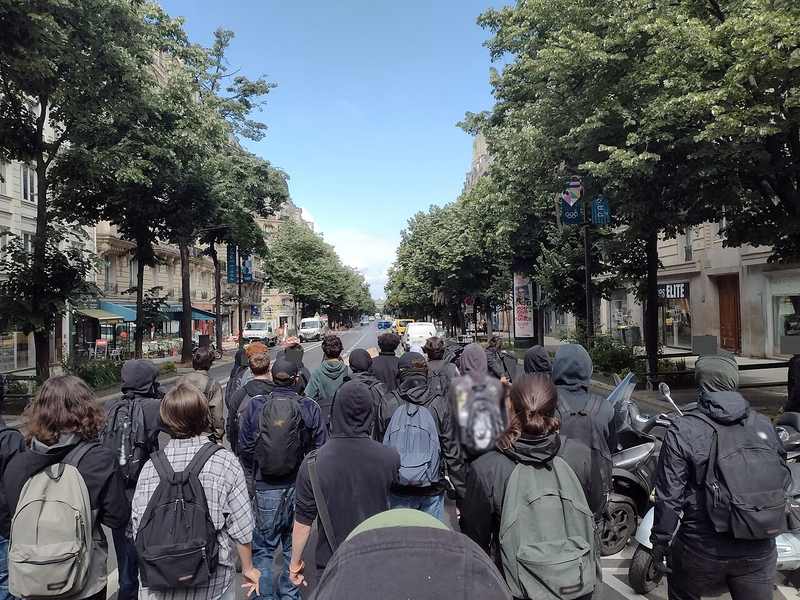
France school protests October 2026 reached their largest mobilization on Tuesday, October 6, when the Interior Ministry counted more than 250,000 people nationwide, including about 56,000 in Paris. Organizers put the total at roughly 450,000. Whichever count is used, the day marked a sharp expansion of a three-week movement that began in the Paris suburbs over missing teachers, crowded classrooms and deteriorating buildings.
The demonstrations were not uniformly peaceful. Police used tear gas and water cannon against violent fringes in Paris, Strasbourg, Rennes and Toulouse. Reuters reported 488 arrests on Tuesday; the Interior Ministry says 6,100 people have been arrested since the protests began, including 1,483 minors. Prime Minister Sébastien Lecornu told lawmakers that at least 215 teenagers, 85 school staff and more than 700 police officers had been injured.
President Emmanuel Macron convened Lecornu and senior ministers for an emergency meeting Tuesday, BFM reported. Around 3,700 lycées—more than half of France's upper-secondary schools—have shut. The immediate question is whether the government can restore safe access to classrooms without treating every protester as violent, while also answering the staffing and funding grievances that brought students, teachers, parents and unions into the same movement.
Why this matters
This is now more than an education dispute. A crisis that closes more than half the country's lycées, puts hundreds of thousands in the streets and produces thousands of arrests tests the state's two core promises at once: that public schools will function and that public order will hold. Failure on either side damages confidence in the government; failure on both turns a policy dispute into a legitimacy crisis.
The timing increases the stakes. France is heading toward a presidential election in spring 2027 while support for far-right and far-left populist parties is rising. Macron's allies lost their parliamentary majority in 2024, leaving the government struggling to pass budgets as high debt and weak growth narrow the money available for new commitments. Education spending that might have looked like a sectoral negotiation now competes with fiscal credibility and electoral survival.
Students also carry unusual moral and political weight. Large numbers of minors are not simply another organized constituency. Their injuries, detentions and interrupted schooling raise questions about policing, child safeguards and the cost of continuing the confrontation. At the same time, authorities argue that arson, attacks and serious disorder cannot be excused because many demonstrators are young.
How France's school crisis reached this point
France teacher shortages protests began with everyday failures
The movement started in the Paris suburbs in September with complaints that were concrete rather than abstract: teachers missing from classrooms, classes overcrowded, buildings aging, water leaking through roofs, rats in school facilities and days students said were too long. These are local experiences, but they share a national argument—that the public education system is asking pupils and staff to absorb shortages that budgets have not fixed.
Teachers, parents and unions joined the students as the demonstrations spread. That broadened the coalition and gave the movement institutional support, but it also made its demands harder to settle with a single announcement. Hiring teachers requires trained applicants and recurring funding. Reducing class sizes requires staff and space. Repairing thousands of buildings requires local and national coordination. Shortening or reorganizing school days can collide with transport, childcare and examination schedules.
Reuters reported that the students' stated demands concern understaffing and funding, not religion or immigration. That distinction matters because outside political voices have tried to supply a different explanation for the unrest. The movement's origin does not settle every question about who later joined demonstrations or committed violence, but it does establish what organizers say brought students out first.
France lycées shut as security overtook negotiation
As blockades and marches multiplied, officials shifted from managing disruption to containing what Lecornu called the most violent student demonstrations in decades. Closures can protect pupils and staff when administrators cannot guarantee access or safety. They can also deepen the original grievance by taking away more classroom time from students already protesting educational disruption.
The reported shutdown of about 3,700 lycées is therefore both a security measure and a measure of lost normality. For the government, closing a site may prevent injuries or damage. For organizers, the scale of closure can look like proof that enforcement has displaced dialogue. Families bear the practical costs either way through childcare, missed work and uneven remote learning.
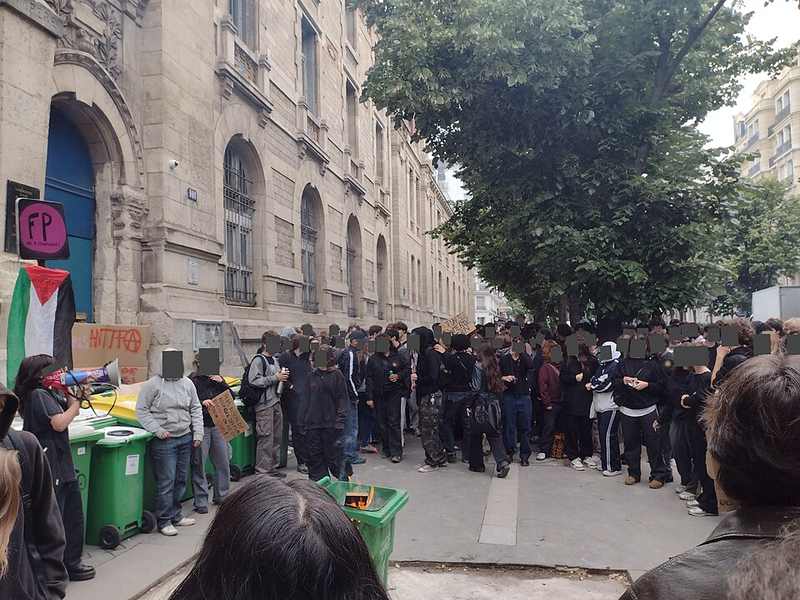
The violence: what is known and what remains disputed
Sébastien Lecornu student protests warning
Lecornu told lawmakers that the 215 injured teenagers and 85 injured school staff represented “the heaviest toll in decades paid by the school system.” He also said more than 700 police officers had been hurt. Those figures show harm across the confrontation rather than on only one side: young protesters and education workers have been injured, and so have officers tasked with containing disorder.
Police say tear gas and water cannon were directed at violent groups in several cities. Authorities describe an obligation to protect schools, staff, other demonstrators, emergency workers and property. Student representatives and civil-liberties critics counter that crowd-control tactics around teenagers must be proportionate and that peaceful participants should not be defined by masked or violent fringes.
The arrest count requires similar care. A detention does not prove that a person attacked anyone or damaged property, and the high number of minors makes due process especially important. Yet 488 arrests in one day and 6,100 in three weeks also indicate the operational scale of the crisis. The government cannot treat those numbers as convictions; organizers cannot treat them as irrelevant to public safety.
France student riots or a school protest movement?
The phrase France student riots captures the clashes but can obscure the wider turnout. Hundreds of thousands marched; the reported arrests were a fraction of that total. At the same time, describing the day only as a peaceful education protest would omit the use of water cannon, tear gas, attacks and injuries in multiple cities. Accurate coverage has to hold both realities together.
That distinction matters politically. If violence becomes the defining image, the government can rally support around order and separate moderate protesters from militants. If organizers can isolate violent actors while sustaining large peaceful marches, attention is more likely to return to teacher vacancies, class sizes and building conditions.
The numbers compared with past French protest waves
Tuesday's official figure of more than 250,000 is very large for a school-centered movement, but it is smaller than the biggest recent national labor mobilizations. During the 2023 pension protests, the Interior Ministry counted 1.28 million people on the peak day—about five times Tuesday's official school-protest turnout. That comparison prevents exaggeration: this is not the largest French street protest of the decade.
What makes the current wave exceptional is its institutional footprint and age profile. More than half of the country's lycées are reported shut, 1,483 minors are included in the arrest total, and Lecornu's injury figures center teenagers and school staff. Past pension and Yellow Vest waves were broader anti-government or economic movements. This confrontation is embedded in schools, where the state has direct responsibility for the people, buildings and services affected.
The rival crowd counts also follow a familiar French pattern. The Interior Ministry's 250,000-plus estimate and organizers' roughly 450,000 claim differ by about 200,000, or 80% of the official count. Crowd measurement varies with routes, timing and methodology, so neither number should be blended into a false consensus. The responsible conclusion is that turnout was at least a quarter-million by the government's count and substantially higher by the organizers' measure.
The arrest and injury totals are not directly comparable with turnout. They describe different outcomes, and cumulative counts cover three weeks rather than Tuesday alone. Still, 6,100 arrests against an official peak-day crowd of 250,000 shows why this movement is being judged not only by how many people marched but by how persistently confrontation has accompanied it.
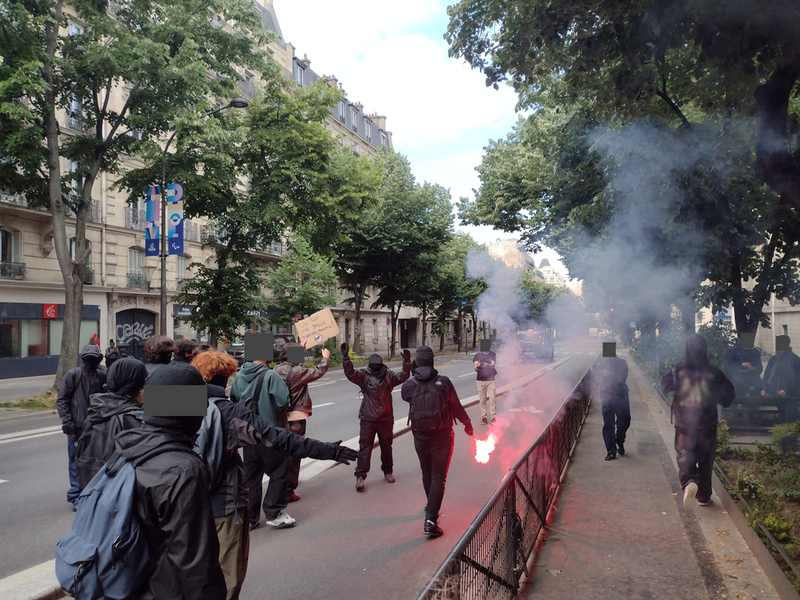
Macron emergency meeting schools response
Macron's emergency meeting with Lecornu and senior ministers signals that the Elysée sees the school protests as a cross-government crisis rather than an issue for the education ministry alone. Security, justice, budgets, local government and education all intersect. The meeting can coordinate those portfolios; it cannot by itself resolve the trade-off between rapid concessions and fiscal limits.
The government's strongest position is that it must prevent further injuries and keep public services operating. Its weakness is that a security response does not fill a vacancy, repair a leaking building or reduce a class size. Protest leaders' strongest position is that they have forced neglected school conditions onto the national agenda. Their weakness is that continuing violence can erode public support and make negotiations politically harder.
A credible response would need two tracks. One would establish enforceable rules for safe demonstrations, targeted policing and accountability for specific acts rather than collective blame. The other would publish measurable education commitments: which vacancies will be filled, which buildings repaired, what funding is available and when progress will be audited.
Trump's France migration claim and Le Pen's different choice
Trump France migration Truth Social post
US President Donald Trump recast the unrest in a Truth Social post: “What's happening in France is nothing less than out of control mass migration. This isn't about schools, this is about Islam wanting to take over a once great Country! President DJT.” That is his political interpretation. Reuters' reporting says the students' demands concern school staffing and funding, not immigration or religion.
The distinction does not require readers to ignore France's broader debates about migration, integration or secularism. It requires separating those debates from the documented origins and stated demands of this protest movement. Trump's intervention may amplify the story internationally, but it does not supply evidence that migration caused the school grievances or organized the marches.
National Rally has not linked the protests to migration
Marine Le Pen's National Rally has not linked the protests to migration policy, Reuters reported. That restraint is notable because the party has made immigration central to its national platform. It may reflect a judgment that the education and public-order facts are politically powerful without importing a claim that the available reporting does not support.
The contrast creates a revealing split on the right. Trump benefits from fitting the unrest into his familiar international warning about migration and Islam. National Rally, competing directly for French voters in 2027, may benefit more from criticizing Macron over disorder, budgets and public services while avoiding an unsupported causal claim.
Who benefits, who loses and what critics say
Students, teachers and unions have gained national attention and bargaining power. Their risk is that every televised clash makes it easier to dismiss school demands as cover for disorder. Student union spokesperson Alice Cohen-Morzadec told BBC News the movement would “amplify even more until we get our demands,” a promise that raises expectations for both turnout and discipline.
Macron and Lecornu can present themselves as defenders of schools and public order. But the scale of closures and injuries also makes the government look unable to deliver either normal education or calm streets. Concessions could reopen schools; poorly designed concessions could strain the budget or invite claims that violence was rewarded.
Opposition parties can benefit from an incumbent trapped between spending demands and security failures. The far left can emphasize underfunded services and policing; the far right can emphasize disorder and state authority. Both lose if they appear to exploit injured teenagers, staff or police rather than offering workable policy.
Families and school workers are the clearest immediate losers. They absorb interrupted learning, safety fears, property damage, staffing pressure and childcare disruption. Police officers also face injury and sustained deployment. The people paying the daily cost are not identical to the political actors seeking advantage.
Critics of the protest strategy say blockades and disruption deny education to the same students the movement claims to defend. Critics of the government say years of warnings about staff shortages and buildings were easier to ignore until they produced a national emergency. Both criticisms can be true: disruptive tactics can harm pupils, and official delay can make disruption more likely.
The 2027 French presidential election shadow
The spring 2027 election gives every decision a second meaning. A successful negotiated reopening would allow Macron's camp to argue that it can still govern despite a fragmented parliament. A prolonged stalemate would reinforce opposition claims that the post-2024 governing arrangement is exhausted.
The fiscal context limits easy answers. France faces debt and weak-growth pressure, while staffing and building improvements require sustained expenditure rather than a one-time announcement. If the government offers too little, the movement may continue. If it offers a large package without explaining how it is financed, budget critics gain fresh ammunition.
For the opposition, the temptation is to nationalize the crisis before its facts are settled. Parties can gain by presenting the protests as evidence for their broader worldview. They can also lose credibility if they distort a school-funding movement into a different cause or minimize serious violence committed around demonstrations.
What happens next: five plausible scenarios
1. Negotiation separates education demands from street violence
The government publishes dates, budgets and targets for staffing and repairs, while unions and student representatives agree on protected routes for peaceful action. This is the most durable off-ramp because it addresses both safety and the original grievances. It also requires trust that neither side currently has.
2. Targeted concessions split the coalition
Macron and Lecornu may prioritize the hardest-hit schools, emergency repairs and teacher replacement pools. Concrete gains could persuade parents and moderate organizers to pause while leaving more radical groups mobilized. The political objective would be to shrink the confrontation without appearing to surrender to violence.
3. Containment restores classes but not legitimacy
Closures, arrests, prosecutions and heavy police deployment could reduce disruption enough to reopen schools. That may work operationally while leaving staffing and funding complaints unresolved. The movement could then recede temporarily and return during the budget fight or presidential campaign.
4. A new injury or violent incident drives escalation
Another serious injury to a student, staff member or police officer could harden both camps. Organizers could call larger marches; ministers could impose broader restrictions. In that cycle, each side treats the other's response as proof that compromise is impossible.
5. The crisis becomes a 2027 campaign proxy
If negotiations fail, the debate may stop being primarily about particular schools and become a referendum on Macron-era public services and authority. That would benefit parties with a simple anti-government message, but it would make practical settlements harder because compromise would carry electoral costs.
The test after the quarter-million march
Tuesday established the scale of the crisis but not its outcome. The official and organizer counts disagree, yet both describe a movement far too large to dismiss. The injury and arrest figures show why authorities cannot treat it as routine. The documented school conditions show why policing alone cannot resolve it.
France's next test is whether it can distinguish peaceful participants from violent actors and immediate safety measures from long-term education policy. If the government can protect schools while publishing credible, measurable reforms, the coalition may narrow. If protesters can sustain pressure while isolating violence, their demands may retain public legitimacy. If neither happens, the country's school crisis will enter the 2027 election as evidence of a state struggling to keep classrooms open and streets calm at the same time.
Sources
- Reuters reprint — turnout, arrests, injuries, school demands, Trump's claim and National Rally's position
- Reuters reprint via Devdiscourse — nationwide reporting and official figures
- Reuters World News podcast, October 7, 2026 — France protests briefing
- BBC News — interview with student union spokesperson Alice Cohen-Morzadec
- BFM — Macron's emergency meeting with Lecornu and senior ministers
- Reuters, March 11, 2023 — comparison with the peak official pension-protest turnout
Reporting note: Crowd estimates are attributed to the Interior Ministry and organizers because they differ. Arrests are not convictions. Claims and interpretations by political leaders are presented as claims, not established causes.
Image sources: Three June 2024 Paris lycée demonstration photographs by Wyslijp16, used as clearly labeled file images under CC BY 4.0. Source pages: Wikinews file page and Lycée Voltaire file page.