Kosovo parliament protest
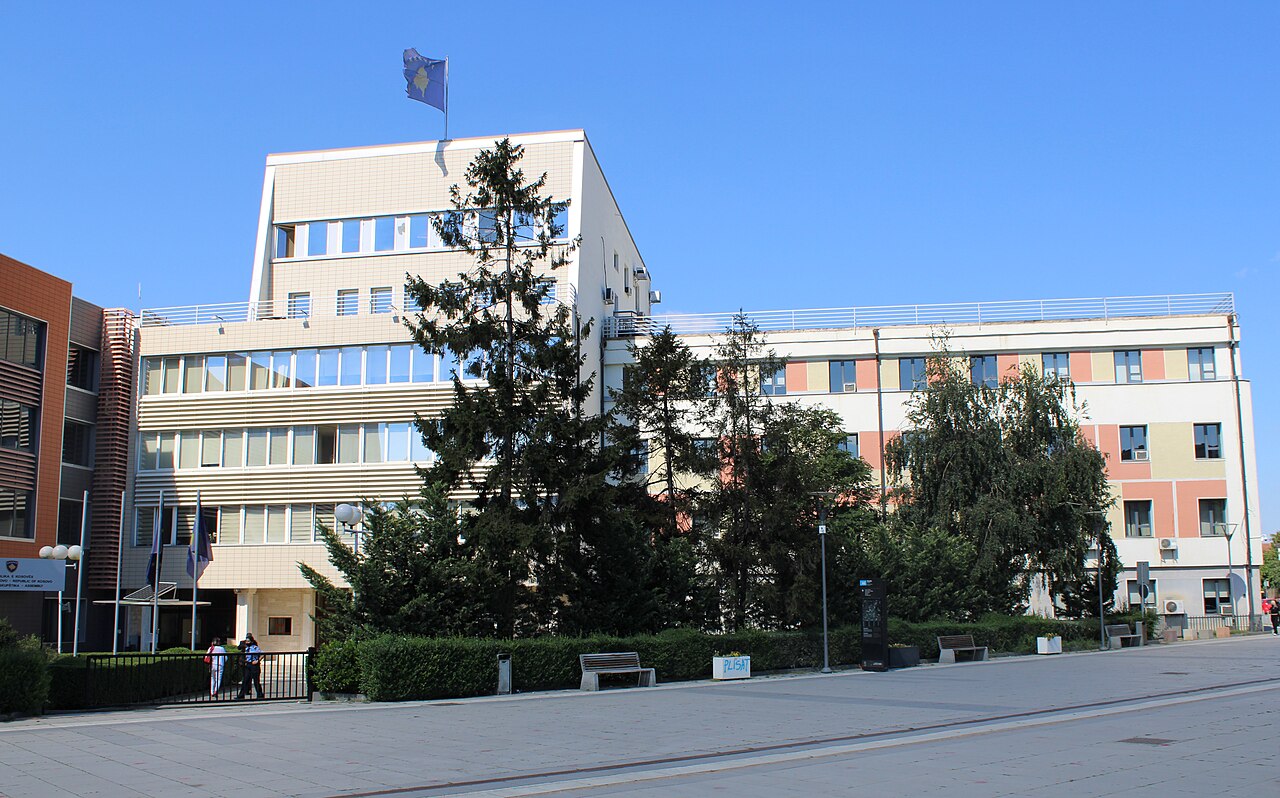
PRISTINA—The Kosovo parliament protest turned violent Monday after demonstrators blocked lawmakers inside the government and parliament complex and demanded an immediate second vote on legislation that would limit the Kosovo Specialist Chambers. Police fired tear gas and used water cannon as demonstrators threw stones and firecrackers. At least 17 people were injured, including six police officers, according to police figures, and three protesters were detained.
The confrontation followed a first reading earlier Monday in which lawmakers approved amendments to the law that created the Hague-based war crimes court. Several hundred protesters later pledged to keep parliament blockaded until the second vote needed to pass the bill, according to AFP. The hours-long standoff escalated after nightfall: bins were set alight near parliament, riot police deployed tear gas, and water cannon and armoured vehicles moved into the area.
Those are the confirmed events. The argument beneath them is more difficult: whether a court created under Kosovo law but seated abroad should retain its existing powers after sentencing men whom many Kosovars regard as architects of independence. That tension explains the depth of the anger. It does not erase the police obligation to protect people and public buildings, and it does not settle whether parliament should change the court's rules.
Why this matters
Monday compressed a long-running national dispute into one image: lawmakers inside a blocked parliament, demonstrators outside demanding that they rewrite the founding law of the court that convicted national heroes, and police between them. The stakes reach beyond one evening's public-order crisis.
For supporters of the amendments, the case is about sovereignty, proportionality and control. The Specialist Chambers operates under Kosovo law, yet it sits in The Hague. Its most prominent defendants emerged from the Kosovo Liberation Army and are widely regarded at home as heroes of the independence struggle against Serbian forces. From that perspective, allowing appeals to Kosovo's Supreme Court, permitting sentences to be served in Kosovo, capping prison terms and restoring a presidential amnesty power would bring decisions affecting Kosovo's wartime leadership closer to Kosovo's own institutions.
For opponents and skeptics, changing the rules after major convictions risks looking like political intervention in judicial outcomes. The court's mandate is to try war crimes and crimes against humanity from the conflict between ethnic Albanian guerrillas and Serb armed forces. A legislature that narrows that mandate under street pressure may satisfy a powerful domestic demand while raising questions about the durability of legal commitments.
What the amendments would actually change
The package is not a symbolic resolution. It would cap prison sentences at 15 years, create an avenue of appeal to Kosovo's Supreme Court, allow sentences to be served in Kosovo, and permit the country's president to grant amnesty to convicted individuals. Each provision changes a different part of the system: punishment, review, place of confinement and executive clemency.
Supporters can argue that those changes place the court within familiar national checks. Critics can answer that a sentence cap or amnesty power could materially reduce the effect of judgments already delivered. The key distinction is between debating the legitimacy of the court—an enduring political question—and altering the consequences of cases after verdicts have been reached.
The European rule-of-law test
The European stakes are reputational as well as legal. Kosovo's EU accession optics depend in part on whether institutions appear able to uphold rule-of-law commitments when those commitments become politically painful. That does not mean every amendment is automatically illegitimate; legislatures routinely revise laws. It does mean the timing, process and safeguards will be watched as closely as the text.
A rushed vote under a blockade could be read abroad as pressure defeating procedure. A slower review with a clear legal rationale could be presented as parliament exercising its lawful authority. The same four amendments can therefore carry very different diplomatic meanings depending on how lawmakers proceed.
How Kosovo reached this point
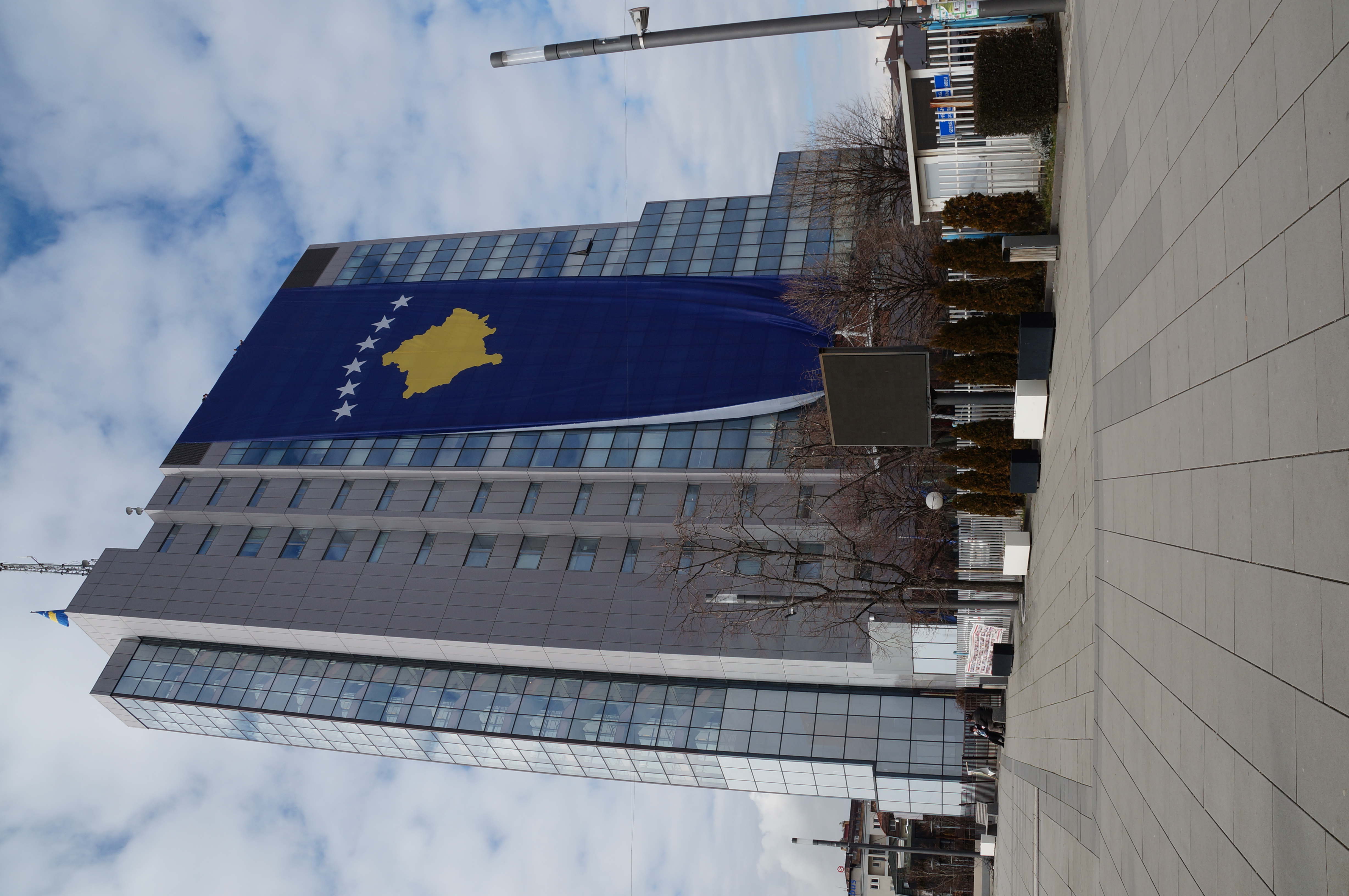
The Kosovo Specialist Chambers is unusual by design. It is established under Kosovo law but based in The Hague, outside the immediate political atmosphere of Pristina. It hears allegations of war crimes and crimes against humanity connected to the 1990s independence war between ethnic Albanian guerrillas and Serb armed forces.
That structure has always carried a built-in contradiction. Legally, the court is a Kosovo institution. Politically and physically, many people experience it as foreign. Its defenders see distance as protection for a sensitive judicial process. Its critics see the same distance as proof that Kosovo's wartime history is being judged away from the society that lived it.
Weeks before Monday's clashes, the court sentenced former President Hashim Thaci and three other senior KLA figures to a combined 81 years in prison for war crimes, including murders, illegal arrests, torture and cruel treatment during the independence war. The verdicts are final as reported. They sparked outrage and rallies because the convicted men are widely honored in Kosovo for their roles in the independence struggle.
Heroes and convicted defendants
The two descriptions—national heroes and men convicted of war crimes—sit uneasily together, but serious reporting must hold both. The independence struggle remains central to Kosovo's national story. The court's judgments address crimes committed during that same conflict. A society can revere a political or military contribution while a court assigns criminal responsibility for specific acts; the dispute begins when one side insists that only one of those truths may be spoken.
For protesters, the combined 81-year sentence is evidence that the court has become detached from Kosovo's understanding of the war and its leaders. For those who defend the court's mandate, public reverence cannot place defendants beyond legal accountability. Monday's clash was therefore not only about four statutory amendments. It was a contest over which institution gets the final word on the past.

The Kurti split: a first vote, then a stop
Prime Minister Albin Kurti and his party backed the first reading but declined to support a second vote on the same day. That sequence placed the government between two pressures: acknowledging the strength of domestic feeling while resisting an accelerated rewrite of a sensitive court law.
“We consider these moves to amend the law on the Specialist Chambers rushed and insufficiently analysed and thought through,” Kurti said. His objection focused on process and scrutiny rather than a blanket defense of every existing rule. That distinction matters because the first-reading vote showed that the debate itself has political legitimacy, while the refusal to move immediately showed that timing and consequence remain contested.
The amendments were presented by the Democratic Party of Kosovo, the former party of Thaci. That authorship gives supporters a direct political vehicle for their demands. It also gives skeptics a reason to ask whether the changes are being designed around the fate of particular convicted leaders rather than a general theory of justice.
Why the second vote became the flashpoint
The protesters did not treat the first reading as victory. They wanted the second vote required for passage and blocked lawmakers from leaving to force a decision. From their perspective, delay risked turning parliamentary approval in principle into indefinite inaction. From the authorities' perspective, lawmakers must be able to deliberate and leave the building without coercion, while police must restore public order when firecrackers, stones and burning bins enter the scene.
Both accounts explain behavior; neither excuses harm. Protesters can argue that extraordinary pressure was needed to make parliament act on a widely felt grievance. Police can argue that a blockade and projectiles crossed from peaceful assembly into a threat to people and institutions. The injury count should be read with attribution: at least 17 injured, including six officers, is the police figure available from Monday.
Who wins—and who loses
Convicted KLA figures and their families
If enacted and applied, the amendments could provide shorter maximum terms, a domestic appeal route, imprisonment in Kosovo and the possibility of presidential amnesty. Those are concrete potential gains for convicted individuals and their families. Whether and how each provision would affect existing cases would depend on the final text and its legal application; Monday's first reading alone did not deliver those outcomes.
Victims and their families
For people whose relatives were murdered, illegally detained, tortured or subjected to cruel treatment, a retroactive weakening of sentences could feel like the state retreating from accountability. Their interest is not abstract: the court's judgments formally recognized crimes and assigned responsibility. Any reform process that treats only the defendants' standing at home risks making victims disappear from the national conversation.
Kosovo's institutions
Parliament could gain domestic support by asserting control over a court established under Kosovo law. It could also lose credibility if the process looks tailored to famous convicts or dictated by a blockade. Police face a parallel test: they must prevent violence and secure parliament, but their use of tear gas and water cannon will be judged against the conduct and scale of the crowd.
European partners and Serbia
For European partners, the issue is whether Kosovo can balance democratic lawmaking with the independence and continuity of war-crimes accountability. For Serbia, the debate carries obvious regional significance because the underlying cases arose from the war against Serb armed forces. No reaction from Belgrade is assumed here; what officials say and whether they use the vote to challenge Kosovo's rule-of-law record are developments to watch.
What happens next
The immediate question is when parliament will hold the second vote. Monday produced no completed passage, only a first reading followed by a blockade. The decisive variables are whether Kurti's party concludes that the amendments have received enough analysis, whether it seeks revisions, and whether the PDK can keep political pressure high without another confrontation outside parliament.
Foreign reaction is another uncertainty, not a reported fact. EU and U.S. officials could focus on the speed of the process, the effect on final convictions, or the principle that a Kosovo-law court should remain insulated from political retaliation. They could also distinguish between procedural changes that preserve accountability and measures that substantially reduce sentences or enable amnesty. Until official positions are issued, those are scenarios rather than reactions.
The street will matter as well. If demonstrators return in large numbers, lawmakers face renewed pressure to finish the bill. If violence dominates the next gathering, the debate may shift from the court to public order. That would strengthen the authorities' case for a slower process while risking deeper anger among people who already believe the political system has ignored them.
The choice before parliament
Kosovo's lawmakers are not choosing simply between patriotism and law. They are deciding how a young state's legal commitments should respond when judgments collide with a powerful national memory. A credible answer has to account for the convicted leaders' standing, the protesters' demand for national control, the rights and dignity of victims, the court's mandate and the independence of parliamentary decision-making.
Conclusion
The Kosovo parliament protest revealed a country arguing with itself about the meaning of justice after war. Supporters of the amendments see an overdue correction to a foreign-based court that punished independence heroes. Opponents and skeptics see a dangerous attempt to change consequences after final verdicts. Police see a duty to secure institutions; protesters see a legislature that moved only when confronted.
Monday settled none of those arguments. It did establish the next test: whether parliament can debate the four amendments without being compelled by the street, and whether the government can keep order without closing the space for dissent. The second vote will decide the bill. The way Kosovo reaches it will decide what the vote means.
Sources
Reporting note: Injury and detention figures are attributed to police. Confirmed events are separated from Signal Post News analysis and forward-looking scenarios.