Abyei drone strike: at least 153 people were reported killed on Monday, October 19, 2026, when drones struck Amiet Market in the disputed Abyei region on the border of Sudan and South Sudan — a death toll the region's caretaker information minister first put at 73 and raised to 153 a day later, according to Reuters and the Associated Press — and South Sudan's government summoned Sudan's ambassador in protest.
Track it live: signalpostnews.com/tracker/africa-wars — live maps and updates for the wars and armed conflicts in Africa covered by Signal Post News. See also the wider war tracker at signalpostnews.com/tracker/wars.
What happened at Amiet Market
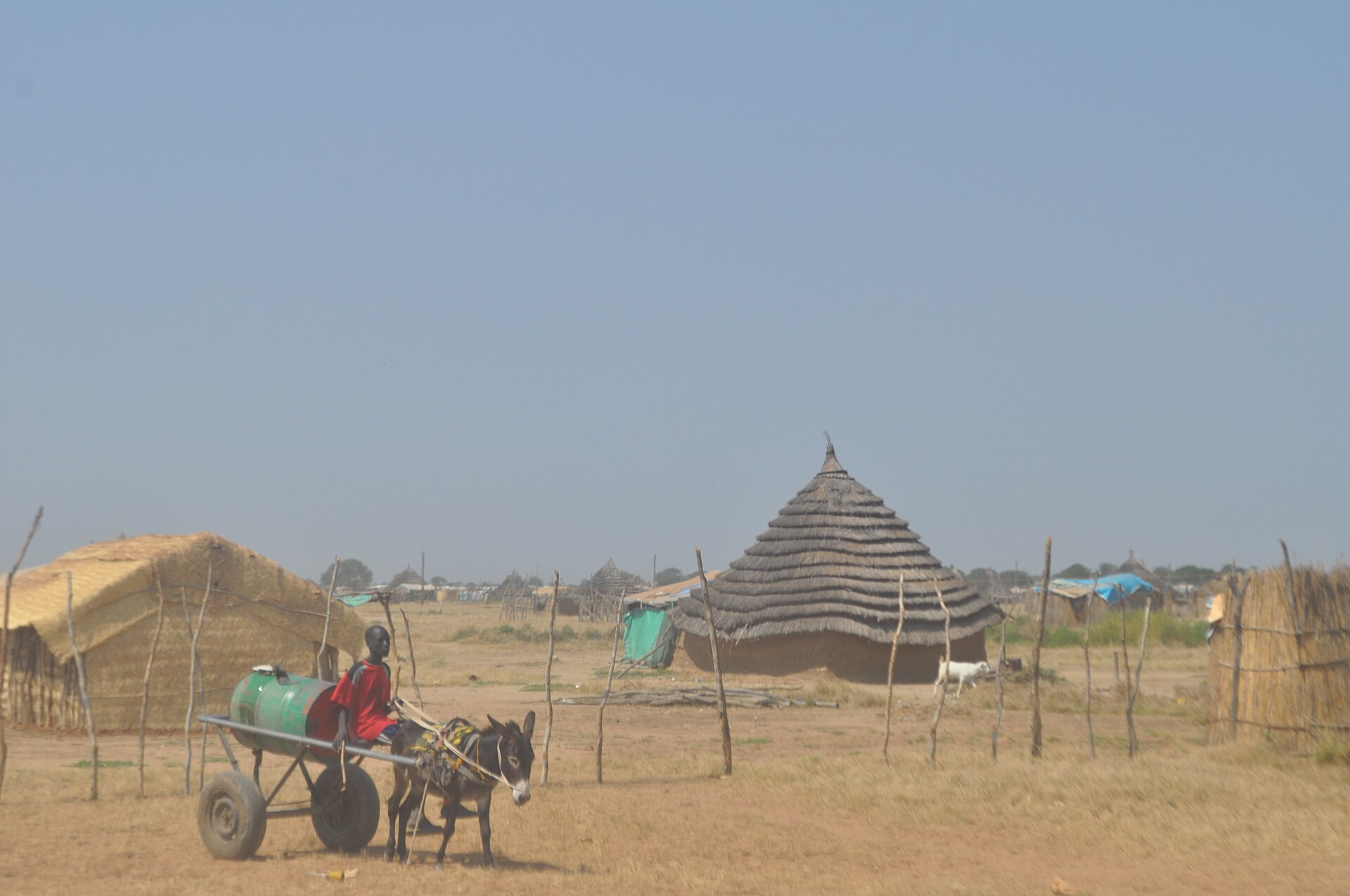
ABYEI — The strike hit on Monday morning, October 19, at Amiet Market — also known as the Amiet Common Market, or Al-Na'am — a trading centre in Ameth-Aguok County, north of Abyei town. According to Yohana Akol Ngor, spokesperson for the Abyei administration, a drone dropped seven bombs at around 11 a.m. local time on the market's northern section, where fuel is sold, striking fuel tankers in an area occupied by Sudanese traders and starting a large fire.
"The drone dropped seven bombs in the northern checkpoint of the market where the fuel is sold. These bombs have caused casualties, loss of lives, and property destruction. The target is the fuel market," Akol said, in reporting by The Radio Community. Akol accused the Sudanese army of carrying out the attack; the outlet said it could not independently verify the allegation, and Akol said at that stage that authorities were still assessing the damage and counting casualties.
The count that followed was far worse than the first reports. At least 73 people were killed when drones struck the market, the caretaker information minister for Abyei said, accusing Sudan's army of carrying out the attack, Reuters reported. The minister did not provide evidence for his claim, Reuters noted. Radio Tamazuj's account of the toll put the wounded at 19 alongside the 73 killed — the same wounded figure the United Nations had reported earlier on Monday, when a UN briefing described drone strikes injuring at least 19 people in a busy market in Abyei, before any death toll from the market had been given.
South Sudan's Ministry of Foreign Affairs and International Cooperation, in a statement issued on October 19 and reported by Radio Tamazuj, said the attack struck multiple locations within the market and resulted in civilian casualties, injuries and significant property damage. The ministry called the incident unacceptable, extended condolences to the families of those killed, and wished the injured a speedy recovery. Its statement gave no casualty figures of its own.
Juba summons Sudan's ambassador
The diplomatic response was immediate, and it is the part of this story that moves it beyond Sudan's internal war. Following the attack, South Sudan's foreign ministry summoned Sudan's ambassador to South Sudan to convey what it called its strong protest, and to express concern over the incident's implications for civilian safety and stability in the disputed Abyei Area, Radio Tamazuj reported. A Sudans Post report on the meeting identified the Sudanese ambassador as Isam Mohamed Hassan Karar and the South Sudanese official who received him as Foreign Affairs Undersecretary Agnes Adlino Orifa Oswaha.
Juba called on the Sudanese government to refrain from actions that endanger civilian lives and property, urged Sudan to take measures to prevent similar incidents from recurring, and urged both sides to address issues concerning Abyei through established diplomatic channels and existing dialogue mechanisms. "The Government of the Republic of South Sudan reaffirms its commitment to the protection of civilians and to the preservation of peace, security, and stability in the Abyei Area," the statement said.
No response from Sudan's army or from the authorities in Port Sudan to the Abyei accusation had been reported by Reuters, Radio Tamazuj or the UN as of Monday night. This article carries the accusation — made by Abyei's administration and repeated in Juba's protest — as an accusation, not as a finding. The drone's operator has not been independently confirmed.
A caution on the toll — and why this story was held earlier in the day
The 73 figure needs to be read for what it is. It is a reported toll from the Abyei administration — its caretaker information minister — carried by Reuters and by Radio Tamazuj, not an independently verified count from a hospital register, a UN tally or a named list of the dead. Reuters was explicit about the limits of the claim in its own reporting: the minister accused Sudan's army, and he did not provide evidence for that claim.
The sequence of Monday's reporting shows why the number arrived late. The UN's Monday briefing, given in New York, reported 19 people injured at the Abyei market and condemned the day's drone strikes across Sudan — it gave no Abyei death toll. Local reporting from the market described seven bombs, a fire in the fuel section and casualties still being counted. Only later did the administration's count — 73 killed, 19 wounded — reach wire reporting. The wounded figure is consistent across the UN briefing and the later toll; the death figure rests, for now, on the Abyei administration's account.
That is also why earlier Signal Post News watches on Monday held the diplomatic half of this story. When Juba's condemnation first surfaced, it rested on a single video report of the foreign ministry statement. What changed by Monday night was corroboration: Radio Tamazuj reported the statement and the summoning of the ambassador, Sudans Post reported the meeting itself, and Reuters then carried the minister's 73-killed toll. Agreement among outlets that share official sources gives a claim reach; it does not by itself verify a body count, and the article reports the toll as reported throughout. That caution applies with equal force to the higher figure the same administration published the next day, and to the United Nations mission's separate count published the day after that — both set out in the updates below.
Update — Tuesday: the toll rises to 153
On Tuesday, the Abyei administration's caretaker information minister, Yohana Akol Ngor, raised the reported death toll from the Amiet Market strike from 73 to 153. Reuters reported that the toll had doubled from around 73 reported earlier, and Ngor told the Associated Press by phone: "We have recorded 153 deaths," saying the count continued to rise as the fire at the market burned. The strike hit a fuel depot at Amiet Market, north of Abyei town. Both wires carried 153 as the administration's reported count for the same Monday incident — a succession of counts from the same official source, not a second incident, and not an independently verified final toll.
A new claim also entered the record on Tuesday. A senior Sudanese military officer, speaking anonymously to the Associated Press, said Sudan's army did carry out a drone strike on Monday, targeting fuel tankers arriving from South Sudan that he said were bound for the Rapid Support Forces; he said those killed were RSF members and people involved in fuel smuggling, and said: "We do not target civilians." The Associated Press said it could not independently verify his account of the targets or of the identities of those killed. A witness account carried in summaries of the wire reporting said the witness saw no RSF or other uniformed fighters in the market. Ngor also said around 8,000 people had been displaced by the attack, according to the Eastleigh Voice.
Update — Wednesday: the UN publishes its own count
On Wednesday, the UN peacekeeping mission in Abyei, UNISFA, published its own count for the same Monday strike: at least 80 people killed, with 27 injured treated by UN personnel, UN spokesperson Stéphane Dujarric said in New York. The mission said it was still verifying casualties and that other people remained missing. The UN figure is a verified floor compiled by a different body, by a different method, from the Abyei administration's reported 153. The two counts are carried in this article side by side, with their sources attached; they are not added together, and neither replaces the other.
UNISFA said its peacekeepers had extinguished the major fires at Amiet Market and at Todach, some 15 kilometres from Abyei town, were continuing to evacuate casualties and provide medical assistance, and that UN Mine Action personnel were assessing the struck areas for unexploded ordnance. The mission has doubled its day-and-night patrols and is engaging community leaders to encourage restraint and prevent retaliation. In a statement dated Wednesday, UNISFA reiterated the Secretary-General's strong condemnation of the attacks; the statement assigned no responsibility for the strikes. The Secretary-General again called on the governments of Sudan and South Sudan to prevent further attacks and to uphold Abyei's demilitarised status, with dialogue through existing mechanisms including the Joint Political and Security Mechanism meeting scheduled in Khartoum.
Part of a wave: Sudan's deadliest drone weekend
Amiet was the second market strike reported in two days in Sudan's escalating drone war. On Sunday evening, a drone struck twice at a transport hub near the market in al-Dibab, in West Kordofan, killing at least 80 people by the count of a witness who helped bury the dead and a medical source who received the wounded, AFP and The Guardian reported — a strike the RSF's self-declared Tasis administration and the rights group Emergency Lawyers blamed on the army, which has not commented. Early on Monday, a drone attack on Nyala, the South Darfur capital, killed 17 people including seven RSF officers, according to medical and RSF sources reported by AFP, and a house strike in Khartoum killed four people including three children. The full al-Dibab story is reported separately: Sudan Market Drone Strike: 80 Reported Killed at Al-Dibab Transport Hub in West Kordofan.
The United Nations condemned Monday's wave outright. "We are alarmed by the continued deadly drone strikes across the country that are killing civilians, including children, and that are disrupting essential services," UN spokesperson Stéphane Dujarric told journalists in New York. "We condemn all of these attacks unequivocally." The UN said drone strikes on Monday also targeted several locations in Khartoum, including an area near the airport, where one civilian was reportedly killed and some flights were cancelled, and that over the weekend drone attacks reportedly killed at least 19 people, including 10 children, across West Darfur, South Darfur and North Kordofan.
Read in one sequence, the reported numbers describe a war changing shape: at least 80 reported killed at al-Dibab on Sunday, 73 reported killed at Amiet on Monday, 17 in Nyala, and a capital city whose airport area is being struck — almost all of it attributed, contested, and none of it independently confirmed on the ground, in a country where communications blackouts and access restrictions mean the first count is rarely the final one. UN political chief Rosemary DiCarlo, briefing the Security Council last Friday, urged external actors to stop fuelling the violence and the use of drones, and called on the warring parties to return to the negotiating table.
Why Abyei is different: a market shared by two countries' peoples
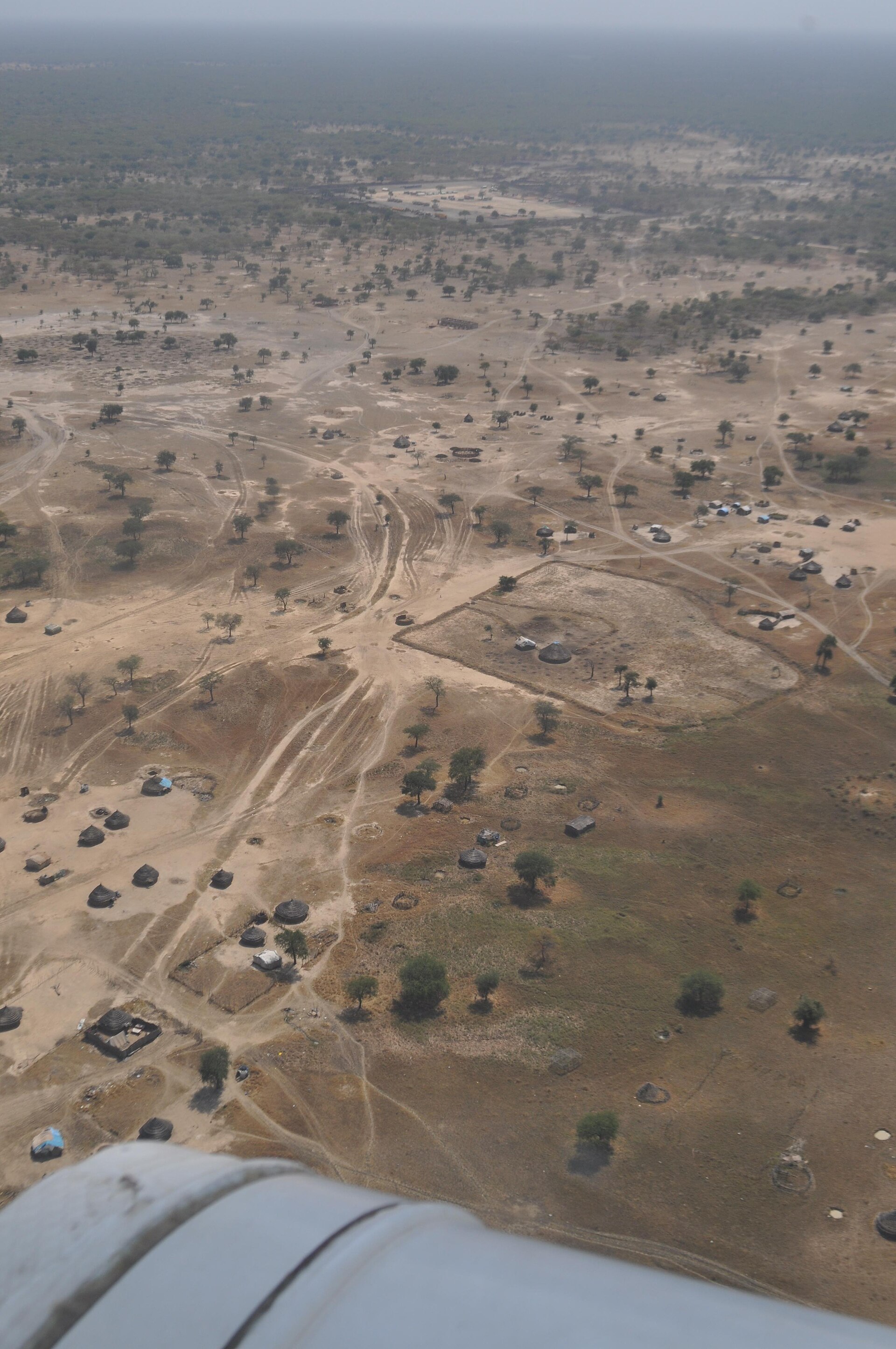
An attack in Abyei is never only an attack in Abyei, and that is what separates Monday's strike from the rest of the wave. Abyei is claimed by both Sudan and South Sudan. Its final status has been unresolved since South Sudan gained independence in 2011; a referendum intended to decide whether the territory joins Sudan or South Sudan has never been held, in part because the two countries disagree over who would be eligible to vote. The United Nations Interim Security Force for Abyei, UNISFA, established in 2011, monitors security under interim arrangements intended to keep the area demilitarised.
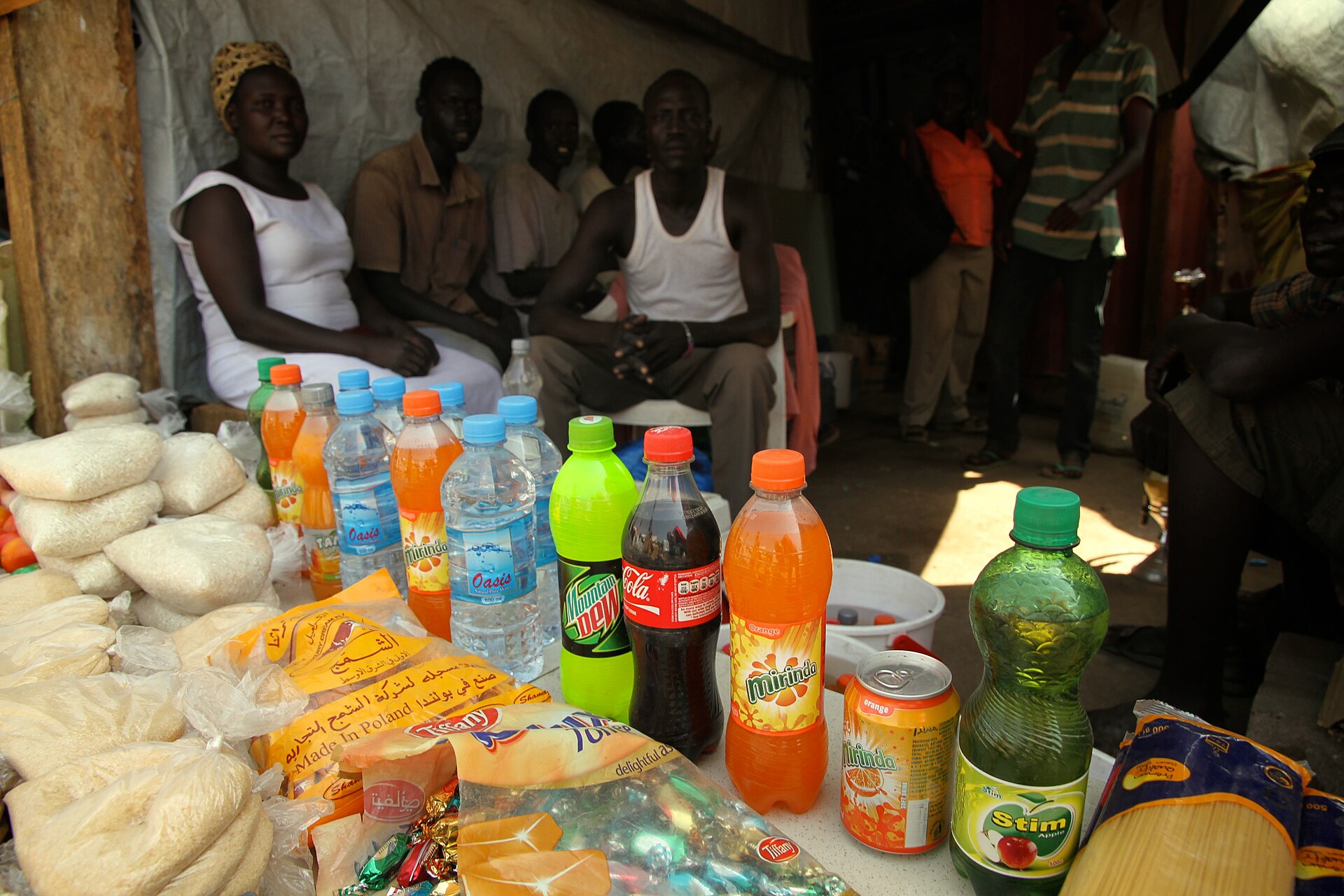
Amiet Market is the practical heart of that unresolved arrangement. It is a major trading centre serving both the Ngok Dinka, who are aligned with South Sudan, and the Misseriya, nomadic herders aligned with Sudan — and, since 2023, people displaced by Sudan's war. A shared market is one of the few institutions in Abyei that requires the two communities, and behind them the two states, to keep functioning together. A strike on its fuel section, in an area the administration said was occupied by Sudanese traders, therefore lands on civilians of both claimed nationalities at once — which is precisely why Juba's response was a state-to-state diplomatic protest rather than only a condemnation of a strike inside Sudan's war.
The timing sharpens that point. The strike came amid renewed political tension over Abyei's future: South Sudan plans to include the disputed area in its December 2026 elections, a move Sudan opposes while the territory's status remains unresolved. On Saturday — two days before the strike — Al-Khair Abdullah Idris Abu Muridat, Sudan's newly appointed head of the Abyei Joint Oversight Committee, reaffirmed Khartoum's claim to the territory and called for a peaceful resolution under the agreements signed by the two countries in 2011. And Amiet itself has recent form: on September 15, deadly clashes at the market killed 26 people and injured 82, according to UNISFA, after which the mission reinforced security around it. A market that needed peacekeepers reinforced around it five weeks ago has now, by the administration's count, suffered a death toll nearly three times that September toll in a single morning.
Why this matters
The Abyei drone strike matters on three levels, and only the first is the body count. The first is humanitarian: two market strikes in two days, with reported tolls of 80 and 73, would make this the deadliest reported weekend of Sudan's drone war for civilians in public places — in a country where, the UN says, 20 million people face acute hunger, famine risk is rising in parts of Darfur and Greater Kordofan, and the humanitarian response plan is just over 43 per cent funded. Markets are where a besieged population eats; every strike on one is also a strike on the food system around it.
The second level is the war's geography. Sudan's conflict since April 2023 has been fought between the army and the Rapid Support Forces inside Sudan's borders. Abyei sits on the seam between Sudan and a second sovereign state. If the Abyei administration's accusation is correct — and it remains unproven — a Sudanese army drone did not merely strike a market inside the war; it struck inside a demilitarised, UN-monitored territory whose other claimant is a neighbouring government, which then summoned Khartoum's ambassador. That is how internal wars become regional ones: not by declaration, but by a single strike in the one place where two states' claims physically overlap, weeks before one of them plans to hold elections there.
The third level is accountability, and it is the bleakest. In strike after strike this weekend — al-Dibab, Nyala, Khartoum, Amiet — the pattern has been identical: a reported toll from witnesses, medics or local officials; an accusation; silence or denial from the accused; and no independent verification, because the places being struck are the places investigators cannot reach. The UN can condemn "unequivocally" without attributing. Juba can summon an ambassador without proving who flew the drone. Until some mechanism exists that can establish responsibility for a drone strike in Abyei, every party's incentive is to strike first and dispute later — and markets, which cannot move and cannot hide, will keep absorbing the cost.
What the numbers imply
Put Monday's figures next to the recent record and the escalation is measurable even with every caveat attached. Amiet's reported 73 killed is nearly three times the 26 killed in the September 15 clashes at the same market — clashes that were serious enough for UNISFA to reinforce its posture there. The combined reported toll of the two market strikes alone, al-Dibab and Amiet, is at least 153 people in roughly 40 hours. Add Nyala's 17 and the Khartoum strikes, and AFP-based reporting on the wider wave passed 100 killed before the Abyei toll was even counted. None of those numbers has been independently verified; all of them come with named sources attached in this article, and readers should hold them as reported figures, not settled counts. But even discounted heavily, they describe a tempo of drone strikes on civilian gathering places that neither side's stated rules of engagement accounts for.
What we know and what we don't know
Known, from multiple reputable sources: a drone strike hit Amiet Market in Abyei on Monday morning, October 19, around 11 a.m., with seven bombs reported in the market's northern fuel section; a large fire followed; South Sudan's foreign ministry condemned the attack in an October 19 statement, gave no figures in that statement, and summoned Sudan's ambassador, Isam Mohamed Hassan Karar, to receive its protest; the UN reported 19 people injured at an Abyei market on Monday and condemned the day's strikes.
Reported, with a single official source behind the figures: the death toll — first reported as at least 73 and raised by the administration to 153 on Tuesday — and the wounded figure of 19 in the toll account, from the Abyei administration, carried by Reuters, the Associated Press and Radio Tamazuj. The UN's own count is separate: UNISFA puts its verified floor at at least 80 killed, with 27 injured treated by UN personnel, and its verification is continuing, with people still missing. Not known: who operated the drone — the administration and Juba accuse Sudan's army, which had not commented when this article was first published; a senior Sudanese officer later told the Associated Press, anonymously, that the army carried out a strike on fuel tankers he said were bound for the RSF, a claim the AP could not verify; whether any military target was present in the fuel section; and what the final verified toll will be once the UN and medical counts are complete.
What happens next
Three things will decide whether Amiet becomes a turning point or simply the worst line in a longer list. The first is verification: whether UNISFA, which is on the ground in Abyei and reported the September toll, publishes its own account and count of Monday's strike. The second is Khartoum's answer: whether Sudan's army or the Port Sudan authorities respond to Juba's protest — with a denial, a counter-accusation, or silence — and whether the Abyei Joint Oversight Committee, whose Sudanese head reaffirmed Khartoum's claim only on Saturday, meets at all. The third is December: South Sudan's plan to include Abyei in its 2026 elections now proceeds in the shadow of a strike its government blames on the other claimant, and every step toward a vote in the territory will be read in Khartoum as a step toward annexation, and in Juba, after Monday, as a step taken under fire.
For the traders of Amiet Market — Ngok Dinka, Misseriya and the displaced alike — the immediate question is simpler and harder: whether a market that two peoples built to trade with each other can reopen at all, and who, in a demilitarised territory patrolled by peacekeepers, is supposed to keep it safe. On Monday's evidence, nobody did.
Related coverage
More Signal Post News reporting on Sudan's war: Sudan Nyala livestock market drone strike; Sudan at the Security Council: drones and hunger; Sudan famine warning for Darfur and Kordofan.
Sources
Reuters, "Drone strike in disputed Sudan–South Sudan area kills dozens, minister says," October 20, 2026 (syndicated wire report) — at least 73 killed at a market in the disputed Abyei region on Monday, per the caretaker information minister for Abyei, who accused Sudan's army; the minister did not provide evidence for his claim. Radio Tamazuj, via Juba Echo, "South Sudan Condemns Drone Attack on Amiet Market in Abyei," October 19–20, 2026 — South Sudan foreign ministry statement of October 19: multiple locations struck at Amiet Market north of Abyei town, incident called unacceptable, Sudan's ambassador summoned, Juba urging diplomatic channels; the statement gave no casualty figures. Radio Tamazuj toll account, via the South Sudan newswire, October 19, 2026 — the Amiet Common Market attack killed at least 73 people and wounded 19, per local officials, who blamed the Sudanese Armed Forces. Sudans Post, via the South Sudan newswire, October 19, 2026 — the summoning meeting in Juba between Foreign Affairs Undersecretary Agnes Adlino Orifa Oswaha and Sudanese Ambassador Isam Mohamed Hassan Karar. The Radio Community, "Drone strike hits Amiet Market in Abyei," October 19, 2026 — seven bombs at around 11 a.m. in the market's northern fuel section, fuel tankers and Sudanese traders' area struck, large fire, spokesperson Yohana Akol Ngor, allegation not independently verified; market context, December 2026 elections tension, Saturday's Abyei Joint Oversight Committee statement, September 15 clashes (26 killed, 82 injured, per UNISFA). UN News, "UN condemns deadly wave of drone strikes in war-torn Sudan," October 19, 2026 — Dujarric condemnation; Abyei market strikes injured at least 19 on Monday; Khartoum airport-area strike, one civilian reportedly killed, flights cancelled; weekend toll at least 19 killed including 10 children; DiCarlo Security Council briefing; 20 million facing acute hunger; response plan just over 43 per cent funded. AFP reporting via The Guardian and News Central TV, October 19, 2026 — al-Dibab (80 reported killed), Nyala (17 killed) and Khartoum house strike (4 killed) accounts forming the wider wave.
Reuters, updated wire, October 20, 2026 — the reported toll doubled to 153, per the Abyei caretaker information minister; Associated Press via CNN, October 20, 2026 — Ngor: "We have recorded 153 deaths"; the anonymous senior Sudanese military officer's claim that the strike targeted fuel tankers bound for the RSF. UNifeed, "UN / Abyei drone attacks update," October 21, 2026 — Dujarric briefing: UNISFA count of at least 80 killed and 27 injured treated; fires extinguished; patrols doubled; Joint Political and Security Mechanism meeting scheduled in Khartoum. UNISFA statement, Abyei, October 21, 2026 (via ReliefWeb, October 22, 2026) — condemnation reiterated; attacks near Amiet Market and Todach; no responsibility assigned.