Sudan market drone strike: at least 80 people were reported killed on Sunday evening, October 18, 2026, when a drone struck twice at a transport hub near a market in al-Dibab, West Kordofan, according to a witness and a medical source who spoke to Agence France-Presse — a toll also reported by The Guardian.
Track it live: signalpostnews.com/tracker/africa-wars — live maps and updates for the wars and armed conflicts in Africa covered by Signal Post News. See also the wider war tracker at signalpostnews.com/tracker/wars.
What happened at al-Dibab
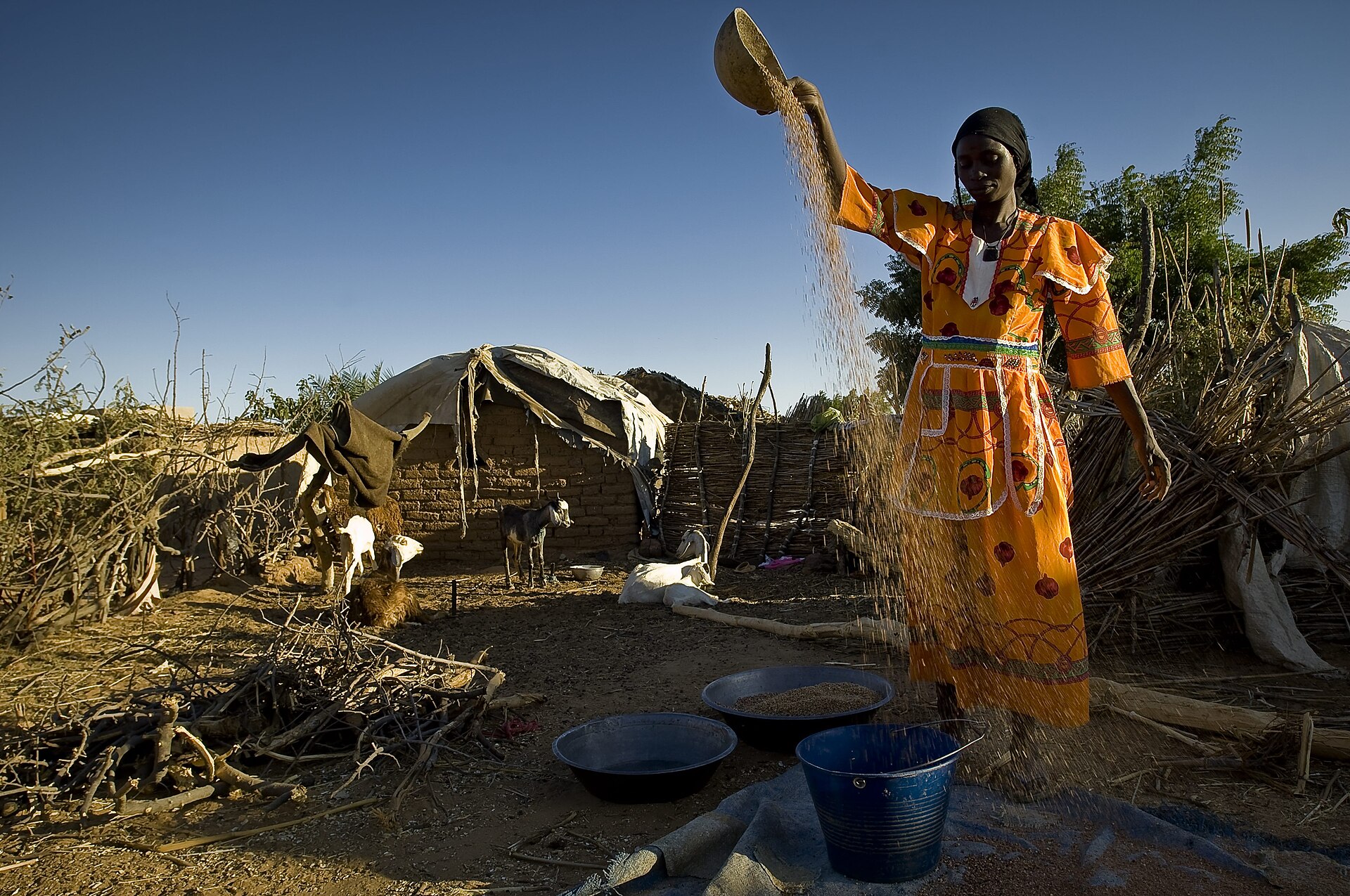
AL-DIBAB, West Kordofan — The strike happened on Sunday evening at a transport hub where people gather after the weekly market in al-Dibab, a town in West Kordofan state in southern Sudan. Most of those killed were commuters catching rides home, according to witnesses and a medical source reported by Agence France-Presse (AFP) and The Guardian.
Ahmed Abakar Wadi, a resident who spoke to AFP via satellite internet to bypass a communications blackout, said he helped bury 50 bodies, including his own brother Mohamed. "50 bodies who I helped bury, one of them my own brother Mohamed," he said. Wadi said the drone struck twice, ten minutes apart, at the hub.
A further 47 injured people were taken to the nearest town, al-Mujlad, Wadi said. A medical source, speaking on condition of anonymity for safety reasons, said 30 of those injured later died from their wounds, bringing the reported total to 80 killed. The same medical source said a separate drone strike on al-Mujlad injured four people.
West Kordofan is entirely under the control of the paramilitary Rapid Support Forces (RSF), which has been at war with Sudan's army since April 2023. The RSF's self-declared administration, known as Tasis, accused the army of carrying out Sunday's strike. The Sudanese rights group Emergency Lawyers also accused the army, according to AFP reporting carried by News Central TV. The army has not commented, and responsibility for the al-Dibab strike has not been independently confirmed. This article carries the accusation as an accusation, not as a finding.
A caution on the toll — and why this story was held earlier in the day
The 80 figure needs to be read for what it is. It is not a final, independently verified count from a hospital register or an official list. It is the sum of two attributed accounts from the scene: 50 bodies a witness says he helped bury, plus 30 deaths among 47 wounded people transferred to al-Mujlad, reported by an anonymous medical source. The 30 are part of the 47 transferred; they are not an additional group beyond them, and the reporting does not establish how many of the remaining wounded survived.
That distinction matters, and it is why earlier Signal Post News watches on Monday held this story. In the morning, the al-Dibab toll rested on a single aggregator citing France 24, with no direct AFP, Guardian, Reuters or AP confirmation available. Under the newsroom rule that a death toll is never published on one chain alone, it was held. What changed by Monday afternoon was direct reporting: The Guardian published the strike with the witness and medical-source account (Carlos Mureithi and agencies), France 24 carried the AFP account, and News Central TV published a fuller AFP account of a wave of strikes since Sunday. Several of those accounts share AFP's witness and medical source, so their agreement gives the toll reach, not a second independent count of the dead. The article therefore reports 80 as the reported toll, attributed throughout, and says plainly what has not been verified: the operator of the drone, the intended target, and whether any fighters were present at the hub.
Part of a wave: more than 100 reported killed since Sunday
Al-Dibab was the deadliest incident in a wider wave of drone strikes reported across Sudan since Sunday, which residents, medical workers and paramilitary sources told AFP had killed more than 100 people in total.
Hours after al-Dibab, early on Monday, a drone attack on Nyala, the capital of South Darfur and an RSF stronghold, killed 17 people, including seven RSF officers, and wounded 23, when it struck the city centre and destroyed two homes, according to medical and RSF sources reported by AFP. On Monday morning in Khartoum, a drone strike on a house in a neighbourhood east of the airport killed four people, including three children aged between two and six, according to a medical source. An army official said Sudanese air defences had intercepted drones launched by the RSF that were targeting the airport and nearby areas.
Those Monday accounts, like al-Dibab, rest largely on medical, resident and party sources in a country with communications blackouts and severely restricted access. They are reported here with that attribution attached, not as verified totals.
The wave follows a drone strike on Friday on a busy livestock market in Nyala, South Darfur, which drew directly competing claims: the army said it had killed RSF fighters, while the RSF accused the military of killing 30 civilians. Signal Post News covered that strike separately — see the Nyala livestock market strike. Two market strikes in three days, with opposite claims about who was hit, is the pattern readers need to hold in mind for al-Dibab as well.
Context: a war for Sudan that turned Kordofan into a corridor
Sudan's war erupted in April 2023 from a power struggle between the Sudanese Armed Forces, led by General Abdel Fattah al-Burhan, and the Rapid Support Forces, led by Mohamed Hamdan Dagalo, known as Hemedti. Fighting that began in Khartoum has since spread across the country. Today the army holds much of Sudan's north, east and centre, while the RSF controls most of Darfur and West Kordofan.
Kordofan sits between those two Sudans. The wider region is oil-rich and serves as a crucial link between RSF-held territory in the west and army-held territory in the east, which is why it has come under repeated drone attacks in recent months as the army seeks to roll back RSF gains consolidated last year in Darfur. A market transport hub in West Kordofan is, in that geography, not a remote accident site: it is civilian infrastructure inside a contested corridor, used at a predictable time, on a predictable day, by people with no other way home.
There is no definitive toll for the conflict as a whole. Aid workers estimate it has killed more than 200,000 people and created the world's largest hunger and displacement crisis — a crisis Signal Post News has tracked in its coverage of famine conditions in Darfur and Kordofan and the UN Security Council's warnings on drones and hunger in Sudan.
Why this matters
The deeper significance of al-Dibab is not only the number, large as it is. It is what the strike shows about how Sudan's war is now being fought. Between January and April this year, drone strikes accounted for at least 880 civilian deaths, more than 80 percent of all conflict-related civilian deaths in Sudan, according to figures reported by The Guardian from the UN human rights office, mostly in Kordofan. News Central, citing the United Nations, put drone deaths in the first half of the year alone at more than 1,100. Drones have become the leading reported cause of civilian death in this war.
That shift changes the risk for civilians in a specific way. Artillery and ground fighting are tied, however brutally, to a front line that people can learn and avoid. A drone can strike a market hub, a cattle market, a health centre or a house far behind any front, at the hour when people are most concentrated and least able to scatter — after market day, waiting for transport. A second strike ten minutes after the first, as Wadi described, is the detail that will be examined most closely by investigators, because a return strike at the same civilian gathering point is the pattern that most sharply raises questions under the laws of war about distinction and proportionality. This article does not answer those questions: the operator and the intended target are unconfirmed. It records the pattern, attributed, because the pattern is now repeated across Nyala on Friday, al-Dibab on Sunday and Nyala and Khartoum again on Monday.
Who benefits, and who loses, is therefore not a simple battlefield calculation. If the army carried out the strike, as Tasis and Emergency Lawyers allege, it would have hit a transport hub in RSF-held territory at heavy civilian cost — a cost that undercuts any claim to be restoring state protection in Kordofan. If the operator was not the army, the RSF's immediate accusation still shows how quickly each side uses a mass-casualty strike to contest legitimacy in a region neither fully governs for civilians. The clear losers, on either account, are the market-goers of West Kordofan, for whom the weekly market and the ride home have become exposure points, and the medical workers in places like al-Mujlad receiving dozens of wounded with limited capacity. Critics of both sides, including UN officials, argue that external suppliers have strengthened drone capabilities on both sides, lengthening the war's reach into civilian life. That claim, from a UN fact-finding mission reported this week, is carried here as a reported finding, not as proof about this specific strike.
What the numbers actually imply
Put the reported figures side by side and they describe escalation, not a single outlier. At least 880 civilian drone deaths in four months (January to April) is an average of more than 200 a month from drones alone. A single Sunday evening strike reporting 80 dead would, if the attributed toll holds, account for a large share of a typical month's drone deaths in one incident, at one hub. The Friday Nyala market strike (30 reported dead, with competing claims about who they were), al-Dibab on Sunday (80 reported), Nyala and Khartoum on Monday (17 and 4 reported) together exceed 140 reported deaths in four days across market, transport, city-centre and residential targets, on AFP-based counts. Even allowing for attribution uncertainty in every one of those numbers, the direction is consistent with the UN data: drones are not a side weapon in Sudan any more. They are the central civilian risk.
What we know — and what we don't
Known, on attributed reporting: a drone struck a transport hub near al-Dibab market on Sunday evening, twice, about ten minutes apart (witness via AFP); a witness helped bury 50 people, including his brother; 47 wounded were taken to al-Mujlad and a medical source said 30 later died, for a reported total of 80; a separate strike on al-Mujlad injured four; West Kordofan is under RSF control; Tasis and Emergency Lawyers accused the army; the army has not commented.
Not known: who operated the drone; what, if anything, it was aiming at; whether fighters were present at the hub; a final, independently verified list of the dead and injured; and whether the Monday strikes in Nyala and Khartoum were carried out by the same party or different parties. Communications blackouts — Wadi could only report out by satellite internet — are part of why those gaps persist.
What happens next
The immediate tests are narrow and concrete. First, whether the army responds to the Tasis and Emergency Lawyers accusation with a statement, a denial, or evidence about Sunday evening. Second, whether any hospital, UN agency or independent monitor can publish a checkable accounting from al-Mujlad to confirm or revise the 80 figure. Third, whether market days in West Kordofan and South Darfur in the coming week are held, moved, or abandoned — a practical measure of how civilians themselves now rate the risk.
Beyond that, the diplomatic picture offers little relief. Last week Rosemary DiCarlo, the UN undersecretary-general for political and peacebuilding affairs, warned the Security Council that the conflict and humanitarian crisis were deteriorating with no breakthrough in sight. "They are not moving closer to dialogue," she said of the warring parties. "On the contrary, they seem to believe that they can make greater gains on the battlefield." Al-Dibab, on the reporting available on Monday, is what that belief looks like at a market transport hub, at the end of market day, for people trying to get home.
Sources
The Guardian, October 19, 2026, "Drone attack in Sudan kills 80 near market, witnesses say" (Carlos Mureithi and agencies; witness and medical source via AFP) — https://www.theguardian.com/world/2026/oct/19/drone-attack-in-sudan-kills-80-near-market-witnesses-say ; France 24 / AFP, October 19, 2026, Sudan al-Dibab strike account (at least 80, witness Ahmed Abakar Wadi, anonymous medical source, Tasis accusation, army no comment); News Central TV, October 19, 2026, "Sudan Drone Strikes Kill Over 100" (AFP; al-Dibab 80, Nyala 17 including seven RSF officers, Khartoum house four including three children, Friday Nyala cattle market 30, UN drone-death figures) — https://newscentraltv.com/sudan-drone-strikes-kill-over-100/ ; UN remarks by Rosemary DiCarlo to the Security Council, reported October 2026.