
The G7 strategic diesel reserves release will put 100 million barrels of diesel and other petroleum products into a market strained by war, refinery disruption and export restrictions, beginning immediately and running over four months. France, which holds the G7 presidency, announced the coordinated action after President Donald Trump threatened to stop U.S. diesel exports unless Europe contributed more of its own emergency stocks. The agreement is designed to do two things at once: send physical fuel toward tight markets and prevent a political fight between allied economies from turning into a damaging round of export bans.
The G7 plan reported by Reuters will operate through the International Energy Agency. It calls for a substantial diesel release by G7 members and partners in the first 20 days, followed by additional barrels over the remainder of the four-month window. The official language matters: this is not 100 million barrels of diesel alone. It is a combined release of diesel and other petroleum reserves, with distillate fuel front-loaded because that is where shortages have become most politically and economically acute.
Trump announced the European move on Truth Social before the full mechanics were public. “Europe has just agreed to release a massive amount of their heavily stocked Diesel Oil. The process will begin immediately,” he wrote, according to the New York Post. The boast compressed a more complicated deal into a political victory line. Europe is contributing, but the release is multilateral, includes products beyond diesel and is paired with a promise by G7 governments not to restrict energy trade among themselves.
What the G7 actually agreed
The architecture has three layers. First, the IEA will coordinate 100 million barrels from member emergency holdings over four months. Second, G7 governments and participating partners will deliver a sizable portion of diesel within 20 days, making the package faster than a uniform monthly draw. Third, the G7 pledged to “refrain from export restrictions on energy and energy products between G7 countries” and urged other producers to avoid bans that could intensify market tension.
That third piece is the quiet center of the agreement. Emergency barrels can lower prices for a time, but an export ban can merely relocate a shortage. If Washington kept more diesel at home, U.S. wholesale prices might fall while Europe paid more and competed for cargoes from India, the Middle East or Asia. Refinery margins and shipping rates would jump; some of that increase could then return to the United States through crude prices and broader inflation. The G7 language tries to stop this beggar-thy-neighbor cycle before it starts.
French President Emmanuel Macron chaired a video conference on Friday after speaking with Trump Thursday evening, CNN reported. U.S. Treasury Secretary Scott Bessent and Energy Secretary Chris Wright had pressed Europe to draw more of its holdings. Macron's proposal, according to The Times, envisioned 50 million barrels of diesel from Europe paired with 50 million barrels of crude from other IEA members. The final G7 wording describes a broader product mix, so the precise diesel-versus-crude split will depend on national contribution schedules.
Why this matters
Diesel is the bloodstream of the physical economy. Trucks move food and retail goods with it. Farm equipment, mining machinery, construction fleets and backup generators depend on it. Jet fuel, heating oil and diesel also compete for similar refinery streams. A tight distillate market therefore does more than raise the number on a roadside sign: it raises the cost of moving nearly everything and can turn an energy shock into a food-price, freight and industrial shock.
The timing is politically explosive. U.S. diesel averaged $6.37 a gallon on Friday after setting a record $6.52 on September 22, according to AAA figures carried by the Associated Press. November's midterm elections are one month away. Farmers, independent truckers and logistics firms feel diesel first, while consumers feel it indirectly in delivery charges and retail prices. Trump needed a visible intervention without appearing to sacrifice American supply for Europe.
Europe needed the opposite: continued access to U.S. exports without accepting the claim that it had hoarded emergency stocks while American prices climbed. Since Russia's 2022 invasion of Ukraine, Europe has reduced its dependence on Russian energy and leaned more heavily on seaborne fuel, including U.S. diesel. The shift strengthened Atlantic energy ties but created a new vulnerability. When the same disruption hits both sides of the ocean, allies are no longer just strategic partners; they are competing buyers in one interconnected market.
For households, the release matters because governments are trying to flatten a spike before it becomes embedded. Fuel shocks alter inflation expectations quickly. Businesses add surcharges, unions seek compensation, governments spend more on subsidies, and central banks face pressure to keep rates high. A timely stock release cannot end the underlying war or repair a refinery. It can, however, buy time for cargoes to reroute and for demand to adjust without forcing the economy through an abrupt price shock.
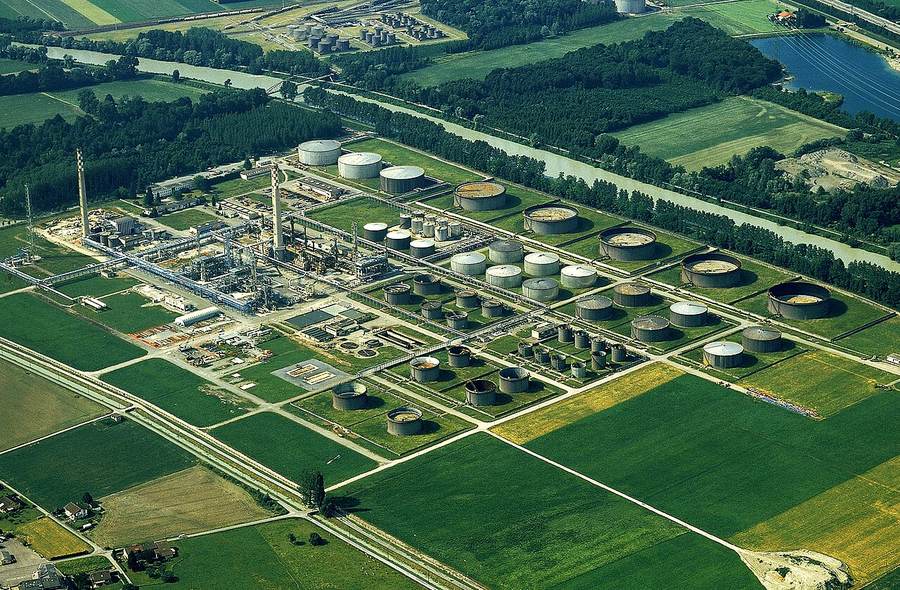
The UK diesel price at £2 a litre
Britain supplied the day's starkest consumer signal. The RAC said the average diesel price reached 200.01 pence a litre on Friday, the first time the national average had crossed £2 and above the previous 199.09p record set in June 2022. At that average, a 55-litre family-car fill costs about £110. For a delivery van with an 80-litre tank, the arithmetic reaches roughly £160 before any fleet discount. Those are simple illustrations based on the reported average, not a prediction of every driver's bill.
The UK is also exposed by the composition of its emergency holdings. The Times reported Britain had around 40 days of diesel stocks, while France, Germany and Italy held more than 900 days of supply. Those figures should not be read as ordinary commercial inventories that can all be released tomorrow. Countries count emergency obligations and product holdings differently, and crude stocks cannot instantly become diesel. The comparison nevertheless explains the political pressure: the burden is distributed very unevenly, and Britain has far less diesel-specific cushion than large continental holders.
A UK diesel price of £2 a litre also carries outsized inflation consequences because fuel taxes are fixed per litre while the commodity price moves underneath. Governments can cut duties, but that reduces revenue and may blunt conservation. They can subsidize selected industries, but deciding who qualifies creates political friction. A shared reserve release is attractive because it works on wholesale supply and does not require a permanent fiscal commitment.
The numbers: large enough to matter, too small to end the crisis
Spread evenly across four months, 100 million barrels equals about 833,000 barrels a day. The actual schedule will not be even: the diesel component is meant to be front-loaded in the first 20 days. That daily equivalent is a useful scale marker, not a forecast of market flow. It is significant enough to influence prompt prices and inventories, particularly in the relatively tight diesel market, but modest beside total global oil consumption of roughly 100 million barrels a day.
Another comparison is the United States' 2022 strategic petroleum reserve release. President Joe Biden announced 180 million barrels over six months, or roughly one million barrels per day. IEA members added further coordinated volumes, bringing the agency's 2022 emergency response to about 182.7 million barrels across its actions, according to Reuters reporting at the time. The 2026 package is smaller than that episode but more tightly targeted toward a product shortage.
Targeting changes the meaning of the number. Crude is interchangeable only up to a point: refineries have different configurations, crude grades yield different products, and maintenance constrains throughput. Releasing one barrel of crude does not guarantee one barrel of diesel. Product stocks can reach distributors more directly, but they are also scarcer and more strategically valuable in cold-weather regions. That is why the initial diesel tranche may matter more to near-term prices than a larger crude headline delivered slowly.
The package is not free supply. Governments are borrowing barrels from the future. Stocks eventually must be replenished, and purchases made later can support prices or tighten the market again. The policy bet is temporal: sell inventory when scarcity is acute and replace it after production, trade routes or demand have normalized. Success depends as much on the refill window as on the release itself.
How the Trump diesel export ban threat changed the negotiation
Trump told Fox News he was considering a U.S. diesel export ban “very seriously.” The European Union rejected the idea, warning that restrictions would deepen a shared shortage. That Trump diesel export ban threat gave the talks urgency, but it also exposed a tension in energy nationalism. The United States is a major producer and exporter, yet its refiners, pipelines and coastal markets are connected to global prices. Restricting exports can lower one regional price while disrupting refinery economics and allied supply.
The administration's leverage came from Europe's dependence on imported refined products. Europe's leverage came from its larger emergency holdings and the diplomatic cost of an allied rupture during a war. The resulting bargain lets both sides claim success. Trump can say Europe released fuel after his ultimatum. Macron can say the G7 preserved open trade and shared the burden through an established multilateral system rather than surrendering to a unilateral ban.
That does not mean the conflict disappears. National governments still decide what they contribute, when terminals load cargoes and where supply moves. If U.S. diesel stays expensive, domestic pressure for restrictions can return. The G7 pledge is political, not a physical law, and it will be tested by every new price spike before the midterms.
Macron's diesel proposal and Europe's strategic imbalance
The reported Macron diesel proposal reflects Europe's unusual reserve map. France, Germany and Italy have deep mandatory stock systems; Britain has a narrower diesel buffer; other IEA members hold more crude than refined product. A swap-like structure — European diesel paired with crude from partners — recognizes that each country should contribute what it can release without creating a new local vulnerability.
There is also an industrial logic. European refining capacity has changed since 2022, and replacing Russian barrels altered both crude inputs and product trade. Sanctions and the wider Iran conflict have increased voyage lengths and insurance costs. A barrel in storage at Rotterdam is not equivalent to a barrel on the U.S. Gulf Coast if the shortage is in northern England. Ports, product specifications, pipeline capacity and trucking availability determine how quickly the headline becomes usable fuel.
This is why the first 20 days deserve more attention than the four-month total. Traders will watch loading programs, refinery margins and regional inventories. If prompt diesel spreads narrow, the release is reaching the right bottleneck. If prices remain elevated while crude falls, the problem is likely refining or distribution rather than the aggregate volume of oil.
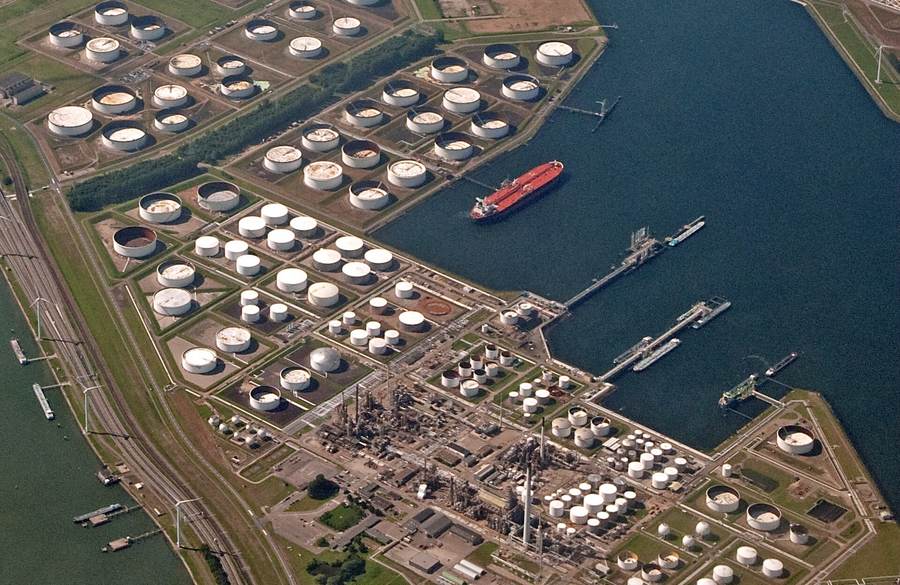
Historical parallels: 1991, 2005, 2011 and 2022
IEA emergency oil stocks were created for moments when ordinary market adjustment is too slow or politically dangerous. The precedents show both their usefulness and limits. During the 1991 Gulf War, IEA members released about 17 million barrels. After Hurricane Katrina in 2005, the response totaled 60 million barrels. When Libya's civil war removed supply in 2011, the IEA again coordinated 60 million barrels, including 30.64 million barrels from the U.S. reserve, according to U.S. Department of Energy records.
The 2022 response to Russia's invasion was far larger. Biden's 180-million-barrel U.S. draw ran for six months, accompanied by IEA actions. It helped add supply during a violent repricing, but it did not make fuel cheap or erase refinery constraints. The lesson is not that reserves fail. It is that reserves are bridges. They smooth the transition from shock to adjustment; they do not replace production, functioning trade routes or demand discipline.
The 2026 release is unusual because refined fuel is central and because allied trade policy is part of the emergency. Past actions mostly answered a physical loss of crude. This package also answers the threat that governments themselves could fragment the market. In that sense, the promise not to impose export restrictions may be as valuable as the barrels.
Who benefits
European trucking firms, airlines, farmers and industrial users are the most direct beneficiaries if distillate prices fall. British consumers stand to gain from any reversal below the £2 threshold. U.S. households and freight operators could benefit if the coordinated release lowers global wholesale prices without removing export revenue from American refiners.
Governments gain political time. The White House can argue that pressure produced burden-sharing before the midterms. European leaders can show they acted collectively rather than bidding against one another. Central banks gain a chance — not a guarantee — that a short-lived energy spike will not spill into persistent inflation.
Refiners may benefit from steadier throughput and open export markets, though lower product prices can compress extraordinary margins. Shipping firms may see more cargo movement but lower scarcity premiums. The effect varies by contract and location; there is no single corporate winner.
Who bears the cost and what critics say
Taxpayers ultimately own public reserves and bear the risk of replenishing them at a higher price. Governments that release too much before winter also reduce their insurance against another disruption. Critics therefore argue that emergency stocks should answer physical supply interruptions, not electoral pressure or a price level politicians dislike.
Another criticism is moral hazard. If markets believe governments will always cap price spikes with public barrels, companies may hold less commercial inventory and consumers may delay conservation. The counterargument is that the current shock is extraordinary and coordinated action prevents panic buying, which itself destroys efficiency.
Environmental groups often object that reserve releases treat a fossil-fuel crisis with more fossil fuel. That critique addresses the long horizon: efficiency, electrification and lower oil dependence reduce exposure permanently. But trucks, farms and heating systems cannot switch technologies in 20 days. Near-term stabilization and long-term transition are different policy problems, even when they intersect.
There is also a fairness dispute inside Europe. Countries with hundreds of days of mandated stocks may feel punished for prudence, while countries with thinner buffers benefit. Yet reserve systems exist for collective emergencies, and a fragmented response could cost every member more. The argument will return when governments decide how to replenish what they release.
What this does to prices
Reserve announcements influence prices through expectation before all barrels move. Traders who expected worsening scarcity now know additional supply is scheduled. That can narrow near-term spreads, reduce the premium for immediate delivery and discourage stockpiling. Pump prices respond later because wholesale contracts, taxes, transport and retailer inventories create lags.
The strongest effect should be on diesel rather than gasoline, assuming the promised early distillate volume arrives. Crude prices may also soften because the package includes other petroleum reserves and signals willingness to act again. But war news can overwhelm the policy quickly. A major refinery outage, shipping attack or further closure around the Strait of Hormuz could add a larger risk premium than 100 million barrels removes.
Readers tracking the consumer side can see the wider transmission mechanism in our analysis of why the Iran war is lifting U.S. fuel prices. The political consequences also meet a weakening labor market in the September jobs report before the midterms. High diesel costs matter more when hiring and wage growth are already slowing.
Three scenarios for the next four months
Scenario one: a successful bridge. The first diesel cargoes arrive quickly, prompt prices ease, and the war does not remove additional supply. Refiners maintain output, exporters keep trade open and the four-month program carries the market into a more balanced winter. Under this outcome, the release looks timely and later replenishment can be spread over a calmer period.
Scenario two: temporary relief. Prices fall on the announcement but rise again because refinery constraints or shipping disruptions persist. Governments release the full 100 million barrels yet discover that the shortage is concentrated in products and locations the reserve cannot easily reach. This is the most likely middle path whenever a headline volume meets a logistics problem.
Scenario three: escalation overwhelms the buffer. A wider Iran war or new export restrictions remove more supply than the release replaces. The U.S. revives its export-ban threat, allies retaliate or protect domestic markets, and emergency stocks drain into a still-rising price environment. The G7 would then face a harder choice between larger releases, demand controls and direct consumer aid.
None of those outcomes can be declared on announcement day. The indicators to watch are physical: national release schedules, diesel cargo loadings, refinery utilization, regional stock data and the spread between near-term and later delivery prices. Political statements move markets, but tanks, ships and pipelines determine whether households see relief.
The larger energy-security lesson
The deal exposes the trade-off at the heart of Western energy policy. Europe reduced its reliance on Russian supplies for strategic reasons, then became more dependent on global shipping and allied exports. The United States expanded its role as supplier, then discovered that overseas demand can become a domestic political liability when prices soar. Security gained in one dimension created exposure in another.
Strategic reserves are valuable precisely because no supply chain is perfectly secure. But the contrast between Britain's thin diesel cushion and the much larger reported holdings in France, Germany and Italy shows that stock rules need to match actual product risk, not just crude-equivalent totals. Future policy will likely focus more on where stocks sit, which fuels they contain and how quickly they can be delivered across borders.
The immediate achievement is real but narrow: allies stepped back from an export-ban confrontation and put a measurable volume on the table. The deeper test begins now. If the G7 can translate shared barrels into lower delivered diesel prices without hollowing out winter security, the release will look like coordinated crisis management. If not, Friday's announcement will be remembered as a temporary political truce in a market still governed by war and scarcity.
Sources
- Reuters — G7 to release 100 million barrels through the IEA
- CNN — U.S. and Europe agree emergency diesel action
- USA Today — Europe rejects a U.S. diesel export ban
- The Times — reserve levels, UK prices and Macron proposal
- Associated Press via TMJ4 — G7 release and U.S. diesel prices
- U.S. Department of Energy — historical strategic reserve releases
Image sources: Photographs were sourced through Wikimedia Commons and are credited under each image.