Ukraine $27 billion defence funding
Ukraine says it needs an additional $27 billion before the end of this year to close its deficit and finance defence, a compressed funding request that President Volodymyr Zelenskyy tied directly to the calendar for ordering drones. Speaking after meetings around the United Nations General Assembly, Zelenskyy said European Union and International Monetary Fund officials understood the need and that Kyiv had asked for part of an EU loan to be brought forward.
The number matters because battlefield production cannot wait for the next annual budget cycle. Zelenskyy said contracts for drones required next year must be placed in October and November. Missing those ordering windows would not simply postpone an accounting entry; it could narrow the flow of systems available to units as the war enters another winter and suppliers allocate production capacity.
Two funding needs, two different clocks
The $27 billion request covers the remaining 2026 gap and defence needs. Separately, Kyiv expects to require more than $52 billion in international financial aid during 2027. Adding the two produces roughly $79 billion, but that arithmetic spans different years and different budget periods; it should not be treated as one formally announced package.
Ukraine's financing model also separates military and civilian ledgers in ways that make headline comparisons difficult. Domestic revenue and borrowing are heavily directed toward security and defence, while external support helps keep pensions, public salaries and essential services running. Money that stabilizes the civilian budget can therefore release domestic capacity for defence even when a donor instrument does not directly buy weapons.
Why bringing the EU money forward matters
Kyiv's request to accelerate part of an EU loan is about liquidity and procurement timing. A commitment scheduled for later can be politically valuable but operationally useless if manufacturers need deposits now. Earlier disbursement would give the finance ministry room to sign contracts before production slots close, while reducing the risk of disruptive stopgap measures late in the year.
That request is distinct from the EU's separate decision to release €6.6 billion linked to military assistance. The latter includes training, joint procurement and reimbursement mechanisms; it is not interchangeable with the national budget support Zelenskyy described. Treating the two as one pot would overstate the cash immediately available to Kyiv and obscure who controls each spending decision.
The IMF review is a credibility test
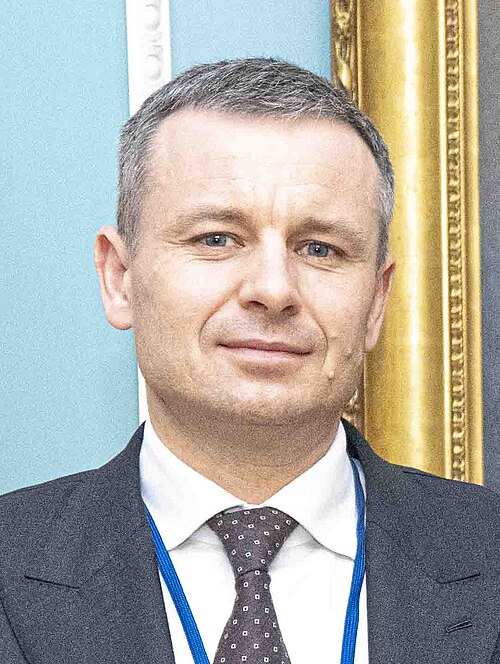
Finance Minister Sergii Marchenko said he expected an IMF second-review mission in November. Reviews do more than unlock one institution's disbursement. They provide other governments with an external assessment of fiscal assumptions, debt sustainability and reforms, helping determine whether bilateral and EU support moves on time.
That scrutiny creates a hard balance. Ukraine must demonstrate control over public finances while asking partners to accept that war costs remain inherently volatile. A surge in air-defence consumption, damage to energy infrastructure or a change in mobilization can shift expenditure far faster than a peacetime forecast. Donors want oversight; Kyiv wants enough flexibility to respond to combat conditions.
Who gains—and where the risks sit
Ukraine's armed forces and domestic drone producers would gain most from early commitments because predictable orders support components, labor and production planning. European governments gain if accelerated finance sustains Ukrainian capacity without emergency appeals later. The political cost falls on donor governments that must explain additional support to voters while managing their own budgets.
The risk for Kyiv is a timing mismatch: political agreement may arrive after procurement deadlines. The risk for partners is fragmentation, with overlapping loans, reimbursements and bilateral programs creating the appearance of more usable cash than actually exists. Transparent schedules and clear separation of instruments will matter as much as the headline totals.
What happens next
Three dates and decisions now matter. First, partners must determine whether any EU loan tranche can be advanced quickly enough for October and November drone orders. Second, the IMF's expected November review will test the assumptions behind the 2027 financing request. Third, donor governments must turn general expressions of understanding into dated commitments, rather than leaving Kyiv to bridge the gap with short-term measures.
The central uncertainty is not whether Ukraine faces a large wartime bill; that is established. It is how much financing can arrive before procurement decisions become irreversible, what conditions will accompany it and how long partners are willing to fund a war whose end date remains unknown.
Related reporting: the EU's separate €6.6 billion military-aid release · the proposed UAE talks track · Ukraine's deep-strike campaign
Reporting basis: Fixed September 25, 2026 snapshot. The approximately $79 billion figure is simple arithmetic across two different years, not a single announced package.