EU Ukraine military aid deal
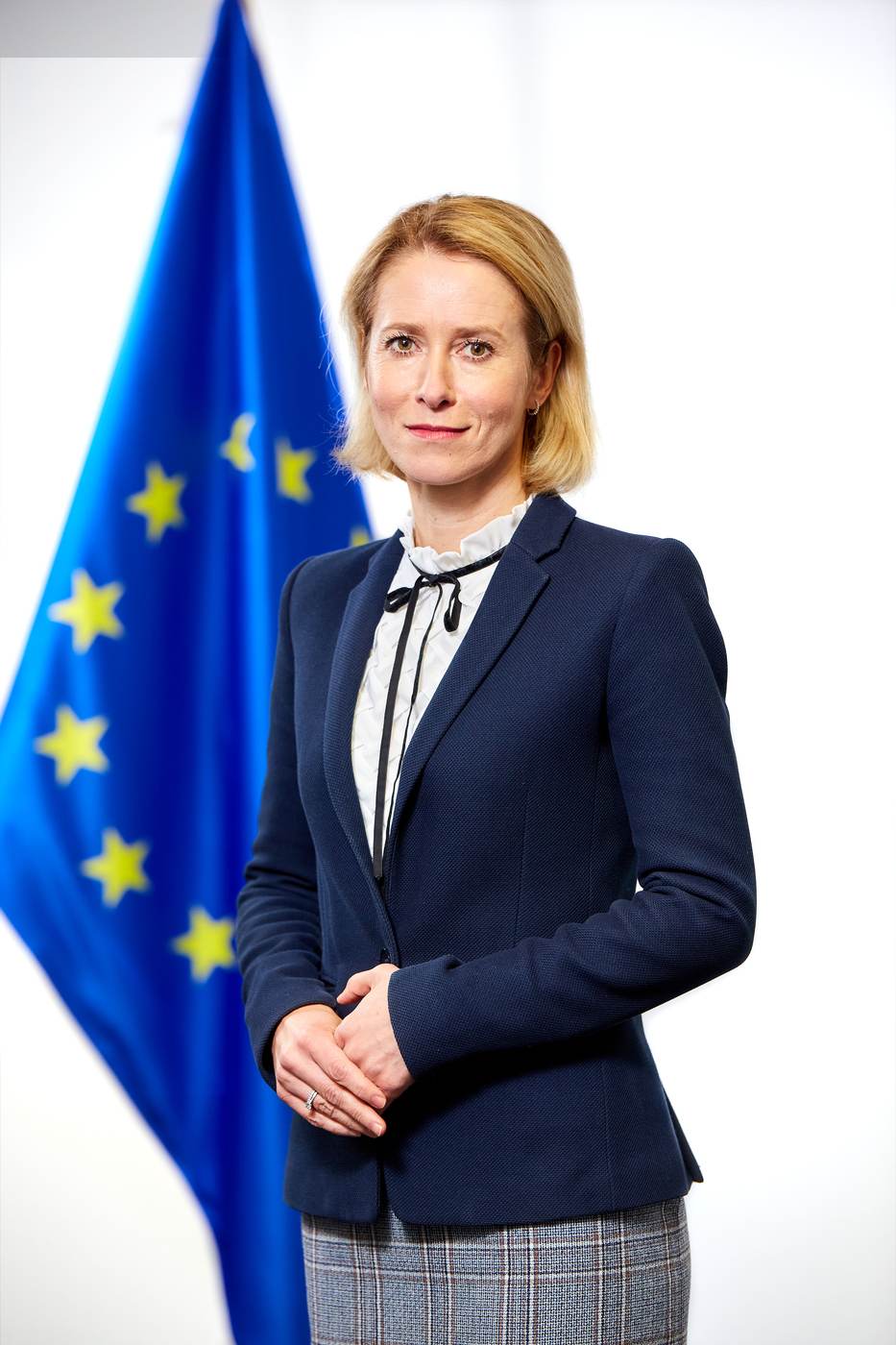
After months frozen by a single country's veto and weeks of open feuding over who gets the cash, the European Union finally moved its stuck billions. EU member countries agreed a deal on Friday to release €6.6 billion ($7.5 billion) in funds linked to military aid for Ukraine, the bloc's foreign policy chief Kaja Kallas announced — closing a saga that began with a Hungarian blockade, ran through a German-Polish shouting match, and ended in a compromise that gives every capital something to take home. The EU Ukraine military aid deal matters not only for what it sends to Kyiv, but for what it proves about whether Europe can still act as one when the money gets real.
What the deal actually does
The money comes from the European Peace Facility, the EU's off-budget fund for financing military aid to countries outside the bloc — and for refunding member governments for weapons they have already sent. Kallas laid out the split in a post on X, and the arithmetic tells its own story about how Brussels compromises.
€900 million: training Ukraine's soldiers
The first slice goes to the EU's military assistance mission for Ukraine, the bloc's training operation for Ukrainian forces. It is the smallest of the three tranches but arguably the most directly useful: trained troops are the one input money cannot conjure overnight, and the mission has been one of the EU's steadiest contributions since 2022.
€1 billion: buying weapons together
The second slice funds new joint procurement of military equipment — capitals buying together rather than separately. Joint buying is slower to set up but stretches each euro further, and it feeds the European defense industry at a moment when Brussels is pushing a “buy European” preference for Ukraine aid.
€4.7 billion: paying back the capitals
The largest slice — nearly three-quarters of the total — reimburses member states for military aid they have already provided to Kyiv. Several governments have said they will channel their refunds straight back into fresh aid for Ukraine. But as Reuters noted, it is up to each government to decide — and a reimbursement, once paid into a national treasury, can just as easily disappear into a budget hole. This is the honest caveat at the heart of today's celebration: it remains unclear exactly how much of the €6.6 billion will directly benefit Ukraine.
Why this matters
Paralysis broken — Europe can still move money
The deeper significance is institutional, not just financial. This cash was stuck for months, initially blocked by the previous Hungarian government under the Russia-friendly Viktor Orbán. One member state held €6.6 billion hostage, and the bloc spent the better part of a year working around it. That the money is moving at all — days after EU leaders spent the UN General Assembly week warning about Russian hybrid attacks — is the point Kallas wanted landed: “Moscow's hybrid attacks try to intimidate Europe into scaling back its support for Ukraine. Europe is doing the opposite.” Whether you buy the framing or not, the signal to Moscow is deliberate: the veto era on this file is over. The announcement also lands against the wider European security backdrop facing NATO.
The compromise everyone can sell at home
Look at the split and you see a negotiation, not a strategy. Germany wanted the money sent directly to Ukraine; Poland demanded full reimbursement for weapons already transferred. Kallas's formula — partial reimbursement plus training plus joint procurement — is the classic Brussels fudge that lets Berlin claim the funds serve Ukraine and Warsaw claim it got paid back. Compromises like this are how the EU survives its own unanimity rules. They are also why EU aid announcements deserve reading twice.
The reimbursement trap
Here is the columnist's uncomfortable observation: €4.7 billion of €6.6 billion is back-pay, not new aid. Reimbursing past generosity is fair — countries that emptied their arsenals early deserve to be made whole, and Poland's argument that it “fought for every euro” is not frivolous. But money that refills a national treasury is one political decision away from never reaching a battlefield. The deal's real test is not today's announcement but the quiet choices capitals make in the coming weeks: how many of them actually recycle their refunds into new weapons for Kyiv, as some have promised.
Background: from veto to deal
Orbán's blockade
The European Peace Facility money sat frozen for months because EU foreign-policy spending effectively requires consensus, and Hungary's previous government under Viktor Orbán — the bloc's most Russia-friendly leader — refused to release it. The veto finally lifted in early June 2026 after a change of government in Budapest, and Kallas confirmed the €6.6 billion unblocked on June 8. But unlocking the vault did not settle who gets the cash. The decision followed a broader cycle of EU bargaining over Russia sanctions.
The German-Polish fight
What followed was the EU's familiar internal bazaar. Germany argued the released funds should flow directly to Ukraine as fresh aid. Poland — which had transferred vast quantities of Soviet-era and then modern equipment early in the war — demanded full reimbursement for what it had already given. France backed the compromise line while insisting purchases favor European arms makers. For nearly four months the money sat unblocked but unspent while capitals haggled.
Kyiv's “window of opportunity”
Ukraine watched the haggling with open impatience. In a June 26 letter seen by Reuters, Defence Minister Mykhailo Fedorov urged EU partners to direct the €6.6 billion to military aid to exploit what Kyiv sees as a six-to-nine-month “window of opportunity” on the battlefield, calling the funds potentially “one of the most impactful European contributions to Ukraine's defence effort this year.” Fedorov separately sought another $20 billion from the 50-nation Ukraine Defence Contact Group on top of $40 billion already committed — a measure of how far even combined Western aid falls short of Kyiv's needs. Separate negotiations over a winter arms package and Patriot systems show the urgency behind that request.
The numbers, honestly
€6.6 billion against €136 billion
Fedorov's letter put Ukraine's total defence need this year at around €136 billion, with the Ukrainian budget covering roughly €53 billion. Against that gap, €6.6 billion is about five percent of one year's need — real money, but not war-changing money. For scale: the EU has committed roughly €43 billion in total military assistance to Ukraine through the Peace Facility mechanism, of which about €13.5 billion was potentially eligible for member-state reimbursement. The €6.6 billion now released is less than half of that eligible amount.
Only 29 percent is truly new
Strip out the €4.7 billion in reimbursements and the genuinely new money is €1.9 billion — the €900 million for training and the €1 billion for joint procurement, about 29 percent of the headline figure. None of this is secret; it is in Kallas's own announcement. But headlines will say “€6.6 billion for Ukraine,” and most readers will picture weapons, not refunds. The honest version: Europe is paying its old bills and buying some new kit, and Ukraine's direct gain depends on choices yet to be made in 27 capitals.
Before and after: the aid landscape
The deal lands inside a much larger funding picture. Ukraine is set to receive about €28.3 billion for defence purposes this year from the EU's separate €90 billion loan, and EU leaders are debating even bigger instruments — including Germany's push to unlock up to €140 billion in frozen Russian assets. The Peace Facility release is the small, hard-fought win inside the big, still-unsettled argument about who pays for Ukraine's war in 2027 and beyond.
Winners, losers, and what critics say
The winners
Kyiv wins twice: the training and procurement money is real, and the political signal — Europe moving in unison days after the General Assembly — is worth something in Moscow's calculations. The eastern flank states that armed Ukraine early, Poland foremost, finally get their reimbursements. And Kaja Kallas personally banks a win: the former Estonian prime minister, dubbed “Europe's Iron Lady” for her hawkish Russia stance, turned a four-month internal stalemate into an announcement with her name on it.
The losers and the skeptics
The losers are quieter. Anyone who wanted the full €6.6 billion converted into new weapons — the German position, and Kyiv's — got less than a third of that. Transparency advocates will note that reimbursements are the least visible form of aid: once the money lands in a national budget, tracking it to a battlefield becomes an act of faith. And Russia, for all Kallas's “bad news for Russia” framing, knows the arithmetic too — €4.7 billion in back-pay does not change the front line tomorrow.
What is genuinely uncertain
The central uncertainty is the one Reuters flagged: how much of the refund money becomes new aid. Several states have said they will recycle their shares to Ukraine; none has published a binding commitment. Watch the next few weeks of defense-ministry announcements — the gap between promise and procurement will tell you whether today's deal was a turning point or a press release.
What happens next
The recycling test
The story now moves from Brussels to 27 national capitals. Each government must decide how much of its reimbursement to convert into fresh military aid. Poland, Slovakia and others that demanded payback will face the sharpest scrutiny: having fought for every euro of compensation, will they fight equally hard to send it back out as weapons?
Joint procurement and the “buy European” push
The €1 billion joint-procurement tranche will test the EU's other big ambition: building a European defense-industrial base out of the Ukraine war. France has insisted purchases favor European manufacturers; the compromise language allows buying abroad only where no viable European alternative exists. Which contracts get signed — and where — will show whether “strategic autonomy” is policy or slogan.
The bigger money fight ahead
The €6.6 billion is a down payment on a larger argument. With Ukraine's annual defence need an order of magnitude bigger and the €90 billion loan disbursing in tranches, the unresolved question is the frozen Russian assets — the €140 billion Berlin now wants mobilized. Today's deal proves the EU can unstick billions when it must. The assets debate will prove whether it can do it at the scale the war actually demands.
Sources
- Reuters, September 25, 2026: the agreement, its €900 million / €1 billion / €4.7 billion split, and the uncertainty over how much directly benefits Ukraine.
- Kaja Kallas, EU High Representative for Foreign Affairs and Security Policy, announcement post on X, September 25, 2026, as cited by Reuters. A direct post URL was not publicly indexed at publication.
- Reuters, July 1, 2026: Ukraine's request for the €6.6 billion and the wider defence-funding gap.
- 2eu.brussels: Kallas's €1 billion military-support proposal and Black Sea moratorium talks.
- The Gaze: the Germany–Poland dispute over distribution of the Ukraine military-aid fund.
Reporting cutoff: September 25, 2026. The allocation split is public, but governments had not published binding commitments showing how much of the €4.7 billion in reimbursements would be recycled into fresh aid. Analysis is identified as Signal Post News analysis.