Yemen Taiz siege 2026
War / Yemen / Middle EastThe Yemen Taiz siege 2026 has moved from battlefield map to market stall in a matter of days. Houthi forces advancing around Taiz have closed roads used to bring food and fuel into government-held parts of the city, according to Al Jazeera's October 10 reporting and on-the-ground sources. Streets are nearly deserted as petrol disappears from regular commerce, while a 20-litre container on the black market has risen from 30,000 Yemeni riyals, about $19, to 90,000 riyals, about $58.
Track it live: follow the conflict and regional developments on the Middle East live tracker.
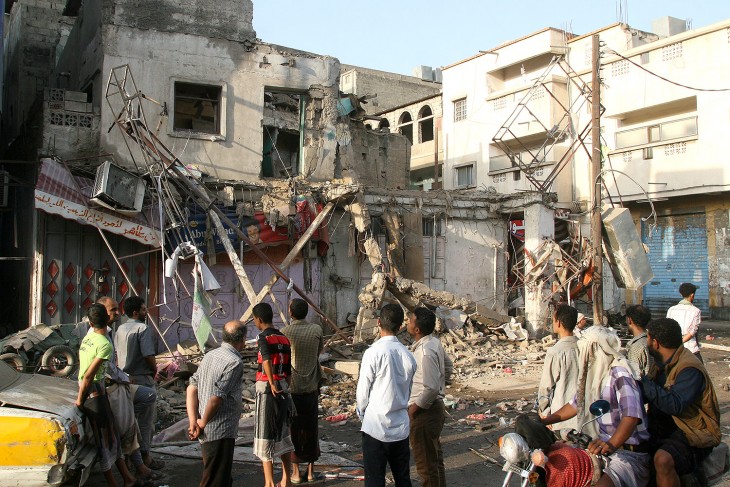
Why this matters: Yemen's third-largest city is a strategic hinge
Taiz is not simply another contested district. It is Yemen's third-largest city, a commercial center between the highlands and Aden, and a political symbol of resistance to Houthi rule. Its roads connect urban consumers, rural producers and the southern ports. When those links close, the humanitarian effect reaches well beyond the checkpoints where the military lines meet.
Nabil Jamil, director-general of the planning and development office in Taiz governorate, told Al Jazeera that the current siege is “more comprehensive and its impact more severe than in 2015.” His point was geographic: the pressure now reaches beyond the principal roads to most secondary routes connecting rural districts. About 2.8 million people in government-held areas of Taiz governorate face the resulting hardship, alongside roughly 200,000 people recently displaced by fighting along the coast and in rural areas.
The wider stakes extend south and west. Taiz sits on the inland approach to Aden and near routes that feed the Red Sea corridor. Control does not automatically confer command of Bab el-Mandeb, but it gives any force leverage over movement between the central highlands, the southern capital and the coast. That makes the city's humanitarian squeeze inseparable from the larger Yemen war escalation.
How the renewed siege emptied streets and squeezed markets
Fuel had been entering Taiz through the al-Turbah route from Aden. Houthi gains this week cut that artery and narrowed the alternatives. Reuters reported on October 8 that Houthi forces had taken territory around Taiz along its main mountain road toward Aden, corroborating the military movement behind the shortages. Less than a week later, the consequences are visible in the city's nearly empty streets.
The eastern crossing is another pressure point. Reopened in 2024 after years of pressure, it linked Taiz with Sanaa and the Houthi-held north and carried much of the city's food. Security sources cited by Al Jazeera said it closed after attempted Houthi incursions. Closing both a southern fuel route and an eastern food route does not merely reduce supply; it strips the market of competing channels and makes every remaining shipment more expensive and uncertain.
Wafiq Saleh, a journalist specializing in economic affairs, reported noticeable increases in wheat and flour prices and said vegetables and fruit had doubled. Residents have rushed to stockpile, while some traders have been accused of hoarding. Saleh also noted that merchants hold stocks sufficient for months. That distinction matters: scarcity at the shop counter may reflect blocked replenishment, panic buying and opportunistic withholding at the same time. The evidence supports severe market stress; it does not by itself prove every accusation against traders.
What the numbers reveal about siege economics
The cleanest measure is petrol. A rise from 30,000 to 90,000 riyals for 20 litres is a 200 percent increase over the old price — or three times as much cash for the same amount of fuel. For a household paid in local currency, transport has not become modestly more expensive; it has been repriced beyond reach. Every taxi journey, water delivery, generator hour and farm-to-market trip then carries that shock into the price of something else.
The doubling of vegetables and fruit moves faster than the price of staples because fresh food spoils. Traders cannot simply wait for roads to reopen. Drivers demand compensation for fuel, delay and checkpoint risk; sellers price in the chance that the next shipment will not arrive. Wheat and flour can be stored longer, which helps explain why their reported increase is noticeable but not yet described as a doubling. Together, the movements are the signature of a city being disconnected in stages.
The figure of 2.8 million people provides the scale. Even a small daily increase in the cost of bread or water becomes enormous when multiplied across millions of residents. Add about 200,000 newly displaced people — households more likely to lack stable income, storage and local support — and the Taiz food and fuel prices become a humanitarian multiplier rather than a narrow inflation story.
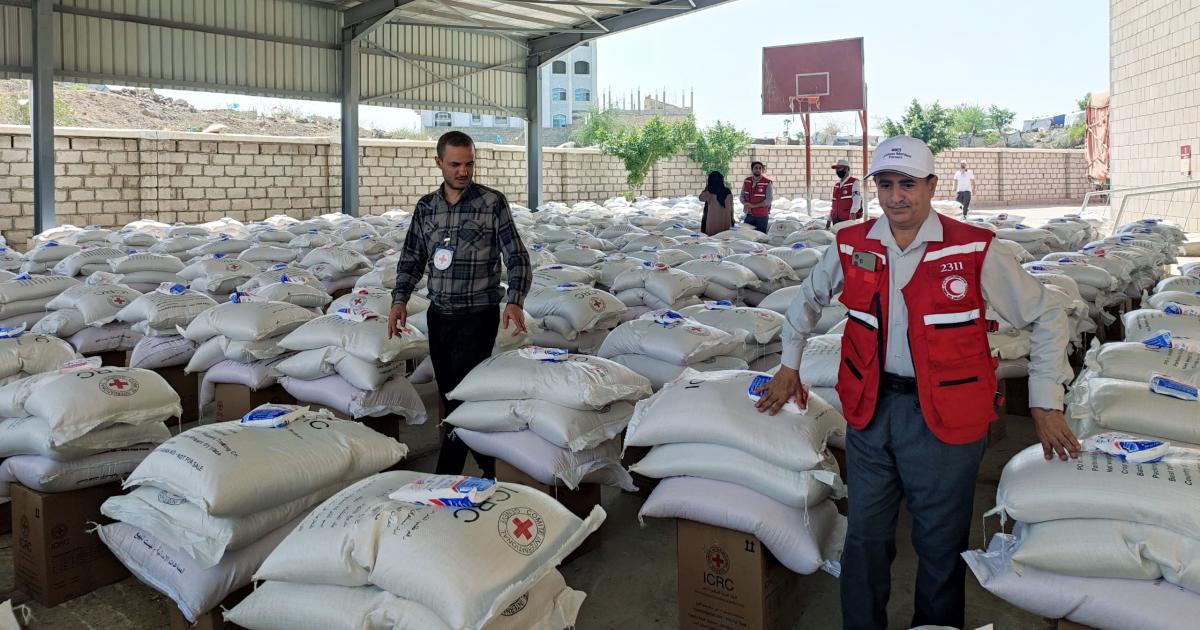
How Taiz returned to a siege it thought it was leaving behind
Taiz endured one of the defining sieges of Yemen's war after the Saudi-led coalition intervened in 2015 on behalf of the internationally recognized government. The city was split, roads were cut and civilian movement became a daily negotiation with front lines. Pro-government forces broke the tightest ring in 2016 by recapturing territory to the south, but access remained constrained and dangerous.
The 2024 reopening of the eastern route was therefore more than a traffic measure. It was a modest peace dividend: shorter journeys, lower transport costs and a practical link across the country's divided zones. Its closure now reverses that gain. The al-Turbah supply route cut compounds it from the south, producing a more comprehensive chokehold than either closure would create alone.
The renewed siege unfolds amid a broader regional escalation. Yemen's government has declared an all-out war effort against the Houthis. The United Nations says more than 200,000 people have been displaced in recent weeks. Missile attacks on Riyadh's airport, airstrikes on Sanaa and preparations for a Saudi-led counteroffensive have widened the contest from a local struggle for roads into a test of the balance of power across Yemen.
Who gains leverage — and who absorbs the cost
The Houthi military rationale
From the Houthi perspective as described by analysts, pressure on Taiz can pin government forces, disrupt their north-south logistics and weaken a city that has long been hostile to the movement. Salman al-Maqrami, a journalist specializing in Houthi affairs, argued that the aim is to break the cohesion of anti-Houthi forces. Capturing or subduing Taiz would carry symbolism well beyond the terrain: it would let the Houthis claim that no government-held area is beyond their reach.
That is a military rationale, not a humanitarian defense. The same road closures that create battlefield leverage also restrict ordinary people from reaching fuel, food and rural markets. Houthi authorities have not provided a detailed public answer to the price and access claims cited in the reporting reviewed for this article.
Civilians, traders and aid agencies lose room to operate
Residents lose first through mobility and purchasing power. Traders face higher transport costs and a political climate in which genuine supply risk and accusations of profiteering coexist. Aid agencies face a familiar trap: the number of people requiring assistance rises just as the roads needed to deliver that assistance narrow.
Government and Saudi-backed forces may gain political support for a counter-push, but that too carries risk. Fighting to reopen roads can displace more people, damage the same routes aid convoys need and expose dense neighborhoods to artillery or airstrikes. No side can credibly describe a military solution as cost-free for Taiz.
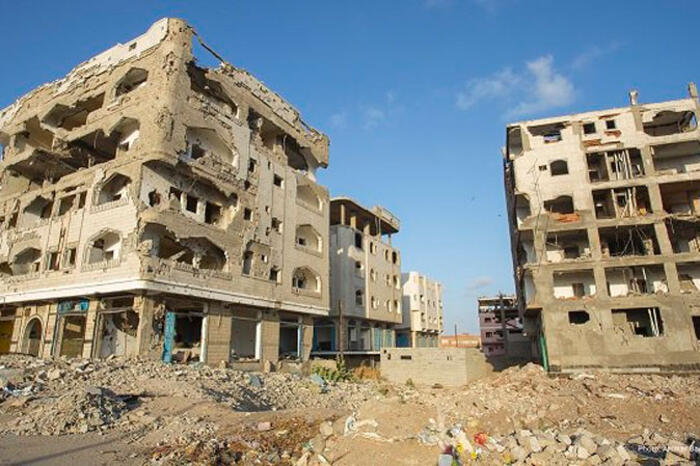
What happens next: four routes out of the squeeze
A government counter-push from the west
Government forces could try to reopen supply access through a counteroffensive from western or southern positions. Success would ease the immediate chokehold, but terrain around Taiz favors defenders and a rapid push could move fighting closer to populated districts. The military question is not just whether a road can be retaken, but whether it can stay open safely enough for commercial traffic.
Saudi air power changes the map — or hardens the siege
A broader Saudi air campaign could slow Houthi advances and support government ground units. It could also damage roads, increase displacement and make traders more reluctant to move goods. Air power may alter battlefield momentum faster than it restores a functioning market.
A negotiated humanitarian corridor
The least destructive option would be a monitored agreement to reopen one or more crossings for food, fuel and civilian movement. The 2024 eastern reopening shows that negotiated access is possible. The current escalation makes it harder: each side may view a corridor as conferring advantage, and enforcement would require guarantees that trucks and travelers are not turned into bargaining chips.
Winter compounds every failure
If the closures persist into winter, household reserves will shrink while the price shock spreads from fuel and produce into water, medicine and wages. Displaced families will be the least able to absorb it. The most revealing indicator will not be the front line alone but whether petrol falls back toward its prior price and whether the eastern and southern routes carry regular civilian traffic again.
The test is access, not rhetoric
Taiz has heard declarations from all sides for more than a decade. The practical test is measurable: can trucks enter, can families travel, and can a worker buy fuel without surrendering several times the money required a week earlier? Until those answers change, the renewed siege is already achieving its harshest effect — making ordinary life unaffordable before the battle for the city is decided.
Sources
- Al Jazeera report reprinted by Ghanamma: “Yemen's Taiz under siege again as food and fuel prices rise,” October 10, 2026
- Barbados Gazette reprint of Al Jazeera's Taiz report
- Reuters: Houthi gains around Taiz and the wider Yemen escalation, October 8, 2026
- Vesper News: independent coverage of developments around Taiz