Track it live: Middle East conflict tracker
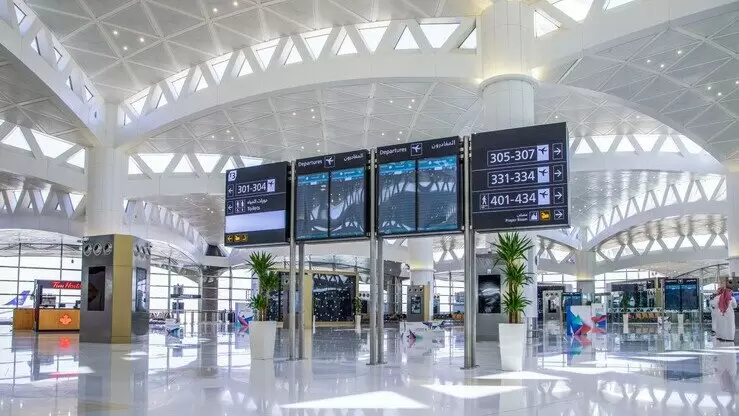
Houthi missiles landed direct hits on Terminals 3 and 4 at King Khalid International Airport on Saturday, according to reporting by The Wall Street Journal, Reuters, The Associated Press and the New York Post. Early hospital-source reporting said dozens were injured, several were in critical condition and five were in intensive care after parts of a terminal roof fell on people inside. The New York Times, citing officials, later reported that at least 12 people were killed and around 50 wounded. That toll was preliminary and had not been publicly confirmed by Saudi authorities at the time of the report; casualty counts remained fluid. The airport was evacuated and closed as Saudi authorities suspended flights and assessed the damage.
Direct hits on Terminals 3 and 4
The key development after the first reports Saturday was confirmation that missiles landed direct hits on both Terminal 3 and Terminal 4. Travelers reported loud blasts before emergency personnel cleared the passenger complex. Parts of a terminal roof fell on people inside, turning the attack into a mass-casualty incident rather than a disruption confined to airport operations.
Early hospital-source reporting said dozens of people were injured, with several listed in critical condition and five receiving treatment in intensive care. The New York Times, citing officials, later reported a preliminary toll of at least 12 people killed and around 50 wounded in the strikes on Terminals 3 and 4. Saudi authorities had not publicly confirmed the New York Times figures at the time of the report, and casualty counts remained fluid as hospitals treated casualties and authorities worked through the damaged areas.
Terminals 3 and 4 are part of the passenger complex at King Khalid International Airport, Riyadh's main international gateway. Direct impacts there affect more than individual gates: terminal security, baggage handling, passenger processing and aircraft movements are tightly connected, which is why the damage triggered an airport-wide shutdown.
Saturday attack timeline
Blasts, falling roof sections and evacuation
Travelers heard explosions as the missiles struck Terminals 3 and 4. Parts of a terminal roof fell on people inside, and emergency teams moved passengers out of the airport. The evacuation extended across the airport as arriving aircraft were diverted and scheduled departures were canceled.
Airport closes and flights are suspended
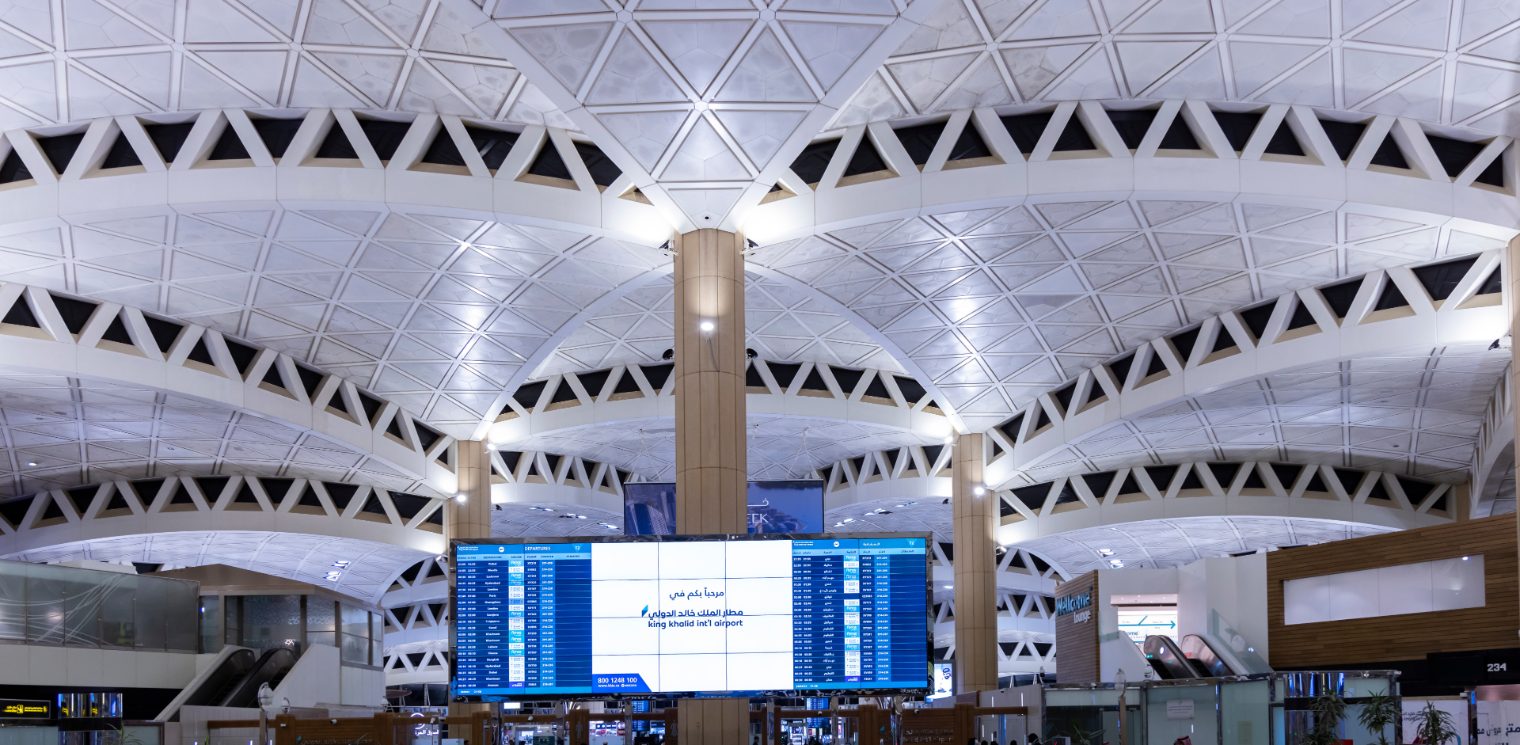
Saudi Arabia's civil aviation authority announced a temporary suspension of flights while damage was assessed. The airport was closed, with arrivals canceled or delayed across the board. Flightradar24 data cited in the reporting showed more than 221 flights canceled since dawn Saturday, while other aircraft were diverted, including flights sent to Dammam.
Preliminary toll remains unconfirmed
Hospital sources initially reported dozens injured, several in critical condition and five in intensive care. The New York Times, citing officials, reported that at least 12 people were killed and around 50 wounded, but Saudi authorities had not publicly confirmed the New York Times figures at the time of the report. The toll remained preliminary and fluid, and authorities had not yet issued a final casualty total or a complete public inventory of structural damage.
More than 221 flights canceled
Flightradar24 data cited in the reporting showed more than 221 cancellations since dawn Saturday. Arrivals were canceled or delayed across the board, and aircraft already inbound were diverted, including to Dammam. Kuwait Airways canceled flights KU775 and KU776, citing the Riyadh airport closure.
The shutdown disrupted both passengers already at King Khalid airport and travelers scheduled to connect through Gulf hubs. Routes through Riyadh carry passengers onward across Europe, Asia, Africa and North America, so the closure can create missed connections and displaced crews well beyond Saudi Arabia.
For passengers, the immediate priorities are operational: confirm the flight directly with the airline, do not travel to the airport unless instructed, and retain receipts for rebooking or accommodation claims. Even after an all-clear, schedules may remain irregular because planes and crews are no longer where the timetable expected them to be.
Saudi response: airport closed during damage assessment
The Saudi civil aviation authority announced a temporary suspension of flights while damage was assessed. The airport was evacuated and closed, with no reopening timetable announced in the cited reporting. Authorities still had to inspect the terminals, runways, approach corridors and connected passenger systems before operations could safely resume.
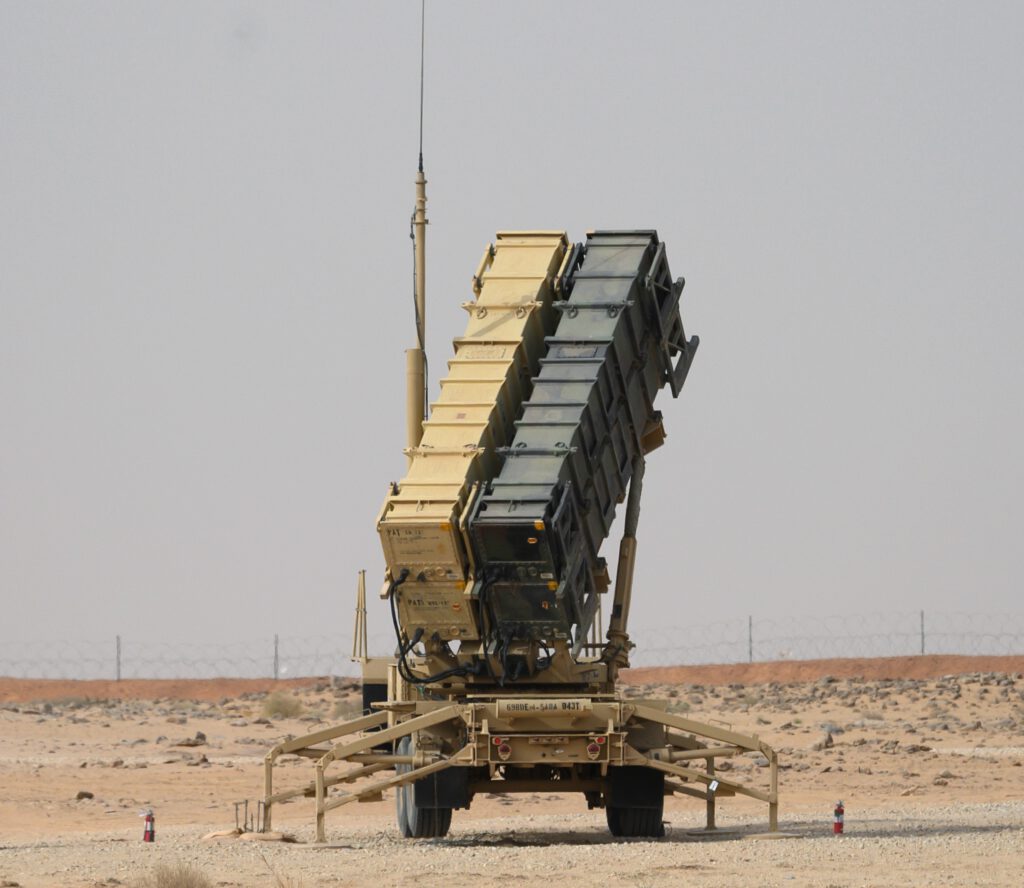
Saudi Arabia now faces two simultaneous tasks. The first is forensic and defensive: establish how the missiles reached two terminals, whether any systems engaged them, and what changes are needed around critical aviation infrastructure. The second is commercial: restore confidence among airlines and travelers without reopening before the airport has been cleared.
Embassies from the United States, Canada, Germany, Ireland, Spain and the United Kingdom warned their citizens to avoid the airport. Those notices reflected the closure and the possibility that security and flight conditions could change while the damage assessment continued.
Trump says the United States may join Saudi strikes
Asked whether the United States would join Saudi strikes on the Houthis, President Donald Trump said: “We may. We're going to look at it. We just found out about the recent attack. So we'll make a decision. We move very quickly.”
The statement did not amount to a commitment of U.S. military action. It did, however, leave that option publicly open as Washington assessed the airport attack and Saudi Arabia considered its response.
What the Houthis say—and what remains contested
The Houthis claimed responsibility for the attack, according to the cited coverage. The movement has framed its campaign against Saudi targets as part of a broader confrontation tied to Yemen and the regional conflict. Saudi Arabia treats attacks on civilian aviation and urban infrastructure as unacceptable strikes on civilians and state sovereignty.
The Houthis are widely described by Saudi, U.S. and other Western officials—and by The Wall Street Journal—as Iran-backed. Iran's support for the movement is an important part of the regional security context, but the degree of operational direction in any particular strike is a separate question. The cited reports do not establish that Tehran selected this target or directed this specific launch, so that conclusion should not be assumed.
That distinction does not reduce the strategic stakes. A group with access to Iranian-linked weapons, training or technical support can still make its own targeting decisions. Conversely, political alignment does not prove command responsibility for a particular attack. Establishing the missile's components, route and launch site will be central to any evidence-based attribution beyond the Houthi claim itself.
Third attack on the airport this week
Saturday's strikes marked the third attack on King Khalid International Airport this week. Thursday's attack killed three people, including a Saudia pilot, and destroyed a passenger jet. The direct hits on Terminals 3 and 4 therefore represented a further escalation against civilian aviation infrastructure rather than a repeat of a single incident.
The sequence also changes the strategic calculation described in our analysis of how the Saudi-Yemen war restarted. Repeated attacks can test air-defense coverage, strain interceptor stocks and force Saudi Arabia to protect more civilian sites at once. Direct terminal hits add economic and psychological pressure because aviation depends as much on confidence and scheduling reliability as on physical infrastructure.
Red Sea escalation and the wider conflict
The airport strike sits inside a conflict that has stretched from Yemen across Red Sea shipping lanes and into Saudi territory. Houthi attacks in and around the Red Sea have already raised risks for commercial vessels and insurers. Saudi-Houthi fighting adds a land-based dimension that can affect energy routes, tourism, aviation and the security calculations of neighboring Gulf states.
Diplomacy has narrowed as the two sides harden their positions. Saudi Arabia has ruled out a ceasefire under attack, while the United Nations has warned that Yemen risks a return to full-scale war. Saturday's direct hit makes de-escalation harder because civilian infrastructure and international travelers are now part of the immediate political pressure.
What happens next
Four questions will determine the next phase. First, Saudi authorities must publish a final casualty and damage account. Second, the airport and airlines must state which terminals and routes can operate safely. Third, investigators will try to identify the launch paths and why defenses did not prevent the terminal impacts. Fourth, Riyadh must decide whether to answer militarily, intensify defensive deployments, seek U.S. support or combine all three.
The Houthi movement's next actions will matter just as much. A pause could leave space for mediation; another attack on an airport, city or energy site would point toward a deliberate campaign to impose recurring economic disruption. Regional governments will also watch whether shipping attacks and strikes on Saudi territory are coordinated as one pressure strategy or proceed on separate tracks.
The established picture as of the 2:30 p.m. PDT update is that missiles hit Terminals 3 and 4, early hospital-source reporting said dozens were injured and five were in intensive care, the airport was evacuated and closed, and more than 221 flights had been canceled since dawn. Separately, The New York Times, citing officials, reported a preliminary toll of at least 12 people killed and around 50 wounded; Saudi authorities had not publicly confirmed those figures at the time of the report. The final casualty total, full structural-damage assessment and reopening time remained unconfirmed.
Sources
- The Wall Street Journal — direct hits, casualties and airport closure
- Reuters via DevDiscourse — evacuation, flight suspension and international warnings
- The Associated Press — October 10 reporting on casualties, airport damage and the U.S. response
- The New York Times — October 10 reporting, citing officials, of a preliminary toll of at least 12 killed and around 50 wounded; the figures had not been publicly confirmed by Saudi authorities at the time of the report
- The Sun and Spectator Index — October 10 reports carrying the New York Times casualty account and attribution
- New York Post — October 10 reporting on the terminal strikes and President Trump's remarks
- Flightradar24 — flight cancellation and diversion data cited in October 10 reporting
- Kuwait Airways — cancellation notice for flights KU775 and KU776 citing the airport closure
- ACI Asia-Pacific — King Khalid International Airport Terminal 3 file photography
- LOT Polish Airlines — King Khalid International Airport passenger-hall file photography
- Middle East Institute — Saudi air-defense file photography
Reporting note: This article was updated at 2:30 p.m. PDT with the New York Times report, citing officials, of a preliminary toll of at least 12 killed and around 50 wounded. Saudi authorities had not publicly confirmed those figures at the time of the report; earlier hospital-source reporting of dozens injured, several in critical condition and five in intensive care remains included because casualty counts were still fluid. The final casualty count, full damage assessment and reopening timetable had not been announced.
Signal Post News analysis is independent and does not take a political, military or commercial side.