Yemen coalition offensive October 2026
Why this matters
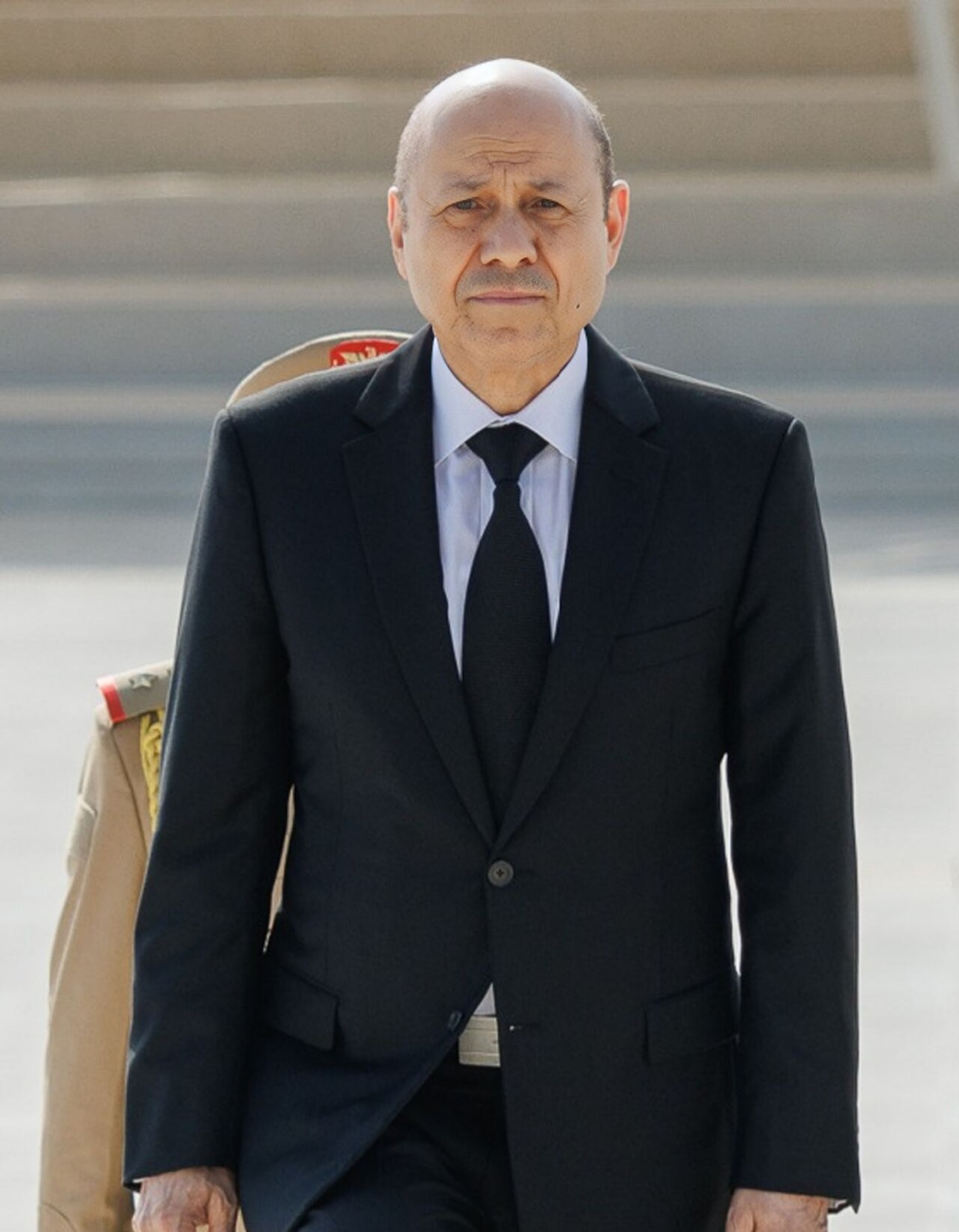
Words like "full operational support" are not casual diplomatic filler. When the spokesman of the Saudi-led Coalition to Support Legitimacy in Yemen uses that phrase — as Maj. Gen. Turki al-Maliki did on Sunday, according to CNN — it means the coalition is publicly binding itself to the Yemeni government's newly declared military campaign. This is the moment the offensive announced by Presidential Leadership Council chairman Rashad al-Alimi stops being a Yemeni government press release and becomes a Saudi-backed war effort with coalition air power, intelligence and logistics behind it.
The timing matters as much as the wording. The pledge landed less than 24 hours after al-Alimi's televised address declaring the start of military operations to retake Houthi-held territory, and on the same day Yemen's armed forces said they were conducting strikes against "vital targets" in Sanaa and the Houthi stronghold of Saada. The coalition is not waiting to see how the government's campaign goes before deciding whether to back it — it is announcing its backing at the outset, which changes the military arithmetic for everyone involved.
There is a second, less obvious reason this matters: the pledge is also a message to Washington. The United States has twice declined to join the operation with airstrikes, and Reuters reporting indicates Saudi allies are not expected to play a direct combat role. By publicly committing "full operational support," Riyadh is signaling that it will proceed with or without American firepower — and implicitly putting pressure on Washington to at least keep the intelligence flowing.
For global markets, the stakes are concrete. The Houthis' September seizure of the Bab al-Mandeb Strait — the southern exit of the Red Sea — has already made this waterway an alternative pressure point to the Strait of Hormuz, which has been effectively closed by the wider Iran conflict. A full-scale campaign to retake the Red Sea coast could either reopen the strait or, if it goes badly, turn it into a prolonged battleground. Either way, shipping insurers and energy traders will be watching the next 72 hours closely.
What happened on Sunday
The day unfolded on three tracks: the coalition's political messaging, the government's battlefield claims, and the Houthis' counter-claims.
The pledge
Al-Maliki said the coalition would continue providing "full operational support" to Yemeni government forces in what he described as efforts to restore state institutions and end "the Houthi coup," CNN reported. He paired the pledge with an accusation: that the Houthis continue attacking Saudi Arabia and international shipping in the Red Sea and Bab al-Mandeb Strait. "Such threats undermine regional and international security, jeopardize freedom of navigation and international trade, the lifeblood of the global economy," he added.
Separately, in comments to the Saudi-owned Asharq Al-Awsat late Saturday, al-Maliki dismissed the Houthis' claims of successful strikes on Saudi territory as "misleading" and accused the group of chasing "imaginary victories" to distract from heavy losses in Taiz province. The coalition's framing is consistent: the Houthis are losing on the ground and manufacturing propaganda wins to compensate.
The strikes
Yemen's armed forces, aligned with the internationally recognized government, said early Sunday they were conducting strikes against the Houthis in Sanaa and Saada, targeting what a spokesman described only as "vital targets," Reuters reported. Loud explosions rocked the Houthi-held capital late Saturday and into Sunday; a Sanaa resident told Xinhua that warplanes could be heard overhead as powerful blasts echoed across the city, rattling windows and shaking buildings. "The blasts were so powerful that the ground shook beneath us," the resident said. "It felt like an earthquake."
The coalition said its own forces carried out 97 "precise targeting operations" early Sunday against Houthi reinforcements on the Tor al-Baha front and the Taiz axis, using warplanes, drones, artillery, missiles and snipers. A day earlier, government spokesman Col. Majed Abdullah al-Nazili said Yemeni forces had "executed 257 precision targeting operations" against Houthi sites on Saturday, with initial estimates of at least 700 Houthi fighters killed. Neither figure has been independently verified.
The Houthi counter-claims
The Houthis' account of the last 24 hours is dramatically different — and almost entirely unverifiable. The group's military spokesman claimed Saudi Arabia carried out 106 air and missile strikes over the previous 24 hours targeting Sanaa and other areas, without providing casualty or damage details. In retaliation, the Houthis claimed they struck two Aramco facilities — one in the Saudi capital Riyadh and one in the Khurais area — causing large fires. There has been no Saudi confirmation of either strike, and the coalition has called the Riyadh claim "misleading."
The Houthis also claimed Sunday to have captured a critical highway linking Taiz with Aden, the seat of the Yemeni government — a claim that, if true, would be a major battlefield development, but which has not been confirmed by any independent source. Readers should treat all Houthi battlefield claims with the same caution the coalition itself urges: they are assertions by a party to the conflict, not verified facts.
Background: how the 2022 truce collapsed
To understand why Sunday's pledge is significant, it helps to remember how unusual full-scale fighting in Yemen had become. The conflict between the Iran-backed Houthis and the Saudi-backed government mostly stopped after a truce agreed in 2022, and for several years Yemen experienced relative calm — at least by the standards of a country at war since 2014, when the Houthis seized Sanaa and the Saudi-led coalition intervened the following year.
The truce collapsed in July 2026. The proximate trigger was the Houthis' declaration of a naval blockade against Saudi Arabia on July 20, followed by missile and drone attacks on Saudi territory and shipping — a spillover from the wider war between Iran and the United States. The Houthis then made major territorial gains along Yemen's Red Sea coast, capturing the port city of Mocha on September 10 and the strategically located Mayyun Island the next day, before pushing as far south as the Bab al-Mandeb waterway itself.
That September offensive changed the strategic picture. The Bab al-Mandeb is the chokepoint through which commercial shipping crosses from the Red Sea into the Indian Ocean; with the Strait of Hormuz effectively closed by the Iran conflict, it has assumed even greater importance as an alternative route for global trade and energy flows. The Houthis announced that Saudi shipping trying to use the strait would be targeted — a direct threat to the kingdom's maritime access and to global supply chains.
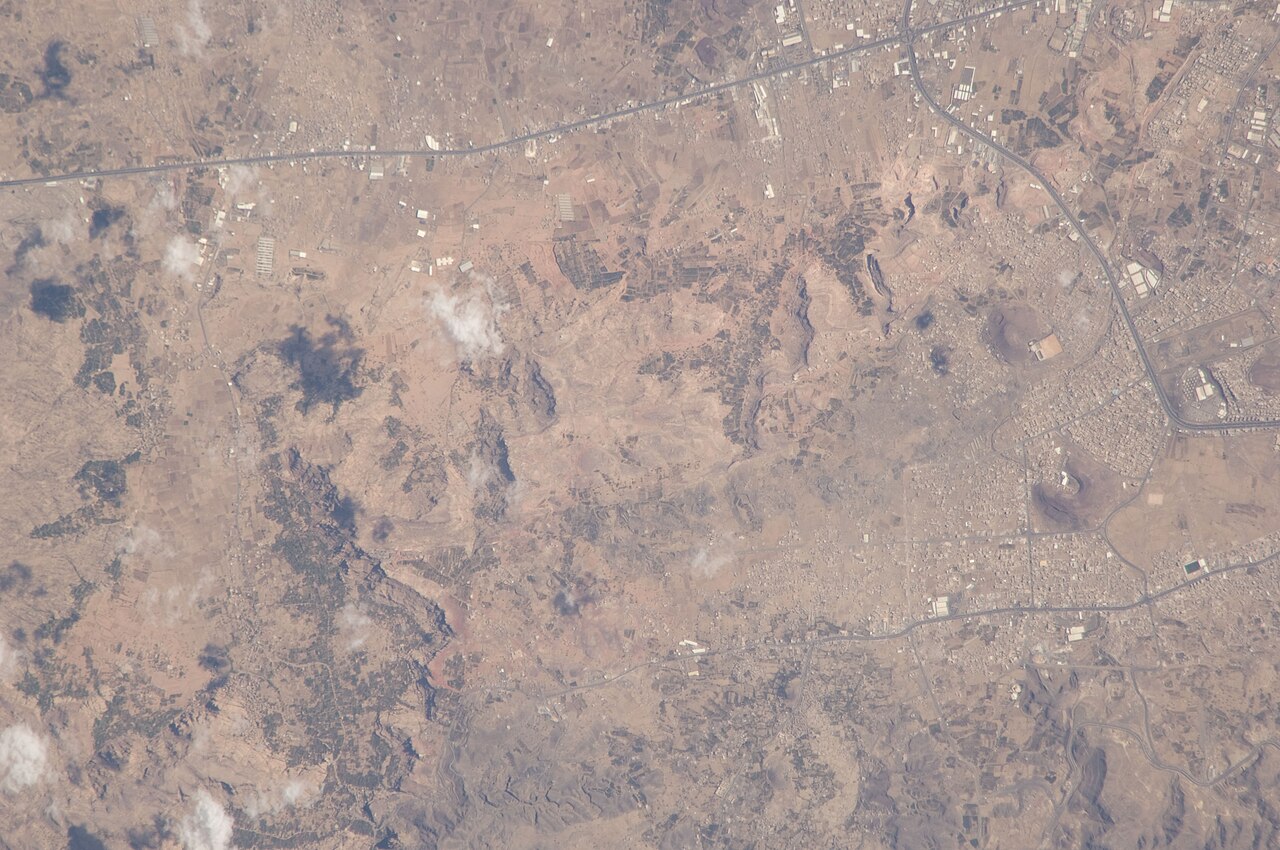
Much of the recent ground fighting has concentrated in Taiz province in the southwest, where the Houthis have sought to cut off government forces in the regional capital. It was the intensity of this fighting — and the Houthi push toward the Taiz-Aden road — that set the stage for al-Alimi's announcement and, now, the coalition's pledge.
Claims versus verified facts
Sunday's information environment is a fog of competing claims, and it is worth separating what is verified from what is merely asserted.
Verified: The coalition pledged "full operational support" (CNN, Arab News). Yemen's armed forces said they conducted strikes on Sanaa and Saada (Reuters). Explosions were heard in Sanaa by residents and reported by Xinhua. Al-Alimi announced the offensive in a televised address (multiple outlets). An AFP journalist reported seeing flames and smoke at an oil facility near the Saudi capital — though the cause is unconfirmed.
Asserted by the government/coalition, unverified: 257 precision operations Saturday; ~700 Houthi fighters killed; 97 coalition targeting operations Sunday; the characterization of Houthi claims as "misleading" and "imaginary victories."
Asserted by the Houthis, unverified and disputed: 106 Saudi strikes in 24 hours; Aramco strikes in Riyadh and Khurais causing large fires; capture of the Taiz-Aden highway. The coalition explicitly rejects the Riyadh claim, and no independent source has confirmed any of these.
The AFP journalist's sighting of flames and smoke near Riyadh is the one data point that gives the Houthi Aramco claim a measure of plausibility — but flames at an oil facility do not confirm a Houthi missile strike, and Saudi authorities have not commented. Until they do, the responsible reading is that something burned near Riyadh and the cause is unknown.

Multiple angles: who benefits, who loses, what critics see
Riyadh's calculus
For Saudi Arabia, the pledge is both a military commitment and a political necessity. The kingdom's credibility is on the line: the Houthis have been firing ballistic missiles and drones at Saudi targets — including industrial and energy infrastructure — since late July, declared a naval blockade against the kingdom, and seized the Bab al-Mandeb. A Saudi-led coalition that pledges support but withholds it would look impotent. "Full operational support" is Riyadh's way of saying the era of restraint is over.
There is also a domestic audience. The Houthi claim of striking Riyadh — whether true or not — and the AFP sighting of flames near the capital put the war on the doorstep of ordinary Saudis. The coalition's dismissal of the claim as "misleading" only works if it is paired with visible action. The pledge provides that.
The Yemeni government's gamble
For al-Alimi's government, based in Aden and controlling the less-populated south and east, the coalition pledge is the difference between a symbolic announcement and a real campaign. Government forces alone have struggled to hold ground — the Houthi lightning offensive down the Red Sea coast in September saw government positions collapse. With Saudi air power, intelligence and logistics formally committed, the government's planned force of potentially 100,000-plus troops becomes a credible instrument rather than an aspiration.
The risk for the government is equally clear: if the campaign stalls or produces heavy civilian casualties, the political cost lands on Aden, not Riyadh.
The Houthis' position
The Houthis enter this phase from a position of recent strength — territorial gains, a demonstrated ability to strike Saudi territory, and control of the capital and the northwest — but face a materially worse military balance once coalition air power is fully committed. Their strategy, visible in Sunday's claims, is to internationalize the costs: threaten energy infrastructure, threaten shipping, and force Riyadh to weigh every airstrike against the risk to Aramco facilities and oil prices. The "106 strikes" claim, whether accurate or not, serves a second purpose: building a narrative of victimhood and resistance that has historically helped the group recruit and retain fighters.
Civilians in the crossfire
The unambiguous losers in any escalation are Yemen's civilians. The fighting since the truce collapsed in July has already displaced hundreds of thousands of people, and airstrikes on Sanaa — a densely populated capital with UNESCO-listed historic quarters — carry obvious risks. Al-Masirah TV reported that hospital facilities, including maternity and pediatric wards, were damaged in earlier strikes; that claim is unverified, but the pattern of urban airstrikes producing civilian harm in Yemen's war is well documented. Al-Nazili's call for Houthi-aligned fighters to lay down their arms, and his assurance that the government remains committed to protecting civilians, will be tested against the reality of urban warfare.
What critics say
Critics of the escalation make three arguments. First, that the 2015–2022 phase of this war demonstrated the limits of air power against the Houthis: years of Saudi bombing did not dislodge them from Sanaa or the north, and there is little reason to believe a new air campaign will succeed where the old one failed. Second, that the humanitarian cost — in a country already facing one of the world's worst humanitarian crises — will dwarf any plausible military gain. Third, that the campaign risks becoming a proxy escalation with Iran at precisely the moment the wider Iran-US war is already straining the region.
Supporters counter that the status quo ante is gone: the Houthis' seizure of Bab al-Mandeb and their attacks on Saudi territory mean that inaction now carries its own costs — to Saudi security, to global shipping, and to the credibility of the internationally recognized government. The question is not whether escalation has costs, but whether the costs of not escalating are greater.
The data in context
Strip away the rhetoric and Sunday's numbers tell a story of a conflict accelerating on every axis. The government's claimed 257 operations on Saturday and the coalition's 97 on Sunday, if even approximately accurate, represent an operational tempo far beyond anything seen during the truce years. The Houthis' claimed 106 incoming strikes in 24 hours — again, unverified — would, if true, make this one of the most intense single days of bombing in the war's history.
Compare the territorial picture: in early September the Houthis were advancing — Mocha on September 10, Mayyun Island on September 11, then the push to Bab al-Mandeb. By early October the momentum narrative has flipped, with the government claiming to have stabilized defensive positions and now announcing a nationwide offensive. The truth is likely somewhere between the two sides' claims: a fluid battlefield where neither side has established durable control of the contested zones around Taiz and the Red Sea coast.
The force-generation numbers are worth noting. Reporting has described a planned Yemeni force potentially exceeding 100,000 personnel, with Saudi Arabia supplying command support and air power, the United States providing intelligence assistance, and Türkiye and Pakistan expected to provide equipment and advisers under the framework of the Makkah defence agreement signed August 7. France has reportedly contributed defensive capabilities. Whether that multinational scaffolding translates into battlefield effectiveness is the central military question of the coming weeks.
What happens next: three scenarios
Scenario 1: The coastal campaign succeeds. Government forces, backed by coalition air power, retake the Red Sea coast and Bab al-Mandeb within weeks. Shipping through the strait normalizes, the Houthis lose their maritime leverage, and Riyadh claims vindication. This is the coalition's plan — but it requires ground forces to hold territory that air power alone cannot, and the September collapse of government positions on the coast is a cautionary precedent.
Scenario 2: Stalemate and attrition. The offensive makes initial gains but stalls around Taiz and the approaches to Hodeidah, settling into grinding attritional warfare. Airstrikes on Sanaa continue, Houthi missile and drone attacks on Saudi Arabia continue, and the Bab al-Mandeb remains contested — keeping shipping insurance rates elevated and the humanitarian toll climbing. This is the outcome the 2015–2022 war suggests is most likely, and the one critics warn against.
Scenario 3: Regional spillover. Houthi retaliation succeeds spectacularly — a confirmed major strike on Aramco infrastructure, a hit on shipping in the strait, or a missile that penetrates Saudi air defenses over Riyadh. Oil prices spike, the US faces renewed pressure to intervene directly despite having declined twice, and the Yemen campaign merges fully with the wider Iran-US confrontation. The AFP sighting of flames near Riyadh is a reminder that this scenario is not hypothetical.
The next 72 hours will be diagnostic. Watch for: whether the coalition's "full operational support" translates into a visible surge in sortie rates; whether the government's ground forces actually advance or merely announce operations; whether Saudi Arabia confirms or denies the Aramco claims; and whether Washington's posture shifts from intelligence support to something more. Each of those data points will narrow the range of plausible scenarios.
Sources and reporting notes
- CNN: Saudi-led coalition pledges support for Yemeni offensive against Iran-backed Houthis (October 4, 2026)
- Reuters: Yemen's armed forces say it is conducting strikes against Houthis in Sanaa (October 4, 2026)
- Xinhua via IANS: Saudi airstrikes reported on Yemen's Houthi-held capital Sanaa (October 4, 2026)
- Europesays: Saudi coalition dismisses Houthi Riyadh strike claim as 'misleading' (October 4, 2026)
- Devdiscourse: Yemen leader announces major military operations against Iran-backed Houthis (October 4, 2026)
- The Washington Outsider: Back to the Yemen War — Saudi Arabia's new Houthi campaign (October 3, 2026)
Reporting note: battlefield claims and casualty figures are attributed to the government, the coalition, the Houthis or the outlet that carried them. Signal Post News could not independently verify competing claims about territorial control, casualties, total strike counts or strikes on Saudi energy infrastructure. Houthi claims are reported as claims and noted as disputed by the coalition. Forward-looking scenarios are analysis, not predictions.