Track it live: Middle East — live tracker · Wars — live tracker
ADEN, November 17, 2026 — The claim was made by the army’s spokesman, Colonel Majed al-Nuzaili, in a statement on X on Monday and reported by Al Jazeera on Tuesday: 661 attacks against Houthi positions across several fronts since the Dawn of Yemen offensive began. The breakdown the army gave is precise — 15 air strikes, 526 artillery attacks, 53 drone strikes and 67 rocket attacks, which sum exactly to the headline figure — and the army further claimed that the attacks killed or wounded 173 Houthi fighters, a combined killed-or-wounded figure, and destroyed or damaged 71 military vehicles and pieces of equipment, along with command-and-control centres, observation posts and fortifications. All of those numbers are claims by one belligerent about its enemy. No independent verification exists, and the Houthis have not responded to them.
Al-Nuzaili said government forces, backed by the Popular Resistance, were confronting Houthi movements in Taiz, Marib and al-Jawf, with operations also under way on the southern fronts, and that the army would continue until its objectives were met while taking precautions to protect civilians. The offensive itself, Dawn of Yemen, was launched on October 5 — six weeks before this tally — with the stated aim of regaining Houthi-held territory including the capital, Sanaa. Aden, from which the internationally recognised government operates, is its interim capital.
The offensive at six weeks
Dawn of Yemen was announced on October 5 as the government’s bid to reverse years of stalemate: an offensive to regain Houthi-held territory, with the capital, Sanaa — held by the Houthis for more than a decade — as its stated ultimate objective. Six weeks on, the army’s own public accounting of the operation is a fire tally rather than a territorial one. No town, district or strategic position has been announced as retaken under the offensive in the army’s statement; what the statement counts is expenditure — shells, rockets, sorties and drone strikes — and claimed effects on the enemy. That choice of metric is informative in itself. Armies that are advancing count ground. Armies that are holding count fire. The fronts al-Nuzaili named — Taiz, where government and Houthi lines have ground against each other for years; Marib, the energy province whose defence has anchored the government’s eastern position; and al-Jawf, the northern desert governorate bordering Saudi Arabia — are the war’s established axes, and operations “also under way on southern fronts” now run, after the November withdrawals, through the approaches to Aden itself.
The army’s statement also carried its standard assurance that precautions are taken to protect civilians. That assurance sits in a war in which artillery — the claimed instrument of four-fifths of these attacks — is by nature an area weapon, and in which Taiz in particular is a divided city whose front lines run through populated districts. The claim of precaution is recorded here as the army made it; nothing in the sources reporting the tally independently documents how it was implemented across 526 claimed artillery attacks, and no civilian casualty accounting accompanied the statement. Readers should hold the tally and the assurance at the same evidentiary weight: both are the army’s account of its own offensive.
The map the tally does not mention
The context in which the 661 figure landed is a fortnight of government setbacks, already covered by Signal Post News and summarised here rather than re-reported. On November 15, government forces withdrew from Dhubab and the Bab al-Mandeb area to defend Aden, as set out in our report on the government forces’ withdrawal from Bab al-Mandeb. Houthi forces then reached Khor Omairh, roughly 100 kilometres west of Aden and about 25 kilometres from government lines at Qawah, and on November 16 Saudi Arabia replaced its coalition commander, as covered in our report on the commander change and the Khor Omairh advance. Al Jazeera’s Yousef Mawry reported that the Houthis had cut a key government supply route along the Red Sea coast, forcing troops to abandon several positions, amid concern over a possible Houthi offensive towards Aden.
That juxtaposition — a rising claimed attack count announced over a shrinking map — is the analytical heart of this story, and it cuts in two directions. A charitable reading is that the tally is real firepower being expended exactly where the army says: on the Taiz, Marib and al-Jawf fronts and the southern approaches, where holding fire can be heavy even when the line it defends is being pulled back elsewhere. A sceptical reading is that cumulative strike counts are what an army publishes when it cannot publish ground gained. Both readings agree on the evidentiary point: the figures are the army’s, they are unverified, and The Levant Files’ November 17 note — which independently summarised the same tally — flagged it the same way, noting no Houthi response and no fighting inside Aden in the preceding hours, with the last confirmed Houthi gains dating from Sunday and Monday.
Parliament’s bill: designation, with one step still to go
The second development is legal rather than military. Yemen’s parliament unanimously approved a bill designating the Houthis a “terrorist organisation” and criminalising their activities, financing and supply of weapons, according to the state-run Saba news agency via Al Jazeera. The bill provides for prosecuting those involved in violations attributed to the group, for freezing and confiscating affiliated assets, and for tougher penalties for offences including attacks on civilians, planting landmines and targeting international shipping.
Its status must be stated exactly: the bill is not yet law. Parliamentary approval sends it to Rashad al-Alimi, chairman of the Presidential Leadership Council, for enactment. Until he acts, the designation is a unanimous parliamentary decision awaiting its final step — politically significant, legally incomplete. The distinction matters because designations of this kind do their work through the machinery they activate: asset freezes need enforceable law behind them, prosecutions need courts applying a statute, and the shipping offences the bill names engage the same Red Sea file that the UN Security Council addressed in the Council’s renewal of Yemen sanctions under Resolution 2837, covered by Signal Post News.
Why this matters
A government losing ground near its interim capital is answering on two tracks at once: volume and law. The volume track is the 661 claimed attacks — a number whose composition is itself the analysis. Artillery accounts for 526 of the 661 claimed attacks, just under 80 percent. That is the signature of an attrition tally, not a manoeuvre one: guns firing at positions, day after day, across static fronts, rather than the air and drone strikes — 15 and 53 claimed respectively — that accompany forces actually advancing. An offensive six weeks old whose public scoreboard is four-fifths artillery is an offensive holding its lines loudly. Set beside the army’s earlier claimed pattern on the Taiz front — a previous claim of 474 strikes and 1,540 casualties, likewise an unverified party figure — the 661 reads as the latest instalment of a claims ledger that grows regardless of which way the front line moves.
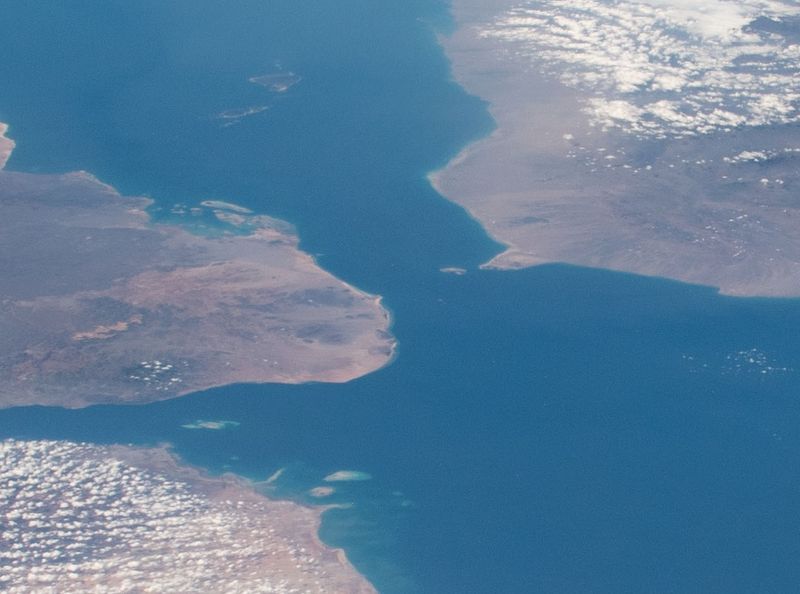
The law track may prove the more durable of the two. A terrorist designation, once enacted, changes the legal environment for everyone who funds, supplies, insures, ships for or negotiates with the designated group — inside Yemen’s government-held areas immediately, and as a reference point for partners and financial institutions beyond them. Its limits are equally real: the Houthis hold Sanaa and the northern highlands and now press on the Bab el-Mandeb shore, and a statute enacted in Aden does not reach a checkpoint in territory the government does not control. Designation is a weapon against a movement’s money and logistics; it is not, by itself, a weapon against its positions. Whether it bites depends on enforcement against financing and supply networks — the very activities the bill criminalises — in the ports, banks and border crossings the government and its coalition partners actually hold.
The numbers, in context
The tally rewards a slow read. 661 claimed attacks over the roughly six weeks since October 5 averages to around fifteen attacks a day across all fronts — a tempo consistent with routine front-line artillery exchange rather than a concentrated offensive pulse. The composition sharpens that picture: 526 artillery attacks (about 80 percent), 67 rocket attacks (about 10 percent), 53 drone strikes (about 8 percent) and 15 air strikes (about 2 percent). An operation leaning that heavily on tube artillery is one whose striking arm is its guns — plentiful, sustainable and indiscriminate at range — while its precision instruments, air power and drones, appear in token numbers. Against that, the claimed effects — 173 fighters killed or wounded combined, 71 vehicles and pieces of equipment destroyed or damaged — are modest next to the expenditure, which is another way of seeing the attrition problem from the government’s side: even taking the army’s figures entirely at face value, 661 attacks bought claimed effects that have not, on the reported map, held the Bab al-Mandeb shore or kept the Houthis out of Khor Omairh.
None of that makes the tally worthless as evidence. It establishes that government forces remain capable of sustained fire on multiple fronts, that the army’s command structure is intact enough to compile and publish a theatre-wide count, and that the government intends the number to be read — by its own public, by its coalition backers and by the Houthis — as proof the offensive lives. What it cannot establish is the thing it most wants to prove: that Dawn of Yemen is succeeding. For that, the evidence would be territorial, and on territory the recent record, covered in the linked Signal Post News reports, runs the other way.
The angles
From the government’s side, the framing is coherence under pressure: an offensive still running on multiple fronts, a redeployment presented as prioritisation of the capital’s defence, and a parliament speaking unanimously — a display of institutional unity at the moment the map looks worst. From the Houthi side, there is silence on the tally, which is itself a position: the group that has just taken ground near the strait has no need to contest a spreadsheet. From Riyadh, the coalition commander’s replacement a day earlier signals a backer recalibrating rather than withdrawing. And for shipping, the designation bill’s inclusion of attacks on international shipping among its aggravated offences ties Yemen’s internal legal fight directly to the Red Sea lanes — the file on which the Houthis’ leverage, and much of the world’s interest in this war, actually rests.
What happens next
Three markers will show whether November 17 was a turning point or a communiqué. The first is al-Alimi’s decision: enactment converts the designation from a parliamentary vote into law, and the speed of his signature will say how unified the leadership council behind the unanimous parliament really is. The second is the Qawah–Aden line: whether the forces pulled back from Dhubab and Bab al-Mandeb form a defence that holds, and whether a counteroffensive towards the strait materialises or the claimed attack tempo simply continues from fixed positions. The third is the Red Sea: a Houthi movement consolidating on the Bab el-Mandeb shore, facing a government that has now legislated against its financing and its shipping attacks, raises the risk calculus for every vessel transiting the strait — and for the coalition deciding how to answer.
Until those markers move, the verified core of the day is narrow and is stated the way the sources support: Yemen’s army claims 661 attacks, 173 fighters killed or wounded, and 71 vehicles and pieces of equipment destroyed or damaged under Dawn of Yemen — claims, unverified, unanswered by the Houthis. And Yemen’s parliament has unanimously approved a bill to designate the Houthis a terrorist organisation — approved, and awaiting enactment. The gap between the claimed firepower and the map is the story; the designation is the government’s attempt to fight on ground where the map does not decide.
Reporting based on Al Jazeera (Nov. 17, 2026), carrying the army statement of spokesman Col. Majed al-Nuzaili and the Saba news agency report of the parliamentary vote, and on The Levant Files’ November 17 note, which independently summarised the tally and flagged it as unverified. Battlefield context from Reuters reporting of November 15–16 as carried in Signal Post News’ linked coverage. All army figures are claims and are attributed throughout.
Sources
Sources: Al Jazeera (Nov. 17, 2026); Saba news agency via Al Jazeera (Nov. 17, 2026); The Levant Files (Nov. 17, 2026); Reuters (Nov. 15–16, 2026, context).