CNN barred from Air Force One
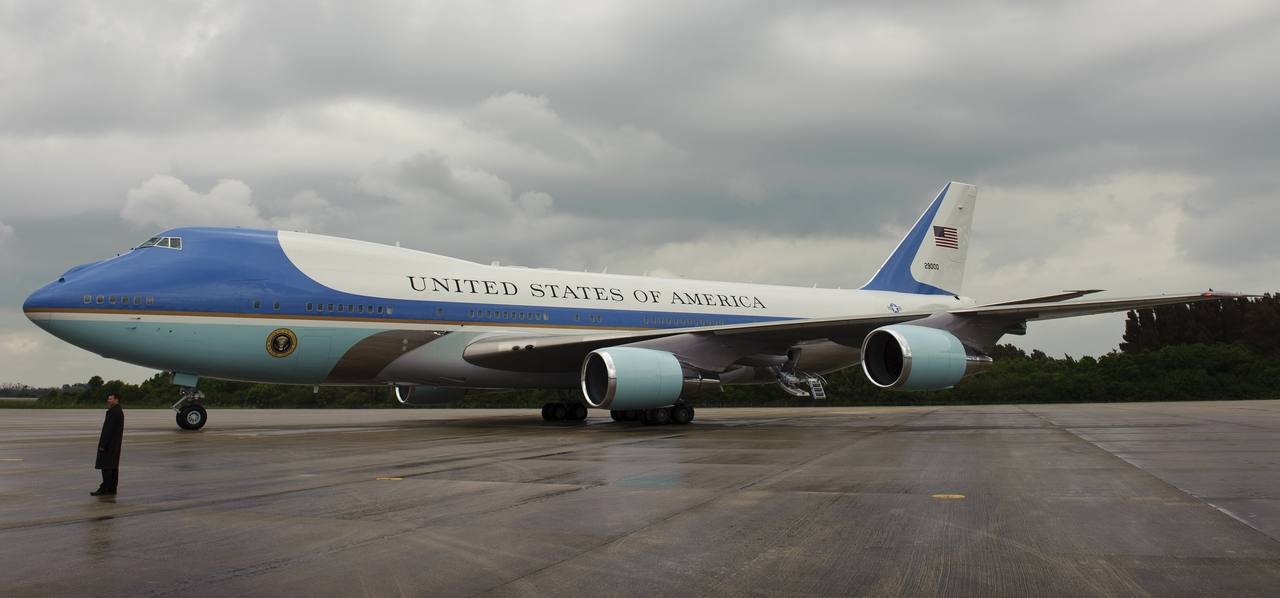
The White House barred CNN from flying aboard Air Force One on Saturday as the network was set to serve its scheduled turn in the television press pool covering President Donald Trump's trip to Tennessee for a college football game — the latest escalation in the administration's confrontation with the network, and the second time in seven days CNN has been yanked from a pool rotation.
What happened on Friday night
CNN had been scheduled to fly with the president to Tennessee — Knoxville, for a college football game on Saturday — as the designated TV pooler: the rotating network that supplies cameras, reporters, and shared video to all five major networks when space is limited. A White House scheduling email on Friday night removed CNN from the manifest and listed no replacement TV pool representative. Without a designated pooler, there would be no television pool coverage of the trip at all. CNN said it was pulled from the trip; the White House did not immediately respond to requests for comment, according to Reuters and The Wall Street Journal. The Hill reported that CNN's journalists were barred from boarding Air Force One at Joint Base Andrews on Friday night.
The second removal in seven days
The Tennessee move is a repeat. Last weekend the administration pulled CNN from its scheduled TV pool rotation ahead of Trump's trip to New York for the United Nations General Assembly. The response was extraordinary: on Monday, the five TV networks — Fox, ABC, CBS, NBC and CNN — jointly suspended the television pool rotation in solidarity, which meant no pool cameras at all for the opening days of Chinese leader Xi Jinping's Washington visit. Major newspapers joined the pressure campaign in their own way: The New York Times and The Washington Post agreed to hold publication of still pool photographs until midnight, and the Associated Press, Reuters, Getty Images and Agence France-Presse likewise withheld images from Trump's events until midnight. Regular coverage only resumed on Friday, with CNN back in the rotation for Xi's White House arrival and the two leaders' tour of the National Archives with first lady Melania Trump and Peng Liyuan.
How we got here: a week of escalation
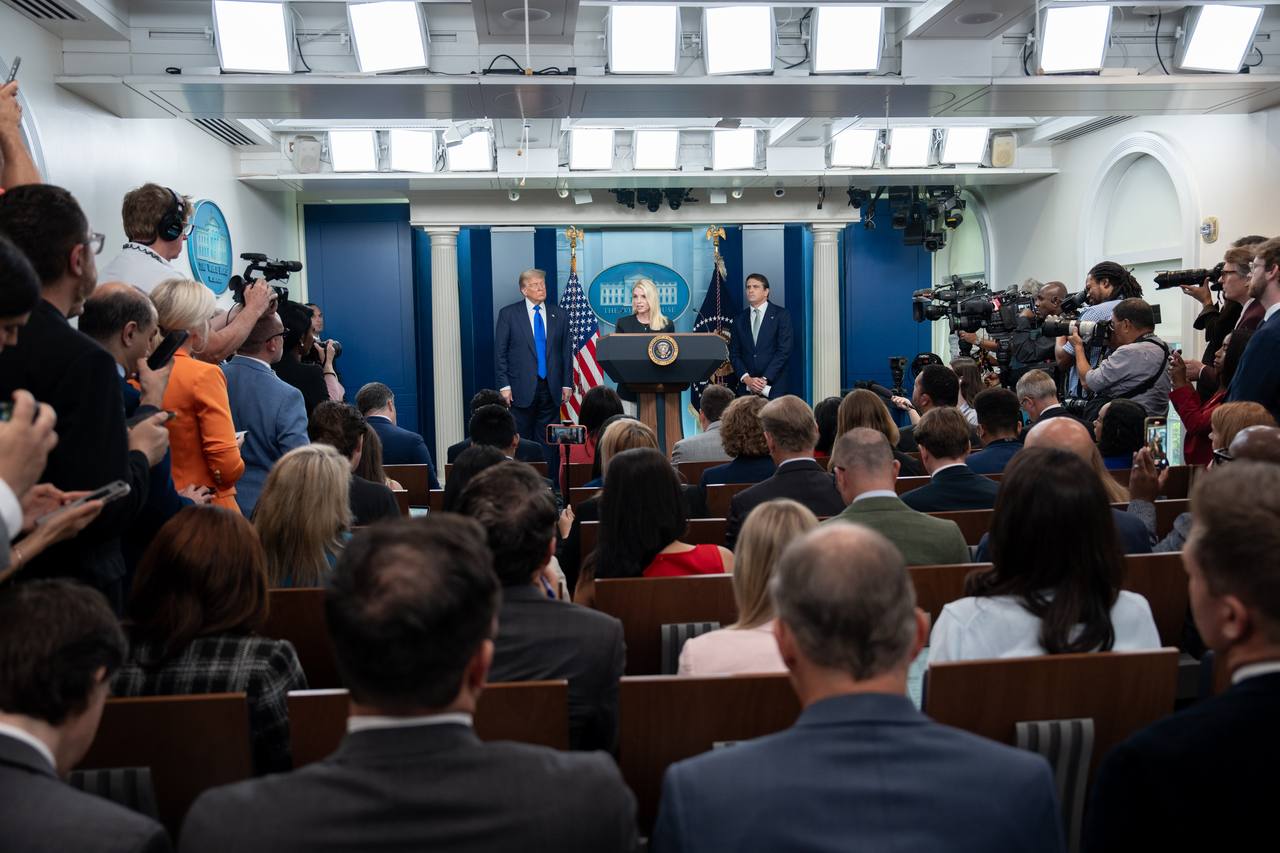
September 18: Trump announced on social media that he would ban CNN, MS NOW and Politico from the White House, saying he was “sick of” their coverage, which he called fiction, lies and fake news. September 19: journalists from the three outlets were turned away at the White House gates, and Secret Service officers seized their press credentials. The outlets sued, alleging violations of the First Amendment and of due process. September 22: the five networks suspended the TV pool rotation; the Justice Department defended the ban in a court filing, citing national security concerns and alleged violations of professionalism standards. Days later Trump himself invoked national security explicitly, writing on Truth Social that the White House was conducting an “assault on the FAKE NEWS,” calling it “a threat to our National Security, and must be stopped, NOW!” September 24: federal Judge Timothy Kelly granted a temporary restraining order blocking enforcement of the ban and ordered the outlets' credentials restored, a 14-day order. Thursday was chaotic: reporters were initially denied entry at the White House gates in the morning, then allowed back by midday; CNN and MS NOW journalists were also denied access to the precredentialed state-dinner arrival during Xi's visit. September 25: pool coverage resumed for the final day of Xi's visit — and on Friday night, CNN was barred from the Tennessee trip. September 28, Monday: the judge's deadline for the news organizations to seek a preliminary injunction that would put the ban on hold for longer.
Why this matters: the pool is the public's eyes
The television pool is not a courtesy extended to networks. It is the infrastructure of presidential transparency: a small rotating group of journalists who cover the president where space is limited — Air Force One's press cabin holds just 13 seats — and share what they gather with every other outlet. When the pool functions, the country sees the presidency through independent cameras. When it does not, the public sees only what the White House itself chooses to show. That is the substance of the White House Correspondents' Association's warning. Its president, Fox anchor Jacqui Heinrich, put it plainly: “That's the system that allows the networks to share video of the president with the whole country. If they aren't there, the pool can't function.” Her predecessor, CBS's Weijia Jiang, went further: “America cannot have state TV.” The administration does produce its own livestreams of events — but a camera the White House controls is not the same thing as a camera it does not, and the difference between the two is the entire point of the pool system built up over decades.
Who wins, who loses
The administration's move is tactically shrewd and legally delicate at the same time. By targeting pool rotations rather than building access, the White House can punish coverage it dislikes while staying inside the letter of the court order that restored the outlets' credentials — a pressure campaign that tests the spirit of the ruling without plainly defying it. The risk is that a judge reads it exactly that way: as retaliation by another name, which is precisely what the outlets' lawsuit alleges. The networks' solidarity is their only real leverage — a collective refusal to cover is the one threat that costs the White House the pictures it wants — but it is leverage they can only spend by giving up their own access, and the public pays for every hour of the standoff in unseen presidencies. The deeper loser, whichever side prevails in court, is the precedent: whatever tools this administration normalizes for sidelining disfavored outlets will be available to the next one, of either party. And hanging over all of it is Trump's warning, issued when the ban was announced, that “other Fake News Outlets” could be added to the list — a signal to every newsroom doing the math on its next tough story.
The numbers behind the standoff
Five networks share the TV pool rotation: ABC, CBS, NBC, CNN and Fox News. Thirteen seats is all the press cabin of Air Force One holds, which is why the rotation exists at all. Fourteen days is the lifespan of Judge Kelly's temporary restraining order — the bridge to Monday's preliminary-injunction deadline, when the outlets must persuade the court to extend the block. One full week has now passed since the ban was announced, and in that week the dispute has already produced two pool removals, one joint network boycott, one midnight photo embargo by the country's biggest papers, and a chaotic day of reporters being turned away at the gates hours after a federal judge ordered them let in. Those are not the metrics of a contained disagreement; they are the metrics of an institution being stress-tested in public.
What happens next
Three paths are visible from here. First, the court path: on Monday the outlets file for a preliminary injunction, and if the judge grants it, the administration's ban stays frozen while the lawsuit plays out — possibly with clearer judicial language about pool rights, which is where the real fight has migrated. Second, the practical path: the White House slots another network into Saturday's rotation, the trip gets covered, and CNN absorbs the snub as the cost of the larger war. Third, the escalation path: the networks re-suspend the pool, the photo embargoes return, and the standoff hardens into the open-ended condition of the presidency — with Trump arriving at a college football game in Knoxville as the most-seen and least-independently-filmed president in the pool era. Watch Monday's filing deadline first; everything else is commentary until the judge speaks.
Sources
- CNN, “White House bars CNN from covering Trump on behalf of major TV networks as he travels to Tennessee” (Sept. 25, 2026)
- The Wall Street Journal, “White House Removes CNN From Planned Weekend Trip” (Sept. 25, 2026)
- Reuters, Susan Heavey, “TV networks resume covering White House as press access fight continues” (Sept. 25, 2026)
- The Hill, “CNN says its press pool reporters were barred from boarding Air Force One” (Sept. 25, 2026)
- Associated Press, “CNN and MS NOW reporters back at White House, hours after judge ordered Trump to lift ban” (Sept. 24, 2026)
- Reason, “Trump invokes ‘national security’ to defend White House media ban” (Sept. 23, 2026)