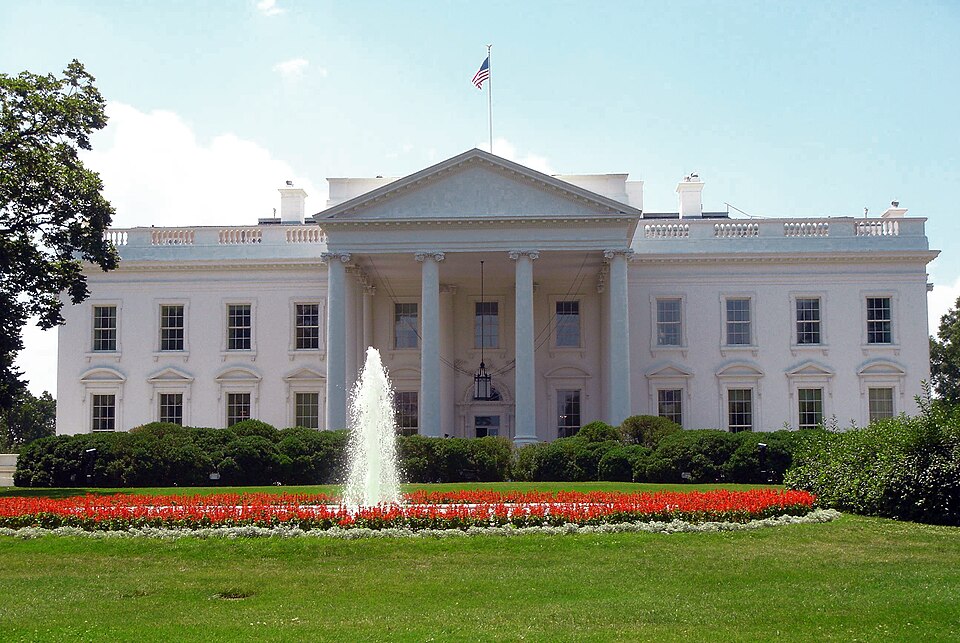
WASHINGTON — A federal judge has ordered the Trump administration to immediately restore White House press access to CNN, MS NOW and Politico, halting President Donald Trump’s outlet-wide ban for 14 days while the news organizations’ constitutional challenge proceeds.
U.S. District Judge Timothy Kelly issued the temporary restraining order early Thursday after a Wednesday hearing in Washington. Kelly found that the outlets had shown a likelihood of success, at least on their Fifth Amendment procedural due-process claim, because the government revoked their hard passes without giving them advance notice and a meaningful opportunity to contest the decision.
The order is an immediate operational victory for the three newsrooms, whose reporters had been denied entry and whose credentials were confiscated or deactivated after Trump announced the ban on September 18. It is not a final judgment on every allegation in the case. The broader First Amendment and due-process fight remains unresolved, and the administration can seek appellate review.
What Kelly ordered
Kelly directed the administration to return the affected press passes immediately and barred officials from enforcing the exclusion for 14 days. A temporary restraining order is designed to prevent ongoing harm while a court examines a case more fully; it does not decide the lawsuit’s ultimate merits.
The ruling restores the practical status quo that existed before the ban. CNN, MS NOW and Politico reporters may again use their White House hard passes while the temporary order remains in force. Because access is perishable—a briefing missed today cannot be fully recreated later—the timing is central to the relief the outlets sought.
Kelly’s narrowest basis was process. He wrote that the general rule requires notice and an opportunity to be heard before the government deprives someone of a constitutionally protected interest. The administration did not dispute that the outlets lacked such an opportunity before their passes were revoked. Letters describing an appeal route were sent only after the revocations and after the lawsuit had already been filed.
The national-security argument failed on this record
Justice Department lawyers argued that White House access is a privilege rather than an entitlement and defended the president’s authority to control entry to a secure executive complex. They also invoked national-security concerns tied to the outlets’ reporting.
Kelly rejected that justification at the emergency stage. He said the record lacked factual support for the claim that revoking these specific passes would protect national security or that restoring them while the litigation continues would endanger it.
The judge also contrasted the government’s courtroom rationale with Trump’s public explanation. When Trump announced the ban, he attacked what he called the outlets’ lack of truthfulness and negative coverage. That distinction matters because neutral security rules receive a different legal analysis from a punishment allegedly imposed because officials dislike a newsroom’s reporting.
Why the due-process finding matters
The ruling does not say that every journalist has an unlimited constitutional right to enter every White House event. Space, security and pool arrangements still require rules. The important distinction is that once the government creates a credentialing system and grants continuing hard passes, it cannot necessarily withdraw those credentials without fair procedures.
That principle is familiar to Kelly. In 2018, during Trump’s first administration, he ordered the White House to restore CNN correspondent Jim Acosta’s pass after finding that the government had not provided adequate due process. The current case is broader because it concerns three entire news organizations rather than a single reporter, but the procedural question is closely related: what notice was given, what standard was applied and what chance did the affected journalists have to respond?
At Wednesday’s hearing, Kelly pointed to D.C. Circuit precedent requiring process before a White House hard pass is suspended or revoked. The administration argued that Tuesday letters supplied a sufficient explanation and appeal mechanism. The judge was skeptical because those letters arrived after access had already been removed.
Why this matters beyond three newsrooms
The most consequential issue is whether an established access system can become a penalty for disfavored coverage. The plaintiffs say Trump targeted them because he objects to their journalism. Trump has said the outlets report “fiction and lies” and called the measure an attack on what he describes as fake news, not an attack on the free press.
If government officials can revoke credentials first and explain the process later, every newsroom faces uncertainty about whether critical reporting may carry an immediate access cost. If neutral standards, advance notice and a genuine appeal are required, the executive branch retains security authority but must exercise it through rules that can be understood and challenged.
The order also separates two questions that political arguments often merge. Officials may dispute accuracy and criticize coverage. The harder constitutional issue is whether state power may be used to punish that coverage by removing access under an established credentialing regime. Kelly’s order does not finally resolve the First Amendment retaliation claim, but it prevents the ban from remaining in force while that claim is litigated.
Who wins and who remains exposed
CNN, MS NOW and Politico win immediate access. Their reporters can return to the White House under the temporary order, limiting the day-to-day reporting harm that prompted the emergency motion.
The administration retains a path to appeal. The Justice Department can ask the D.C. Circuit to pause or reverse Kelly’s order. It can also continue defending the broader lawsuit and attempt to show that its access decisions rest on lawful, neutral grounds.
Other news organizations gain a procedural safeguard. Reuters, Fox News, The Washington Post and press-freedom groups joined a brief supporting the plaintiffs. Their institutional concern is that a discretionary punishment imposed on one newsroom today can be used against another tomorrow, regardless of ideology.
The final constitutional boundary remains unsettled. The 14-day order preserves access; it does not permanently define the president’s power over White House credentials or decide the full First Amendment case.
What the numbers mean
Three outlets: the ban operated at an institutional level, affecting CNN, MS NOW and Politico rather than one correspondent accused of violating a specific conduct rule.
Fourteen days: that is the current life of the temporary restraining order. The court may hold further proceedings before it expires, extend relief through another order or allow the dispute to move to appellate review.
Six days: Trump announced the ban on September 18; Kelly ordered restoration on September 24. The speed reflects the ongoing nature of the injury asserted by the plaintiffs.
2018: Kelly’s Acosta ruling supplied a direct procedural precedent from the same judge and the same president’s earlier administration. It did not dictate the result, but it made due process the clearest route to emergency relief.
What happens next
The first question is compliance: whether the White House returns and reactivates the hard passes without delay. The second is appellate strategy. Trump had already indicated that an adverse ruling would be appealed, and the Justice Department can seek emergency relief from the D.C. Circuit.
At the district court, the parties can build a fuller record on how the decision was made, what standards governed it and whether the president’s public comments establish unconstitutional retaliation. Kelly may later consider a preliminary injunction that lasts longer than the temporary order, or the case may move on an accelerated schedule.
The administration could also attempt to create a clearer credential-review system. But a new process would not automatically cure an earlier violation, and any standards would still face scrutiny if they operate as a proxy for viewpoint discrimination.
The immediate result is unambiguous: CNN, MS NOW and Politico are entitled to return while the case continues. The lasting result will depend on whether higher courts treat Kelly’s order as a narrow demand for advance process or as the opening stage of a broader rule against punishing news organizations for critical coverage.
Sources
- Reuters: Judge blocks Trump’s White House media ban and orders access restored
- CNN: Kelly orders immediate reinstatement of White House access
- USA Today: Background on the September 23 hearing
- CNN: The outlets’ lawsuit and request for restored access
This article is a fixed September 24, 2026 reporting snapshot based on the temporary restraining order and contemporaneous coverage. The order restores access for 14 days; it is not a final judgment on every constitutional claim in the case.