Todd Blanche press ban interview
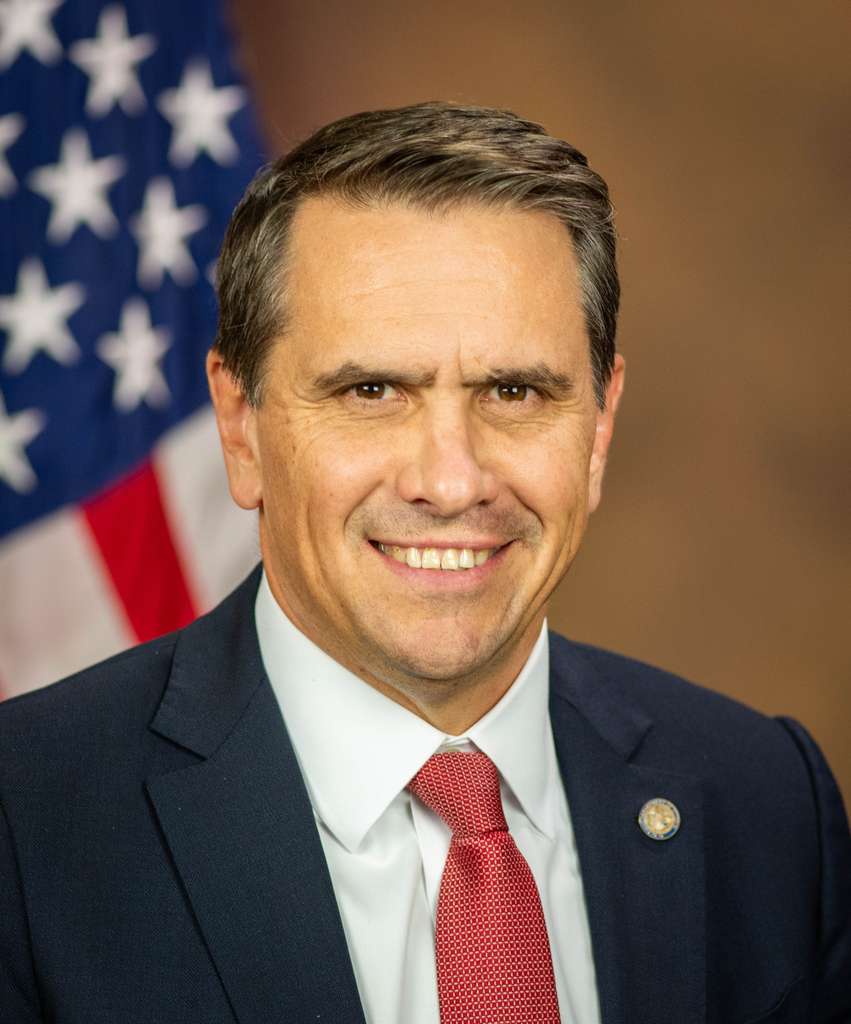
WASHINGTON — The Todd Blanche press ban interview on Sunday morning, September 27, 2026, put the Trump administration's case against three news organizations in its starkest terms yet. Appearing on ABC News' “This Week,” the attorney general told host Martha Raddatz that White House access “is a privilege ... not a right.” President Donald Trump, Blanche said, is “sick and tired of certain media outlets just refusing to report accurate news.” Then he moved beyond the administration's previous public defense: what the White House considers “one-sided” reporting, he argued, can itself become a national security problem serious enough to justify keeping journalists out of the White House and off Air Force One.
That final claim is the interview's most consequential one. Trump announced the September 18 ban on CNN, MS NOW and Politico by accusing them of publishing “fiction or lies.” Blanche supplied something closer to a governing doctrine: a secure presidential complex is not a public forum, and editorial judgment the administration considers inaccurate can be treated not only as objectionable speech but as a threat to the country's external relationships. The first proposition has a foundation in law. The second is much broader, and it is already colliding with a federal judge's view of the evidence.
What Blanche said
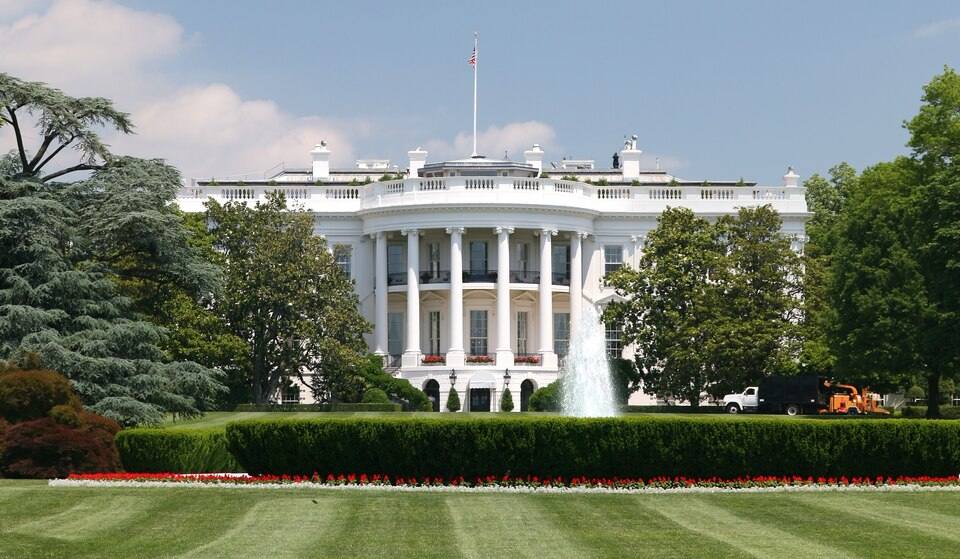
Blanche began by disputing the description of the policy itself. “The president hasn't denied access. That's not the right way to describe it,” he said. His distinction was between a news organization's freedom to publish and its entitlement to occupy government-controlled space: “What the law says, what the free press can do is they are free to report whatever they want. Of course, they can. But when it comes to the White House, it is the People's House. It is a privilege and not a right to be there.”
On accuracy, he argued that audiences should expect reporting to have “even a whiff of impartiality” and “even a whiff of accuracy about what's actually happening.” If that standard is not being met, Blanche said, “it is absolutely the president's duty to make sure that the American people are hearing accurate news.” He added a qualification that matters: “It doesn't have to be good for the president. It doesn't have to be everything's positive about what's happening in the administration. It has to be very accurate.”
Then came the security claim. “By the way, that is what is a national security problem,” Blanche said. “When you have completely misinformation, complete misinformation coming out of the White House, that affects our relationship with our foreign partners. That affects our relationship with our foreign enemies.” On CNN's exclusion from the president's plane, he said the White House “routinely decides who can go on Air Force One,” adding: “This wasn't a one-time denial of CNN. There's all kinds of times when certain reporters are not flying or are flying.”
The exchange that defined the interview
Raddatz tested the accuracy argument with the most direct question available: name one CNN report that was inaccurate. Blanche did not identify one. He moved instead to a broader complaint about negative and one-sided coverage. The absence of an example does not prove every report was accurate; it does expose the gap between a sweeping official penalty and the evidence the administration was prepared to state on national television.
When Raddatz quoted Trump's own explanation that the outlets “want to try and diminish the Republicans and a Republican administration,” Blanche accused her of cherry-picking. “You just picked out seven words the president said,” he replied, calling her characterization “extraordinarily disingenuous.” The clash sharpened when she asked whether the administration would begin screening journalists for presidential flights and White House access. “I DID NOT SAY THAT!” Blanche answered. “No, no, I did not say that! You don't get to put words into my mouth!”
Raddatz closed with the constitutional question beneath the argument: “What do you think the job of the press is? What does the First Amendment mean to you?” Blanche's answer returned to the distinction he had been building throughout the segment — the press may report what it wants, but physical access to the White House is “a privilege, not a right.” That formulation is memorable because it is partly true and therefore legally more complicated than a slogan. No reporter has a personal right to every room or every flight. But once the government creates a regular credentialing system, courts have said it cannot distribute access arbitrarily or revoke established access without process.
Why this matters: from grievance to constitutional theory
This was the first time a sitting attorney general personally defended the ban on air, and Blanche's framing did heavier work than Trump's original justification. It joined two ideas: first, that the White House is controlled government property rather than a press entitlement; second, that editorial slant can be recast as a national security risk. The first argument recognizes the executive's real authority over security, crowding and access. The second risks making the president the judge of acceptable journalism.
If “one-sided” coverage of the White House can be classified as a national security problem, the logic does not stop with three outlets. Critical reporting on diplomacy can be said to complicate relations with allies; reporting on military policy can be said to aid adversaries; reporting on intelligence can be said to damage operations. Those may be legitimate concerns when specific information is mishandled. Blanche articulated no limiting principle that separates a concrete security risk from ordinary criticism the president considers unfair.
That is why the interview matters beyond CNN, MS NOW and Politico. It previews how the administration will define the boundaries of its policy in court. A dispute that began as retaliation for coverage the president called false is being translated into institutional language about property, privilege and national security. Courts tend to give the executive considerable room on genuine security judgments. They also ask for evidence when a security rationale appears after public statements focused on viewpoint.
How we got here: nine days from ban to television defense
September 18: Trump announced that CNN, MS NOW and Politico would be barred from the White House, accusing them of publishing “fiction or lies.” Their badges were revoked. In subsequent court filings, the administration cited national security grounds alongside concerns about reporting.
September 21–23: the three organizations sued, and U.S. District Judge Timothy Kelly set an emergency hearing. They argued that the government had punished them for disfavored coverage and removed established credentials without advance notice or a chance to respond.
Early Thursday, September 24: Kelly, a Trump appointee who also ruled for CNN in the 2018 Jim Acosta dispute, issued a 14-day temporary restraining order directing the White House to “immediately return, reinstate, and restore” the hard-pass credentials. He found the outlets likely to succeed on their due-process claim. The passes had been revoked without adequate notice or opportunity to answer.
Kelly also rejected the national-security justification on the record before him. The articles the government cited were “routine,” he wrote, while its arguments “offer little to back up their asserted national security interest.” He noted that “nothing in the record” suggested national security motivated the revocations when they were made. Reporters returned to White House grounds on Thursday, and television pool coverage resumed Friday for the final day of Chinese President Xi Jinping's state visit, including an event at the National Archives.
Friday night: a White House schedule omitted CNN from the Air Force One manifest for Trump's Saturday trip to Knoxville, Tennessee, for the Tennessee–Texas college football game at Neyland Stadium. The Associated Press reported that CNN was replaced by the conservative Real America's Voice News.
Saturday: there was no television pool coverage of the trip. CNN said its access to Air Force One had been blocked despite the temporary order. The distinction is legally important: Kelly's order restored hard passes to the White House grounds; it did not assign pool rotations or seats on the presidential plane. Practically, however, the result showed how much independent coverage can be lost through decisions outside the four corners of a credential order.
The precedents: Acosta and Sherrill
The 2018 Jim Acosta case is the direct modern parallel: the same judge, a disputed press pass and an emergency order requiring restoration. The first Trump White House complied and then wrote rules governing reporter conduct. The difference in 2026 is that the administration is litigating the theory while testing each boundary the temporary order did not cover — pool rotations, aircraft manifests and event-by-event access.
The deeper precedent is Sherrill v. Knight, the 1977 D.C. Circuit decision holding that once the White House opens a press facility, access may not be denied arbitrarily and an unsuccessful applicant must receive notice and an opportunity to respond. Kelly applied that due-process principle. Blanche now argues the corollary in the opposite direction: process may constrain how a decision is made, but the underlying access remains a privilege the president has wide authority to distribute.
Both propositions can coexist only if the criteria are clear, neutral and tied to legitimate functions such as security or conduct. If the operative criterion is whether coverage “diminishes” the president's party, the policy moves from access management toward viewpoint discrimination. If the criterion is a demonstrable security risk, the government needs a record showing the risk. Kelly found that record absent at the temporary-order stage.
Who benefits, who loses — and the critics' case
The administration gains a deterrent signal to critical outlets and a legal theory that, if it survives the preliminary-injunction stage, could become a template for controlling presidential access. The theory also lets officials distinguish formal compliance with the hard-pass order from discretion over a far larger set of daily decisions. A reporter can possess a badge and still miss the flight, the pool assignment or the room where news happens.
Critics — including the affected organizations and press associations — call the accuracy argument a pretext. Trump publicly framed the ban as retaliation against outlets that “want to try and diminish the Republicans and a Republican administration.” In their view, that is the viewpoint-based exclusion the First Amendment forbids: government power used to reward favorable coverage and punish unfavorable coverage.
The immediate loser is the public's real-time view of the presidency. Saturday produced zero independent television pool coverage of a presidential trip, a concrete demonstration of what pool exclusion means. The administration is betting that its own media channels, including the newly launched Trump TV service, and friendly outlets can fill the vacuum. They can distribute pictures and official messages efficiently. They cannot replicate adversarial scrutiny, because scrutiny depends on the reporter's ability to choose the question, observe what officials did not script and share the answer with competitors.
There is a fair counterargument: no outlet has a guaranteed seat on Air Force One, and pooled travel has always required White House logistical choices. The constitutional dispute begins when those choices are allegedly made because of editorial viewpoint rather than neutral rotation, capacity, security or conduct. The facts of each assignment matter. So does the pattern created by removing the same disfavored organization after a judge restored its building credentials.
The numbers put the stakes in focus
Three outlets were targeted. One 14-day temporary restraining order runs through roughly October 8. September 28 is the deadline for the organizations to seek a preliminary injunction that could extend the block for the duration of the case. And zero television pool coverage of Saturday's presidential trip is the clearest measurable consequence so far.
The comparison with 2018 is revealing. Acosta's pass was restored within days, and the White House responded by issuing rules. This time the fight is entering its second week with the government expanding the theory rather than narrowing the practice. Instead of treating due process as a defect to repair, the administration is defending a broader proposition about who deserves access and why critical coverage may itself count as a security problem.
What happens next
Base case: the outlets seek a preliminary injunction by September 28 and Kelly extends protection while the lawsuit proceeds. The administration continues to use discretion around pool and plane assignments, forcing the plaintiffs to decide whether to broaden their challenge or file a new one. That path turns every manifest and event credential into potential evidence.
Escalation case: the Justice Department's national-security theory receives a fuller hearing. If it fails again, the outlets' constitutional position strengthens and later claims for relief become more plausible. If it survives, the result would mark a major shift in press-access law by allowing an administration's assessment of reporting accuracy to carry security weight — a power every future president would inherit.
Wild card: notwithstanding Blanche's emphatic denial that he was proposing journalist “screening,” the logic of his argument points toward formal access criteria. Any written rule that evaluates accuracy or impartiality would be challenged immediately as vague and viewpoint-based. Rules tied to conduct and security are easier to defend; rules tied to perceived fairness invite judges to ask who decides what counts as fair.
Friday's state-dinner access rules and the next Air Force One manifest now deserve close attention. Each is no longer just logistics. Each can become a legal event — evidence of neutral administration, a workaround designed to preserve exclusion, or something in between.
The argument is now clear
The Sunday interview did not resolve the press fight; it clarified it. The administration's position is no longer merely “we don't like the coverage.” It is that the coverage can be the threat and the building is the privilege. A Trump-appointed judge has already found that the evidence did not support the threat claim and that the process did not satisfy the Constitution.
The coming week — the September 28 injunction deadline and the temporary order running to about October 8 — will test whether the argument Blanche made on television can survive in the courtroom where its first version has already lost once. The answer will govern more than three newsrooms. It will help determine whether White House access remains a system bounded by neutral rules or becomes an instrument for grading the press.
Sources
- CNN: Todd Blanche defends the White House press ban
- Associated Press via WAMC/NPR: CNN left off Air Force One
- CNN via LA Post: White House bars CNN from covering the Tennessee trip
- TBS News: CNN barred from traveling with Trump on Air Force One
- The Guardian via Scoop: reporting on the White House press-access fight
- ABC News' “This Week,” September 27, 2026 broadcast.
Reporting basis: Published September 27, 2026. Direct quotations from Todd Blanche and Martha Raddatz are drawn from ABC News' “This Week” broadcast and the linked reporting. Legal analysis and forward-looking scenarios are Signal Post News's.