Settlers attack diplomats in the West Bank: a delegation of European diplomats, Catholic representatives and French mayor Bernard Baudoux was attacked by masked settlers during Taybeh's olive harvest on Saturday. Belgium's foreign minister condemned the assault and renewed calls for EU sanctions on violent settlers, while the IDF condemned the violence and said police were investigating.
Taybeh / A French mayor beaten at the olive harvest — and Europe demanding sanctions
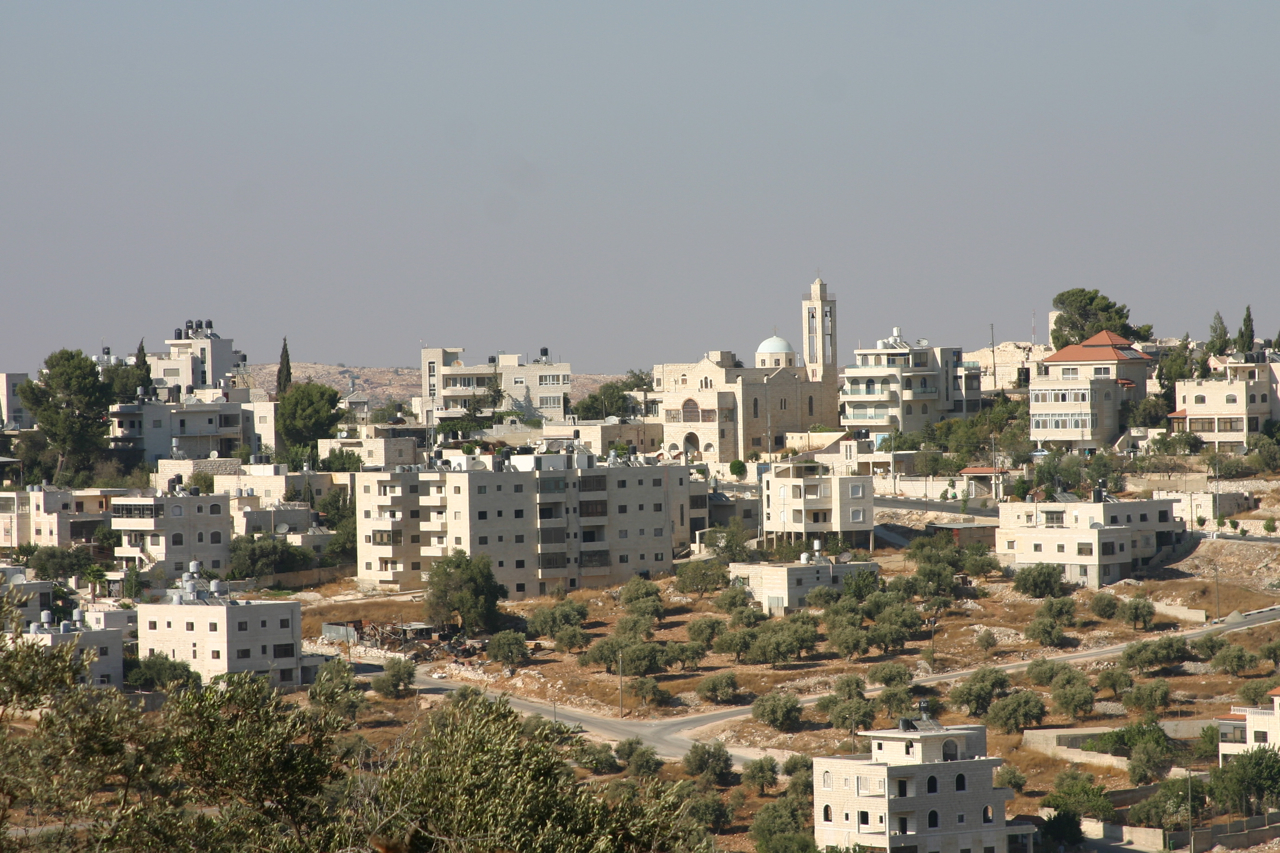
TAYBEH, West Bank — Settlers attack diplomats in the West Bank is not a headline European governments expected to read about their own officials, but it is what happened on Saturday afternoon near the Palestinian Christian village of Taybeh, east of Ramallah. A delegation accompanying Palestinian farmers to the olive harvest — including Belgium's consul general, French and Polish diplomats, Catholic representatives and a visiting French mayor — was confronted by masked settlers who, according to witnesses and diplomats, surrounded the group's vehicles on quad bikes, demanded identification, threw stones, smashed the window of a Belgian consulate car and beat the 78-year-old mayor, who was photographed slumped on the ground against a car. Belgium's foreign minister condemned the attack in the strongest terms and said his country would keep pressing the European Union for sanctions on those responsible. The Israeli military condemned the violence, said no soldiers were present when it happened, and said police investigators were collecting evidence. No arrests had been reported by Saturday evening.
Track it live: Live global wars tracker · Israel war map · Middle East war tracker
What happened at Taybeh on Saturday
The delegation had come to Taybeh for the olive harvest, the October–November season on which thousands of Palestinian farming families depend, and which foreign diplomats, church representatives and solidarity visitors routinely accompany as a protective presence. According to two diplomats and a witness who spoke to AFP, settlers attacked the convoy as it toured the area on Saturday. Footage shared by a diplomat appeared to show Bernard Baudoux, 78, the mayor of the northern French town of Aulnoye-Aymeries, slumped on the ground against a car. Two diplomats and a local resident confirmed his identity, and one diplomat said his condition did not appear life-threatening.
Other accounts filled in the mechanics of the attack. Israeli Army Radio's military correspondent, citing eyewitnesses, reported that seven masked men surrounded a diplomatic vehicle with off-road vehicles, demanded identification and smashed a window. Participants quoted by France's Le Figaro described seven masked settlers arriving on quads and encircling the delegation's vehicles with clubs. Palestinian landowners who fled the scene told reporters the attackers also took olives that had already been harvested. Taybeh's mayor, Suleiman Khourieh, told Al Jazeera the French consul was in the delegation, and one witness said the group updated the Israeli army in real time but received no response — a claim the military addressed directly, as set out below.
Reuters, reporting from Brussels, summarised the official Belgian account: masked settlers attacked Palestinians, Catholic representatives and Western diplomats and officials; the Belgian consul general, French and Polish diplomats and a French mayor were among those attacked; and a Belgian vehicle was damaged. The Israeli military, the European Commission and the French and Polish foreign ministries did not immediately respond to Reuters' requests for comment, though the Israeli military and police issued statements later in the day through Israeli media.
Belgium condemns the attack and presses for EU sanctions
The sharpest response came from Belgium. Deputy Prime Minister and Foreign Minister Maxime Prévot said he strongly condemned "the attack by masked settlers in Taybeh against Palestinians, our Consul General, French and Polish diplomats, as well as Catholic representatives." A French mayor was attacked and a Belgian vehicle was damaged, he said, confirming that his staff were safe. "Harvesting olives, reporting the news or carrying out diplomatic duties should never put anyone at risk of attack," Prévot said. "Our team is safe now, but Palestinians face this violence every day."
Prévot went further than condemnation of the individuals involved. He linked the violence to Israel's settlement policy, which Belgium regards as illegal, and to what he described as attempts to forcibly remove Palestinians from their land, and he said Belgium would continue pressing for European Union sanctions against those responsible for the violence and those who support it. That framing matters: EU sanctions on violent settlers already exist as an instrument, and a member state whose own consul general has now been attacked is positioned to push for their expansion. France and Poland had not commented publicly by Saturday evening, according to the reports.
Israel's response: condemnation, an investigation — and a coordination dispute
The Israel Defense Forces said it "strongly condemns the severe incident of violence, during which diplomatic representatives were attacked by Israeli rioters," in the area of its Binyamin Regional Brigade. Police forces and forensic investigators from the Judea and Samaria District entered the area under IDF protection to collect findings and gather testimony, the military said, and Israel Police said its Binyamin station had opened an assault investigation after footage circulated online, forwarding a report to the Foreign Ministry to locate the victims and collect their testimony. "Israel Police condemns violence of any kind and will pursue these investigations until all those involved in such incidents are brought to justice," the police statement said.
At the same time, the military set out its own account of why no soldiers intervened. The consulate's tour had not been coordinated in advance with the IDF, it said — coordination it described as important precisely to prevent incidents of this kind. A preliminary inquiry found no IDF forces were present at the scene. On the witnesses' claim that a real-time report went unanswered, the military said the report was sent to a brigade operations-room account designated for security personnel only, which receives dozens of operational reports a day and responds only to authorised parties, and that other centres exist for civilian complaints. Both things can therefore be examined in the investigation that is now open: the attack itself, which the IDF calls severe, and the disputed question of whether the protective system around harvest visits functioned as designed.
The day before: Abu Falah and the injured Washington Post photographer
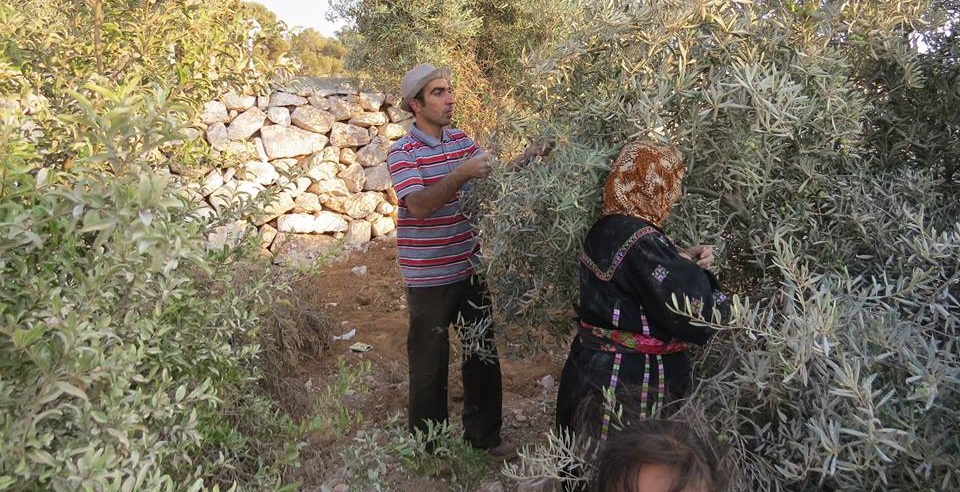
Saturday's attack did not arrive out of nowhere. On Friday, settlers attacked Palestinian villagers gathering olives near the village of Abu Falah, also in the Ramallah area. The Washington Post reported that its photographer Heidi Levine was injured in that attack despite wearing a protective vest marked "PRESS" on the front and back: she was knocked to the ground, repeatedly kicked, and her phone and camera were taken. She was treated at hospitals in Ramallah and in Israel; later Israeli reporting, citing Beilinson Hospital, said she was in moderate condition with injuries to her limbs and had undergone surgery in the preceding hours. Dozens of masked settlers took part, throwing stones and setting olive groves on fire, according to the Post's account. As of Saturday, no arrests had been reported in the Friday attack either, and Israeli reporting said the IDF was expected to reinforce its West Bank division with additional combat troops amid the rise in harvest-season violence.
Taybeh itself had already been targeted this season. Church and local sources documented settlers entering farmland east and south of the village on October 7, picking olives from Palestinian-owned trees and taking harvesting mats from a resident's home; the village's Latin parish priest, Fr. Bashar Fawadleh, wrote this month that many Taybeh families face serious difficulty even reaching their land, and that this year's losses are particularly painful for a community whose olive trees are both income and heritage. A US-based protective-presence organisation deployed a team to Taybeh on October 15 to accompany Christian families into their groves, saying outside witnesses are one of the few effective means of allowing farmers to reach land they would otherwise be afraid to approach.
The numbers behind the harvest
The olive harvest is not a symbolic event; it is a major sector of the Palestinian economy, which is why an attack on it carries weight beyond one afternoon. According to figures published by Peace Now from the Palestinian Ministry of Agriculture, the West Bank holds roughly 550,000 dunams (about 136,000 acres) of olive groves with about 11 million fruit-bearing trees, and this year's crop is valued by the Israeli Civil Administration at about 735 million shekels (roughly $240 million). Peace Now also reported that this season's military harvest orders bar Palestinians from entering approximately 88,300 dunams unless they secure advance coordination with the military — up about 30 percent from 69,000 dunams in 2025 — while the land from which Israeli citizens are barred to prevent settler violence shrank from about 10,700 to 6,890 dunams. The Israeli human rights organisation Yesh Din has been cited in harvest-season reporting for documenting at least 170 violent settler attacks on Palestinians since this season began on September 27, and for its longer-running finding that most police investigations into settler violence end without an indictment — the statistic at the centre of the impunity debate that Belgium's statement invoked.
Why this matters
Attacks on Palestinian harvesters, however serious, have rarely forced a European policy response. Saturday's attack is different in kind, for three reasons. First, the victims include serving diplomats of three EU member states and a Catholic Church delegation — people whose presence was itself the protection mechanism. If protective presence stops protecting, the model that has allowed many farmers to reach their groves at all is weakened everywhere it is used. Second, a member-state foreign minister has now personally attached his name to the sanctions demand. Prévot is not an opposition figure or an NGO; he is Belgium's deputy prime minister, his consul general was in the convoy, and his statement binds the incident to settlement policy rather than treating it as isolated hooliganism. Third, the incident lands in a sequence — Abu Falah and a seriously injured American photographer on Friday, Taybeh and beaten diplomats on Saturday, a reported IDF reinforcement decision the same weekend — that makes it harder for any government to describe the harvest violence as a series of unconnected local scuffles.
The counter-arguments are also on the record and deserve stating plainly. The IDF condemned the attack without qualification, opened forensic work the same day, and points to a real procedural fact: the tour was uncoordinated, and uncoordinated visits are harder to protect in a territory where its forces are stretched across an active war in Gaza and a tense West Bank. Israeli officials and settler representatives routinely argue that the vast majority of settlers are law-abiding, that the army does intervene, and that Palestinian attacks on Israelis in the West Bank — which also occur every season — receive a fraction of the international attention. The investigation will test the narrower questions first: who the seven masked men were, whether the identification and vehicle evidence the police are collecting produces arrests, and whether anyone is charged. Yesh Din's indictment statistics are the benchmark critics will measure that investigation against.
What happens next
Three tracks now run in parallel. The criminal track: Israel Police's Binyamin investigation, with forensic teams in Taybeh and the Foreign Ministry tasked with locating the victims for testimony; the first arrests, if they come, will be the earliest signal of how the case is being treated. The military track: the expected reinforcement of the West Bank division during the remaining weeks of the harvest, and whether coordinated and uncoordinated harvest visits alike pass without further attacks on the villages around Ramallah — Abu Falah, Turmus Ayya, Burqa and Taybeh have all featured in this season's reporting. And the diplomatic track: Belgium's push to expand EU sanctions on violent settlers and their supporters, now backed by a first-person grievance, and the still-awaited public responses from Paris and Warsaw, whose diplomats were in the same convoy. A French statement will matter most of all: the man photographed on the ground was a French mayor, and France is the EU's heaviest diplomatic weight on Middle East questions.
For Taybeh's farmers, the timeline is shorter than any of those tracks. The harvest runs to November, the olives not picked in the next weeks are income lost for a year, and the village priest's October letter asked only for protection, access and awareness. On Saturday the village got the awareness — at the price of its guests being beaten in its fields.
Sources
Reuters, "West Bank settlers attack Palestinians, Western diplomats, Belgium says," October 17, 2026. France 24 with AFP, "Israeli settlers attack European delegation convoy in West Bank, beat French mayor," October 17, 2026. DPA via Israeli Army Radio reporting, "EU diplomats reportedly attacked by Israeli settlers in West Bank," October 17, 2026. Le Figaro reporting via Particle News, "French Mayor Reportedly Wounded in Settler Attack During Taybeh Olive Harvest," October 17, 2026. Israel Police and IDF statements as reported by Jerusalem Post / Walla / Ynet via Israeli media, October 17, 2026. The Washington Post account of the October 16 Abu Falah attack and Heidi Levine's injuries, via DPA, October 17, 2026. Peace Now, "Military Orders Restrict Access to 90,000 Dunams of Olive Groves," 2026 harvest season. Latin Patriarchate of Jerusalem / ZENIT, Taybeh olive theft documentation, October 10, 2026.
Related on Signal Post News: China's Wang Yi challenges Israel on West Bank settlements · Israeli strikes kill four in Gaza on Saturday · UNICEF: more than 340 children killed in Gaza since the ceasefire