A strike on houses in the village of al-Ar, in the Dawran Aness district of Yemen's Dhamar province, killed three children on Friday — one aged eight and two aged ten — and wounded more than a dozen people, the Houthi-run health ministry said on Saturday, in a claim reported by the Associated Press, blamed by the Houthis on Saudi Arabia and not independently verified; Saudi Arabia had not commented.
Three Children, One Highland Village, No Comment From Riyadh — a Dhamar Strike Only One Side Has Described
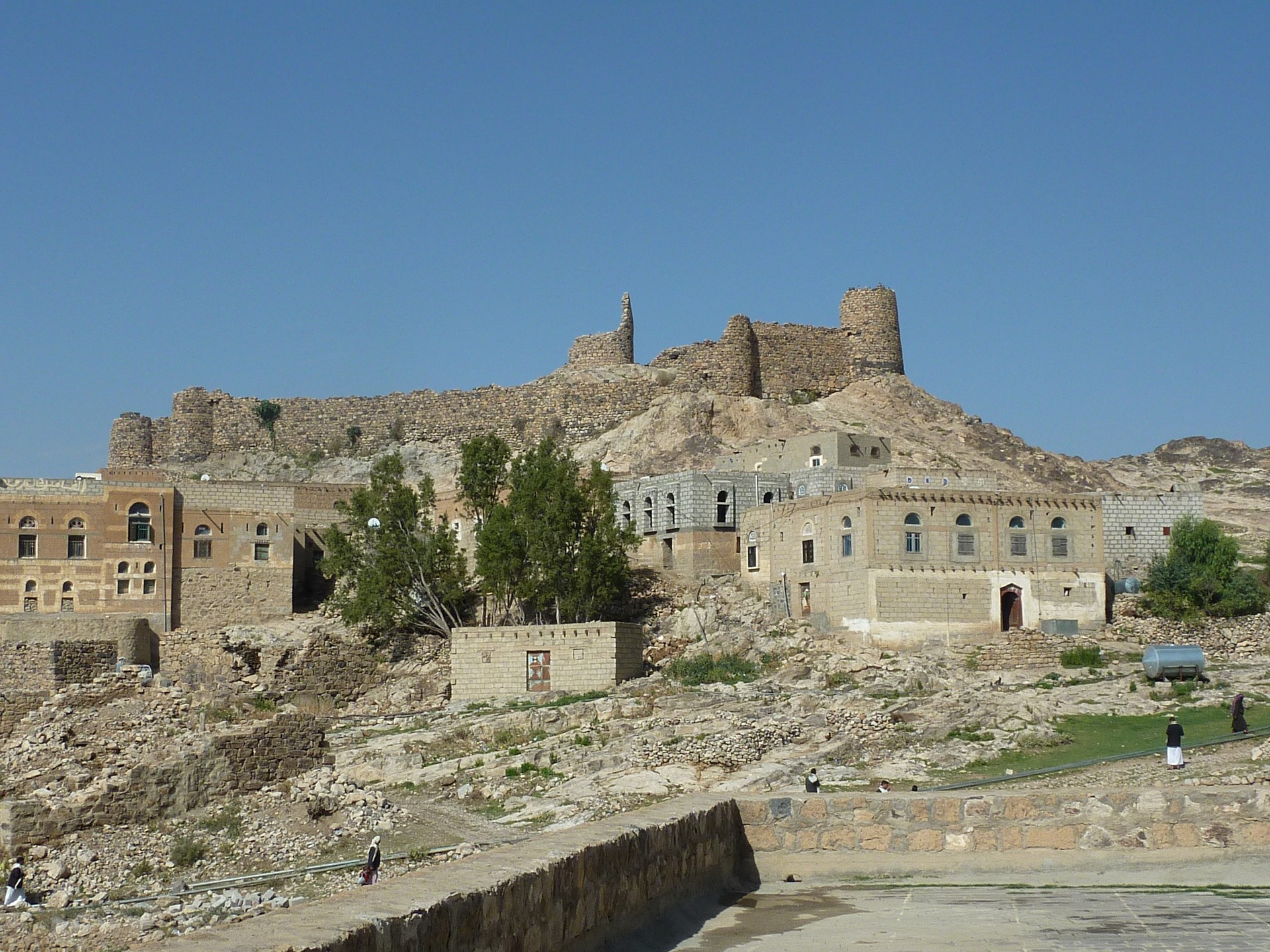
DHAMAR, Yemen — Three children were killed and more than a dozen people wounded on Friday in a strike on houses in the village of al-Ar, in the Dawran Aness district of Dhamar province, according to the Houthi-run health ministry — one child aged eight, and two aged ten. The ministry's account, reported on Saturday by the Associated Press, blames Saudi Arabia, whose forces resumed large-scale operations in Yemen in September. Saudi Arabia had not commented on the claim. Nothing about the incident — not the weapon, not the target, not the toll — has been independently verified, and this article reports the claim as exactly what it is: the account of one belligerent's health ministry, carried by a wire service with its attribution intact, about the deaths of three children in a province where outside observers cannot freely go.
Track it live: Live global wars tracker · Middle East war map
What is claimed — and what is not known
The ministry's statement, as carried by the AP, is specific in the ways such statements usually are and silent in the ways they usually are too. Specific: the place (houses in al-Ar village, Dawran Aness district), the day (Friday), the dead (three children, aged eight, ten and ten) and the wounded (more than a dozen). Silent: everything that would let an outsider test it. No photographs verified as coming from al-Ar have circulated through the wire services. No hospital or morgue account independent of the ministry has been published. No Saudi statement — denial, confirmation, or claim of a military target — had appeared by Saturday. The Houthi movement's own media carried the same ministry account, which is corroboration of what the ministry said, not of what happened.
That distinction is not pedantry; in this war it is the whole discipline. Yemen's fighting parties have run rival information operations for a decade, and casualty claims from Houthi-held territory reach the outside world almost exclusively through Houthi institutions, because the movement controls access. Saudi Arabia, for its part, rarely comments on individual strikes at all — its silence on al-Ar is consistent with its practice whether the claim is accurate, exaggerated, or false. Readers are therefore left with two facts that are solid and one that is not. It is solid that the ministry made the claim, and solid that Riyadh has not answered it. Whether three children died in al-Ar on Friday is, on the public record as of Saturday, asserted by one side and established by none.
Dhamar: a highland province far from the front lines
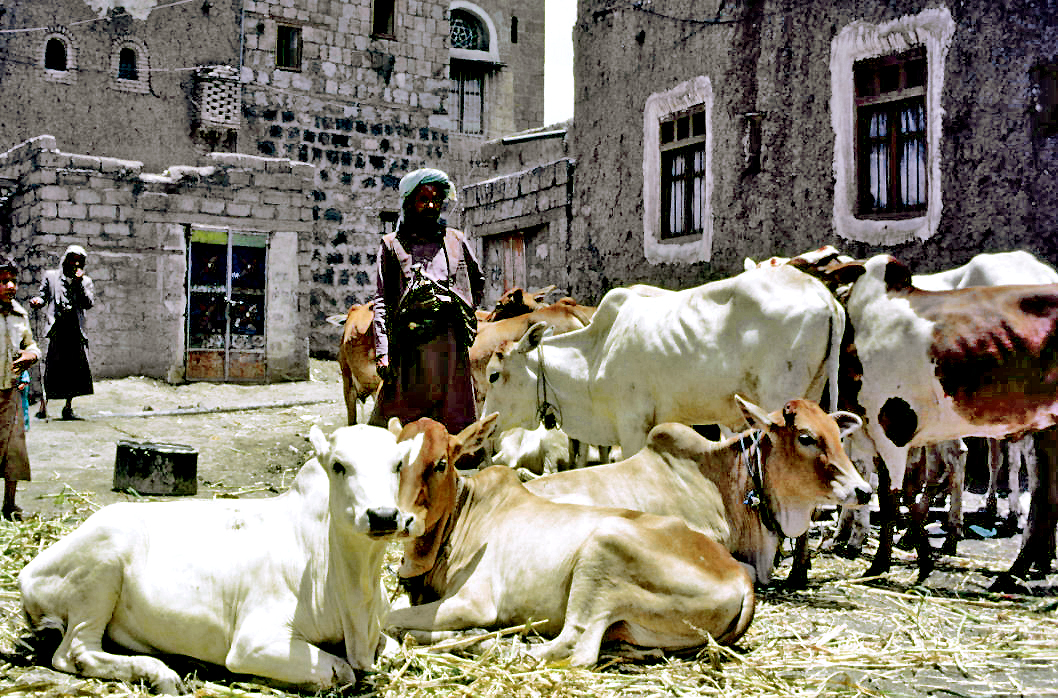
Dhamar is a mountainous agricultural province roughly 100 kilometres south of Sanaa, sitting more than 2,000 metres up in Yemen's western highlands — terraced farmland, qat fields, and stone villages built around old hilltop fortresses, in territory the Houthis have held since they swept through the north in 2014. It is not a front-line province in the current fighting. The war that resumed in September has been reported mostly on the Red Sea coast, where Houthi forces advanced in early September, and around Taiz in the southwest. Dawran Aness, the district named in the ministry's statement, is farming country west of Dhamar city. A strike on houses there — if it happened as described — would not be a front-line incident or a case of a village caught between armies. It would be a weapon landing deep inside the Houthi heartland, in a place whose significance is its ordinariness. That is precisely why the claim matters if it is true, and precisely why it cannot be allowed to stand unverified if it is not.
The war around the claim
The claim arrived on a Saturday that showed every face of this war at once. In Sanaa, the authorities released 159 detainees unilaterally, with the Red Cross interviewing each man and arranging his journey home — a humanitarian gesture in the middle of an escalation. In Cairo, Egypt's president asked his parliament for advance authorisation to defend Saudi Arabia if Riyadh requests it, after Houthi attacks in recent days reached Riyadh's international airport and Saudi Aramco, and after two tankers were attacked on Friday off the Saudi Gulf port of Jubail. And in the same news cycle, the health ministry in Sanaa said three children had been killed the day before by the coalition those pledges are aimed against. None of these events cancels another out. They are the same war, reported in the same hours: a prisoner release, a defence pledge, and an unverifiable report of dead children in the highlands.
The escalation they all belong to began on September 3, when fighting resumed at scale after the long, unconverted truce that had held the front lines largely quiet since 2022. More than 200,000 people have been displaced since, according to aid agencies. Houthi forces overran much of the west coast in a setback for the internationally recognised government and its Saudi backers; the conflict has since reached into Saudi Arabia itself — airports, energy sites, and now shipping — and drawn in pledges from Pakistan, France and Egypt. In that context, a strike claim from Dhamar is not background noise. Each side is building the public case for what it does next, and dead children are the heaviest currency in that argument — which is a reason to report the claim prominently, and a reason to label its provenance on every line.
The number that cannot be checked
Alongside the Dhamar claim, the ministry puts the wider toll of the resumed war in Houthi-held territory at 124 people killed since fighting restarted in September. That figure, like the three children of al-Ar, comes from the same single chain: a ministry of one belligerent, reported with attribution, and not independently verified. It may be accurate; ministries in this war have counted their own dead carefully before. It may not be; the same machinery that counts the dead also speaks for a movement at war. What can be said is how such numbers usually get tested over time — through UN agencies and humanitarian organisations with staff on the ground, through hospital and burial records that surface later, through the slow cross-checking that turned earlier Yemen tolls from claims into history. None of that has happened yet for the September escalation, because access is controlled and the fighting is six weeks old. Until it does, every toll from this war — Houthi, government, or coalition — should travel with its source attached, as this one does here.
Why this matters
Three children, if the ministry's account is right, were killed in their own houses on a Friday in a province at peace with its neighbours and far from any front. Yemen's children have carried this war since 2014 — through airstrikes, artillery, siege economies, malnutrition and disease — and the resumed fighting has restarted the count in a country where a generation has now spent its entire childhood inside the conflict. The Houthis frame such incidents as proof of Saudi aggression against civilians; Saudi Arabia's stated position is that its operations target Houthi military capabilities, defend Saudi territory and civilians, and support Yemen's recognised government. Both frames were on the record before Friday, and neither is tested by an unverified claim. What the claim does test is the region's information environment at the moment of escalation: whether a death toll asserted by one side, unanswered by the other, becomes the accepted fact around which retaliation is justified and pledges are made. In a week when tankers burned off Jubail and Egypt's parliament prepared to vote on defending Riyadh, that is not an abstract concern.
What happens next
The claim now sits where unverified claims in this war usually sit: waiting for anyone else to say anything. Watch for a Saudi response — even a general one about operations in Dhamar — and for any statement from the UN, the ICRC, or humanitarian agencies working in the province, whose staff are among the few outsiders positioned to know. Watch, too, for how the claim is used: whether Houthi officials cite al-Ar by name when justifying the next attack on Saudi territory, and whether the ministry publishes names, funerals, or hospital details that would let the account be examined. And watch the toll: if the 124 figure grows through the autumn, the question of who is counting, and who is allowed to check, will matter as much as the number itself. Three children were reported dead on Friday. The least a reader is owed is clarity about who is doing the reporting — and that, for now, is the Houthi-run health ministry, alone.
Related coverage: Sanaa releases 159 detainees with ICRC support · Sisi asks Egypt's parliament to authorise defending Saudi Arabia · Aden airport missile attack and the Yanbu intercept
Sources
Associated Press, October 17, 2026 — Middle East roundup: the Houthi-run health ministry said Saturday that strikes on Friday hit houses in al-Ar village, Dawran Aness district, Dhamar province, killing three children — one aged 8 and two aged 10 — and wounding more than a dozen people; the Houthis blame Saudi Arabia, which had not commented; the ministry puts deaths in Houthi-held territory at 124 since fighting resumed in September (tricityrecordnm.com). The ministry's claim was also carried by Houthi media (Saba/Mehr), which report the same ministry account. No independent verification of the incident or of the 124 figure was available at publication.