Travel · Residential Cruising
Villa Vie Residences has suspended operations of the Villa Vie Odyssey at Sihanoukville, Cambodia, after fuel costs driven up by the Iran war overwhelmed the economics of its 3.5-year residential world voyage. The 203 residents aboard — people who bought cabins as a permanent home at sea — were told on Monday to disembark within roughly seven hours as the ship entered temporary layup. The company says it will spend about 60 days evaluating a restructuring and recapitalisation, and warns that no financing has been finalised and no outcome is assured.
Track it live: oil prices — live oil price forecast tracker
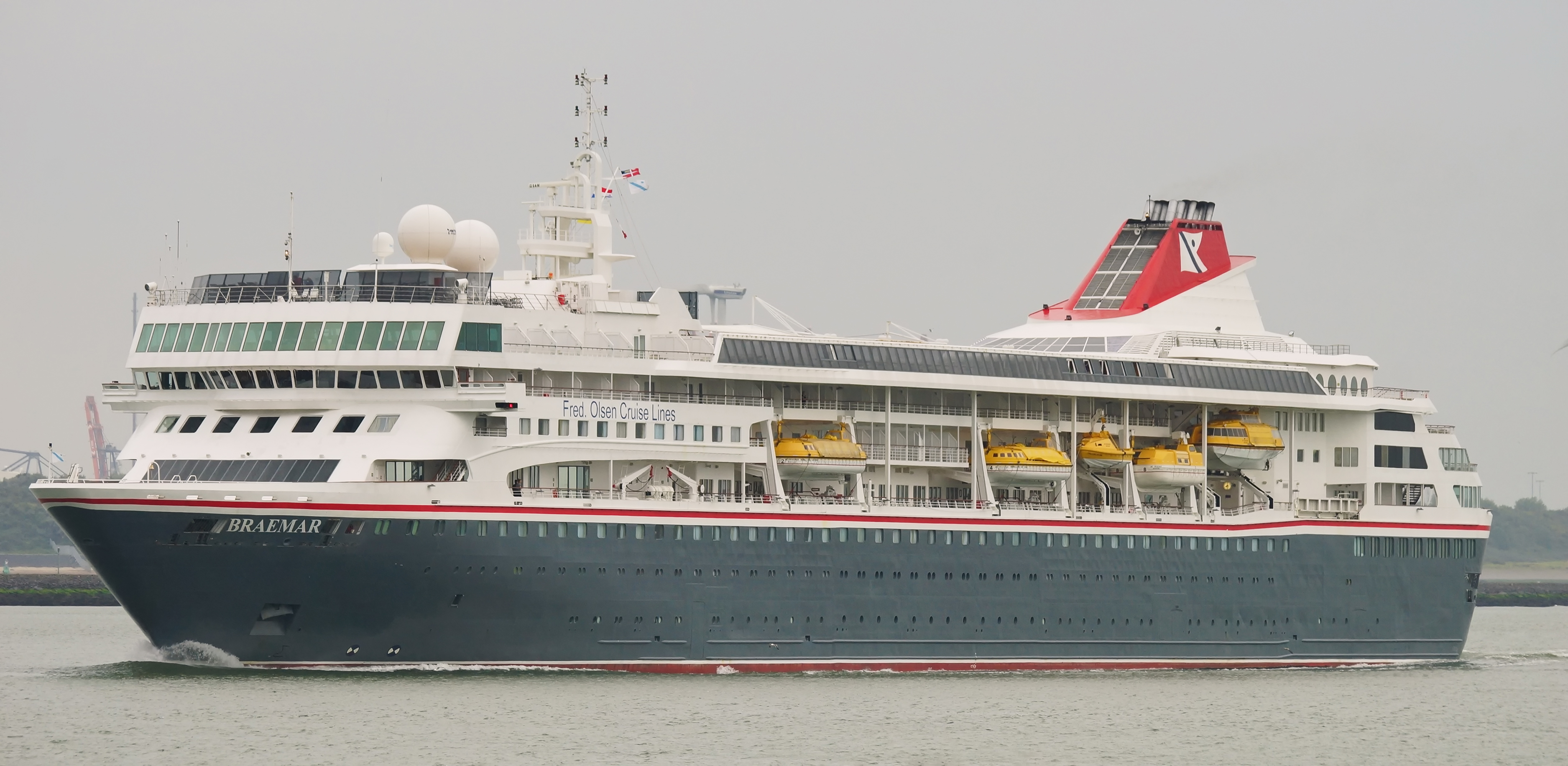
The Villa Vie Odyssey cruise suspended at Sihanoukville this week is not an ordinary itinerary cancellation, and the 203 people ordered off the ship on Monday were not holidaymakers at the end of a trip. They were residents. The Villa Vie Odyssey is a residential cruise ship — a vessel whose passengers buy or lease cabins as a full-time home and live aboard through a continuous 3.5-year circumnavigation — and on Monday, October 26, chief executive Kathy Villalba told them the company was “unable to secure the fuel necessary to continue operations,” that the ship would enter temporary layup that afternoon, and that everyone had to be off by 2:00 p.m., roughly seven hours after the notice arrived. A copy of the notice was shared publicly by resident Randy Cassingham. Shuttle runs back to the ship so residents could retrieve belongings continued into Tuesday evening.
Villa Vie Residences confirmed the suspension in a statement issued through PR Newswire on October 27. The Odyssey had docked at Sihanoukville on October 23 for what was planned as a five-day visit, with Vietnam next on the itinerary, according to the Sihanoukville Autonomous Port via the Associated Press. She never sailed. Aboard at the suspension were 203 passengers from 15 nationalities, most of them Americans, and 156 crew, the AP reported. The ship’s residential capacity is 650 — a figure for how many residents she can carry, not how many were aboard.
Seven hours to leave home
The speed of the shutdown is what separates this story from a conventional cruise cancellation. A holiday passenger told a voyage is over loses a holiday. A Villa Vie resident told to disembark by 2:00 p.m. loses, at least temporarily, the place they live — for many aboard, the only home they have. Founder Mikael Petterson told Bloomberg the company is covering residents’ lodging and local transportation in Cambodia. It is not, he said, funding passengers’ onward departure from Cambodia: getting from Sihanoukville to wherever each resident goes next is, for now, their own problem and their own expense.
What residents are owed beyond a hotel room is an open question. USA Today reported that the company did not immediately respond to questions about refunds or compensation. That question was unanswered at publication, and nothing in the company’s statements establishes whether residents will or will not be refunded for cabins, fees or lost time. It is the single largest unknown hanging over the 203 people now ashore in Cambodia, some of whom paid six figures for their cabins.
The fuel bill that broke the voyage
The company’s explanation is fuel, and its own numbers describe a cost line that no itinerary adjustment could absorb. In Villa Vie’s estimates — the company’s figures, attributed here as the company presented them — the fuel expense attributable to each cabin ran historically at about $1,800 a month. In parts of Asia during the Iran war, the company estimates, that figure reached $6,000 to $8,000 per cabin per month. The company says it slowed the itinerary and lengthened port stays to burn less, and that it still could not offset the increase. It said it was “unable to continue carrying the resulting operating losses,” and that passing the full increase through to residents “is not a realistic solution.”
The shock behind those numbers is the war economy that has run through shipping all year. The conflict around Iran and the Strait of Hormuz has repeatedly repriced marine fuel and war-risk costs across Asia’s sea lanes — the same pressure visible when a tanker was struck off Qatar amid the Hormuz escalation, and in Washington’s warning that a further Iran campaign could follow the US midterms. A conventional cruise line facing that bill raises fares on future sailings or parks a ship for a season. Villa Vie’s residents had already paid, and their monthly fees were set by contracts written before the war repriced fuel. The gap between what the voyage cost to run and what the company could charge for it had nowhere to go except onto the company’s own balance sheet — until, this week, it could no longer stay there.
Why this matters: a home, not a holiday
Residential cruising sells something no other travel product does: not transport, not leisure, but a dwelling. Residents bought cabins outright — prices reported by CNN started at about $119,999 for a permanent cabin, with suites reaching roughly $440,000 — and pay monthly fees reported in the range of $2,000 to $10,000 for the services of the ship. Many residents sold houses to do it. Resident Randy Cassingham, who shared the chief executive’s disembarkation notice publicly, is among those whose home, in any practical sense, was the ship. When a conventional cruise is cancelled, the customer’s life is disrupted. When a residential ship is laid up in a foreign port on seven hours’ notice, the customer’s housing is disrupted — in a country where they have no tenancy, no local address and, in many cases, no home elsewhere to return to.
That is also why the company’s Cambodia arrangements matter beyond courtesy. Covering lodging and local transport, as Petterson described to Bloomberg, acknowledges that the company has put its residents ashore somewhere they did not choose to live. Not covering onward travel draws a line at the port — and it is a line each resident now has to cross at personal cost, with their belongings, their mail, their medical arrangements and, for those who sold up entirely, their whole material lives still organised around a ship that is not sailing.
The flaw in the model
Strip the story down and it is a pricing problem with a war attached. Villa Vie sold a long-duration, effectively fixed-price product — a home and a voyage for a set purchase price and set monthly fees — while its largest single operating cost, fuel, is variable, uncapped and set by world markets. In stable times that mismatch is a margin question. The Iran war turned it into a solvency question: by the company’s own estimates the per-cabin fuel cost more than tripled, at points more than quadrupling, while the revenue side of the contract could not move. The company’s statement that passing the full increase to residents “is not a realistic solution” is the sound of that arithmetic being conceded in public.
An early warning inside the company
There were signs of strain before Sihanoukville. In April 2026, according to Cruise Industry News — secondary reporting, not a company-confirmed announcement — residents were offered an “Emergency Loan Investment Opportunity” seeking $3 million at interest rates of 12 to 24 percent. A company asking its own customers to lend it money at rates like that is signalling something about its access to ordinary credit, months before it concedes it cannot secure fuel. Readers should treat that episode with the attribution it carries: it was reported by a trade outlet and has not been confirmed by Villa Vie. But as context for a suspension blamed on operating losses, it is difficult to ignore.
Between travel law and housing law
The consumer-protection problem is that residential cruising falls between two bodies of law that each assume the other is in charge. Travel law treats the passenger as a customer of a service that can be cancelled, refunded and rescheduled; it is built around holidays with a start and an end. Housing law treats the occupant as a resident with rights that survive a landlord’s cash-flow problems; it is built around notice periods, habitability and the simple principle that people cannot be put out of their homes on a few hours’ notice. A residential cruise ship is, legally, mostly the first and, humanly, entirely the second — flagged at sea, contracted as travel, lived in as a home. The 203 people in Sihanoukville hotels are living inside that gap: their contracts will be read as cruise contracts, while their predicament is a housing predicament. Whatever the restructuring produces, that mismatch is the structural issue no recapitalisation, by itself, fixes.
The 60-day clock
The company says it is evaluating a restructuring and recapitalisation over roughly the next 60 days. It is equally clear about the limits of that promise: no financing has been finalised, and “no outcome is assured.” What a credible restructuring would have to prove is specific. It would need money sufficient not just to restart the ship but to run her under fuel prices that have not fallen — or a new pricing structure residents accept that closes the gap the old one could not. It would need residents willing to re-embark on a product that has already put them ashore once, in Cambodia, on seven hours’ notice. And it would need to do all of that on a clock measured in weeks, while the ship sits in layup and the residents sit in hotels.
Three scenarios cover the realistic outcomes. A restart — new capital, a reworked itinerary weighted to longer, cheaper port stays, possibly revised fees — returns residents to their cabins and gives the model a second, harder test. A sale — of the ship, the company or the resident contracts — transfers the problem to an owner with deeper pockets and leaves residents negotiating their homes with a counterparty they never chose. Liquidation strands the model entirely: the ship is sold as an asset, the cabins’ value collapses into unsecured claims, and 203 households unwind purchases of up to $440,000 through whatever process a failed company leaves behind. The company’s statement does not rank these outcomes, and its July announcement — a second residential ship, Legacy, planned for early 2029, alongside a claim that Odyssey residences were more than 85 percent sold — went unaddressed in the suspension statement, the AP noted. Whether Legacy survives the 60 days is one of the clearest signals of which scenario is arriving.
A ship with three lives
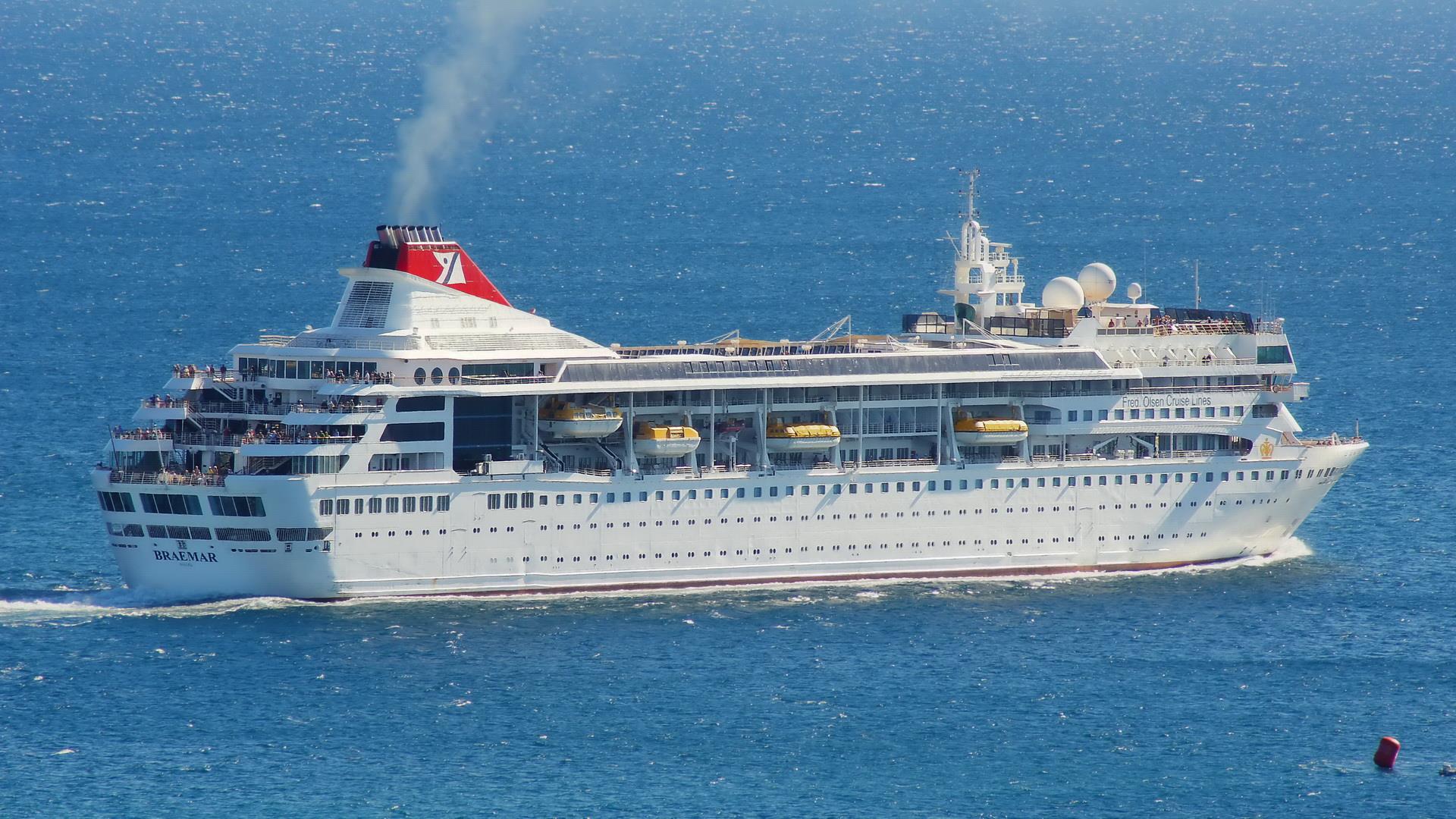
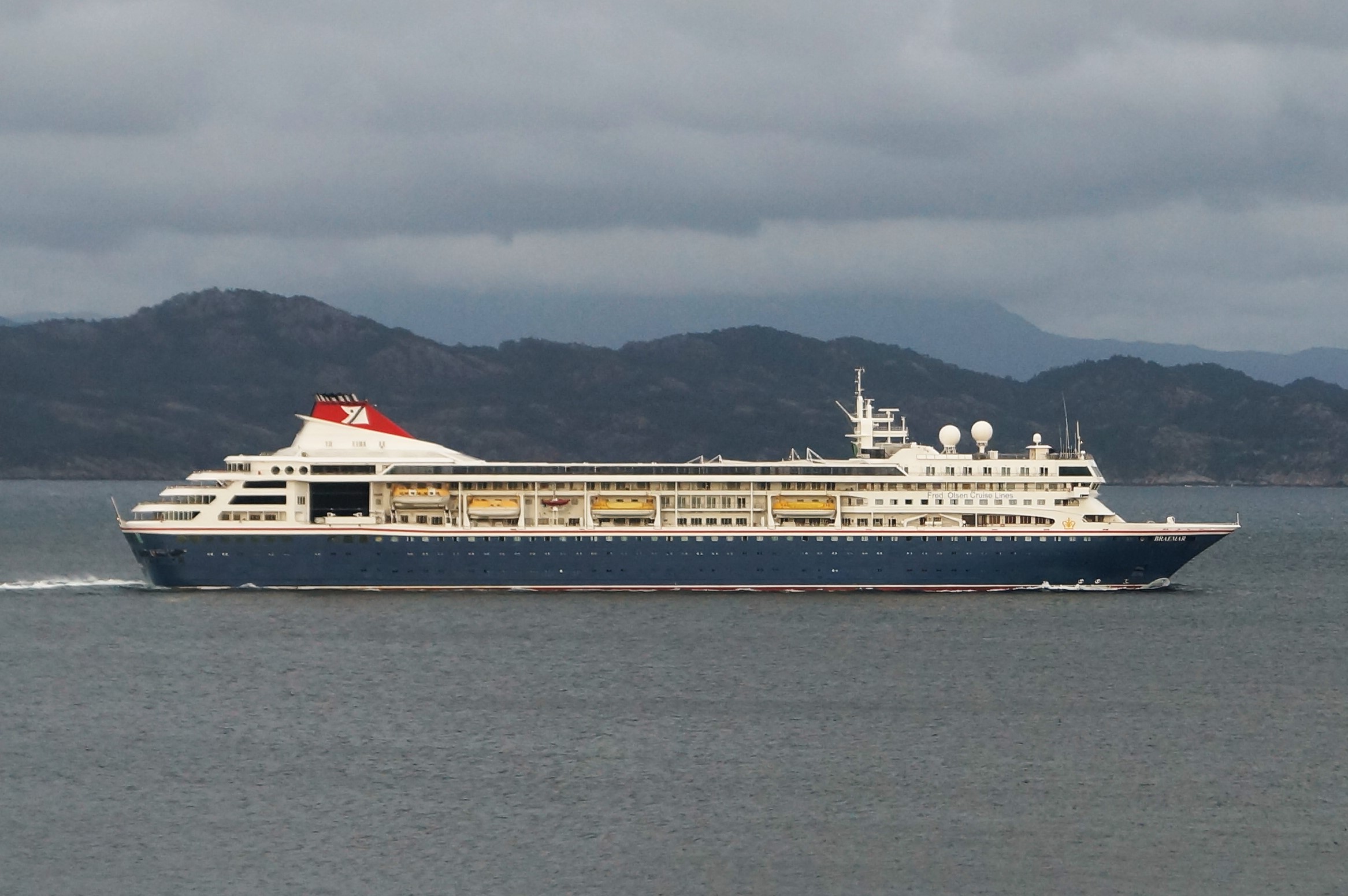
The vessel herself has been here before — not in layup over fuel, but in reinvention. Built in 1993, she first sailed as Crown Dynasty, then spent her long middle career as Braemar with Fred. Olsen Cruise Lines from 2001 to 2024, before being renamed Villa Vie Odyssey in 2024. She is 24,344 gross tons, IMO number 9000699 — a modest, older ship by modern cruise standards, which was precisely the point: a smaller vessel whose economics a residential operator believed it could make work. Her Villa Vie voyage began late and under strain: she finally set sail from Belfast in October 2024, months after a planned May 2024 start, following a long and public season of delays that left residents waiting in Northern Ireland for a home that kept not departing. That the same residents have now been put ashore in Cambodia, two years into a 3.5-year voyage, gives the suspension a history it would not otherwise have: for many aboard, this is the second time the promise of the ship has stopped moving.
The warning the sector already had
None of this is without precedent, and the precedent is not reassuring. Life at Sea Cruises, a rival residential-cruising venture, cancelled its planned three-year voyage in 2023 before it ever sailed, leaving buyers who had sold homes and reorganised their lives around the ship to pursue refunds from a company whose vessel arrangements had collapsed. That failure was treated at the time as one company’s overreach. The Odyssey’s suspension is a different and larger event: a residential ship that actually sailed, actually sold most of its residences — more than 85 percent, by the company’s own July account — and actually carried its community two years around the world, stopped not by a lack of customers but by the cost of the fuel under a full ship. If the model can fail with demand proven and the ship sold, the question the sector has to answer is no longer whether people want to live at sea. It is whether anyone can price a lifetime at sea in a world where fuel can triple between contract and combustion.
What happens next
The immediate facts are the small ones: 203 residents in and around Sihanoukville, their belongings shuttled off the ship through Tuesday evening, their lodging and local transport covered, their onward journeys not. Behind those facts, the dated events are the company’s own — a restructuring and recapitalisation process it has given itself about 60 days to evaluate, with no financing finalised and no outcome assured — and the unanswered one, refunds and compensation, on which USA Today could get no immediate response. Reporting by the BBC, NBC News and gCaptain, alongside CruiseHive’s coverage of the residents’ accounts, has kept the story moving through the week; the next verified development will come either from the company’s restructuring process or from residents themselves, many of whom have documented this voyage publicly from its delayed first day. Signal Post News will update this story as the restructuring talks, the refund question and the residents’ onward plans develop.
Sources
Sources: Associated Press (October 2026), reporting on the suspension at Sihanoukville Autonomous Port, the 203 passengers of 15 nationalities, 156 crew and 650-resident capacity, the Belfast departure and delays, cabin pricing context and the July 2026 Legacy announcement; Villa Vie Residences statement via PR Newswire (October 27, 2026), on the suspension, the company’s per-cabin fuel cost estimates of about $1,800 historically and $6,000–$8,000 in parts of Asia, the slowed itinerary, operating losses and the roughly 60-day restructuring and recapitalisation evaluation with no financing finalised and no outcome assured; Bloomberg (October 2026), founder Mikael Petterson on lodging and local transport being covered in Cambodia and onward departure not being funded; USA Today (October 2026), on the company not immediately responding on refunds or compensation; the October 26 disembarkation notice from chief executive Kathy Villalba as shared by resident Randy Cassingham; Cruise Industry News (April 2026, secondary reporting, not company-confirmed), on the reported “Emergency Loan Investment Opportunity”; CNN, on permanent cabin pricing from about $119,999; and coverage by the BBC, NBC News, gCaptain and CruiseHive. Refund and compensation questions remained unanswered by the company at publication; nothing in this article should be read as establishing that residents will or will not be refunded.