War in Ukraine
Fires were reported at the Novolipetsk steel works in Lipetsk and the EuroChem Azot plant in Novomoskovsk in one of the largest reported drone waves of the war — but Lipetsk’s governor says no industrial facility burned, and Kyiv has not commented.
Track it live: Ukraine war map — live tracker · Live wars tracker
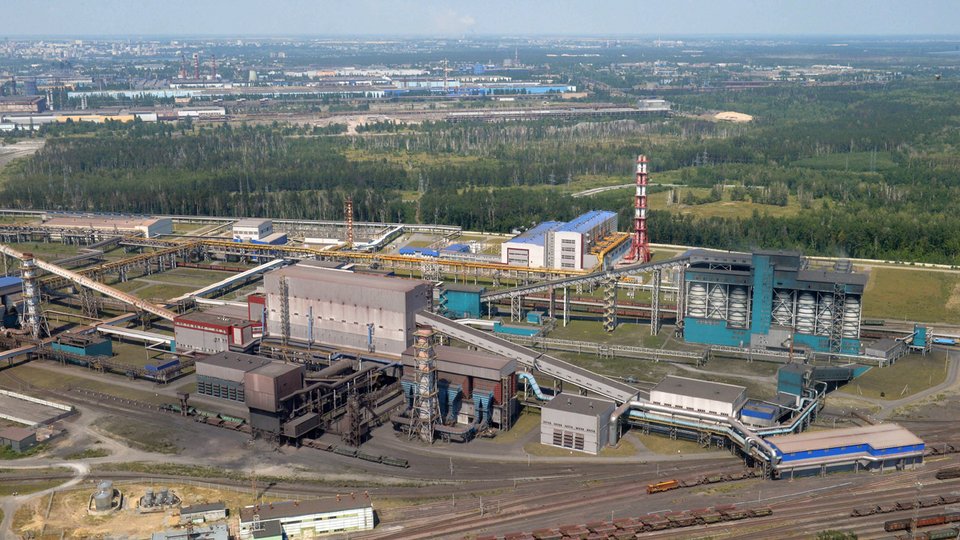
Ukraine reportedly struck two of the most important industrial sites in European Russia overnight on October 27–28 — the Novolipetsk Steel Plant, the largest steel works in Russia, and the Azot chemical plant in Novomoskovsk — as Moscow claimed its air defences intercepted or destroyed 531 Ukrainian drones in a single night. Ukrainian monitoring channels and Russian outlets reported fires at both facilities. The governor of Lipetsk region, however, flatly denied that any industrial plant had caught fire, and Ukraine’s military had not commented on the reported strikes by Wednesday morning — a familiar pattern in a deep-strike campaign in which the damage is often argued over for days before it can be independently confirmed.
What was reported in Lipetsk
A missile alert was declared in Lipetsk region during the night, and the Russian Telegram channel Radar Lipetsk warned that “the enemy is attempting to attack the industrial infrastructure of Lipetsk” and that a massive attack was being repelled, according to the Kyiv Post. The channel later reported a fire at the Novolipetsk Steel Plant (NLMK). Ukraine’s monitoring channel Exilenova+ also reported a blaze on the plant’s premises, suggesting a Russian Pantsir air-defence system may have failed to intercept an incoming target. Petro Andriushchenko, head of Ukraine’s Center for the Study of the Occupation, said a fire was reported in the area of the metallurgical plant and may have been caused by air-defence operations or a crashed aerial object — a more cautious account that underlines how little is yet verified about what, exactly, burned.
The governor’s denial — and what he confirmed
Lipetsk governor Igor Artamonov said on Telegram that 45 drones were shot down over the region overnight. He confirmed real effects on the ground: drone debris shattered windows in an apartment building in Lipetsk, one drone fell onto a garden plot in a gardening cooperative next to a house, and another fell near a residential building in the Dankovsky district. But he rejected the central claim. “Reports are circulating on social media and messaging apps about a major fire at an industrial facility. This is not true,” Artamonov said, adding that drone debris had fallen in a wooded area, sparking a fire that had been contained. Readers should weigh both accounts: the fire reports come from monitoring channels and eyewitness video circulating online; the denial comes from the regional governor, whose own account still confirms one of the heaviest drone attacks Lipetsk has faced.
Novomoskovsk: debris, an industrial zone, and chemical-plant questions
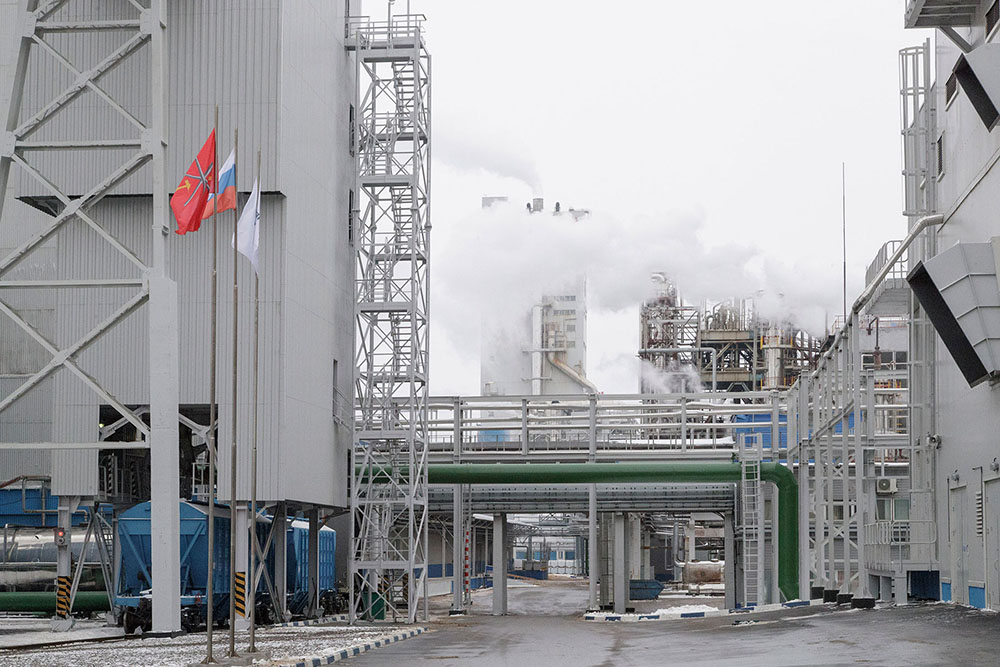
Early on October 28, Tula region governor Dmitry Milyaev declared a missile alert and later reported that the region had come under a massive attack by Ukrainian drones. “As a result of falling drone debris in Novomoskovsk, damage has been recorded to an apartment building, private homes, and infrastructure in the adjacent industrial zone,” Milyaev wrote, adding that information about possible casualties and the extent of the damage was still being clarified. Milyaev did not name the industrial facility. According to Exilenova+ and the Russian outlet Astra, the target in Novomoskovsk was the Azot chemical plant, part of the EuroChem group and one of Russia’s largest producers of nitrogen fertilisers. UA News, citing Andriushchenko, reported the Azot plant was attacked and a fire broke out on its premises, and noted that Moscow’s airports imposed operating restrictions during the night while explosions were also reported in the Voronezh and Belgorod regions. One detail in Milyaev’s statement will draw attention: he said laboratories from the Tula region’s state institution Priroda and the regional office of Rospotrebnadzor, Russia’s consumer-protection and public-health watchdog, had been dispatched to Novomoskovsk — the kind of environmental monitoring deployment associated with incidents near chemical facilities. No official statement has confirmed any chemical release, and none should be assumed.
Why these two plants matter
NLMK’s Lipetsk works is not a symbolic target. It is Russia’s largest steel plant, ranks among the twenty largest steel producers in the world, and has an annual production capacity of about 17 million tonnes of liquid steel across a site covering some 27 square kilometres; the company accounts for roughly a fifth of Russia’s crude steel output. Steel is the skeleton of a war economy — it feeds vehicle, rail, construction and weapons production — and Ukrainian and Western analysts have long treated the plant as part of the industrial base that sustains Russia’s military effort. The Sun, citing the plant’s role in Russian production chains, described it as crucial to the production of air-defence systems, drones and missiles; that characterisation is Kyiv’s targeting logic stated plainly, though the plant’s output is overwhelmingly civilian steel sold on open markets, which is precisely why strikes on it are contested. The plant was previously targeted in an attack in July, and was hit by drones in February 2024.
The Novomoskovsk Azot plant matters for a different reason: chemistry. Part of EuroChem, it produces ammonia, ammonium nitrate, urea and methanol. Ukraine’s Foreign Intelligence Service has said the plant supplied nitric acid to the Sverdlov plant in Dzerzhinsk, which produces explosives for artillery shells — the thread Kyiv draws between a fertiliser factory and the front line. The same dual-use argument, in reverse, is why attacks on chemical plants alarm safety experts: ammonium nitrate and ammonia are hazardous in bulk, and the plant sits in a city of more than 100,000 people. Azot Novomoskovsk was attacked twice before, in May and June 2025. This is also not the only Azot in Ukraine’s target set — Kyiv recently struck the Azot plant at Berezniki in Perm region, hundreds of kilometres deeper inside Russia.
The other direction: Kharkiv hit the same night
The overnight exchange ran both ways. In Kharkiv, Russian strikes wounded five people, including a four-year-old child, after a strike hit an apartment building in the city’s Osnovianskyi district late on October 27, according to Ukrainian officials cited by UATV and the Kyiv Post; emergency crews rescued people trapped inside, and a two-storey industrial building and a residential block caught fire. Russian forces also attacked four districts of Dnipropetrovsk region with drones, artillery, an air bomb and a missile, and a residential building was destroyed in Slovyansk, in the Ukrainian-controlled part of Donetsk region, after two KAB-250 glide bombs were launched, according to The Sun’s reporting from the region. Neither side’s claims about the other’s overnight damage could be independently verified in full on Wednesday morning.
Why this matters
Three things make this night different from the now-routine exchange of drone raids. First, scale: if Moscow’s figure of 531 intercepted drones is anywhere near accurate, Ukraine is sustaining a launch tempo that forces Russia to defend an enormous arc of industrial geography — steel in Lipetsk, chemicals in Tula, and, on other recent nights, plants as far away as Perm — with air-defence systems that are also needed at the front. Even if the number is inflated for public effect, the confirmed debris damage in at least two regions and restrictions at Moscow’s airports show a raid big enough to disrupt ordinary life hundreds of kilometres from the border. Second, target selection: Kyiv is no longer only burning oil depots. Steel and nitrogen chemistry are the upstream inputs of artillery war — shells need explosives, explosives need nitric acid, and armies need steel — so these strikes are an argument that Ukraine can tax Russia’s war production at its source rather than only at the point of delivery. Third, timing: the strikes landed on the same day President Donald Trump said a meeting between Vladimir Putin and Volodymyr Zelenskyy would be set up “very soon” and that “a lot of progress could be made” (Reuters/AFP) — hours after Finland’s President Alexander Stubb and Norway’s Prime Minister Jonas Gahr Støre spoke with Putin by phone, and while the localised Oleshky humanitarian ceasefire was holding into its second day. The war’s diplomatic track and its industrial-escalation track are now running in plain sight of each other, and each new raid raises the domestic political cost, on both sides, of being the leader who stopped first.
Context: a campaign, not an incident
Ukraine’s deep-strike campaign has widened step by step: oil refineries and fuel depots in 2024, then depots and airfields, then — increasingly in 2025 and 2026 — the chemical and metallurgical plants that feed explosives and steel into the war. Russia has answered with its own escalating strikes on Ukrainian energy and cities, including the ballistic-missile attack on Kyiv that damaged a university campus and medical facilities days earlier. The historical parallel analysts reach for — the Second World War’s bomber offensives against ball-bearing and synthetic-fuel plants — is imperfect: modern precision drones cannot flatten a 27-square-kilometre steel works, and both NLMK and Azot have resumed work after previous attacks. But the economic logic rhymes: force the defender to spread scarce air defences across hundreds of sites, raise the cost of every tonne of steel and every shell, and make the war’s price visible to populations far from the front.
What the numbers actually imply
Moscow’s 531-drone claim and Lipetsk’s 45 drones downed over one region cannot both be read as precise counts — wartime interception figures are claims, not audits, and Kyiv has offered no number of its own. What can be said is narrower and more useful: two regional governors independently confirmed heavy attacks and ground damage on the same night; at least one governor felt it necessary to publicly deny a flagship plant was burning; and environmental laboratories were sent to a chemical city. On the Ukrainian side, five wounded in Kharkiv — including a four-year-old — is a reminder that the same night’s arithmetic includes apartment blocks, not only factories. No deaths were reported from the strikes inside Russia at the time of publication, and no casualty figure for Novomoskovsk had been confirmed; Milyaev said the toll was still being clarified.
What happens next
Watch three things. First, satellite imagery and NLMK’s and EuroChem’s own statements: after previous attacks, company disclosures and commercial satellite photos — not official claims — established what was actually damaged, and whether production lines stopped or merely scorched. Second, Russia’s response pattern: Moscow has typically answered mass drone raids with missile and drone strikes on Ukrainian energy infrastructure within days, and Ukrainian officials have warned of exactly that cycle ahead of winter. Third, the diplomacy: technical talks are expected in November, and both the Kremlin’s openness “in principle” to resumed trilateral contacts and Trump’s “very soon” meeting language will be tested against nights like this one. If the Oleshky ceasefire model — narrow, local, verifiable — survives while the industrial war escalates everywhere else, it may become the template diplomats reach for; if it collapses, October 28 will read as the night both tracks were tried at once, and only one of them worked.
Sources
- Kyiv Post, October 28, 2026: “Ukraine Strikes Russia’s Largest Steel Plant, Chemical Factory Amid 531 Drone Claims.” kyivpost.com
- News.Az via EuropeSays, October 28, 2026: “Ukraine reportedly strikes Russia’s largest steel plant, major chemical factory.” europesays.com
- UA News via EuropeSays, October 28, 2026: “Explosions were heard and factories were on fire in Russia overnight.” europesays.com
- The Sun, October 28, 2026: “Ukraine strikes Putin’s major war factories sparking massive blaze.” the-sun.com
- 112.ua / UATV, October 28, 2026: “Russian Attacks on Kharkiv and Zaporizhzhia Injure Civilians, Including a Child.” 112.ua
- Reuters via Pakistan TV / AFP syndication, October 28, 2026: “Trump says Putin-Zelensky meeting to be set up ‘very soon’.”
- Statements: Lipetsk governor Igor Artamonov and Tula governor Dmitry Milyaev on Telegram, October 28, 2026.