War · Iran · Diplomacy
The Vance letter to Iran has reached the one desk in Tehran that can answer for the guns. JD Vance wrote to Mohsen Rezaei, the Revolutionary Guard’s longest-serving commander and now secretary of the Supreme National Security Council, with Trump’s approval and a strike threat as the deadline — a framework for talks, not yet a peace plan, six days before the midterms.
Track it live: Iran war tracker
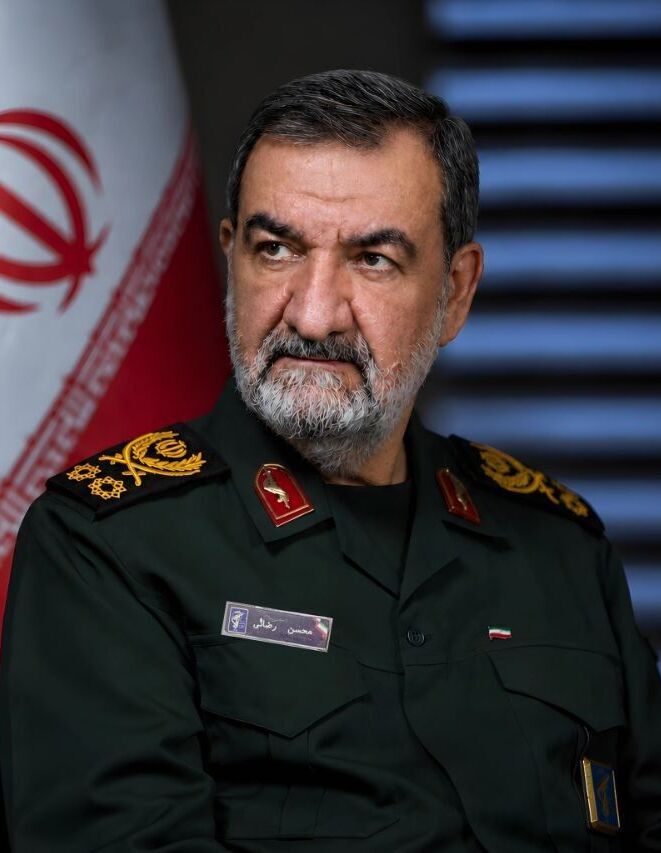
WASHINGTON — The Vance letter to Iran is, as of Wednesday evening, the most consequential piece of paper in an eight-month war. Vice President JD Vance has written directly to Mohsen Rezaei, the secretary of Iran’s Supreme National Security Council and the longest-serving commander in the history of the Islamic Revolutionary Guard Corps, in a bid to revive peace negotiations that have been deadlocked for months, The Wall Street Journal reported on Wednesday, citing US officials and people familiar with the matter. The approach was not a freelance initiative: President Donald Trump confirmed to reporters on Wednesday evening that he had approved Vance’s request to make contact, and one person familiar with the matter said the letter was sent at Trump’s direction.
The timing is the story as much as the letter itself. The outreach lands six days before the November 3 midterm elections, with Trump publicly threatening to resume bombing Iran once those elections are over, and with the administration insisting in public — as recently as last week — that it is not negotiating with Tehran at all. What Vance is testing, according to the reporting, is narrow and urgent: whether Washington and Tehran can find enough common ground to persuade Trump not to give a final order for a short, intense attack on Iran in the coming weeks.
Trump confirms the outreach he spent a week denying
Trump’s confirmation, delivered to reporters on Wednesday evening, was strikingly casual for a channel this sensitive. “They need help with medical supplies and various things,” he said of the Iranians. “He asked me what I thought. I said, ‘If you want to do that, that’s ok.’” A person familiar with the matter went further, saying the JD Vance letter to Iran was sent at Trump’s direction — a distinction that matters in Tehran, where any approach that cannot be shown to carry the president’s authority is liable to be read as a probe rather than an opening.
What the letter does not contain is a peace plan. According to a person familiar with the matter, the letter and the discussions between US and Iranian officials that have followed it have not included specifics for a peace proposal — only a possible framework for negotiations, the scaffolding within which substantive talks could later be held. The precise timing of the letter and its full content have not been confirmed, and nothing in the reporting indicates that Iran has accepted talks. A spokesman for Vance declined to discuss the outreach, the White House referred questions to the vice president’s team, and Rezaei and the Supreme National Security Council could not be reached for comment.
Why this matters
The Vance Rezaei letter matters first because of its addressee. Every previous round of this war’s diplomacy ran through Iran’s diplomatic establishment — Foreign Minister Abbas Araghchi and parliament speaker Mohammad Bagher Ghalibaf, who sat across from Vance, Steve Witkoff and Jared Kushner for 21 hours in Islamabad in April. Writing instead to the secretary of the Supreme National Security Council is a decision to negotiate with the part of the Iranian state that commands its guns. If the channel works, it could produce the one thing the diplomatic channel never did: an interlocutor in Tehran who can plausibly deliver the security establishment’s consent to any Iran negotiations framework that follows.
It matters second because of the clock it is racing. Trump has threatened to resume bombing Iran after the midterms, mused at a rally last Friday about “another little Epic Fury,” and said on Tuesday night that Tehran’s waiting game “is not gonna help them.” The letter is therefore best read as a deadline instrument: it gives Tehran a visible, presidentially blessed alternative to being bombed, and it gives Vance — the administration’s lead negotiator on Iran and the early front-runner for the 2028 Republican presidential nomination — a concrete diplomatic track to put in front of Trump when the post-election decision arrives.
And it matters third because the war it seeks to end is still compounding. The Pentagon has now put the cost of the war at $47.1 billion, with some 65% of the Patriot interceptor stockpile expended — figures we detailed in the Pentagon’s $47.1 billion Iran war cost accounting. A second intense strike campaign would restart both meters at once: the operational spending and the consumption of the interceptors that remain.
How we got here: Epic Fury, Islamabad and a memorandum that collapsed
The United States and Israel opened the war in February with Operation Epic Fury, the strike campaign Trump predicted would be short. Vance’s position in the run-up to it is part of why he now holds the pen: he supported the war publicly, but privately expressed reservations about prolonging it, and before the February strikes he argued for more robust diplomacy. Trump later made him the administration’s lead negotiator, and Vance flew abroad twice to meet Iranian counterparts.
The fullest test of that diplomacy came in April, in Islamabad, where Vance, Witkoff and Kushner met Araghchi and Ghalibaf for 21 hours. It produced process, not peace. In June the two sides struck a memorandum of understanding — and it collapsed two weeks after it was signed, amid conflicting interpretations of how to unlock shipping in the Strait of Hormuz. That failure is the direct ancestor of this week’s letter: the Strait of Hormuz blockade deal is where the last framework died, and any new one has to answer the question the memorandum could not — who moves first, and who verifies it.
Since then the talks have run on and off through mediators in Qatar and Pakistan without breaking the core deadlock: Washington insists on upfront nuclear concessions, Tehran demands immediate economic relief. The most recent mediated attempt — the new draft deal Qatari mediators handed to Tehran — has yet to produce a breakthrough either. Meanwhile Rezaei himself had publicly closed the door Vance is now knocking on: last week he said Iran would not negotiate with Washington until specific core demands were met, and earlier this month he said Tehran could target the UAE, data centres and internet cables across the region. On Sunday he hosted security chiefs from Saudi Arabia, Pakistan and Turkey in Tehran — a rare meeting of security chiefs, not a diplomats’ visit, and a signal of where Tehran has been building its leverage.
Why write to the hard-liner?
The case for the hard-line channel, as some US officials argue it, is that power in Tehran has moved since the war began. The United States and Israel killed senior regime leaders at the war’s outset, and the figures who have amassed power since are disproportionately from the security establishment Rezaei embodies. Araghchi can negotiate, but officials question whether he can commit the Revolutionary Guard; Ghalibaf carries the parliament’s politics with him. Rezaei, who led the Guard through Iran’s 1980s war with Iraq and became secretary of the Supreme National Security Council on August 9, 2026, sits at the junction of both worlds — a wartime commander turned security-policy chief, answerable to the same council that would have to approve any settlement.

The risk is the mirror image of the case. Elevating Rezaei could sideline Araghchi and Ghalibaf — the two Iranians Washington has spent eight months learning to negotiate with — and could read in Tehran as an American preference for dealing with the men of war over the men of the foreign ministry. It could also simply fail at the first fence: Rezaei’s stated precondition is that Iran’s core demands be met before negotiations, which is close to the inverse of the American demand for upfront nuclear concessions. A framework negotiation is, in part, an attempt to postpone exactly that collision — to agree on how to talk before arguing about what to concede.
Who actually decides in Tehran
For readers asking who is Mohsen Rezaei in Iran’s chain of decision: formally, the Supreme National Security Council is the body through which Iran’s defence and security policy is set, and its secretary is the official who runs its agenda and speaks for its consensus. Rezaei’s biography gives him a weight few Iranian officials can match — he commanded the Revolutionary Guard longer than anyone in its history, through the whole of the Iran–Iraq war, before spending decades in the regime’s senior policy bodies. When he says Iran will not negotiate until its demands are met, that is not a pundit’s line; it is the security establishment stating a condition through its own secretary.
The Iranian reaction to the letter so far has been carefully split, which is itself information. Araghchi, the man the letter bypasses, posted publicly that “while our Brave Armed Forces are fully prepared to defend the Homeland, Iran continues to give diplomacy a chance to succeed” — the Araghchi diplomacy-a-chance line keeps the foreign ministry’s door open without confirming any new channel. An Iranian foreign ministry spokesman, by contrast, said he had no information on the Vance outreach. Neither statement accepts talks; neither slams the door. Tehran is letting Washington wonder, which is what a recipient does when it wants the sender to improve the offer.
Public threats, private letter
Set the letter beside Trump’s public words and the contradiction is total — and, on the record of this administration, probably deliberate. Last week Trump said the administration was not talking with the Iranians: “We’re not negotiating with them, we are going to have something one way or another, it’ll happen soon.” On Tuesday night he added: “They’ve wanted to make a deal, but they like tapping it along. Maybe they’re waiting for the election or something — but that’s not gonna help them.” On Friday, in Fort Myers, he floated “another little Epic Fury” — the prospect of an Operation Epic Fury second strike, delivered as a rally line.
Two readings are available, and the difference between them decides what Tehran does next. In the coercive reading, the threats are the leverage and the letter is the off-ramp: Trump raises the price of refusal in public while Vance quietly offers the framework that lets Tehran climb down without humiliation. In the divided reading, the letter is a factional move — a vice president who privately doubted the war’s prolongation building a paper trail of diplomacy against a president who prefers the strike. Trump’s own Wednesday comments cut against the second reading: presidents do not usually bless, on the record and within hours, outreach they intend to disown. But the same comments, with their emphasis on Iran needing “medical supplies and various things,” also frame the letter as humanitarian logistics rather than grand strategy — a framing that lowers the domestic cost if the channel produces nothing.
The deadlock the letter has to break
Underneath the channel politics sits the same substance that has defeated every round so far. The United States maintains an economic blockade on Iranian ports in the Strait of Hormuz, yet Iranian oil exports still flow — a combination that squeezes Tehran without delivering the energy-price relief American voters were promised, because a blockaded strait keeps risk priced into every barrel that moves through the region. Washington wants nuclear concessions first; Tehran wants economic relief first; and the June memorandum’s collapse showed that even an agreed text cannot survive the two sides reading its sequencing differently.
A framework-first approach is designed for precisely this trap. If Vance and Rezaei can agree on the shape of a negotiation — what is on the table, in what order, verified how — the sequencing fight is at least contained inside a structure both security establishments have touched. If they cannot, the letter will join the Islamabad marathon and the June memorandum in the war’s growing archive of near-misses, and the decision reverts to the one Trump has been advertising: whether to bomb again once the votes are counted.
Midterm politics and the price at the pump
The domestic calendar hangs over every paragraph of this story. Republicans are bracing to lose seats in both the House and the Senate on November 3, and voters name the Iran conflict and rising fuel costs among their frustrations — the two grievances this letter, if it works, addresses at once. A credible peace track before the election would not end the war in a week, but it would let Republican candidates argue that an end is being negotiated rather than merely promised. Conversely, a post-election strike — the option Trump keeps naming — would be taken by a president who no longer has to price its fuel and casualty consequences into a campaign.
For Vance personally the stakes compound. As the early lead contender for the 2028 Republican nomination, he owns this channel in a way no envoy could: success makes him the man who ended the war his president started, and failure leaves him holding the letter that Tehran ignored. That dual exposure is, paradoxically, part of the signal Tehran will read — a negotiator whose own future rides on the track is a negotiator motivated to keep it alive.
What happens next: three scenarios
Framework talks open
In the best case, the exchange hardens into an agreed framework: a defined agenda, a sequence both sides can describe as moving first, and a Hormuz shipping arrangement that survives contact with implementation — the test the June memorandum failed. Expect Qatar and Pakistan to remain involved as mediators even in a direct channel, and expect the first public sign to be procedural: named delegations, a venue, a date after November 3.
Rezaei’s demands come first
In the second scenario, Tehran answers the letter with its preconditions restated — core demands met before any negotiation, per Rezaei’s line of last week. That response would not necessarily kill the channel; a demands letter is still a letter, and it would hand Vance the first written Iranian position of the new track. But it would compress the timeline brutally, because Trump has already told his voters what a stall means.
No reply, and a post-election strike
In the third, Tehran pockets the letter, says nothing, and waits for the midterms — the very tactic Trump accused it of on Tuesday. In that case the administration’s advertised option takes over: a short, intense strike campaign in the weeks after the election, aimed at the nuclear and missile infrastructure the February campaign degraded but did not finish. The letter would then serve its final purpose anyway — as the documented last offer, produced for Congress, for allies and for history, before an Operation Epic Fury second strike begins.
Which scenario unfolds will be visible first in small things: whether the foreign ministry spokesman’s “no information” gives way to an acknowledged channel, whether Rezaei’s council repeats its preconditions or quietly drops them, and whether Trump’s rally language changes after November 3. The letter has been sent. Everything else about this war now waits on the reply.
Sources: The Wall Street Journal (October 28, 2026), which first reported, citing US officials and people familiar with the matter, that Vice President JD Vance sent a letter to Mohsen Rezaei to revive peace negotiations, that the discussions have addressed a possible framework rather than a specific peace proposal, and that Vance is testing whether common ground can avert a final order for a short, intense attack; New York Post (October 28, 2026), confirming the outreach and President Trump’s on-record approval of it. Direct quotations from President Trump and Foreign Minister Abbas Araghchi are as reported by those outlets; the letter’s precise timing and full content have not been independently confirmed, and Iran has not said it has accepted talks.