War · Iran
The Iran war cost $47 billion and counting. Pentagon figures provided to Congress put the total at $47.1 billion as of October 16 — up more than 25% since July — with more than $29 billion needed to replace expended munitions and about 65% of the Patriot interceptor stockpile gone.
Track it live: Iran war tracker · Live war tracker
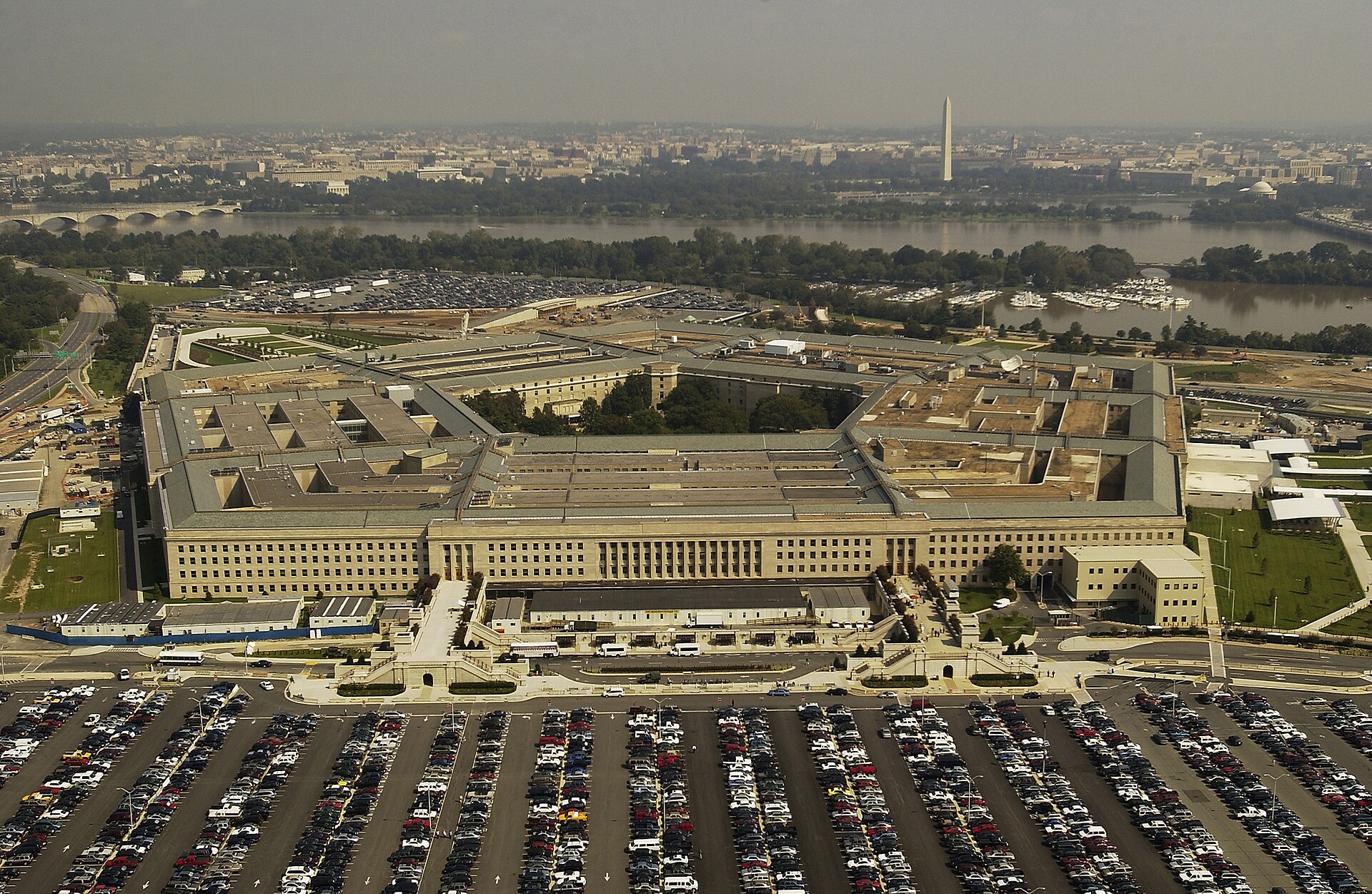
WASHINGTON — The Iran war cost $47 billion by the Pentagon’s own latest count, and the figure is still rising. In figures provided to Congress by the Pentagon and US Central Command (CENTCOM), the total cost of the US war in Iran reached $47.1 billion as of October 16, according to Reuters and USA TODAY, which independently obtained the estimates. The Media Line, citing CBS reporting, carried the same total — three separate reporting chains arriving at the same number, and at the same uncomfortable detail: the largest share of the bill is not the fighting itself, but replacing what the fighting has used up.
The new total is $3.5 billion higher than CENTCOM’s last update to lawmakers and more than 25% above where the Pentagon said the bill stood in July. It also comes with a caveat that cuts in only one direction: the $47.1 billion excludes the cost of repairing US bases in the Middle East damaged by Iranian strikes, which USA TODAY described as making the figure almost certainly a significant undercount of the war’s full price.
The breakdown: $29 billion to replace munitions, $6.1 billion in lost equipment, $11.9 billion to operate
The Pentagon’s figures divide the $47.1 billion into three ledgers, and the proportions tell the strategic story of the war. The largest, at more than $29 billion, is the cost of replacing expended munitions — the missiles, interceptors and precision weapons fired since February, which must be bought again if US stockpiles are to be restored. The second, $6.1 billion, covers lost equipment and platform losses, a category that includes many drones and aircraft destroyed or written off during the campaign. The third, $11.9 billion, is additional operational expenses: the day-to-day cost of keeping more than 50,000 US personnel deployed across the CENTCOM area, flying the sorties, sailing the blockade and manning the air defences.
Read together, the three lines reframe what kind of war this has been. For every dollar spent running the campaign, roughly two and a half dollars are owed to refill the magazines it emptied. That is the arithmetic of a missile-age war: the United States and Iran have fought largely with expendable precision weapons and the interceptors used to stop them, and expendable weapons convert directly into procurement bills. The $29 billion replacement line is, in effect, a second war budget hidden inside the first — money that will flow through contracts over coming years whether or not another shot is fired.
A total that has climbed all year
The $47.1 billion is the fourth major marker in a series that has moved in one direction only. Defense Secretary Pete Hegseth told lawmakers in July that the war’s cost was about $37.5 billion. The Congressional Budget Office (CBO), working independently, estimated about $38 billion through August 1 and projected a further $2 billion to $3 billion per month thereafter. CENTCOM’s early-September estimate put the figure at $43.6 billion. Now, as of October 16, it is $47.1 billion — a rise of $3.5 billion in roughly six weeks, and of more than 25% since Hegseth’s July testimony.
We tracked the earlier stages of this ledger in our explainer on the cost of the US–Iran war, when the running total stood at $45.1 billion on Pentagon figures through early September plus fuel costs. The new CENTCOM figures supersede that count in both method and scale: they are the military’s own formal accounting to Congress rather than a partial tally, and they land higher than the trajectory that explainer described.
The burn rate: what $47.1 billion over seven and a half months means
The war began on February 28. Between that date and the October 16 accounting, roughly seven and a half months elapsed, which puts the all-in average cost at about $6.3 billion a month. That average, however, mixes two very different kinds of spending. The operational ledger — $11.9 billion — works out at roughly $1.6 billion a month, close to the running-cost range the CBO projected in August. The replacement ledgers are lumpier: they arrive when stockpile managers price what has been expended, which is why the headline total can jump $3.5 billion in six weeks even during a period when a ceasefire has been notionally in place and a naval blockade, rather than heavy strike operations, has been the campaign’s main activity.
That distinction matters for what happens next. If heavy fighting resumes, the operational run-rate rises and the replacement bill compounds behind it. If it does not, the operational line flattens but the replacement line does not disappear — $29 billion of munitions and $6.1 billion of equipment must still be bought back to return US forces to their February starting position. On the Pentagon’s own figures, the war has already committed the United States to years of spending beyond the day the shooting stops.
The Patriot problem: 65% of the interceptor stockpile expended
The single most consequential figure in the CENTCOM accounting may be the one expressed as a percentage. About 65% of the US Patriot interceptor stockpile has been expended, according to the figures provided to Congress — nearly two-thirds of the missiles that defend US bases, deployed forces and allies against ballistic missile attack, fired in under eight months.
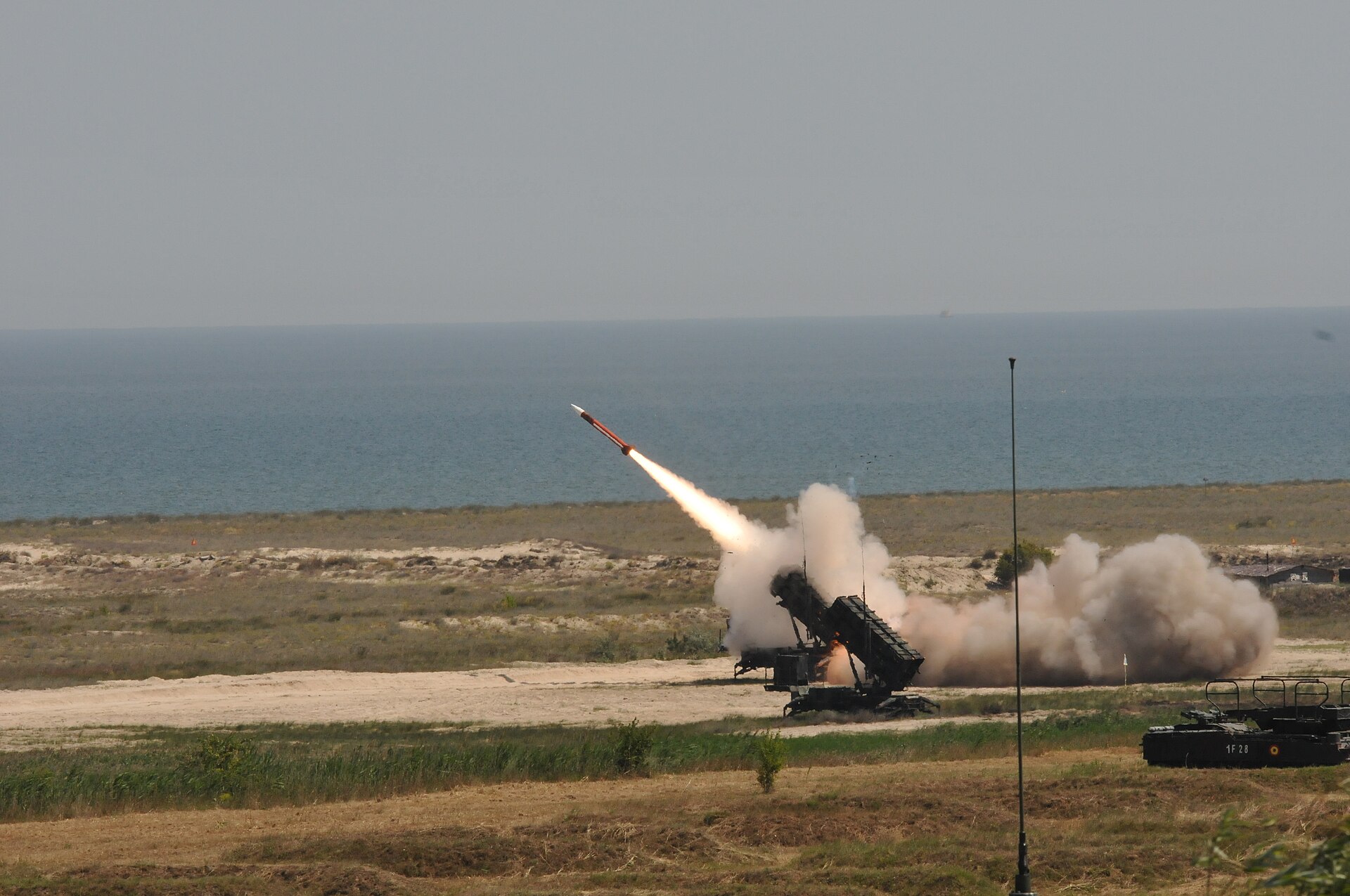
The drawdown reflects the shape of the Iranian threat. Iran’s ballistic missiles can only be reliably stopped by high-end interceptors, and every incoming salvo has been answered with salvos of the defenders’ own — often more than one interceptor per target. The result is an exchange ratio that favours the attacker’s economics: missiles built to destroy are generally cheaper than the missiles built to intercept them, and Iran entered the war with deep magazines of the former while the United States is now counting the latter.
Replenishment is measured in years, and the Pacific is watching
Stockpiles of this kind are accumulated over decades, and they cannot be rebuilt at the speed they were spent. The $29 billion munitions line is the Pentagon’s own pricing of that problem, and Patriot interceptors are among its most complex and slowest items to replace: each round is a sophisticated guided missile whose production depends on specialised components and a small number of production lines. Even fully funded, refilling a stockpile drawn down by 65% is a project of years, during which the remaining inventory has to cover every other commitment the United States has made.
That is where the Iran war’s bill meets its largest strategic trade-off. The same interceptor families that defend bases in the Middle East also underpin US and allied air defence in the Indo-Pacific, where planners measure readiness against a possible conflict involving China. Every Patriot round expended over the Gulf is a round unavailable elsewhere, and every production slot devoted to backfilling the Middle East draw is a slot not building inventory for the Pacific. The Pentagon figures do not state that trade-off in words, but it is embedded in the arithmetic: the United States is now spending $47.1 billion on one war while holding a visibly thinner shield over the theatre its own strategy documents call the priority.
The service ledger and the human cost
The burden has not fallen evenly across the services, according to the reported figures. The Air Force has spent $7.6 billion — the most of any service — and has lost dozens of aircraft during the campaign. The Army has spent $2.1 billion and the Navy $1.5 billion, the Navy’s figure reflecting a war in which its principal roles have been the blockade and sea-based air and missile defence rather than the strike campaign flown from land bases. Behind those service totals stands the deployment itself: more than 50,000 US personnel are serving in the CENTCOM area, a footprint whose sustainment is the engine of the operational ledger.
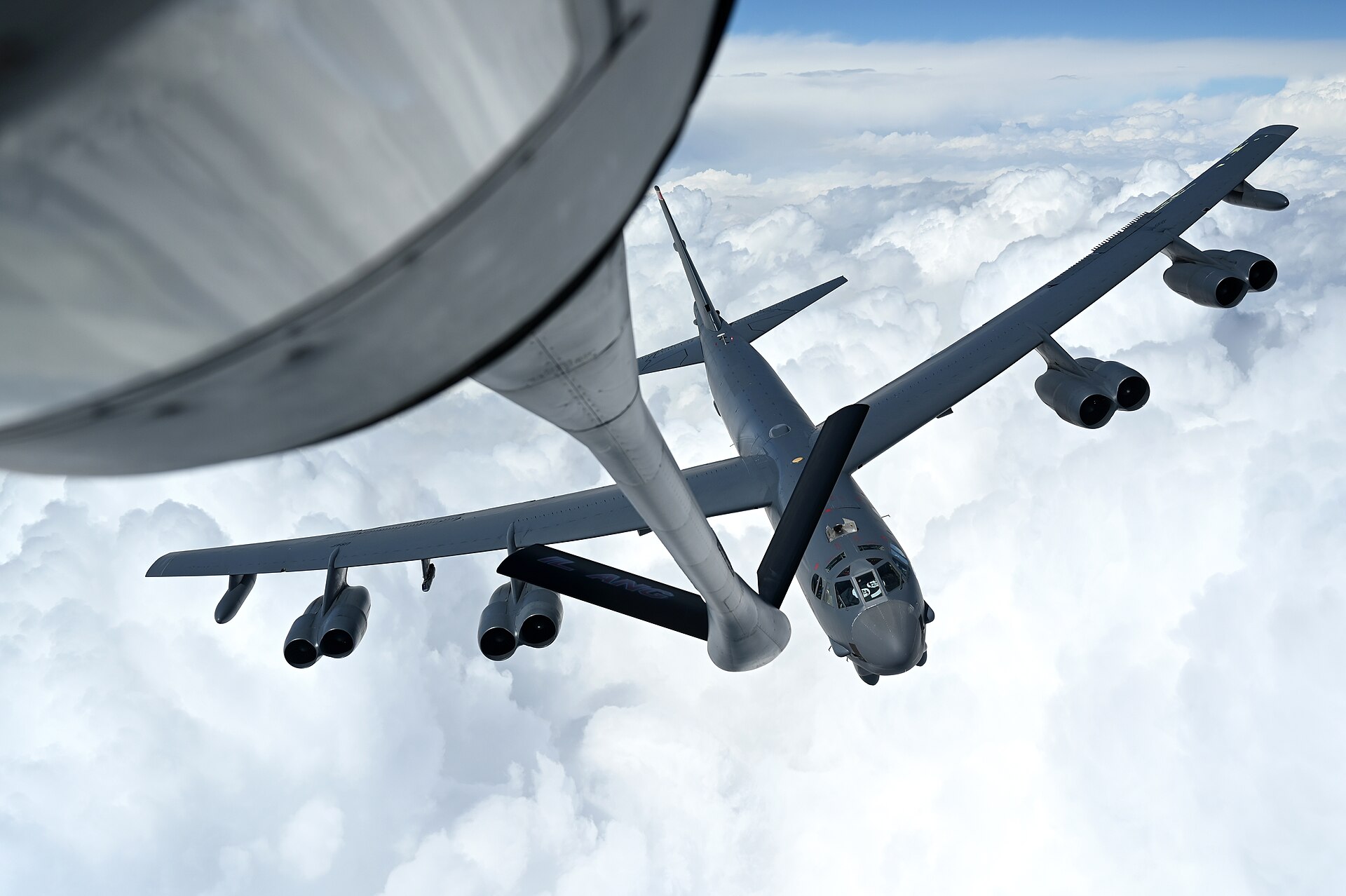
The human ledger is the one no appropriation can rebalance. At least 21 US service members have been killed and 865 wounded since February 28, according to the official casualty database figures carried in the reporting. Those numbers, like the financial ones, are stated as a floor as of the accounting date — and they are the part of the cost that the congressional debate over the $47.1 billion will ultimately be about, whatever line items dominate the hearings.
How we got here
The United States and Israel launched strikes on Iran on February 28, opening a war that President Trump predicted would be short. It was not. An April ceasefire paused the heaviest fighting, but Reuters reporting indicates the pause worked to Tehran’s advantage as well as Washington’s: it gave Iran time to recover buried weapons and air defences that the opening campaign had failed to destroy. A US naval blockade has continued in the meantime, keeping economic pressure on Tehran while the two sides have tested diplomacy through intermediaries — most recently the draft deal that Qatari mediators have handed to Tehran, as we reported in Qatar’s new draft deal to end the war.
The cost series is, in that light, the financial shadow of the strategy’s evolution: a war planned as a short, sharp campaign became a blockade-and-standoff whose meter kept running at $2 billion to $3 billion a month even in its quieter phases, on the CBO’s projection — and whose stockpile consumption during its loud ones has now produced the largest single replenishment bill of any US conflict since the Cold War’s end, on the Pentagon’s own accounting.
Why this matters
The gains and losses from a $47.1 billion war are distributed as unevenly as the service ledgers. The clearest financial beneficiaries are the munitions manufacturers whose products fill the $29 billion replacement line: restocking orders of that scale translate into years of contracted production, and the urgency of a 65% Patriot drawdown strengthens the case for expanded production capacity that the industry has sought for a decade. The clearest losers are harder to name because they are diffuse: the readiness accounts and modernisation programmes across the services that must now compete with replenishment for the same dollars, and the other theatres — above all the Indo-Pacific — whose defensive inventories are thinner for as long as the backfill takes.
Critics of the war’s financing make three arguments that the new figures sharpen. The first is oversight: the totals have reached Congress as periodic estimates rather than through a single debated appropriation, and each update has arrived higher than the last. The second is completeness: a headline figure that excludes base-repair costs, as USA TODAY noted of the $47.1 billion, understates the commitment at the moment lawmakers are asked to judge it. The third is strategy: that a campaign consuming two-thirds of the nation’s premier interceptor stockpile against an adversary whose missile force it was meant to degrade raises the question of whether the exchange is sustainable, whatever its tactical results.
Supporters of the campaign answer in kind. They argue that the expenditure has defended US forces and allies under fire, enforced a blockade that constrains Tehran’s revenue, and degraded Iranian capabilities at a cost that remains a small fraction of annual US defence spending — and that interceptor stockpiles exist precisely to be used when missiles are actually flying at American bases. Both cases now have the same set of Pentagon numbers to argue from. What the October 16 accounting settles is the scale of the bill; what it cannot settle is whether the bill bought enough.
What happens next
Three clocks now run on the war’s finances. The first is electoral: the November 3 midterm elections will decide the Congress that must fund whatever comes next, and US officials say the Pentagon has been planning to restart heavy fighting if ordered — possibly after the midterms, according to Reuters. That planning forms the backdrop to Washington’s warnings to its Gulf partners, which we reported in the US warning to Gulf allies of a new Iran campaign after the midterms. A resumed strike campaign would restart both meters at once — operations and expenditure of the interceptors that remain.
The second clock is appropriations. A replenishment bill of $29 billion for munitions and $6.1 billion for equipment cannot be absorbed quietly inside existing accounts indefinitely; at some point it requires Congress to vote new money, in a supplemental or in the regular defence budget, and that vote will force the debate about the war’s aims that its financing has so far avoided. The third clock is accounting itself: the $47.1 billion excludes the damage to US bases hit by Iranian strikes, and when CENTCOM next updates Congress, that exclusion and six more weeks of blockade operations make another upward revision the safest prediction the series supports. The war’s cost has been revised up every time it has been counted. Nothing in the October figures suggests the counting is finished.
Sources: Reuters (October 28, 2026), on the Pentagon estimate of $47.1 billion, the April ceasefire’s effect in allowing Iran to recover buried weapons and air defences, and US planning to restart heavy fighting possibly after the November 3 midterm elections; USA TODAY (October 27, 2026), which independently obtained the Pentagon and CENTCOM figures provided to Congress, including the $29 billion munitions replacement cost, the 65% Patriot stockpile expenditure, the service-by-service spending and the exclusion of US base damage from the total; The Media Line (October 2026), reporting CBS figures putting US Iran war costs at $47.1 billion, up more than 25% since July. Casualty figures are from the official US casualty database, as reported.