Vance Iran interview
In an exclusive Reuters interview in Fairbanks, Alaska, Vice President JD Vance said Iran must make a "meaningful" cut to its nuclear enrichment capacity to end the seven-month war — and conceded Washington isn't certain who in Tehran can actually agree to a deal.

The Vance Iran interview published this week may be remembered as the moment Washington finally named its price for peace. Sitting down with Reuters after a campaign stop in Fairbanks, Alaska, on Monday, October 6, Vice President JD Vance told the news agency that Iran must make a "meaningful" reduction in its nuclear enrichment capacity to satisfy the United States and end the seven-month war — real, physical cuts to the program, not promises of future drawdowns. "If you don't want a nuclear weapon, then why do you need 60% enriched fuel?" Vance asked. "We're not going to trade words for actions."
What Vance actually said
JD Vance Reuters interview sets the Iran enrichment capacity cut test
In the exclusive interview with Reuters, Vance said any agreement to end the conflict would require Tehran to reduce its nuclear enrichment capacity rather than offer assurances of future nuclear drawdowns. "I think if they want to show a commitment to not building a nuclear weapon, they would do something meaningful on their enrichment capacity," he said. He stressed the United States remains open to a deal but will demand concrete Iranian nuclear concessions first. The vice president also revealed that Washington and Tehran have exchanged proposals in recent weeks aimed at ending the war and reopening the Strait of Hormuz, the vital global energy shipping lane. President Donald Trump rejected Tehran's latest offer, and Vance confirmed the president has warned that American military operations could intensify after the November midterm elections. In a striking admission, Vance said Washington is uncertain who actually makes decisions in Tehran — a complication hanging over every round of talks.
Why this matters
US Iran ceasefire talks meet November midterm elections Iran war pressure
This is the first time anyone in the administration has stated the American endgame as a physical, verifiable threshold rather than a mood. Every previous formulation — "Iran can't have a bomb," "maximum pressure," "a deal we can live with" — was a slogan. Enrichment capacity is a number. It can be counted, inspected, and dismantled, which is precisely the point: Vance is moving the negotiation from trust to verification, from intentions to hardware. That shift matters because it closes the loophole every failed round has exploited — Tehran offering future restraint while keeping the machines that make restraint optional. There is a second signal buried in the venue. Vance, a longtime skeptic of American involvement in foreign wars, has become the administration's lead negotiator on this file, brokering a provisional peace agreement earlier this year that quickly fell apart. Putting the most dovish voice in the room in charge of the hardest demand is either clever delegation or a sign that Trump wants the war ended on terms he can sell as toughness. Finally, the timing is political. Reuters notes the war has jolted global energy markets and become a liability for Trump and fellow Republicans ahead of the November midterms. A named price for peace, stated plainly on camera, is also a campaign argument: we know how to end this.
How we got here
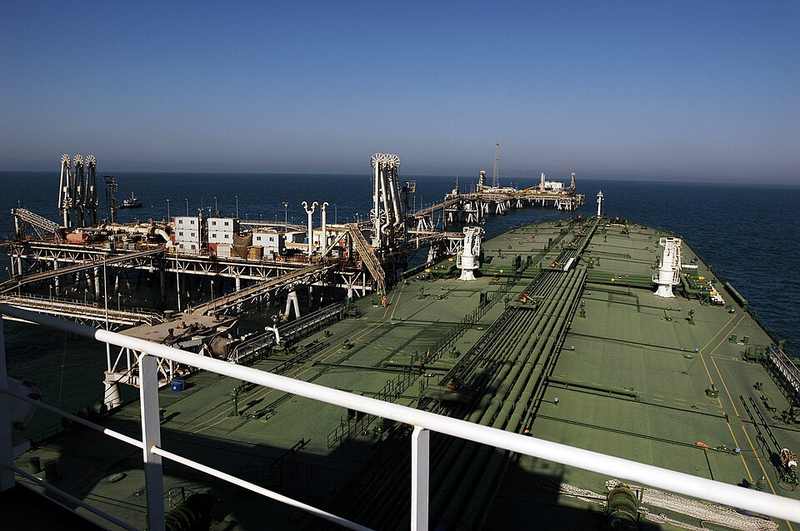
US Iran seven-month war makes Strait of Hormuz reopening the economic hinge
The United States and Iran have been at war for seven months, a conflict that has rattled oil markets, repeatedly threatened shipping through the Strait of Hormuz, and drawn in proxies across the region. Vance personally brokered a provisional peace agreement earlier this year, but it collapsed almost immediately — a failure that now shadows his credibility as a negotiator and explains the harder edge in his language. ("We're not going to trade words for actions" is the sound of a man burned once.) In recent weeks the two sides have traded proposals aimed at ending the fighting and reopening Hormuz; Tehran's latest offer was rejected by Trump. Iran's own public posture, as covered on this site, has been no nuclear concessions while Hormuz stays closed — the mirror image of Vance's demand. Meanwhile the domestic clock is ticking: with midterm elections weeks away, every week of high gas prices and war headlines costs the party in power.
The numbers: what "60% enriched" actually means
Iran 60 percent enriched uranium and the Iran nuclear weapons threshold
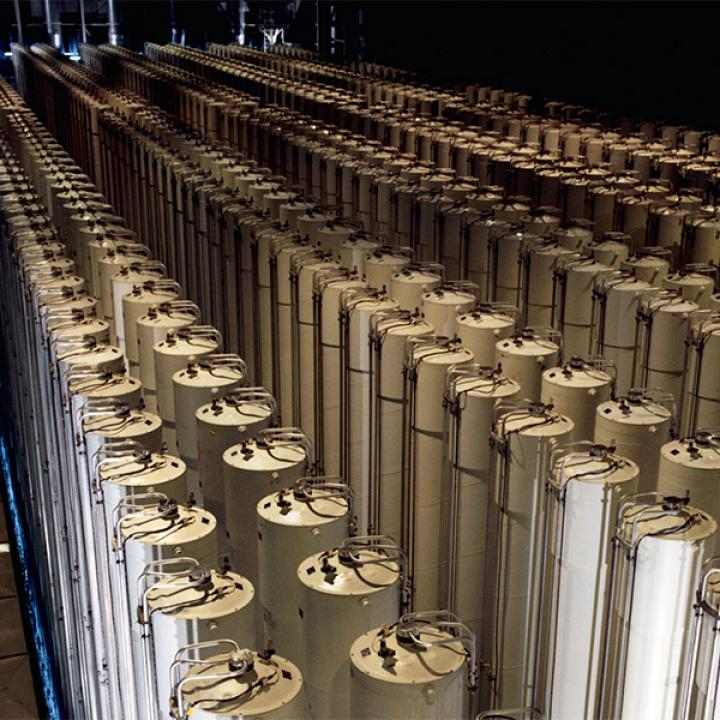
Here is the technical core of Vance's argument, and it is stronger than it sounds. Civilian nuclear power runs on uranium enriched to about 3 to 5 percent. Research reactors use up to 20 percent. There is no civilian application on earth that requires 60 percent enrichment — it exists in exactly one context: as a short technical step from weapons-grade material at 90 percent. Going from 60 to 90 percent is, in enrichment terms, most of the remaining work already done; the jump from natural uranium to 60 is the hard part. So when Vance asks why Iran needs 60% fuel if it doesn't want a bomb, he is pointing at a number that has no innocent explanation, and he knows his audience knows it. For historical context: the 2015 nuclear deal capped Iran at 3.67 percent with intrusive inspections. Iran blew past that cap after the US withdrew from the deal in 2018, climbing through 20 percent to 60 percent. Vance's demand would effectively unwind nearly a decade of escalation — not back to the deal's terms, but to a "meaningful" reduction whose exact number is now the central question of the negotiation.
Who wins, who loses
Vance 2028 White House run versus Trump Iran military operations
If Tehran agrees to verifiable cuts, the winners are obvious: oil markets calm, American drivers pay less at the pump, Gulf shipping insurers exhale, and Trump gets to campaign on ending a war he inherited the politics of — a powerful midterm argument. Vance himself wins twice: a successful negotiation burnishes the foreign-policy credential every presumed 2028 contender needs. (He told Reuters he has not decided whether to pursue a White House run — the classic non-denial of a man keeping his options open.) The losers in a deal scenario: Iranian hardliners who have built their legitimacy on resistance, and the maximalists in Washington who wanted the program dismantled entirely rather than merely cut. If talks fail, the ledger flips: Trump has promised intensified operations after the midterms, which pleases hawks but deepens the political liability — more strikes, more risk to shipping, higher energy prices, and a war with no exit entering an election year.
What the skeptics say
Tehran will call this what it has always called enrichment demands: a demand that Iran surrender a sovereign right. Enrichment itself is legal under the Non-Proliferation Treaty, and Iranian officials will argue — as they have for years — that the program's purpose is civilian and the suspicion is political. Arms-control veterans will raise a different objection: demands for physical dismantlement have a poor historical record precisely because they humiliate the conceding party. The 2015 deal worked, they will note, because it capped and verified rather than destroyed — until Washington walked away from it. And then there is Vance's own admission that the US doesn't know who decides in Tehran. Critics will read that not as candor but as a confession: you cannot negotiate a "meaningful" cut with a counterpart whose authority structure you don't understand. Finally, the hawks will note that "meaningful" is doing a lot of work in Vance's formulation — a deliberately elastic word that could mean anything from mothballing centrifuges to a token reduction. Elasticity is useful for diplomacy and dangerous for verification.
What happens next
Three scenarios now branch from this interview. Scenario one: Tehran answers with a concrete, verifiable offer — some defined cut to enrichment capacity tied to IAEA access — and the two sides race toward a Hormuz-reopening deal Trump can announce before the midterms. Scenario two: the talks stall past November, Trump follows through on his warning, and American operations intensify — airstrikes widen, the energy shock deepens, and the war enters its most dangerous phase. Scenario three, the most likely in the near term: a frozen, grinding middle — partial proposals, partial strikes, Hormuz half-open, neither peace nor escalation, while both sides wait out the American election. Watch three things: the next exchange of proposals, any movement on IAEA inspections, and the oil price — the market has been the most honest commentator on this war from the start.
Sources
- Reuters: “In interview, US Vice President Vance says Iran must cut enrichment to end war” (October 6, 2026)
- Also reported by BusinessWorld, TBS News, and LA Post on October 7, 2026.