Trump blames Iran FlyDubai attack
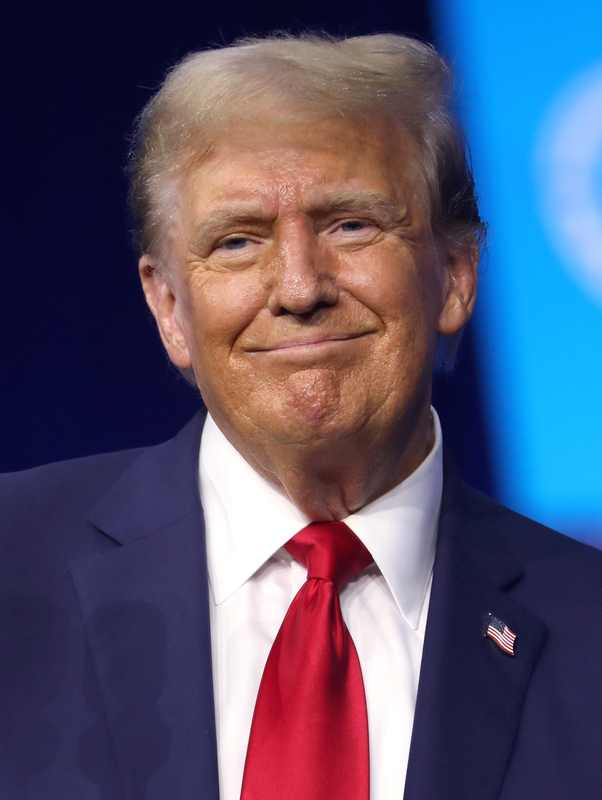
The moment Trump blames Iran FlyDubai attack became more than a search phrase came on October 5 at the White House. A reporter asked President Donald Trump whether he believed Tehran was behind the attempted hijacking of FlyDubai Flight FZ1073. “I do. I personally do,” Trump replied. He gave no evidence and no explanation. Hours earlier, Vice President JD Vance had offered almost the opposite assessment: he had seen nothing conclusive tying Iran to the plot and would defer to the intelligence professionals still working the case.
What Trump said — and what he didn't
Trump's exchange was striking for its certainty and its brevity. The question was direct; the answer was personal, affirmative and unsupported. The president did not cite an intelligence assessment, identify a chain of command, explain how an Omani suspect might have been recruited, or say whether the United States had intercepted communications linking the co-pilot to Iranian officials or proxies.
That silence matters because the statement escalated beyond Trump's October 2 warning that Iran would be “hit very hard” if investigators proved Tehran directed the attack. The earlier formulation was conditional: evidence first, retaliation second. By October 5, Trump had publicly supplied his own attribution even though the evidentiary condition remained unmet. The Trump Iran retaliation threat had moved one step closer to becoming an administration position without a corresponding public change in the investigation.
He made the comment on the same day he addressed a separate suspected threat in Britain that had prompted movements of U.S. bombers. Those are distinct cases, and they should not be blended. But their convergence sharpened the atmosphere: presidential words about Iran were landing while military assets were visibly in motion, making a terse answer sound less like speculation and more like signaling.
The split inside the White House: JD Vance, Iran and the evidence
Vance's posture was deliberately cautious. “I wouldn't say I've seen anything conclusively just yet,” he told reporters, adding, “I don't want to get ahead of any announcements.” He deferred to CIA Director John Ratcliffe and other intelligence professionals rather than turning an incomplete assessment into a political verdict.
At the same appearance, Vance announced a review of procedures governing foreign pilots in the United States. That response addressed a concrete vulnerability exposed by the suspect's international training history without assigning state responsibility. The distinction is important: screening and aviation-security rules can be tightened on the evidence already known, while retaliation against another country requires a much higher threshold.
The public gap between president and vice president creates two plausible readings. One is strategic: Trump supplies pressure while Vance preserves room for the intelligence community to qualify or withdraw the accusation, a good-cop/bad-cop campaign designed to keep Tehran off balance. The other is less controlled: senior officials genuinely disagree about what the intelligence shows, and the president has moved ahead of his own advisers. There is not enough public evidence to choose confidently between those explanations. Either way, the JD Vance Iran evidence answer now stands as the administration's clearest acknowledgment that the case is not settled.
What the FlyDubai FZ1073 terror investigation actually shows
The evidence-based position is narrower than the president's claim. Multiple U.S. officials briefed on the inquiry told NBC News that early indications pointed to the suspect acting alone, not in coordination with Iran or another foreign actor. Israeli investigators reached the same preliminary lone wolf pilot theory. Neither assessment is final, but both cut against a confident state-attribution claim.
Israeli Prime Minister Benjamin Netanyahu has also declined to blame Tehran. “We will get to the bottom of this,” he said, adding, “I think we will know very soon.” That is not an exoneration of Iran; it is an acknowledgment that investigators have not yet established the answer.
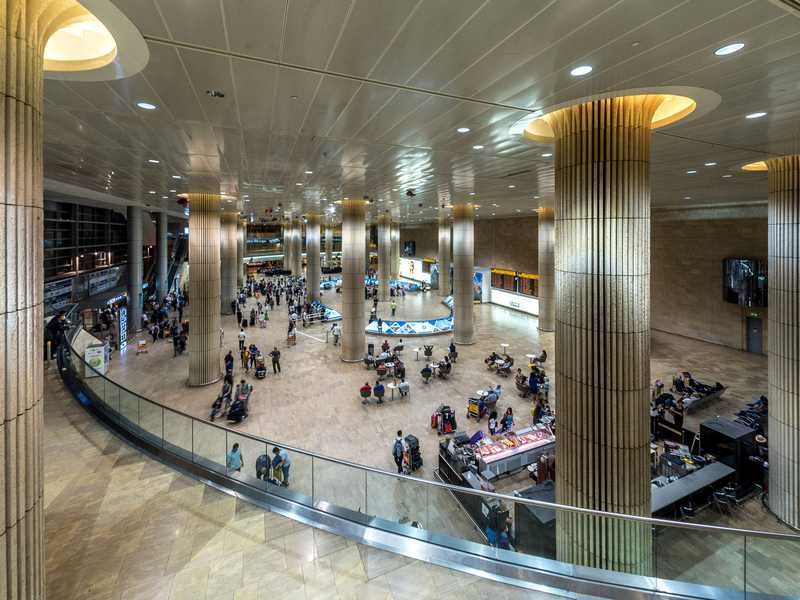
The UAE-led inquiry has classified the episode as a terrorist attack. Reuters, citing sources briefed on that investigation, reported that the suspect intended to crash the aircraft into Ben Gurion Airport near Tel Aviv and had scoped a different Tel Aviv-bound flight earlier in the year. Those details strengthen the case for premeditation, but planning by an individual is not proof of direction by a government.
The suspect is 29-year-old Omani co-pilot Hamam al-Hammami. Australian Federal Police confirmed that the Victorian Joint Counter Terrorism Team is examining his links to Australia. He studied at RMIT University in Melbourne from 2015 to 2017 and did not complete his degree. The Australia RMIT pilot investigation may help establish his training path, contacts and possible radicalization timeline. It does not, by itself, answer who — if anyone — directed him.
Why this matters: attribution is a policy act
A president publicly attributing a terrorist attack to a foreign government is not merely offering commentary. It narrows diplomatic room, shapes allied expectations and creates a record against which every later decision will be judged. It can move oil and defense markets before a single intelligence document is released. It also gives Iranian hardliners a ready argument that Washington decided the verdict first and built the case later.
With a third U.S. carrier group reportedly in the region and Tehran already warned about retaliation, words from the White House lawn carry strike-adjacent weight. Markets and militaries do not wait for the footnotes. They price the risk that today's personal belief becomes tomorrow's order.
There is also a basic asymmetry in the public case. Al-Hammami is an Omani national, not an Iranian one. That does not exclude Iranian recruitment or support; states often work through foreign nationals and intermediaries. But moving from an Omani suspect to Iranian responsibility requires connective evidence — money, communications, handlers, travel, training or command relationships. Nobody in authority has publicly shown such a link. Until they do, the gap between motive and sponsorship remains the central fact of the case.
Background: the September 30 attack
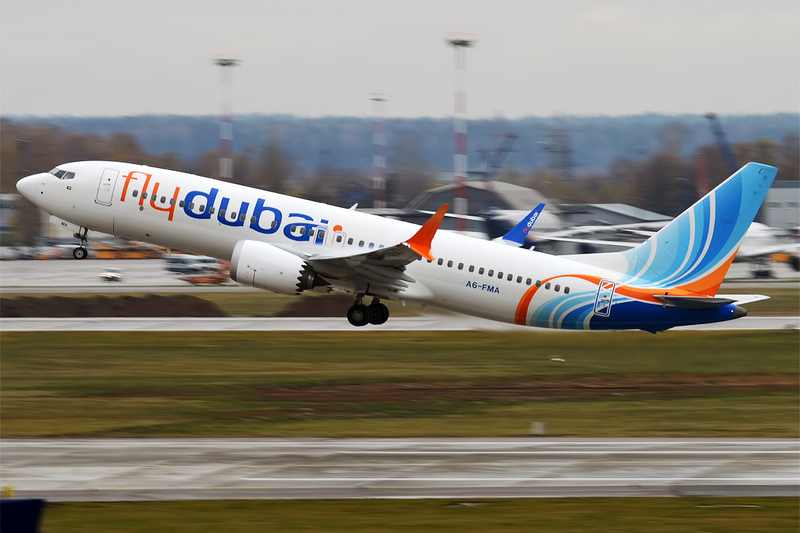
Flight FZ1073 left Dubai for Tel Aviv with more than 170 passengers and crew aboard. Investigators allege that co-pilot Hamam al-Hammami attacked captain Smit Machchhar with a knife inside the cockpit and tried to seize control. During the struggle the aircraft entered a steep descent, transforming a cockpit assault into an imminent mass-casualty emergency.
Crew members and passengers, including two off-duty pilots, helped subdue the suspect and regain control. The aircraft diverted to Tabuk, Saudi Arabia, for an emergency landing. The intervention prevented what investigators now describe as a deliberate attempt to turn a passenger jet into a weapon.
Signal Post News previously detailed the fight aboard FZ1073 and the emergency landing, then examined Trump's “hit very hard” warning to Iran. The new development is not another retelling of the attack. It is the president's personal attribution and the visible break between that claim and the caution expressed by his vice president and investigators.
Who benefits, who loses
An Iran attribution benefits officials who want greater leverage over Tehran's nuclear and missile posture. Israeli hawks can point to the accusation as evidence that the aviation plot belongs inside the broader contest with Iran. U.S. Iran hawks gain another argument for sanctions, military pressure or covert action. Even without proof strong enough for court or public release, the claim can raise the cost of Tehran's strategic ambiguity.
If the attribution is wrong, the losses spread wider. U.S. credibility suffers the next time Washington presents intelligence about an imminent threat. The integrity of the UAE terror investigation into FlyDubai is weakened if investigators appear pressured toward a geopolitical answer. Airlines and passengers face fresh uncertainty about Gulf and Israeli airspace. Most of all, the trauma of the more than 170 people aboard risks becoming a prop in a confrontation they did not choose.
Iran denies involvement. Tehran benefits from delay in one narrow sense: unresolved attribution preserves uncertainty and complicates any coalition for retaliation. But prolonged ambiguity also leaves Iran under threat, forces it to prepare for escalation and allows Washington to keep pressure elevated without committing to a strike. Denial is therefore useful but not cost-free.
What happens next — three scenarios
1. Evidence links the plot to Tehran
If communications, money or a handler ties al-Hammami to Iranian authorities or a proxy, Trump's conditional “very hard” threat immediately becomes operationally relevant. A regional force buildup could acquire a casus belli, and allies would face pressure to support a response. Our analysis of three U.S. carrier groups and the risk of strikes after the midterms explains why even limited proof could carry outsized consequences.
2. Investigators close on a lone wolf
If the inquiry finds no foreign direction, the White House will probably shift tone rather than stage a public reversal. Vance's caution can become the official line: the system waited for the intelligence, acted on aviation vulnerabilities and declined to overstate the case. Trump's personal belief may remain on the record but lose practical force.
3. Ambiguity persists
This is the most likely near-term outcome. Terror investigations cross borders, devices, bank records and intelligence holdings; definitive attribution can take months or never arrive. In that vacuum, the accusation itself becomes a pressure tool. Iran must guess how much Washington knows, while Trump preserves the option to escalate without firing a shot. The cost is that every day of ambiguity also widens the gap between presidential certainty and publicly available evidence.
Sources
- USA Today — Trump and Vance offer different assessments of Iran's possible role
- The Times — Australian investigators examine Hamam al-Hammami's links to Melbourne
- New York Post — Trump's October 2 conditional retaliation warning
Reporting note: Trump's attribution has not been supported by publicly released evidence. U.S. and Israeli investigators' lone-wolf assessments are preliminary, and the UAE-led investigation remains active.
Image sources: Donald Trump, FlyDubai Boeing 737-8 MAX and Ben Gurion International Airport photographs via Wikimedia Commons.