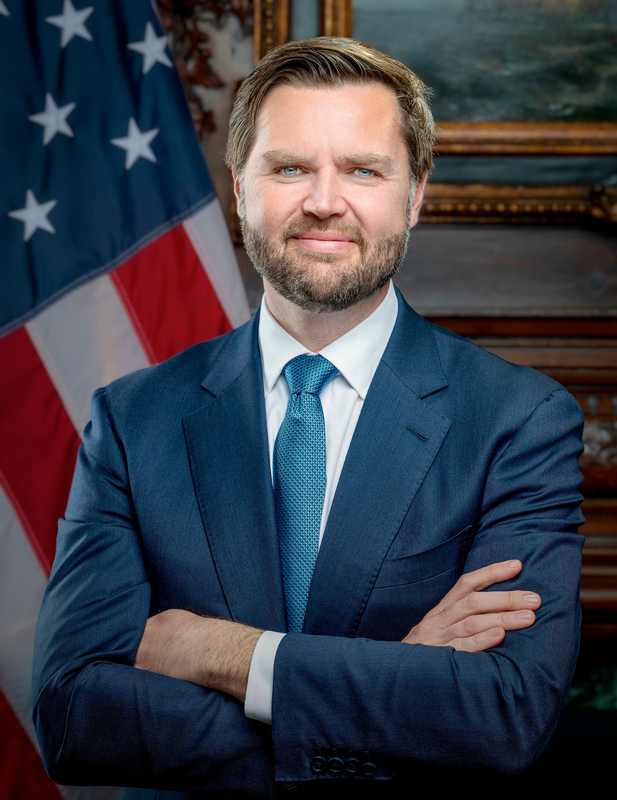
Vance Accuses Microsoft of Abusing H-1B Visas, Suspends It From Green Card Program
Vance Microsoft H-1B: Vice President JD Vance on Thursday accused Microsoft of laying off thousands of American workers while stocking up on foreign labor through the H-1B visa system — and announced the Trump administration is suspending the tech giant, along with Adobe and other firms, from a key employment-based green-card program. The move, unveiled at a news conference on H-1B and J-1 visa fraud alongside Labor Department officials, marks the administration's sharpest escalation yet in its running war over skilled-worker visas.
What Vance announced
Vance said the administration is barring Microsoft and other companies from a green-card program that lets employers sponsor foreign workers for permanent residency, accusing major tech firms and outsourcing companies of abusing the visa system at the expense of American workers. His charge against Microsoft was blunt: "There has been no company in the United States, unfortunately, that has abused the system more than Microsoft."
The vice president's numbers, presented as his claims, were stark. He said Microsoft laid off 6,000 American workers last year while benefiting from 6,300 H-1B visas and nearly 3,000 green cards, calling the arrangement a "scandalous system." Then came the line that will travel furthest: "For every worker that Microsoft laid off, they replaced that worker with 1½ foreign indentured servants."
The suspension targets companies the administration accuses of using foreign workers to undercut U.S. wages and replace American employees. Vance framed it as a fraud crackdown rather than an immigration debate — a news conference about visa fraud, not border policy.
Why this matters
This is the first time the administration has moved from rhetoric and fees to cutting a major employer's access to the green-card pipeline itself. Fines and application fees raise the cost of the H-1B system; a suspension from employment-based green cards threatens the end of the road — the permanent residency that makes the whole skilled-immigration funnel work for both companies and workers.
Microsoft is the symbolic target precisely because of its scale. It is one of the largest H-1B sponsors in the country, and its layoffs — 9,000 employees globally in one round, plus 1,600 cuts in the Xbox division — unfolded in public while its visa petitions kept flowing. Whether or not the two are connected, the optics handed Vance a made-for-television case study.
Every other large H-1B sponsor is now on notice. If the Labor Department can suspend Microsoft from the program, it can suspend anyone — and the investigation Vance's task force launched this week, with dozens of subpoenas already issued, suggests a list is being built.

How we got here
The H-1B program lets U.S. employers hire foreign workers in specialty occupations — jobs typically requiring a bachelor's degree or equivalent. It runs on an annual statutory cap of 65,000 visas, allocated by lottery, and has powered Silicon Valley's workforce for decades. It has also been contentious for just as long, with critics arguing it suppresses wages and displaces American workers.
The current fight escalated in stages:
The $100,000 fee
On September 19, 2025, the administration imposed a $100,000 fee on employers for H-1B workers outside the U.S. seeking entry. The restriction was later extended through September 21, 2027. A federal district court ruled the payment unlawful in June 2026; the administration appealed, and the case now sits before the 1st U.S. Circuit Court of Appeals.
Vance's long-running campaign
Vance has been building this case for over a year. In July 2025, at a Hill and Valley Forum event, he questioned the logic of companies laying off 9,000 workers and then applying for overseas visas, dismissing the claim that they can't find workers in America. On September 24, 2026, he posted on X: "Our message to corporate America is simple: We're not going to let you lay off American workers so you can replace them with cheap foreign labor." On October 1, he called the program "completely broken" and said he would support scrapping it outright.
The fraud probe
This week, Vance's anti-fraud task force went operational. At a Milwaukee event, the Labor Department's Inspector General announced dozens of subpoenas and investigations into H-1B and J-1 visa fraud, citing schemes involving fraudulent applications, wage-kickback arrangements, and below-market wages. Department of Homeland Security assessments cited by investigators suggest as much as 21 percent of H-1B petitions may be fraudulent.
Microsoft's response
Microsoft rejects the connection Vance is drawing. A company spokesperson told Fox News Digital: "These decisions are based on business need, not visa status. H-1B employees were also impacted by job eliminations in the U.S."
In an earlier statement, the company went further into the numbers: "Our H-1B applications are in no way related to the recent job eliminations in part because employees on H-1B's also lost their roles. In the past 12 months, 78% of the petitions we filed were extensions for existing employees and not new employees coming to the U.S."
That 78 percent figure is the core of Microsoft's defense — and it points to a real complexity in the debate. H-1B petitions include renewals for people already working in the United States, not just new arrivals. A company can simultaneously shrink its workforce and file thousands of petitions without hiring a single new foreign worker. Vance's camp treats that as a technicality; Microsoft treats it as the whole story.
Who wins, who loses, what critics say
Supporters of the crackdown see long-overdue enforcement. Rep. Riley Moore (R-W.Va.) has called for an end to what he terms the "H-1B scam," arguing big tech abuses the program to replace American workers with cheaper foreign labor. Immigration hawks in the MAGA coalition have made H-1B restriction a litmus test, and Vance — who has urged supporters to press Congress — is their most prominent champion inside the White House.
The tech industry argues the program fills genuine skill gaps and that the best-and-brightest framing still matters: the administration itself says it wants top global talent building companies in America. An Indian-origin tech investor publicly fact-checked Vance's layoff-versus-visa math, arguing the comparison conflates global headcount reductions with U.S. visa sponsorships.
Economists are split. Some research finds H-1B workers complement rather than substitute for American workers, pushing companies to expand. Others find measurable wage suppression in the occupations most exposed to the program. What both sides agree on: the program's lottery and wage-tier mechanics create the very gaming incentives everyone is now fighting about.
Foreign workers — the people at the center of the rhetoric — face the most immediate uncertainty. A suspension from the green-card pipeline doesn't just punish employers; it strands workers mid-process, many of whom have spent years in the queue.
What the numbers actually say
Strip out the rhetoric and the dispute comes down to a few figures, each contested:
6,000 laid off vs. 6,300 H-1B visas vs. ~3,000 green cards. These are Vance's numbers, presented as his claims — they have not been independently audited here, and Microsoft disputes what they imply.
78% extensions. Microsoft's figure for the share of its H-1B petitions that were renewals for existing employees rather than new workers coming to the U.S. If accurate, it significantly weakens the "replacement" narrative — though critics note that extensions still represent jobs held by foreign workers.
21% potentially fraudulent. The DHS assessment cited by the Labor Department's Inspector General for H-1B petitions overall — a striking figure that, if even roughly right, suggests the fraud problem Vance describes is real even if any single company's guilt is debatable.
65,000 and $100,000. The annual H-1B cap and the contested per-petition fee — the two numbers that define how tight the system is and how much tighter the administration wants it.
What happens next
Legal challenges are near-certain. The $100,000 fee already lost once in district court; a suspension from the green-card program — a far blunter instrument — will be tested by Microsoft's lawyers quickly. The 1st Circuit's ruling on the fee appeal will signal how much deference courts give the administration on visa policy.
Watch the list. Adobe was named alongside Microsoft; other firms and outsourcing companies were referenced but not all identified. Whether Labor publishes the full suspension list — and expands it — determines whether this is a warning shot or a campaign.
Watch Congress. Vance has said he favors scrapping the H-1B program entirely and wants constituents pressuring their representatives. Legislative action remains the only durable path — everything the administration has done so far lives or dies in court.
Three scenarios sketch the range: courts block the suspension and the fight retreats to the fee appeal; the suspension stands and every large sponsor quietly restructures its immigration strategy; or Congress rewrites the H-1B statute, which would moot the courtroom battles and reshape skilled immigration for a generation. None of them leaves the status quo intact.
Sources
- Fox Business — "Vance suspends Microsoft, others from foreign workers applying for green cards, accuses company of visa 'abuse'," October 8, 2026
- Fox News — "Fury erupts as US brand fires 1,600 employees after securing thousands of foreign worker visas" (includes Microsoft spokesperson response), July 2026
- Benzinga via TradingView — "JD Vance Warns Companies Against 'Cheap' H-1B Replacements," September 2026 (fee, court ruling, and X-post context)