U.S. and Zambia Sign $2.49 Billion Health Deal After Data-Sharing Standoff
US Zambia health deal: The United States and Zambia signed a $2.49 billion health financing pact in Lusaka on Thursday, closing a negotiation that stalled for months over American demands for access to Zambian patients' medical data and biological specimens — demands Lusaka ultimately forced Washington to drop. The Zambian government also confirmed the deal contains no clauses linked to the country's abundant copper and other critical minerals, which will be negotiated separately.
What was signed
The five-year agreement, covering 2026 to 2030, is worth $2.49 billion in total, according to the U.S. State Department. The United States will contribute $1.52 billion — working with Congress to secure the funds — while Zambia will invest $975 million of its own money into its health system over the same period. The figures are somewhat less than the $3.6 billion Zambian officials had floated earlier in the week, when they announced the signing would take place on Thursday.
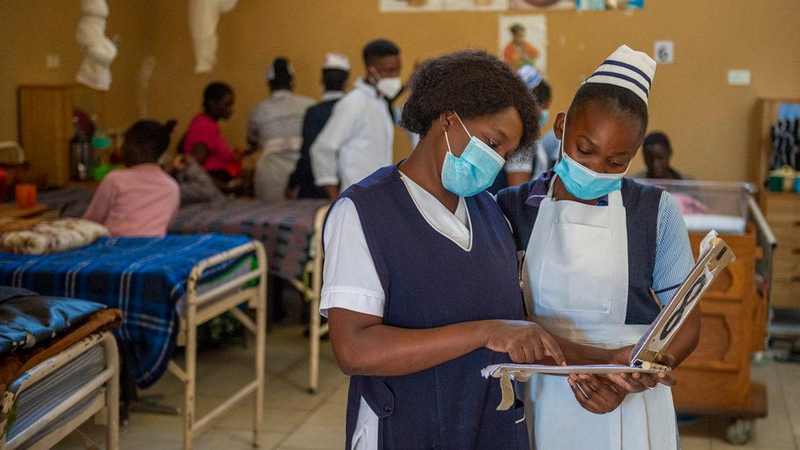
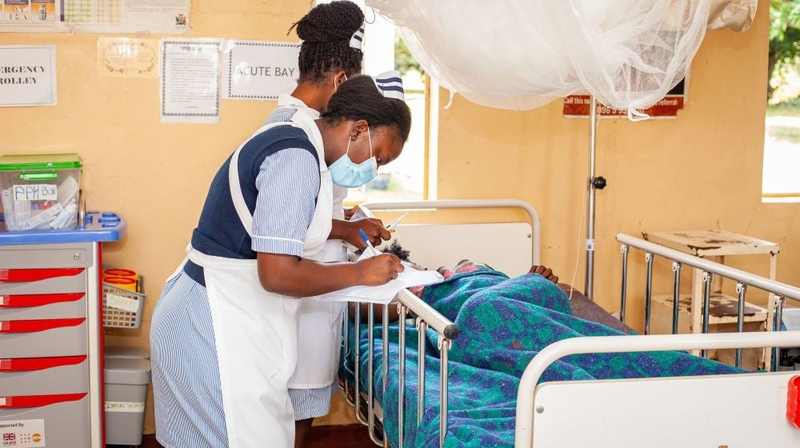
The pact will fund the recruitment of 40,000 health care workers over five years — 15,000 frontline health workers and 25,000 community health workers, according to Zambia's health ministry — and support programs dealing with HIV/AIDS, malaria, and other public-health challenges where the United States has long been one of Zambia's principal funders.
Mich Coker, the chargé d'affaires at the U.S. Embassy in Lusaka, framed the partnership as shared security as much as charity: “Infectious diseases know no borders. A strong Zambian health system serves as a first line of defense for both our nations and for the broader region. By helping Zambia detect and respond to outbreaks quickly, we are protecting Americans as well as Zambians.”
Zambia's finance minister, Situmbeko Musokotwane, said he was pleased that the issues which had blocked the agreement were now resolved, while Foreign Minister Mulambo Haimbe stressed that the health pact and any future critical-minerals discussion were deliberately decoupled.
The two clauses that almost killed it
The deal nearly died twice — once over data, once over minerals.
First, the data. The original American framework required Zambia to share broad medical information and to hand over biological specimens from patients when requested by Washington. Lusaka objected on grounds of data privacy and national sovereignty — and held its ground for months. In the final text, the specimen-sharing clause is gone entirely: Zambian officials say no biological specimens will leave the country under the agreement. Data sharing is narrowed to information needed to monitor and evaluate the programs the U.S. funds. “The deal did not contain any clauses that would compromise Zambia's security through data sharing,” Health Minister Roma Chilengi said.
Second, the minerals. Zambia is Africa's second-largest copper producer, and there were widespread concerns that Washington would try to link its health funding to access to the country's natural resources. Negotiations stalled earlier this year partly over exactly that suspicion, Reuters reported. In the signed deal, Chilengi said, “there is no mention of critical minerals” — and he added that he was not aware of any separate critical-minerals agreement being negotiated with the United States.
Why this matters
This is the first large-scale test of the world that comes after USAID. The Trump administration dismantled the U.S. Agency for International Development — once the world's largest humanitarian donor — and replaced its model with the America First Global Health Strategy: instead of open-ended American aid, African governments sign co-financing pacts that commit them to steadily increase their own health spending while U.S. assistance gradually phases down. Zambia is now the biggest and most closely watched signature on that new architecture.
What makes Lusaka's deal a precedent rather than just a press release is that Zambia negotiated like a sovereign, not a supplicant. Data sovereignty — the right of a country to control its citizens' most intimate information — is the defining anxiety of the digital age, and Zambia just proved it can be defended at the negotiating table against the world's most powerful donor. Every other African capital weighing one of these pacts watched this standoff. They now know the American template has give in it.
The minerals decoupling may matter even more than the health money over the long run. Copper is the metal of the energy transition, and Zambia sits on some of the world's richest deposits. Keeping the health negotiation sealed off from the minerals negotiation preserves Lusaka's leverage for the conversation Washington really wants to have — the one about who gets to mine, refine, and buy Zambia's copper in an era of great-power competition over critical minerals. That second negotiation hasn't started. When it does, Zambia will arrive holding a signed health deal and an unspent bargaining chip.
The pattern across Africa
Zambia is not signing in isolation. Kenya, Tanzania, and Uganda have already signed similar health pacts under the Trump administration's new approach — part of the same pivot from aid dependence to self-reliance. But the template has not been universally accepted: Ghana and Zimbabwe both rejected their deals over the data-sharing demands, unwilling to trade medical sovereignty for funding.
That split is what gives the Zambia outcome its weight. With Lusaka securing the removal of the specimen clause and the narrowing of data sharing, the holdouts now have evidence that rejection — or at least the credible threat of it — can extract concessions. The question for Washington is whether the Zambia revisions become the new standard offer, quietly extended to the next capitals in line, or a one-off exception that future negotiators are told not to expect.
Who wins, who loses
Zambia wins the negotiation. It kept the money, killed the specimen clause, narrowed the data sharing, and kept copper out of the document. For a country that entered the talks being asked to hand over patient samples on request, that is a comprehensive defensive victory — plus 40,000 health jobs.
The Trump administration wins the showcase. After dismantling USAID amid warnings that American global-health leadership would collapse, the White House needed a flagship deal proving the replacement model works. A $2.49 billion pact with an African government co-investing nearly a billion dollars of its own is exactly the “partnership, not patronage” story the strategy was designed to produce.
American public health wins the argument, if not yet the outcome. Coker's case — that a Zambian system able to detect outbreaks quickly protects Americans too — is the strategic logic holding the whole enterprise together. Whether the phasedown end of the bargain preserves that detection capacity is the five-year question.
Ghana and Zimbabwe face new pressure. As the two governments that walked away, they are now the outliers. If the Zambia terms become the reference point, both may find it harder to justify staying out — and may return to the table negotiating from the precedent Lusaka set rather than the original American demands.
The losers: frictionless data flows and mineral leverage. Global disease-surveillance networks lose a potential stream of specimens and broad data access they might once have taken for granted. And anyone in Washington who hoped health aid would quietly pry open Zambia's copper sector will have to start that negotiation from zero — against a government that just demonstrated it knows how to say no.
What the numbers actually say
$2.49 billion. The headline total over five years — 2026 to 2030.
61 / 39. The funding split: $1.52 billion from the United States, $975 million from Zambia. Washington still pays the majority, but Lusaka's share is large enough to be a genuine co-investment rather than a token.
$3.6 billion to $2.49 billion. The announced figure shrank by roughly 31 percent between Tuesday's announcement and Thursday's signature — a reminder that in this new era, the number on signing day and the number Congress ultimately appropriates may differ. The State Department says the U.S. will work with Congress to provide its $1.52 billion; appropriation is not automatic.
40,000. Health workers to be recruited — 15,000 frontline and 25,000 community workers. In a country where rural clinics are chronically understaffed, this is the part of the deal ordinary Zambians are most likely to feel.
Three signed, two rejected. Kenya, Tanzania, and Uganda have signed similar pacts; Ghana and Zimbabwe rejected theirs. Zambia is the sixth data point — and the first to rewrite the terms.
What happens next
Watch Congress. The American $1.52 billion requires congressional action. The administration's framing — shared security, burden-sharing, self-reliance — is designed to sell on Capitol Hill, but the specimen-clause fight showed this is not a rubber-stamp process on either side.
Watch Lusaka's budget. Zambia's $975 million commitment has to appear in real budgets over five years, alongside the recruitment of 40,000 workers. The strategy's core premise — that domestic spending rises as American funding falls — will be tested in treasury spreadsheets, not signing ceremonies.
Watch the minerals track. The health deal explicitly defers the critical-minerals conversation. Copper is where the great-power competition over Zambia will actually be decided, and both sides know it.
Watch Accra and Harare. Ghana and Zimbabwe rejected the original terms. If Washington now offers Zambia-style revisions, the post-USAID map of Africa could fill in fast — on African terms.
The era of the blank-check donor is over. What replaces it is being negotiated one capital at a time — and in Lusaka this week, the capital did the negotiating.
Sources
- Associated Press — “US, Zambia sign $2.49B health financing pact after removing data and specimen-sharing terms,” October 8, 2026
- Reuters — “Zambia to sign $1.5 billion US health pact after resolving differences over data-sharing,” October 6, 2026
- Zambian Observer — “US, Zambia sign $2.49 billion health MOU, data sharing agreement,” October 8, 2026
- Voice of Nigeria — “Zambia, US to sign $1.5bn five-year health deal,” October 6, 2026
- HealthTimes — “Zambia finally signs US$1.5bn US health funding deal after months of disputes,” October 2026