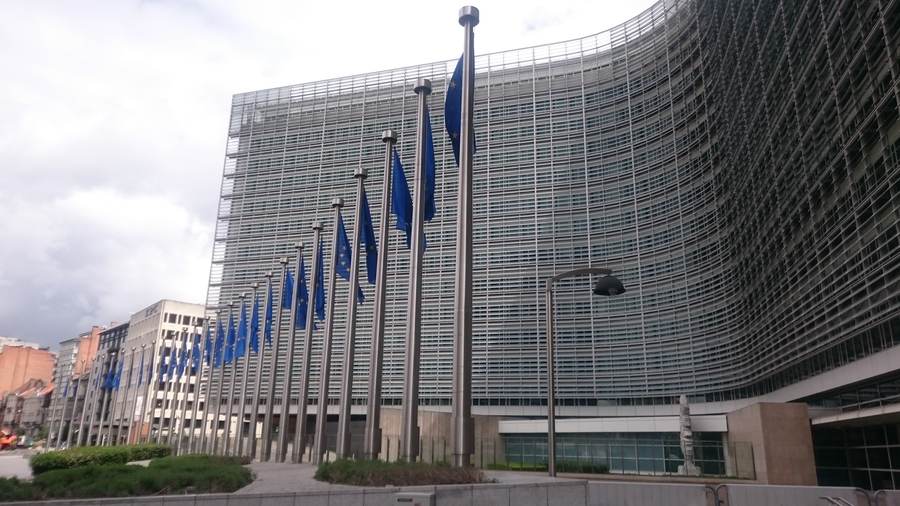
LUXEMBOURG — The EU suspends Sierra Leone aid 2026 in a decision announced on Thursday, October 1, freezing €18 million (about $20 million) in budget support promised to Freetown for this year. The reason, according to Dutch Justice Minister David van Weel: Sierra Leone refuses to arrest and extradite Jos Leijdekkers, the 34-year-old convicted Dutch cocaine kingpin known as "Bolle Jos," who Dutch authorities say has lived under high-level protection in the West African country since at least 2023.
Van Weel announced the suspension at a meeting of EU justice and home affairs ministers in Luxembourg, saying the Commission had acted after the Netherlands demanded action. A further €22.5 million promised to Sierra Leone for 2027 could also be suspended. "They can resolve this within 24 hours," van Weel told Dutch broadcaster NOS, "by arresting and extraditing him." The European Commission itself declined to comment — so every element of the Dutch account below is attributed as the Netherlands says it, not as an established Commission position.
Sierra Leone tells a different story. Information Minister Chernor Bah said the delayed 2026 disbursement was procedural — tied to an amended financing agreement — with the funds proposed for 2027 and 2028, and described a July decision on the money as not punitive. Two governments, one missing payment, and a fugitive at the center of it: this is a story about what European aid is actually for.
Why this matters: Europe just priced impunity at €18 million
Budget support is the most trusting form of aid there is: money paid directly into a partner government's treasury, rather than earmarked for specific projects, on the understanding that the partner shares the donor's basic commitments — to the rule of law, among them. Suspending it is the diplomatic equivalent of closing a joint bank account. Brussels does not do it often, and when it does, the message is aimed at every other capital watching: sheltering a convicted drug lord has a line item now.
The case also tests a newer European doctrine — that development money is leverage, not charity. The EU's multibillion-euro commitments to Ukraine and its expanding sanctions regimes have already normalized the idea that European funds come with behavioral conditions. Sierra Leone is where that doctrine meets West Africa — and where its limits will be measured, because the people who lose €18 million in budget support are not the officials allegedly protecting Leijdekkers.
There is a third significance, quieter but larger. Cocaine now moves through West Africa at industrial scale, and Europe is the destination. Every ton that lands in Rotterdam or Antwerp started somewhere — increasingly, in the ungoverned or complicit spaces of the Gulf of Guinea. A fugitive kingpin living openly under state protection is not a bug in that system; prosecutors would say he is the system. Suspending aid treats the symptom. Whether it treats the disease depends on what happens in the next 24 hours — or doesn't.
Who is "Bolle Jos" — the fugitive at the center of it
Jos Leijdekkers, 34, from Breda in the southern Netherlands, is not a street dealer who got lucky. Dutch courts sentenced him in absentia on June 25, 2024, to 24 years in prison for smuggling more than seven metric tons of cocaine into the Netherlands and for ordering a murder. In Belgium, where his network was equally active, courts have handed down sentences totaling roughly a century across various cases. He has been on Dutch and Europol wanted lists since 2022. Dutch prosecutors are seeking €221 million from him in criminal assets — a figure that gives some sense of the scale prosecutors attribute to his operation.
The nickname "Bolle Jos" — roughly "Chubby Jos" — belongs to the folklore of the Dutch underworld, where he rose as the cocaine trade industrialized. Seven metric tons is not a suitcase operation; it is logistics — containers, corrupt officials, front companies, money laundering at a scale that needs a banking system, or a state looking the other way. That is what makes his reported life in Sierra Leone so explosive politically: Dutch authorities say he has lived there under high-level protection since at least 2023. Protection at that level is not purchased by a fugitive; it is extended by a government, or by people inside one powerful enough to act like it.
The Netherlands has formally demanded his extradition. According to van Weel, the formal request produced nothing — no arrest, no proceedings, no timeline. That silence is what converted a law-enforcement file into a diplomatic crisis.
Two stories, one missing payment
The Dutch account is straightforward: Sierra Leone is shielding a convicted drug trafficker from justice, so the EU is suspending budget support until he is arrested and extradited. Van Weel framed it as a 24-hour fix — arrest and extradite, and the money question resolves itself. The bluntness is the point: this is enforcement dressed as development policy.
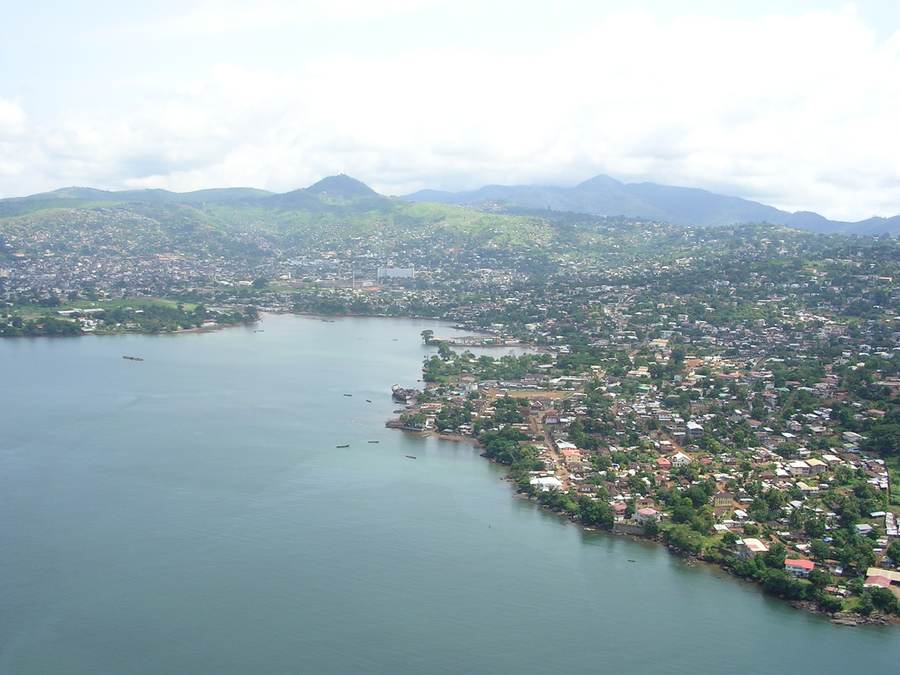
The Sierra Leonean account is procedural: Information Minister Chernor Bah says the 2026 disbursement was delayed because of an amended financing agreement, with the funds reprogrammed for 2027 and 2028, and that a July decision touching the money was not punitive. In this telling, there is no suspension at all — just paperwork, and a Dutch minister grandstanding at a Luxembourg press conference.
Both accounts cannot be fully true, but note what neither side disputes: the money has not been paid, and Leijdekkers has not been arrested. The disagreement is about why — punishment or procedure — and that disagreement is itself informative. If the delay were purely administrative, Freetown could end the speculation tomorrow by arresting the most wanted fugitive in Dutch law enforcement. That it has not done so, through years of formal requests, is the fact the Dutch account is built on. Readers should weigh the competing explanations against that single stubborn fact — and against the Commission's own silence, which leaves the Dutch version as the only official account of why the money stopped.
Background: how cocaine turned West Africa into a transit corridor
The Leijdekkers affair did not emerge from nowhere; it surfaced from a trade route. Over the past two decades, South American cocaine has increasingly transited West Africa en route to Europe — a shift driven by tighter direct interdiction and by the region's long coastlines, busy ports and, in places, fragile or complicit institutions. The UN Office on Drugs and Crime has repeatedly flagged the Gulf of Guinea as a trafficking hub, and European seizures at ports like Rotterdam and Antwerp — routinely measured in tens of tons per year — testify to the volume.
Sierra Leone's particular vulnerability has a history. The country's civil war (1991–2002) hollowed out institutions; the postwar rebuilding never fully insulated politics from organized crime's money. Across the region, the pattern is familiar: traffickers do not merely bribe officials, they become stakeholders — in elections, in security services, in the political economy itself. A kingpin living under "high-level protection" is the logical endpoint of that pattern, not an aberration from it.
Europe's response has evolved in parallel. Where Brussels once treated drug trafficking primarily as a policing problem for member states, it now reaches for the development budget as an instrument of coercion — the same logic visible in its sanctions policy. The Sierra Leone suspension is arguably the clearest application yet of that logic to a single fugitive: one man's freedom, priced at €18 million and counting.
For the region, the precedent lands alongside other strains — Nigeria's 66th independence anniversary this week was a reminder of how West Africa's giants are wrestling with governance and legitimacy of their own. A European decision to punish one small state's alleged complicity will be read across the region as a signal about all of them.
Who benefits — and who loses — from the aid freeze
The Netherlands gains leverage it could not get from diplomacy alone. Years of formal extradition requests produced nothing; one suspended payment changed the conversation overnight. For Dutch prosecutors chasing €221 million in criminal assets and a fugitive who has mocked justice since 2022, the Commission's budget line turned out to be a more persuasive interlocutor than any démarche. Other EU member states with fugitives sheltered abroad are watching closely.
The European Commission gains a demonstration effect — at the cost of owning the precedent. If the freeze works and Leijdekkers is surrendered, Brussels has a template: budget support as an arrest warrant with a treasury attached. But templates get reused, and the next target may be messier — a government whose cooperation Europe needs on migration, counterterrorism or critical minerals. Today's clean moral case is tomorrow's complicated one.
Sierra Leone's government faces a choice it has avoided for years. Surrendering Leijdekkers would mean admitting — implicitly — that the protection was real, with all the domestic fallout that implies for whoever extended it. Keeping him means watching European money, and potentially other donors' money, walk away. The Bah government's procedural framing is an attempt to have it both ways; the Dutch 24-hour framing is designed to make that impossible.
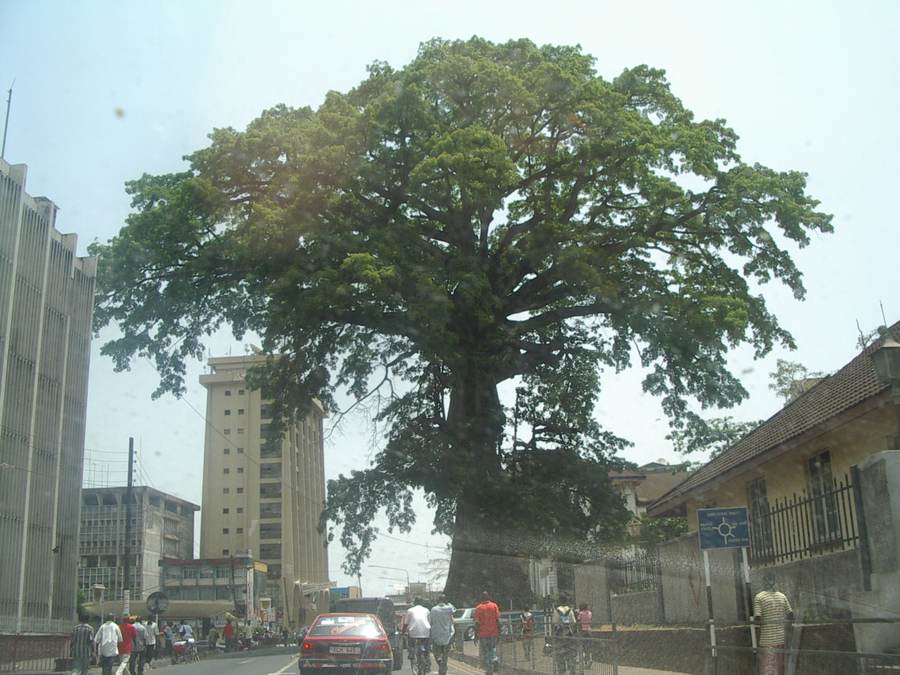
Sierra Leoneans lose either way, at least in the short term. Budget support funds the unglamorous machinery of a state — salaries, clinics, schools. Its suspension punishes a treasury, not a kingpin. This is the standing moral objection to aid conditionality: the leverage works precisely because ordinary people need the money, which means ordinary people pay for the pressure. Defenders reply that impunity also has civilian victims — the communities hollowed out by the drug trade — and that someone has to price it.
What the numbers mean: €18M against a €221M criminal fortune
Start with the asymmetry. The suspended sum — €18 million, about $20 million — is real money for Sierra Leone's budget but modest by European standards; it is roughly what a single large cocaine shipment is worth at European wholesale prices. Against it, Dutch prosecutors value Leijdekkers' criminal assets at €221 million — more than twelve times the suspended aid. If those figures are even approximately right, the economics of protection are straightforward: the man allegedly being sheltered is worth an order of magnitude more than the aid being withheld. That ratio is the strongest argument the skeptics of this policy have — and the strongest reason Freetown might calculate that keeping him is, crudely, affordable.
Then the escalation ladder: another €22.5 million is pledged for 2027 and now under review. Combined, €40.5 million begins to look like a sum that concentrates minds even in a political economy accustomed to drug money. The Dutch strategy is clearly calibrated — a first tranche suspended, a second tranche threatened — to give Freetown a reason to move before the price rises.
Seven metric tons is the other number that matters. That is the quantity Dutch courts tied to Leijdekkers — enough cocaine, at typical European street prices, to represent hundreds of millions of euros in retail value. It puts the "kingpin" label beyond journalistic flourish: this is industrial-scale trafficking, the kind that requires the complicity the Netherlands alleges. And 24 years plus roughly a century in Belgian sentences measures how seriously two justice systems take him — sentences of that length are not handed to replaceable middlemen.
Compare, finally, with precedent. The EU has suspended budget support before — over democratic backsliding, over corruption — but rarely, if ever, over a single fugitive. That novelty is the story: Europe has decided that one man's impunity is a systemic issue. Whether that logic holds will be judged by what it achieves, and at what cost to the people the aid was meant to serve.
Critics' views: leverage or collective punishment
Supporters of the suspension argue that all other avenues were exhausted. Formal extradition requests, diplomatic pressure, years of patience — none of it moved Freetown. In that reading, the freeze is not collective punishment but the only language left, and its 24-hour off-ramp (arrest and extradite) makes it among the most targeted sanctions available: comply, and the money flows.
Critics answer that the off-ramp is illusory for the people actually harmed. Budget support does not sit in a minister's pocket; it pays nurses and teachers. Suspending it to pressure elites assumes elites feel the pain first — a heroic assumption in countries where elites are, by definition, insulated. There is also a sovereignty objection, voiced across the Global South whenever donors attach strings: Europe is using development money to enforce European arrest warrants, a precedent smaller states experience as coercion whatever its justification.
A third view holds that both sides are performing. Freetown's procedural explanation strains credulity given the timing — amended financing agreements rarely coincide this neatly with ministerial ultimatums — while the Dutch framing oversimplifies: arresting a protected kingpin is not a 24-hour errand but a confrontation with the very power structures the aid is meant to reform. The truth likely sits between the press releases: a real suspension, a real fugitive, and a resolution that will take far longer than a day.
What happens next: the 24-hour fix and the 2027 question
1. The quick surrender
Freetown calculates that €40.5 million at risk outweighs whatever Leijdekkers is worth to his protectors, and he is arrested and extradited within weeks. Brussels restores the funds; the Netherlands gets its trial of the decade; the Commission banks a precedent. This requires Sierra Leone's government to absorb the domestic shock of admitting the protection was real — the hardest step, and the reason quick surrenders are rare.
2. The slow freeze
Neither side moves. The 2026 money stays suspended, the 2027 tranche follows it into limbo, and the dispute hardens into a standing grievance — Freetown citing procedure, The Hague citing impunity, Brussels saying nothing. Leijdekkers remains where he is. Other donors quietly reassess. This is the default outcome of most aid standoffs, and the one the numbers favor: €18 million may simply not be enough.
3. The widening precedent
The Commission, emboldened or pressured, applies the same instrument elsewhere — to other states sheltering fugitives, or to governments backsliding on rule-of-law commitments. Each application makes the tool more normal and more contested, until a future suspension hits a country Europe cannot afford to alienate. The Leijdekkers case would then be remembered not for the fugitive but for the doctrine it launched.
What to watch now
- The Commission's silence: whether Brussels ever confirms the Dutch account — or continues to let The Hague speak for it.
- Freetown's next move: any arrest, any legal proceeding against Leijdekkers, or any further procedural explanation from Minister Bah.
- The 2027 tranche: whether the pledged €22.5 million is formally suspended, and when.
- Other donors: whether bilateral European donors or multilateral lenders adjust their own Sierra Leone programming.
- The fugitive: any verified sighting, movement or statement from Leijdekkers himself — he has been silent since the Dutch sentencing.
- Regional reaction: how ECOWAS and neighboring governments read a European aid suspension tied to a single extradition case.
Sources and reporting notes
- Reuters, October 1, 2026: the EU cuts aid to Sierra Leone over its protection of convicted cocaine kingpin Jos Leijdekkers; van Weel's announcement at the Luxembourg JHA Council.
- Brussels Signal, October 2026: the EU halts millions in budget support to Sierra Leone over the fugitive Dutch drug lord.
- Signal Post News background: the EU's €6.6 billion Ukraine military aid deal and Europe's conditional funding doctrine.
- Signal Post News background: EU sanctions over the deportation of Ukrainian children.
- Signal Post News background: Nigeria's 66th independence anniversary and West African governance strains.
Reporting cutoff: October 3, 2026 at 7:25 p.m. PDT. The suspension was announced by the Netherlands, which says the European Commission acted on its request; the Commission itself declined to comment, and this article attributes the Dutch government's account accordingly. Sierra Leone's government disputes the characterization, saying the delayed disbursement is procedural. No extradition has taken place. File photographs are used for geographic and institutional context and do not depict the events described.