Trump Genesis Mission 2.4 billion
Trump Genesis Mission 2.4 billionGenesis Mission tech pledgesNvidia 1 billion AI scienceTrump AI science initiativefederal AI research fundingGenesis Mission consortiumAnthropic Claude federal scienceAWS science acceleratorsuper intelligence for science

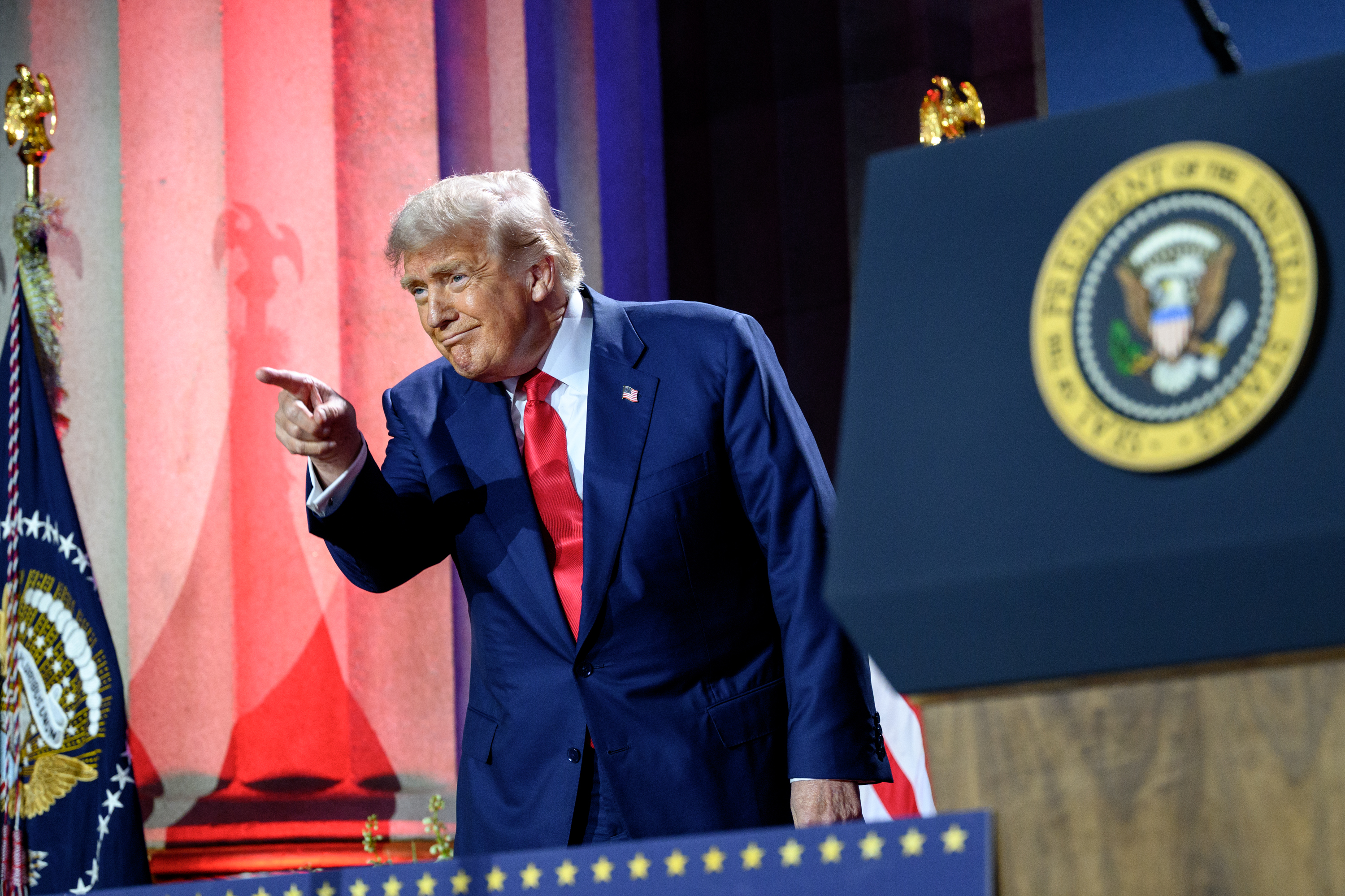
Washington, D.C. — The Trump Genesis Mission 2.4 billion headline is real: President Donald Trump announced Thursday that eleven technology companies will commit roughly $2.4 billion in AI tools, models and cloud-computing credits to the federal Genesis Mission, the administration's flagship effort to fuse artificial intelligence with government science. The announcement, made at the “Golden Age of American Innovation Summit” hosted by the White House Office of Science and Technology Policy at the United States Institute of Peace, pairs the largest single-day private pledge to federal research of the AI era with a sweeping bet: that “super-intelligence for science” can compress decades of discovery into years.
The $2.4 billion pledge sheet
The White House fact sheet published October 8 describes $2.4 billion in super-intelligence-for-science tools and compute credits from eleven industry partners. The resources are intended for the Genesis Mission consortium and more than fifteen federal agencies working on the administration's National Science and Technology Challenges. The pledge is not a single fund. It is a portfolio of chips, model access, coding tools and cloud capacity with different time limits and conditions.
Eleven companies, one headline number
NVIDIA accounts for $1 billion; AMD, $500 million; OpenAI, $200 million; Anthropic, $150 million; Google, $150 million; AMP, $100 million; Emerald AI, $100 million; and AWS, Armada, Crusoe and Micron, $50 million each. Together, those Genesis Mission tech pledges total $2.4 billion.
The Nvidia 1 billion AI science commitment is spread over five years and is aimed at higher-education research institutions, quantum leadership and cloud providers, according to HPCwire. Anthropic is committing $150 million over three years in Claude, Claude Code and API credits for several hundred projects, including work in fusion energy and quantum computing. That Anthropic Claude federal science package is model access rather than a conventional cash grant. AWS separately unveiled its “Golden Age of Science Accelerator,” an AWS science accelerator offering up to $50 million in cloud credits over three years.
At the summit, Trump presented Nvidia chief executive Jensen Huang with the National Medal of Technology and Innovation while Elon Musk looked on. The administration said commitments announced across federal agencies, industry, universities and philanthropy topped $6 billion. The National Science Foundation and the Department of Energy separately announced more than $100 million for AI-enabled scientific instruments and autonomous laboratories.
Why this matters: compute is the new currency of science
The deeper significance is the administration's decision to treat frontier compute, foundation models and coding agents not simply as commercial products, but as national research infrastructure — closer to telescopes, particle accelerators and supercomputers. The practical bottleneck in many fields has moved. A lab may possess enormous stores of data and powerful machines yet still lack the specialized models and software needed to turn those resources into testable hypotheses.
OSTP Director Michael Kratsios summarized the theory behind the Trump AI science initiative: “The efforts announced today will channel billions of dollars across our science ecosystem to realize the new scientific opportunities that now exist.” The administration's broader super-intelligence push gives that framing political weight as well as technical ambition.
Viewed historically, the mission is an AI-era version of earlier federal science mobilizations: government defines a strategic objective, industry supplies a critical layer of the stack, and researchers attempt to produce knowledge that can eventually become general-purpose economic infrastructure. The internet and GPS followed variants of that path. The difference now is that much of the essential stack is proprietary. Whoever controls the compute pipelines, model interfaces and access rules can influence the pace and direction of discovery in medicine, energy and materials.
How we got here: the Genesis Mission timeline
The Genesis Mission began in November 2025 through Executive Order 14363 and was placed under the Energy Department. In July 2026, it expanded across more than fifteen agencies, including NASA, the National Institutes of Health, the National Science Foundation and the Department of Energy. That expansion came with a $5 billion federal commitment and a portfolio of 278 AI-driven projects. Kratsios's “Science: A New Golden Age” report supplied the intellectual framework; Thursday's announcement is the private-sector leg catching up to the federal one.
The historical parallel is useful but incomplete. Federal buildouts helped seed the internet and GPS because public procurement and research created demand while private firms supplied components and scaled deployment. The Genesis Mission applies the same formula to models, chips and cloud platforms. Yet the modern vendors are not interchangeable commodity suppliers; each brings its own software environment, pricing structure and technical constraints. That makes the Genesis Mission consortium a research partnership and a market-shaping exercise at the same time.
Who benefits — and who quietly loses
University labs and national-lab scientists with limited access to frontier GPUs are the clearest winners. Expensive compute queues can delay experiments for months, and a well-targeted allocation can convert an idea into a working simulation or a validated result. Anthropic's $150 million spread over three years and several hundred projects implies meaningful but relatively modest blocks of access for fusion and quantum researchers — enough to change individual programs, not enough to erase every capacity constraint.

The companies benefit too. Placing proprietary chips, models and cloud credits inside federal research pipelines can produce a generation of scientists who know one vendor's stack best. Critics describe that as future-contract lock-in; Zubiqo has characterized the arrangement as a structural play by Big Tech to entrench itself inside the state. Innovation advocates answer that standardized tools let projects move faster and that refusing private capacity would leave scarce computing power idle.
The political tension cuts across familiar camps. MAGA skeptics of concentrated technology power may see public research becoming dependent on a small group of firms. Innovation hawks see fast-tracked science as a national advantage, especially as China and other competitors expand their own research infrastructure. Both views can be true at once: the resources can accelerate legitimate research while also strengthening the vendors that provide them.
The largest uncertainty is utilization. The headline pledge mixes cash-equivalent credits, multi-year commitments and in-kind tooling. Its realized value depends on how many researchers receive allocations, how quickly those allocations arrive, whether the tools fit the projects, and whether unused credits expire.
The credits-versus-cash reality check
The $2.4 billion private package sits beside a $5 billion federal commitment. Spread evenly across 278 projects, the private headline works out to about $8.6 million in stated value per project over multi-year horizons, before administrative costs and uneven allocations. In practice it will not be spread evenly. Large computational projects could absorb many times that amount, while others may need far less.
NVIDIA's $1 billion over five years is the anchor, roughly $200 million annually. That is substantial federal AI research funding for recipient institutions, but small next to a company that spends tens of billions of dollars on research and development each year. Huang put the company's case directly: “With a $1 billion investment, NVIDIA is putting advanced Super Intelligence in the hands of America's scientists to accelerate breakthroughs in medicine, energy and materials.”
Credits are not cash. A cloud credit must be spent on the donor's infrastructure and usually on the donor's timetable. That makes the arrangement generous and self-serving at the same time: real computing value for cash-strapped labs, but also customer acquisition, platform familiarity and future revenue retention for the donor. The test is not the face value announced at the summit. It is how much high-priority research the credits actually complete.
The awkward timing: tech's biggest gift arrives amid the visa crackdown
The same-day irony should not be mistaken for one combined story. On the day the administration courted Big Tech's science resources, Vice President JD Vance and Labor Department officials moved against Microsoft in the H-1B and employment-based green-card arena, suspending the company from one federal certification program amid disputes over layoffs. Our separate report explains the visa crackdown and Microsoft's response.
The policy tension is real even if the announcements are distinct: Washington wants the industry's chips, models and cloud capacity while narrowing parts of the talent pipeline that helped build them. Supporters of the labor action say federal policy should protect U.S. workers and prevent firms from pairing layoffs with visa sponsorship. Industry advocates answer that cutting access to specialized scientists and engineers can weaken the same research push the administration is financing.
What happens next
The first test is allocation. The public should be able to see which of the 278 projects receive priority compute, the size and duration of each award, the vendors involved and the research outputs. Transparent reporting would help distinguish productive access from credits that are announced but never fully used.
The second test is whether the more than $100 million from NSF and DOE for AI-enabled instrumentation and autonomous laboratories becomes a hardware complement to the donated models and cloud capacity. Software access without sensors, robotics and reliable lab equipment cannot automate experiments on its own.
A larger infrastructure idea is also taking shape. Andreessen Horowitz partner Anjney Midha has described a “National Compute Grid” that could pool two gigawatts of compute by 2030, alongside a separate $100 million pool of national compute credits. If implemented, that network could reduce the fragmentation of federal and academic capacity. It could also magnify questions about grid power, procurement rules, vendor concentration and who gets to schedule scarce machines.
Finally, multi-year promises have to survive appropriations cycles, agency implementation and a midterm election that will test the administration's science branding. The Genesis Mission consortium will matter less for the size of its announcement than for the discoveries it produces, the access rules it publishes and the public value it can demonstrate.
Sources
- New York Post — report on the October 8 White House summit and technology-company commitments
- Unite.AI — White House fact sheet on the $2.4 billion industry pledges, published October 8, 2026
- Anthropic newsroom — $150 million Genesis Mission commitment
- AWS — Golden Age of Science Accelerator and up to $50 million in cloud credits
- HPCwire — NVIDIA's five-year, $1 billion commitment