US Patriot batteries Saudi Arabia
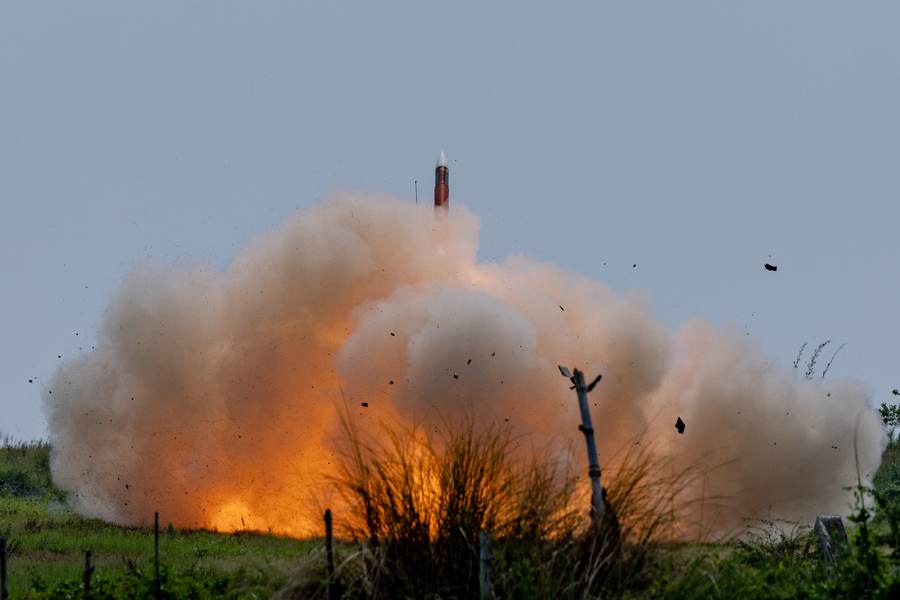
The United States has deployed two additional Patriot air-defense batteries to the Persian Gulf in recent weeks — one to Saudi Arabia to protect a major oil facility, the other to Qatar to defend a natural-gas installation — according to a report published Thursday by Axios journalist Barak Ravid, citing two U.S. officials and one regional source. A spokesman for U.S. Central Command declined to comment on the report, which had not been independently confirmed as of publication. The deployment, the report says, is meant to reassure Riyadh and Doha that Washington will protect their critical energy infrastructure if President Donald Trump decides to resume large-scale military operations against Iran. Trump said Thursday he is weighing exactly that: "Now I have to make a decision: either Iran signs the deal, or it won't exist anymore."
Why this matters: the Pentagon is voting with its scarcest weapons
Militaries do not move Patriot batteries for messaging. Each battery is a roughly billion-dollar system, and its interceptor missiles are among the scarcest munitions in the American arsenal. An assessment from the Center for Strategic and International Studies cited in coverage of the deployment estimates U.S. Patriot interceptor stocks have fallen below 1,000 after seven months of war with Iran — with batteries and missiles already pulled from other regional commands, raising readiness questions elsewhere in the world. When a military takes weapons it can barely spare and parks them around someone else's oil terminals, it is not posturing. It is preparing — or at minimum, buying itself the option to act. That is what makes this deployment different from the routine force movements of the past seven months: it is Washington spending down its most constrained air-defense inventory to protect another country's infrastructure, which only makes sense if U.S. planners believe those sites may soon need protecting.
How we got here: the August argument Washington lost
Rewind to early August. Trump was weighing a large-scale offensive that would have included strikes on Iranian energy infrastructure, Axios reported. The leaders of Saudi Arabia and Qatar pressed him not to go ahead: their fear was straightforward — that Iran would retaliate by hitting their oil and gas facilities. U.S. officials told Axios those appeals were a major reason Trump stood down and chose economic pressure instead. That pressure campaign has a name — "Operation Economic Outcast" — and it keeps escalating: on Tuesday the Treasury Department sanctioned ten individuals and entities in Iran, Hong Kong and Pakistan accused of procuring weapons components for Tehran, and Iran's rial collapsed to a record low past 2.5 million to the dollar the same day. But the diplomacy meant to accompany the pressure has stalled. Trump publicly rejected an Iranian proposal relayed through Qatari mediators at last week's U.N. General Assembly; in a Time magazine interview published Thursday he said he would not accept proposals he "wouldn't have approved a year ago" — and left open resuming bombing after the November 3 U.S. midterm elections.
The Saudi airspace problem decides everything
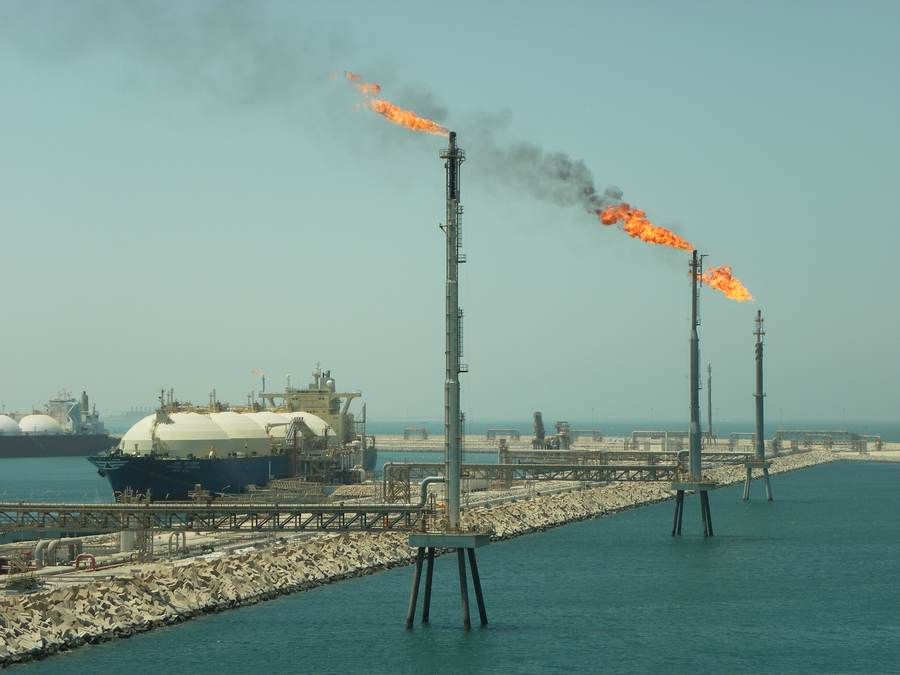
There is a practical reason the Patriots went in first. If large-scale operations resume, Washington will need Riyadh's permission to use Saudi airspace — and the Saudis are unlikely to grant it unless their oil facilities are protected. The kingdom remembers 2019, when strikes on Abqaiq, the world's largest crude-processing facility, knocked out 5.7 million barrels a day — about 5 percent of global supply. It remembers this month, too: a drone attack blamed on an Iran-backed militia in Iraq forced the temporary shutdown of the 1,200-kilometer East-West pipeline, the kingdom's Red Sea export artery (now back operating, Saudi officials say). And Qatar remembers March, when Iranian strikes caused what QatarEnergy called "extensive damage" at Ras Laffan — the core of the country's LNG operations — while drones set fires at two Kuwaiti refineries. Every one of those precedents is an argument Tehran can make without firing a shot: strike us, and the region's energy map burns with us.
The numbers behind the move
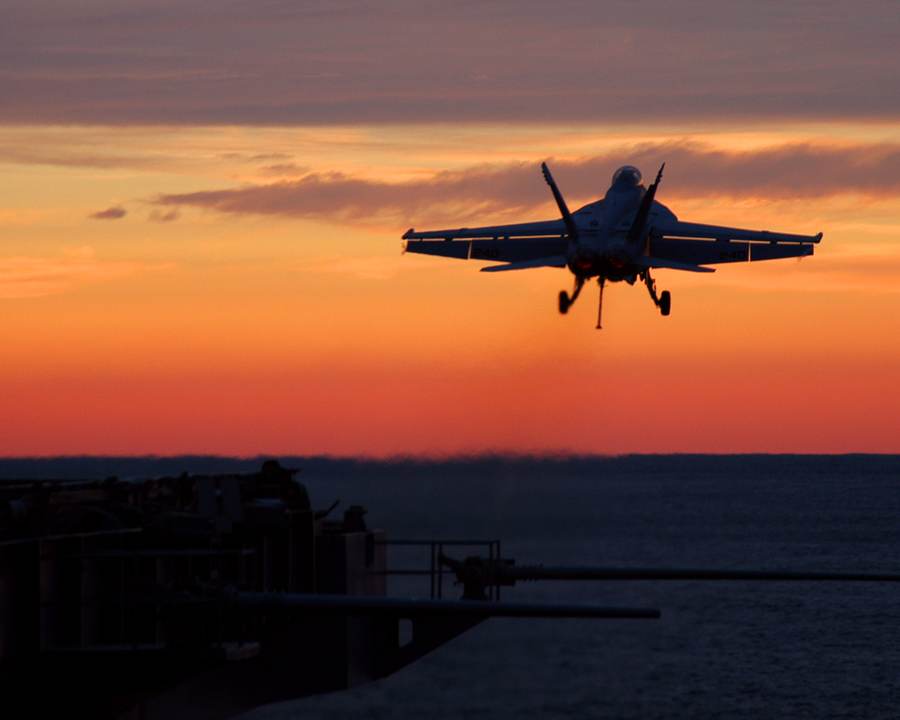
The deployment looks different once you put figures to it. Fewer than 1,000 Patriot interceptors remain in U.S. stocks, per the CSIS estimate — a stockpile being drained by seven months of intercepts over Israel, the Gulf and the Red Sea. Two batteries are now tied to Saudi and Qatari point defense rather than any other contingency. And the naval picture is filling in behind them: the carriers George H.W. Bush and George Washington are already in the region, and the Theodore Roosevelt's strike group left San Diego on Sunday, expected around mid-November — it is not yet decided whether it relieves one of the others or makes three. Add the 10,000-troop buildup already reported, and the trajectory is unmistakable: Washington is assembling the pieces of a major operation while insisting no decision has been made. That is precisely how the August operation was assembled, too — right up until the Saudi and Qatari phone calls stopped it.
Who gains, who loses, and what the critics will say
Riyadh and Doha gain a shield — and leverage. Protected oil facilities mean the Saudis can say yes to U.S. overflight requests without betting the kingdom's revenue; the Patriots are as much a political instrument as a military one. Washington pays in readiness: every interceptor parked in the Gulf is one unavailable in the Pacific or Europe, a trade the Pentagon has been quietly warning about for months. Tehran reads the deployment as a prelude, not a deterrent — IRGC spokesman Hossein Mohebbi warned this week of "new weapons with new capabilities" if fighting resumes, and Iranian planners will assume any U.S. strike package now comes with Gulf airspace already secured. Energy markets price the ambiguity: European gas hit its highest since early 2023 in September on the back of damaged Qatari supply, and insurers are already charging a war premium on Gulf shipping. And American voters get the bill at the pump — which is why, with the midterms a month out, the White House is watching gasoline prices as closely as satellite imagery.
What happens next: three scenarios
First, the deal. Shuttle diplomacy through Qatari and Omani mediators produces a phased agreement — sanctions relief for nuclear constraints, Hormuz reopened — and the Patriots never fire. In this telling, the deployment is deterrence as diplomacy's bodyguard: reassurance that lets Riyadh say yes, which lets Trump credibly threaten, which lets the threat work without being used. Second, the post-election campaign. Trump waits out November 3, then resumes bombing; the Patriots earn their keep intercepting retaliation salvos aimed at Abqaiq and Ras Laffan; Hormuz stays shut and oil spikes into winter. Third, the miscalculation. A proxy drone, a misread radar track — or a wild card like this week's FlyDubai cockpit attack, after which Trump has already promised Iran will be hit "very hard" if any link is found — triggers the retaliation before anyone has chosen war. The honest read is that the Patriots don't prove strikes are imminent. They prove Washington wants the choice — and wants Riyadh comfortable enough to say yes if the choice is made.
Sources
- JFeed: write-up of the Axios report on Patriot deployments to Saudi Arabia and Qatar
- ANI: Gulf oil infrastructure at risk as U.S. rushes Patriot missiles to Saudi Arabia and Qatar
- The Istanbul Post: additional Patriot batteries sent to protect Saudi and Qatari energy sites
Sourcing note: This article is based on the Axios report of October 1–2, 2026, as carried by JFeed, ANI and other outlets; U.S. Central Command spokesman Capt. Tim Hawkins declined to comment, and Signal Post News has not independently confirmed the deployment.