Washington blacklisted a Russian aircraft maker and a Russian shipping line alongside Chinese, Hong Kong, and Pakistani middlemen — a strike at the two-way arms pipeline linking Tehran and Moscow.
What happened
On Tuesday, September 29, the US Treasury and State departments announced fresh sanctions against 13 individuals and entities based in Russia, China, Hong Kong, and Pakistan, accusing them of helping Iran's Ministry of Defense procure weapons and components. Treasury Secretary Scott Bessent said the measures were aimed at degrading Tehran's ability to reconstitute its weapons programs and raising the cost for anyone who supports its procurement efforts.
The Treasury designations hit a procurement network stretching across Asia: Seyyed Asghar Alizadeh Tabatabai, described as the Beijing-based representative of Iran's Ministry of Defense and Armed Forces Logistics agency who coordinated purchases of finished weapons systems and dual-use components in China; the Iran-based Kavoshcom Asia R and D Group, accused of procuring electronics — including connectors — for the Iran Aircraft Manufacturing Industrial Company; the Hong Kong-based EC Mojo Technology Co Limited and its China-based representative Li Fen, accused of supplying electronic components for Kavoshcom's procurement; and Pakistan-based Waseem Pasha Tajammal, chairman of the privately owned defense company Cavalier Group.
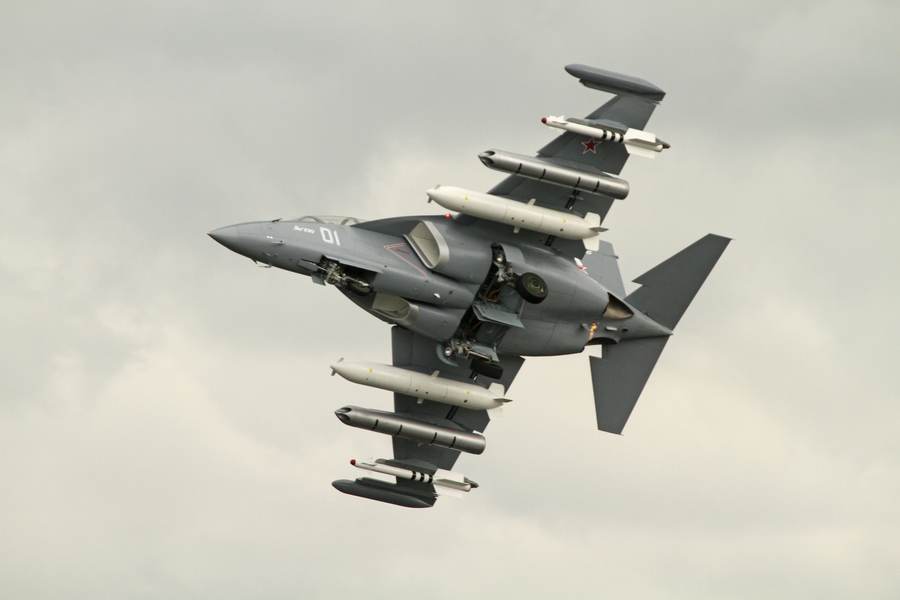
The State Department's parallel action named the two Russian targets: the Joint Stock Company Experimental Design Bureau Named After A.S. Yakovlev, the aircraft manufacturer, and MG-Flot LLC, the shipping company — formerly TransMorFlot — whose vessels Washington says transport weapons for the Russian government. The State Department also blacklisted Saha Airlines, an Iranian carrier tied to the Islamic Republic Air Force.
A note on sourcing: the sanctions announcements, the named targets, and Bessent's statements are confirmed by Reuters' original reporting and US government documentation. The underlying transaction details — Yakovlev's aircraft deliveries, MG-Flot's cargo movements — come from US State Department documentation as reported by the Spanish outlet Demócrata; they are Washington's allegations, carried here with attribution. Reuters could not independently verify every underlying claim, and the sanctioned parties have not publicly responded.
Why this matters
This story matters less as a sanctions list than as a map. Read the 13 names together and they trace the full circuitry of a two-way arms trade between Iran and Russia — the junction of two wars.
First, the pipeline runs in both directions. According to US documentation, Yakovlev delivered roughly 24 Yak-130 advanced training aircraft to Iran between the end of 2023 and December 2025. In the other direction, Washington attributes to MG-Flot the transport of Iranian-made short-range ballistic missiles to Russian territory in 2024 — missiles that feed Russia's war against Ukraine — plus air defense systems by the end of 2025. This is not a one-way patronage relationship; it is a barter economy of war materiel, jets for missiles, with each side arming the other for a different front. Sanctioning both ends of the pipe at once is Washington's attempt to sever the loop.
Second, the geography of the network is the story of sanctions evasion in 2026. The procurement chain runs through Beijing (a defense ministry buyer), Hong Kong (an electronics cutout), Iran (the assembler), and Pakistan (a defense-company chairman). Every node sits outside US jurisdiction, which is precisely why the network was built that way. The designations are a bet that dollar-clearing exposure and secondary sanctions — newly expanded under the Lindsey O. Graham Sanctioning Russia and Iran Act signed September 18 — will make banks and shippers in third countries think twice about handling the next shipment.
Third, the timing ties the sanctions to the battlefield. The action comes as Russia intensifies nightly missile and drone strikes on Ukraine — strikes that, per the Kyiv overnight reporting, lean on interceptor-straining jet-powered drones — and as the US-Iran war, which began with the US-Israeli strike on Iran on February 28, grinds through its eighth month. The administration is explicit that the goal is to force Tehran to negotiate an end to that war. Whether economic pressure can move faster than the rearmament it is trying to stop is the open question hanging over the entire "Operation Economic Outcast" campaign.
Background: the economic war on Iran, phase two
The September 29 action is not an isolated gesture but the latest turn in a sanctions campaign that has been escalating all month. On September 18, President Trump signed the Lindsey O. Graham Sanctioning Russia and Iran Act of 2026, named for the late senator — a law that adds new sanctions and tariffs targeting Russia, codifies authorities previously exercised by executive order, extends the Iran Sanctions Act sunset to 2031, and, critically, broadens secondary-sanctions exposure for foreign entities that engage with Russia's military, energy, and financial sectors. The September 29 designations are among the first major actions taken under the new legal architecture.
The context is the US-Iran war itself. Since the February 28 US-Israeli strike, Washington has pursued a two-track strategy: military pressure on Iranian targets and economic strangulation of the networks that rebuild them. Earlier this month the Treasury moved against Iranian airlines, grounding carriers tied to the regime's logistics. The Kavoshcom network — electronics and connectors for Iran's aircraft manufacturing — targets the unglamorous middle of the supply chain: the components without which missiles and drones cannot be assembled at scale.
There is also a Ukraine dimension that should not be missed. The same MG-Flot vessels Washington accuses of carrying Iranian ballistic missiles into Russia in 2024 are part of the logistics chain feeding Russia's strike campaign against Ukrainian cities. In that sense the September 29 sanctions are simultaneously an Iran-war measure and a Ukraine-war measure — one action aimed at two battlefields.
Who gains, who pays — and what the critics say
Washington's calculation is that even imperfect sanctions compound. Each designation raises compliance costs, forces networks to reroute through more expensive and less reliable cutouts, and signals to banks in the Gulf and Asia that handling Iranian defense money now carries Graham Act secondary-sanctions risk. Bessent's language — "identify, expose, and isolate Iran's enablers" — is the classic logic of attrition by paperwork.
Tehran and Moscow's likely response is adaptation, not surrender. Both countries have spent years building sanctions-resistant procurement: front companies, barter deals, yuan- and ruble-denominated settlement, and state-owned shippers like the former TransMorFlot that answer to governments rather than markets. The Yak-130 deliveries were already completed; the missiles already arrived. Sanctioning the deliverymen after the delivery is, as critics note, closing the barn door — but Washington would argue it is really about the next delivery.
The critics' case is blunt. Brett Erickson, managing principal with Obsidian Risk Advisors, told Reuters the action "would do little to impede Iran's ability to launch missiles and drones in the Strait of Hormuz," calling it "optics management for the Trump administration to claim 'We're hammering them,' when the reality is we're poking them with a toothpick." The skepticism has a track record behind it: decades of Iran sanctions have not stopped Tehran's missile program, and Russia's war economy has absorbed far heavier measures since 2022. The counterargument — that sanctions are a slow weapon whose effects compound over years, not news cycles — is harder to prove and impossible to disprove in the short term.
The third countries — China, Pakistan, and the Hong Kong intermediaries — face the sharpest immediate pressure. Beijing has consistently opposed unilateral US sanctions; Islamabad will not welcome the designation of a Pakistani defense executive. Whether the Graham Act's secondary-sanctions threat changes their calculus, or simply pushes the procurement deeper underground, is the experiment now underway.
The numbers in context
Thirteen targets sounds modest until you map what they represent. Five individuals and five companies in the OFAC network alone, spanning four jurisdictions — a single procurement chain for one country's defense ministry, dismantled on paper in a day. The ~24 Yak-130 aircraft are a concrete, countable transfer: a full training fleet, delivered over two years, now the stated justification for blacklisting one of Russia's legacy aircraft design bureaus.
Put the action in the sequence: September 18 (Graham Act signed), then airline shutdowns, then September 29 (procurement network). That is three escalating economic actions in 11 days — a tempo that suggests "Operation Economic Outcast" is a sustained campaign, not a headline. Compare it with the diplomatic track: US-Iran shuttle talks at the UN General Assembly in the same week produced no breakthrough. The administration appears to be betting that pressure, not persuasion, will bring Tehran to the table — a bet whose payoff, if it comes, will be measured in months, not days.
And consider the asymmetry the critics point to: the entire September 29 action targets the supply side of Iran's rearmament. It does nothing about the demand side — the war itself — and nothing about the stockpiles already built. Sanctions are a weapon aimed at the future; the present arsenal is untouched.
What happens next
Three things are worth watching. The most likely: more designations. "Operation Economic Outcast" is framed as an ongoing campaign, and the Treasury's pattern — airlines, then procurement networks — suggests the next tranches will climb further up the chain toward financiers and insurers. The Graham Act's secondary-sanctions machinery gives Washington new leverage over the banks that clear these transactions; expect test cases. The diplomatic track: the sanctions are explicitly meant to force negotiations to end the US-Iran war. If Tehran reads them as a prelude to talks, they could become bargaining chips; if it reads them as pure coercion, they harden positions. The UNGA shuttle talks showed both sides still talking — barely. The wildcard: retaliation by other means. Iran's leverage is the Strait of Hormuz, where Erickson notes the sanctions will do little to impede missile and drone launches. If Tehran answers economic pressure with maritime pressure, the sanctions campaign could raise the very escalation risk it is meant to contain.
For now, the 13 names are on a list, their dollar assets frozen, their transactions criminalized. Whether that amounts to a toothpick or a hammer will be decided not in Washington's press releases but in the shipping manifests of the next six months — in what gets delivered, what gets intercepted, and what simply finds another route.
Related coverage
Sources
- Reuters (Andrea Shalal) — "US sanctions 10 over allegedly procuring weapons for Iran" (September 29, 2026)
- Reuters (updated, via Devdiscourse) — "US imposes sanctions on 13 tied to Iran weapons procurement" (September 29, 2026)
- Demócrata — "USA tightens sanctions against Iran's military network" (September 29, 2026)
- Clyde & Co — "The Lindsey O. Graham Sanctioning Russia and Iran Act of 2026 becomes law" (September 2026)