Trump Iran retaliation threat
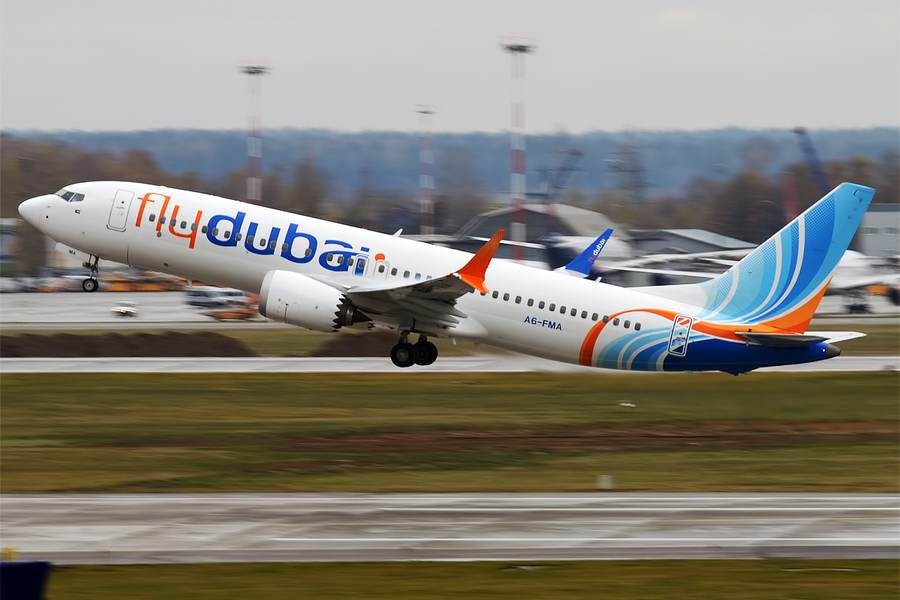
WASHINGTON — The Trump Iran retaliation threat moved a terrifying aviation-security episode into the center of a wider Middle East war on Thursday, October 1. President Donald Trump said Iran would be hit “very hard” if investigators establish that Tehran was connected to the copilot accused of trying to crash an Israel-bound FlyDubai jet carrying 182 people.
Asked at the White House whether he believed Iran was involved, Trump answered: “We're working on it right now.” He then added, “I would say the answer, based on what I'm hearing, is yes, but we're working on it right now,” without describing the intelligence behind that assessment. On the consequences, he was more definitive: “Oh they'll be hit, very hard, don't worry.” He later said, “You just ask them. They know what happened. They'll be hit very hard.”
Those statements are consequential, but they are not evidence. As of publication, the White House had not publicly released intelligence tying the accused copilot to the Iranian government or an Iranian proxy. Trump called the man “perhaps a terrorist or perhaps a whack job,” language that itself underscored the unresolved question of motive. The distinction between state direction, ideological influence and an individual's actions is the central fact still missing from the public record.
Why this matters
Aviation incidents compress time. A suspicious movement in a cockpit can produce a steep descent in seconds, emergency codes in moments and military alerts before investigators have interviewed everyone aboard. Presidential threats operate on a different clock but can create similar pressure: once a leader publicly promises punishment, every subsequent intelligence assessment is read through the expectation of action.
That is why the conditional in Trump's warning is as important as the threat itself. If a credible chain of command links the FZ1073 attack to Tehran, Washington would face pressure to retaliate against conduct that endangered civilians from several countries, including four U.S. citizens. If the link remains unproven, acting anyway would risk turning an attempted individual crime into a state-to-state escalation. Both paths carry costs, and the time available to separate them may be shortened by an already active war.
The warning also lands at a politically combustible moment. The Israel–Iran war is seven months old. Israel is one week from the third anniversary of the October 7 attacks and only weeks from an election. In the United States, Trump has tied the possibility of renewed bombing to the period after the November 3 election. A threat made against that calendar can serve deterrence, but it can also narrow diplomatic room if rivals conclude that decisions are being set by political dates rather than evidence.
How FZ1073 became a geopolitical crisis
FlyDubai FZ1073 copilot stabbing and the 16,000-foot descent
FlyDubai flight FZ1073 departed Dubai for Tel Aviv on September 30 aboard a Boeing 737 Max 8. According to reporting carried by the Associated Press and regional outlets, the copilot stabbed captain Smit Machchhar inside the cockpit and the aircraft fell rapidly before other crew members and people aboard restrained the alleged attacker. Our first detailed account reconstructed the cockpit assault and the crew's response.
Public flight-tracking data supplied the starkest numerical picture. Flightradar24 showed the jet dropping from roughly 33,000 feet to about 17,000 feet in around a minute, a loss of approximately 16,000 feet. The transponder first broadcast 7700, the general emergency code, and then 7500, the code for unlawful interference or hijacking. The jet diverted to Tabuk, Saudi Arabia, and landed safely.
FlyDubai said on-duty crew members secured the aircraft. Most of the 182 people aboard were Israeli, while other passengers included Indian and Emirati nationals; the U.S. State Department said four had American citizenship. A regional official identified the copilot as Omani, and he was transferred to the United Arab Emirates on October 1. Oman's government had not commented publicly at the time of this report.
Prime Minister Benjamin Netanyahu said the alleged attacker appeared to have undergone “Islamist indoctrination,” but he did not identify who might have radicalized him. In a Fox News interview, Netanyahu said it was too early to say whether Iran was connected. He separately told CNN that Israel had received no specific warning. These statements leave the public evidence short of the standard required to attribute an operation to a state.
From an emergency squawk to the seven-month war
Israel Iran war October 2026: attribution is the hinge
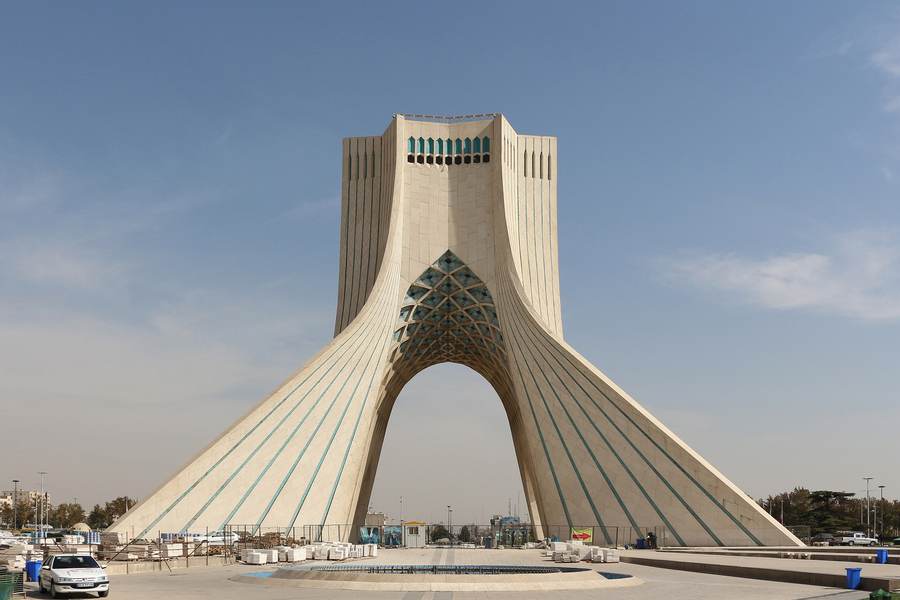
The FZ1073 case did not arrive in a vacuum. Seven months of direct war have lowered the barrier between warning and action, while each side seeks to convince the other that escalation will be answered. In that environment, even an event with uncertain sponsorship can be interpreted as part of a broader campaign.
Attribution has several levels. Investigators may establish what the copilot did and why. They may find contacts with an extremist network. They may discover material support from people tied to a proxy group. None of those findings automatically proves that senior Iranian officials ordered an attack. A defensible state-attribution case normally requires a chain joining intent, direction, capability and execution. Public rhetoric can get ahead of that chain.
This is also why the flight's passenger mix matters. An attempt against an Israel-bound aircraft can be framed as an attack on Israelis, yet the danger was multinational: the crew and passengers crossed several national jurisdictions, the aircraft was operated by a UAE carrier, the accused was reported to be Omani, the emergency landing occurred in Saudi Arabia and Americans were aboard. Every government in that chain has its own evidence, legal process and incentive.
For a closer reconstruction of the distress codes and the moment control was regained, see how the FZ1073 crew and passengers fought through the hijack scare.
Iran peace proposal rejected as diplomacy narrows
The warning came as the diplomatic track was already contracting. Iranian officials said Wednesday that they had received an official U.S. response to Tehran's latest proposal to end the war. Trump had rejected the proposal publicly days earlier. In a Time magazine interview published October 1, he said he would not accept proposals he “wouldn't have approved a year ago” and left open the possibility of resuming bombing after the November 3 U.S. election.
That negotiating posture and the FZ1073 warning reinforce one another. The White House can use the threat of force to press Iran for better terms. Iran, however, can read the same threat as proof that concessions will be followed by additional demands rather than a settlement. Coercive diplomacy works only when the opponent can see both a cost for refusal and a credible exit for compliance.
The Strait of Hormuz reopening proposal is part of that wider bargain. Shipping lanes, energy flows and sanctions relief are potential leverage points, but an alleged attack on a civilian airliner could make concessions politically harder for Washington and its partners. Conversely, if the allegation is not substantiated, attaching it to negotiations may poison a channel that was already fragile.
Historical parallels: threats, retaliation and aviation crises
American presidents have often used deliberately forceful language after attacks on U.S. personnel or civilians, sometimes before disclosing intelligence. The purpose is to preserve freedom of action and deter a follow-on strike. The danger is that a promise can become a credibility test: if evidence remains ambiguous, restraint may be portrayed as weakness; if the response arrives too quickly, later facts can expose a grave mistake.
Aviation-security crises have their own history of miscalculation. Hijackings and attempted cockpit takeovers generate incomplete reports across borders, while governments simultaneously manage public fear, criminal evidence and military readiness. The lesson is not that leaders should remain silent. It is that criminal attribution and state attribution must be kept separate until facts justify joining them.
The strongest precedents for retaliation share a common feature: officials could describe the target, the responsible chain and the intended limit of the response. The weakest precedents are those in which the act of retaliation became a substitute for proving the allegation. In the present case, Trump's phrase “if it is behind” Iran preserves a factual threshold. Whether policy respects that threshold will matter more than the volume of the warning.
Who benefits, who loses and what critics say
U.S. pressure strategy and Israeli deterrence
For Washington, the threat may increase leverage without requiring an immediate strike. It tells Iran that sponsorship of attacks beyond the conventional battlefield could trigger a larger response. For Israel, the statement extends deterrence around civilian aviation and signals that Americans aboard can make an incident a direct U.S. concern.
Supporters of the approach argue that ambiguity favors the defender: Tehran must account for the possibility of overwhelming retaliation even if Washington does not reveal intelligence sources. They also contend that a quick public warning can prevent copycat operations by raising the expected cost.
But deterrence has a mirror image. An adversary may disperse forces, accelerate operations or use proxies more opaquely if it believes a strike is coming. Allies may also make stronger public claims when they expect U.S. power to backstop them. That makes disciplined attribution more important, not less.
Iranian diplomacy, airlines and oil markets carry the downside
Iran stands to lose diplomatic space even if no operational link is ultimately proved. The allegation places Tehran in the position of disproving a secret relationship while negotiating under threat. Iranian officials could cooperate with an investigation, deny the claim or portray it as a pretext; each choice has domestic and strategic costs.
Airlines face a more immediate burden. A single cockpit attack can alter crew screening, route planning, insurance and passenger behavior across carriers that serve Israel and Gulf hubs. FlyDubai must answer questions about internal controls while its crew's successful recovery is recognized. Saudi Arabia and the UAE must process evidence from an event that crossed both jurisdictions.
Oil and shipping markets react not only to attacks but to the probability of future disruption. A direct U.S. strike on Iran could raise risk premiums around the Strait of Hormuz even without a closure. Higher fuel and insurance costs would reach airlines first, then passengers and freight customers. Those costs are why attribution is not an abstract legal debate: it shapes prices far from the cockpit.
What critics say about an unverified link
The central criticism is procedural. Trump said his preliminary answer was “yes” while acknowledging that the administration was still working on it and offering no public evidence. Critics of that sequence argue that a president should not create an expectation of war before investigators establish motive and sponsorship.
A second criticism concerns proportionality. Even if an Iranian connection is found, the nature of that connection matters. Direct state orders, proxy facilitation, online propaganda and an individual's claimed inspiration are not interchangeable. A response calibrated to the wrong category could widen the war without deterring the actual mechanism behind the attack.
Defenders answer that public evidence is rarely released at the beginning of an active intelligence investigation and that waiting silently can invite further attacks. Both arguments have merit. The practical test is whether the administration can later show a credible evidentiary chain and define what “very hard” is meant to achieve.
What the numbers mean
182 lives, 16,000 feet and two emergency codes
The scale of the incident begins with 182 people aboard. A descent from approximately 33,000 feet to 17,000 feet in about sixty seconds implies an average vertical change near 16,000 feet per minute. That simple ratio does not reconstruct the aircraft's exact attitude or the forces inside the cabin, but it explains why the event was treated as an immediate mass-casualty risk.
The shift from squawk 7700 to 7500 is equally important. The first announces a general emergency; the second specifically signals unlawful interference. Together, they suggest that the cockpit recognized both operational danger and a security threat. They do not identify a sponsor. Transponder codes are evidence of what the crew faced, not of who planned it.
The four U.S. citizens aboard expand Washington's legal and political interest, but the event would remain internationally significant without them. The passenger count, carrier nationality, alleged attacker's nationality and landing jurisdiction make this a multi-state investigation. Any military response that outruns that investigative network risks discarding evidence that could prove or disprove the larger allegation.
US troops Middle East 9000 and the election calendar
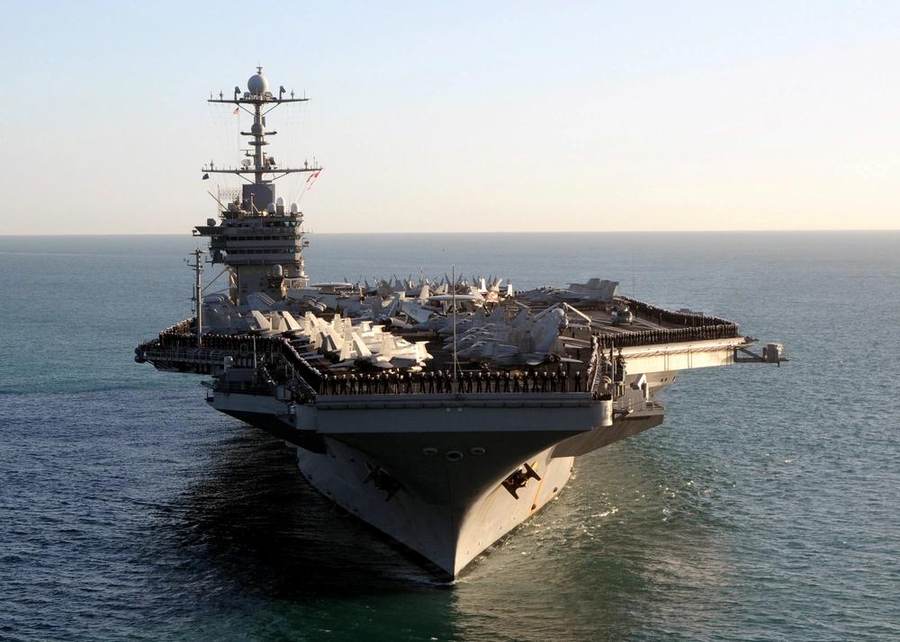
Associated Press reporting says roughly 9,000 U.S. troops have been dispatched aboard ships to the Middle East. That force provides options for protection, evacuation, missile defense and strikes. It also creates more American targets and increases the number of commanders who must distinguish a limited incident from the start of a larger attack.
Three dates now shape risk perception: September 30, when FZ1073 was attacked; October 7, the anniversary around which Israel has heightened security; and November 3, the U.S. election after which Trump left open renewed bombing. Dates do not determine military decisions, but adversaries plan around moments of political attention. That can produce attempts at signaling, provocation or restraint.
The domestic political dimension is already explicit. Lara Trump has acknowledged the Iran war could affect the midterm contest. The president's policy therefore has two audiences: foreign leaders judging U.S. resolve and voters judging the costs of another escalation.
What happens next: four scenarios
1. A state link is proved
If investigators produce communications, financing or command evidence tying the operation to Iranian authorities, pressure for a military response would rise sharply. Washington could choose a limited strike, cyber operation, sanctions escalation or coordinated action with allies. The most credible response would pair any punishment with a clearly stated objective and an off-ramp, reducing the chance that deterrence becomes open-ended war.
2. A non-state network is found, but Tehran's role is indirect
A proxy or ideological network would create the hardest calibration problem. U.S. officials would have to distinguish tolerance from direction and support from command. The likely response would combine arrests, financial disruption and pressure on facilitators, with military options held in reserve. Overstating the connection could weaken international support; understating it could leave the network intact.
3. The Iran link is disproven or remains unverified
If evidence points to an individual act or another sponsor, the administration will need to say so plainly. Correcting an early assessment can carry a short-term political cost, but it protects intelligence credibility for the next crisis. A strike without proof would risk civilian harm, retaliation and a wider war based on a premise the public cannot test.
4. Diplomacy collapses before the October 7 anniversary
The most dangerous scenario is interaction: the aviation investigation remains unresolved while Iran talks fail, military forces maneuver and Israel enters the anniversary period on high alert. Separate warning signals could then be misread as one coordinated campaign. Crisis-management channels, shared evidence and disciplined public language would become as important as the forces already deployed.
The evidence gap is now the policy question
Trump has drawn a bright line: if Iran is linked to the attempted destruction of FZ1073, it will be hit hard. The public does not yet know what evidence sits behind his preliminary belief, whether investigators agree on the standard of proof or what form retaliation would take. Those are not secondary details. They determine whether the threat functions as deterrence or becomes an accelerant.
The crew and passengers prevented a catastrophe in the air. The next task belongs to investigators and governments on the ground: reconstruct the act, establish the motive, trace any support and publish enough of the case to justify what follows. In a seven-month war, the hardest strategic discipline is not making a threat. It is ensuring that the facts decide whether it is carried out.
Sources
- Associated Press via WVLT: Trump's White House remarks, State Department passenger count, Netanyahu interviews and investigation status
- Associated Press via The Hindu BusinessLine: FZ1073 attack and U.S. retaliation warning
- Press Trust of India via Swadesi: independent wire account of Trump's remarks
- Associated Press: Trump's Time interview, rejected Iran proposal and U.S. troop deployment
- UNILAD Tech: Flightradar24 FZ1073 altitude and emergency-code data
- Live and Let's Fly: FlyDubai's statement that on-duty crew secured the aircraft
- USA Today: flight diversion and passenger context
- U.S. Defense Visual Information Distribution Service: carrier file photograph
Reporting basis: Fixed October 2, 2026 snapshot. Facts and quotations are attributed to the cited wire reports and sources. Scenario analysis is Signal Post News analysis; no public evidence establishing Iranian state responsibility had been released at publication.