us talks with Myanmar generals
us talks with Myanmar generalsTrump Myanmar rare earths dealMin Aung Hlaing US sanctionsMyanmar military government talksAdam Castillo Myanmar releaseMyanmar scam centers crackdownMichael Vance State DepartmentMeeks Rubio Burma policy criticismrare earth minerals China supply chainMyanmar 2021 coup isolation

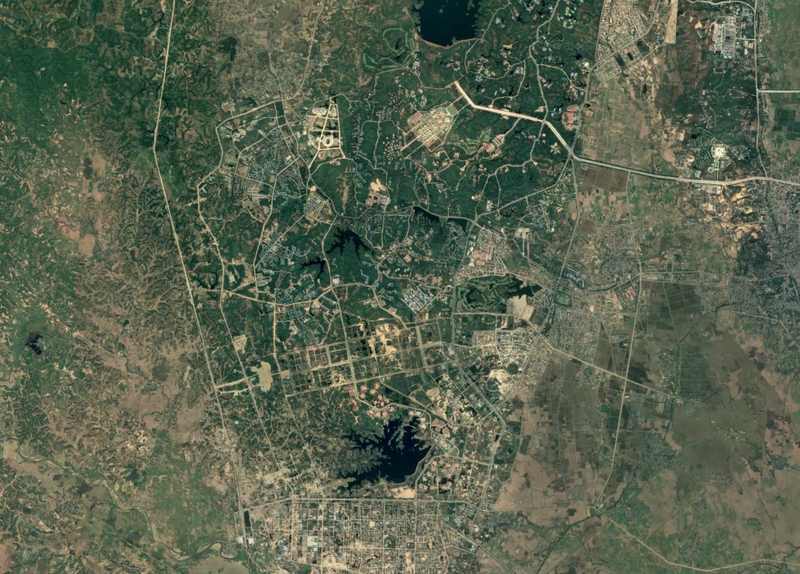
WASHINGTON — The Trump administration has begun direct talks with Myanmar's military-installed government, reversing the post-coup policy of keeping the generals at arm's length. The us talks with Myanmar generals were disclosed in an October 8 Reuters exclusive. Assistant Secretary of State Michael Vance joined two days of meetings with coup leader-turned-president Min Aung Hlaing in Naypyitaw on September 15 and 16, the highest-level US contact since the February 2021 takeover.
The channel is not merely ceremonial. Reuters reported that the September mission sought the release of detained American businessman Adam Castillo, that the FBI is communicating directly with Myanmar authorities about criminal compounds that have defrauded Americans of billions of dollars, and that officials are considering a wider relationship involving Myanmar's heavy rare-earth deposits. Castillo was released that month. Each objective fits President Donald Trump's preference for measurable transactions. Together, however, they amount to a strategic turn: engagement is becoming the instrument, while democratic restoration is no longer the price of admission.
The administration's case is that isolation failed to dislodge the generals, recover Americans or close the scam compounds. Critics answer that direct access grants the military something sanctions denied it: a path to international legitimacy while its air war continues. That conflict sharpened less than two weeks after Vance's visit, when a military strike hit a crowded market in Kyauktaw, Rakhine state, killing more than 50 civilians according to UN human-rights officials.
Why this matters
Michael Vance, State Department intelligence and an unusual diplomatic lane
Vance is the State Department's top intelligence official. Confirmed in August 2026 as assistant secretary for Intelligence and Research, he played a leading part in the outreach and had an ongoing Myanmar-policy role that had not previously been reported, according to Reuters. He attended the Naypyitaw talks and an earlier June meeting in Tokyo alongside officials from Treasury, Homeland Security and the Pentagon.
That portfolio makes the diplomacy unusual. Intelligence offices are built to assess policy options and warn policymakers where assumptions are weak; diplomats are tasked with negotiating those options. Reuters cited Council on Foreign Relations scholar Richard Betts among critics who have questioned blurring intelligence analysis with policy advocacy. The concern is institutional, not personal: once the official weighing evidence also becomes an architect of the policy, independent challenge can become harder.
The administration may see the overlap differently. Myanmar's scam networks, sanctions exposure, armed groups and mineral geography cross bureaucratic lines. An intelligence chief can assemble those strands quickly and communicate with agencies that possess leverage. The question is whether speed and access compensate for the loss of analytical distance.
From Myanmar 2021 coup isolation to transactional foreign policy
The larger significance is the abandonment of a doctrine. After the 2021 coup, US policy treated political normalization as a reward to be withheld until the military reversed course. The new approach treats contact as leverage in itself. A hostage release, an enforcement channel and a possible supply-chain opening are benefits that can be counted now; democratic transition and accountability are aims that may be deferred indefinitely.
That is not the same as endorsing the junta. Officials can negotiate with sanctioned governments without recognizing their legitimacy. Yet photographs, meetings and direct channels carry political value. Min Aung Hlaing can present them at home and abroad as evidence that years of pressure did not prevent Washington from coming to him.
How we got here
Sanctions, frozen assets and the Min Aung Hlaing US sanctions problem
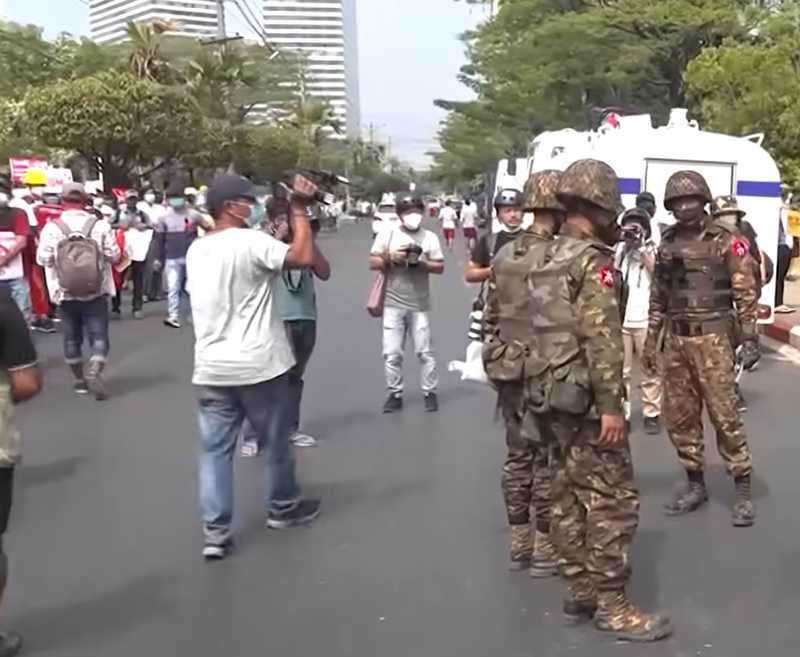
The rupture began in February 2021, when the military removed the elected government and detained its leaders. The Biden administration froze Myanmar central-bank assets held at the Federal Reserve and sanctioned officers and military-linked businesses. In 2022, the State Department formally determined that the military's campaign against the Rohingya constituted genocide. Congress later authorized non-lethal support for the pro-democracy opposition.
Pressure imposed costs but did not remove the junta. The military kept control of the central state while losing territory to ethnic armed organizations and resistance forces. The opposition received political recognition and some practical help, but much of the congressionally authorized assistance was cut during Trump's foreign-aid overhaul. The generals then staged elections widely dismissed by opponents and outside observers as a sham and installed Min Aung Hlaing as president. He remains under US sanctions even as American officials meet him.
Lobbyists, a tariff letter and Myanmar military government talks
Myanmar's government worked to change the conversation in Washington. Reuters reported that Myanmar hired US lobbyists and that Roger Stone, the pardoned Trump adviser, began consulting in April for DCI Group on behalf of Myanmar's Ministry of Information. A DCI newsletter warned that Washington could lose access to critical minerals. Separately, Reuters reported through SRN News that the Trump team was hearing proposals built around access to Myanmar rare earths.
The thaw also had a symbolic step. A tariff letter from Trump addressed Min Aung Hlaing in his new presidential capacity, language the government could read as practical acceptance of his office. Then came the June meeting in Tokyo involving Vance and representatives from Treasury, Homeland Security and the Pentagon. The September delegation went further by traveling to Naypyidaw and meeting Min Aung Hlaing directly.
Regional diplomacy moved in the same direction. On October 7, Min Aung Hlaing visited Malaysia in search of wider acceptance. Reuters described the visit as a red-carpet reception for a leader once shunned. Signal Post News examined that bid for regional standing in Min Aung Hlaing's Malaysia visit.
Adam Castillo Myanmar release: the opening result
Castillo was detained at Yangon airport on June 11. He had founded and chaired the Myanmar chapter of Republicans Overseas, giving his case a direct political constituency in the United States. Reuters reported that the September visit was aimed at securing his freedom and that he was released that month. Reuters detailed the release on September 16; CNN also reported on September 18 that US officials made the rare trip to free the former Marine.
For the administration, Castillo is evidence that direct contact can produce what isolation did not. For the junta, the episode demonstrated the diplomatic value of controlling an American's fate. Both readings can be true. Hostage diplomacy often creates urgent reasons to engage while also rewarding the party that holds the leverage.
Who benefits, who loses
The possible Trump Myanmar rare earths deal
The United States would benefit if Myanmar could become one piece of a diversified rare earth minerals China supply chain. Heavy rare earths are essential to high-performance magnets used in defense systems, electric vehicles, wind turbines and advanced electronics. China dominates processing and much of the commercial chain, making alternative sources strategically valuable even before a mine reaches full production.
But geology is not access. Myanmar's most important heavy rare-earth deposits lie largely in territory held or contested by ethnic armed organizations. The central government cannot simply promise secure production, transport and environmental oversight where it does not exercise undisputed control. A memorandum with Naypyidaw could therefore be more valuable as political signaling than as a near-term supply contract.
Trump-style transactional diplomacy also claims two immediate wins: Castillo's freedom and a working law-enforcement channel. A Myanmar scam centers crackdown could protect Americans if it closes compounds, arrests organizers and preserves evidence for prosecution. The FBI's reported direct contact with Myanmar authorities matters because victims in the United States cannot wait for a complete political settlement before investigators cooperate.
Legitimacy for the junta, uncertainty for the opposition
The military government gains most clearly in status. Meetings with senior Americans, talk of minerals and cooperation with the FBI help recast it from an isolated target of sanctions into a necessary partner. That does not erase Min Aung Hlaing's sanctions designation, but it weakens the political message those sanctions were designed to send.
Myanmar's pro-democracy movement and its American supporters face the inverse. They spent five years arguing that sustained pressure could deny the military legitimacy and resources. Reduced US aid and direct government-to-government contact suggest that Washington's priorities have moved from political change to narrower bargains. Human-rights advocates also worry that sanctions relief could arrive before accountability for attacks on civilians.
Meeks-Rubio Burma policy criticism
Representative Gregory Meeks, the top Democrat on the House Foreign Affairs Committee, called the engagement “contrary to both our values and our interests.” In an October 2 committee statement, he accused Secretary of State Marco Rubio of ceding US leadership and legitimizing Min Aung Hlaing after the Kyauktaw killings.
The criticism identifies the central tradeoff but does not by itself resolve it. Refusing contact can preserve a moral line while limiting practical influence. Engaging can free people and disrupt crimes while normalizing the party responsible for repression. The policy test is whether Washington can obtain concrete concessions without converting every meeting into an unearned diplomatic victory for the junta.
What the numbers actually say
Billions lost, one American freed, more than 50 civilians killed
“Billions” is the figure that explains the law-enforcement urgency. Reuters reported that scam centers operating from Myanmar and elsewhere in Southeast Asia have taken billions of dollars from Americans. These compounds are also associated with trafficking: workers are often recruited under false pretenses and forced to run investment, romance and cryptocurrency fraud. Direct FBI contact can help identify networks, trace proceeds and return evidence across borders, although cooperation should be judged by arrests and closures rather than promises.
Castillo's release is one concrete result. The Kyauktaw death toll is the counterweight. Less than two weeks after Vance's meeting with Min Aung Hlaing, a military airstrike hit the crowded market and killed more than 50 civilians, according to UN human-rights officials. Signal Post News reported the attack in Myanmar Junta Airstrike Kills Civilians at Kyauktaw Market. The timing does not prove that engagement encouraged the strike, but it shows that engagement had not restrained the military's battlefield conduct.
Five years is the other meaningful number. Sanctions and isolation failed to dislodge the junta. Yet failure to achieve regime change does not mean pressure had no effect; sanctions constrained finance, travel and international recognition. The new policy must therefore be compared not with an imagined successful isolation campaign, but with the real mix of costs and limits that existed.
Heavy rare earth scale versus control on the ground
Myanmar's deposits matter because heavy rare earths are scarce in commercially useful concentrations and because supply chains are highly concentrated in China. Still, no publicly disclosed US-Myanmar agreement establishes volumes, timelines, financing, environmental rules or access to territory. The honest number at this stage is zero: there is no announced Trump Myanmar rare earths deal to price.
That gap is consequential. Mining in conflict zones can finance armed actors, displace communities and cause severe contamination. Even if Washington secures political permission from Naypyidaw, companies would need security, local agreements, processing capacity and a route to market. Strategic diversification is a plausible goal; a quick mineral windfall is not yet a demonstrated outcome.
What happens next
Sanctions bargaining and congressional resistance
The next test is whether operational cooperation becomes sanctions bargaining. The administration could offer targeted relief, licenses or diplomatic upgrades in exchange for verified scam-center closures, releases of other detainees, access for investigators or limits on attacks. Narrow, reversible steps would preserve leverage better than broad normalization. Any relief aimed at military-linked enterprises will draw scrutiny from Congress and human-rights groups.
Meeks and other critics can press Rubio for documents, hearings and conditions on appropriated funds. They may not be able to stop executive-branch contact, but they can raise the political cost of concessions and demand measurable benchmarks. The argument will turn on evidence: compounds closed, Americans protected, detainees freed, civilian attacks reduced and aid access widened.
China's reaction and the ethnic-army problem
Beijing is unlikely to ignore a US effort to enter a mineral sector tied closely to Chinese buyers and processors. China has deeper commercial networks, geographic proximity and long relationships with both the military and armed groups near the border. Washington can offer alternative investment and geopolitical balance, but it cannot reproduce those advantages quickly.
The ethnic-army problem is even more immediate. Deposits outside firm central control require negotiations with actors the junta may regard as enemies. A deal struck only with Min Aung Hlaing could be impossible to implement or could intensify conflict over mining areas. US officials will have to decide whether supply-chain strategy can include local consent and environmental safeguards, or whether urgency will outrun governance.
Can engagement coexist with the junta's air war?
Myanmar's military continues to use airpower against areas held by resistance and ethnic forces. Signal Post News has also documented airstrikes on displaced-person camps near Ponnagyun. If talks expand while such attacks continue, the administration will need to show that engagement provides leverage rather than cover.
The most credible path would separate contact from endorsement. Washington can maintain direct channels, demand verifiable outcomes, preserve sanctions on individuals responsible for abuses and consult the democratic opposition and ethnic organizations whose territory matters to any mineral plan. It can also state publicly what would trigger more pressure. Without those guardrails, the policy risks becoming a series of transactions in which the junta receives recognition up front and delivers selective cooperation later.
For now, the outreach is a gamble with asymmetric timelines. Castillo's release is visible; a scam-center closure can be counted; a mineral agreement can be announced. The political consequences for Myanmar's opposition and the civilians beneath the air war accumulate more slowly. Whether Trump's engagement is judged as realism or normalization will depend on which set of outcomes Washington chooses to measure.
Sources and methodology
This analysis is based on Reuters' October 8 exclusive on the direct talks, Reuters' September 16 report on Adam Castillo's release, the House Foreign Affairs Committee minority statement, Reuters' October 7 report on Min Aung Hlaing's Malaysia visit, and Reuters reporting on rare-earth pitches carried by SRN News. CNN's September 18, 2026 report provided additional context on the US mission to free Castillo. Attribution is preserved where claims come from governments, lawmakers or parties to the conflict.