War · Espionage · NATO · United Kingdom · Russia
A serving US Army officer arrested in Gloucestershire on suspicion of espionage offences linked to Russia is now in American military custody, after British prosecutors agreed to pass the investigation to the United States. The allegations are unproven, UK police have not named or charged him, and US officials say no information reached Russia.
Track it live: Wars tracker
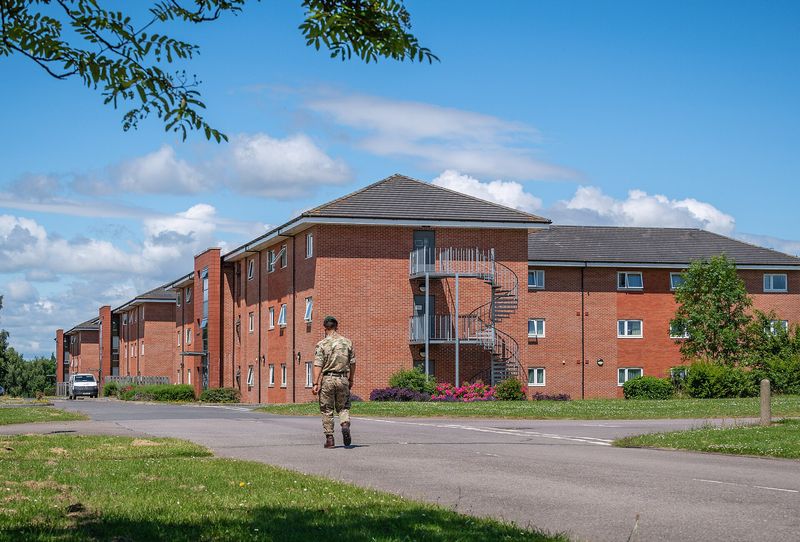
LONDON — Britain has transferred a serving US Army officer, arrested last week in Gloucestershire on suspicion of espionage offences, to US military custody, the Metropolitan Police announced on Tuesday, November 17, 2026, in a statement published at 18:30 UTC and reported the same day by Reuters. The handover ends the British phase of one of the most sensitive counterintelligence cases to surface on UK soil in years: an investigation run jointly by Counter Terrorism Policing, MI5 and the FBI into allegations that an American officer at a NATO headquarters in England was spying for Russia. The allegations remain exactly that — allegations. No charges had been announced in either country at the time of the transfer, and British police have not publicly named or charged the man.
The November 10 arrest and the National Security Act 2023
The arrest came on November 10, when Counter Terrorism Policing officers detained a 41-year-old man in Gloucestershire, near Gloucester. He was held in police custody in London while officers carried out searches at two locations in Gloucestershire. Police said he was arrested on suspicion of offences under Sections 1 and 3 of the National Security Act 2023 — Section 1 covers obtaining or disclosing protected information, and Section 3 covers assisting a foreign intelligence service — and that the allegations relate to Russia. The legal stakes of those sections are severe: under the Act, a Section 1 offence carries a maximum sentence of life imprisonment, and Section 3 up to 14 years. But severity is not a verdict. The officer was not charged under either section in the United Kingdom, and no US charges had been announced by Tuesday evening.
Who Lt Col Brandon Tyner is — according to US officials
British police have not named the arrested man. He was identified to the Associated Press and the Wall Street Journal by US officials as Lt Col Brandon Tyner, 41, a senior human resources officer serving with NATO’s Allied Rapid Reaction Corps at Imjin Barracks, Innsworth, near Gloucester; the BBC understands he was based at Imjin Barracks. Brig Gen Sean Stinchon, the head of US Army Counterintelligence, described him as a senior soldier entrusted with sensitive information. An Army official, speaking via AP and Military Times, set out an unremarkable-on-paper career: Tyner joined the Army in 2008 as a human resources officer, deployed to Afghanistan, Qatar and Iraq, served with the 82nd Airborne Division at Fort Bragg from 2011 to 2013, and was promoted to lieutenant colonel in 2024. A NATO source noted that he held no intelligence post at the base.
A sting, no handover of information, and an unknown motive
Two details reported by US outlets frame everything that follows. According to a US official cited by AP, no information was handed to Russia. According to the Wall Street Journal, Tyner was caught in a sting, speaking unwittingly with British officials he believed were something else. His motive, on the reporting available, is unknown. Those points matter for how the case should be read: what is alleged, on the US account, is an attempt or an approach that was intercepted by the very services investigating it — not a completed transfer of secrets to Moscow. Nothing in the public record so far contradicts that account, and nothing yet proves the underlying allegation either.
Why Britain handed the case to the United States
The transfer was a prosecutorial decision, not a police one. Counter Terrorism Policing presented its case to the Crown Prosecution Service, which engaged the Attorney General’s Office and US partners; the agreed outcome was to pass the investigation to the United States under existing international protocols, Assistant Commissioner Laurence Taylor of the Metropolitan Police said. The United States had asserted primary jurisdiction under the NATO Status of Forces Agreement, the standing framework that governs the legal position of allied forces stationed in Britain. That assertion displaced an earlier plan under which the officer was expected to face UK charges first — anticipated around November 15–16 — followed by a separate US case under the Uniform Code of Military Justice. The UK-first sequence was superseded; the American case now comes first and, for the moment, alone.
Taylor set out the intended message of the joint response: “These are extremely serious allegations, and our collective response should send a strong message that we will act swiftly and robustly where we suspect this kind of espionage activity taking place.” In Washington, FBI Director Kash Patel struck the same note, saying the bureau has “zero tolerance for anyone who betrays their oath”. The investigation’s agency list explains the choreography: the FBI’s Philadelphia field office and its London legal attaché, Counter Terrorism Policing, MI5, the UK Defence Counter Intelligence unit and the US Army Counterintelligence Command all had a hand in it.
Why this matters: an insider case inside NATO’s rapid-reaction headquarters
The Allied Rapid Reaction Corps is not a backwater posting. It is NATO’s high-readiness land headquarters in Britain — the headquarters that would help run a major allied land campaign in a crisis. An espionage allegation inside it, even one that on the US account never delivered anything to Russia, lands on the alliance’s most sensitive nerve: the insider. Tyner’s role sharpens the point. Human resources officers do not sit on war plans, and a NATO source was quick to note he held no intelligence post. But personnel work touches a different kind of sensitive material — who serves where, who is deploying, who holds what clearance, and the personal details through which a foreign service identifies whom to approach next. Counterintelligence officers have long treated personnel data as targeting data, and a senior HR officer is, by that logic, a directory with a rank.
The case also arrives as evidence in an argument Washington is already making. Patel’s figure — 167 counterintelligence and espionage arrests in 21 months, up 53 percent — is the FBI’s own measure of a threat it says is accelerating, and this arrest will be cited on both sides of the Atlantic as proof the machinery works: a suspected approach detected, a sting run with British officials, an arrest on allied soil, and a custody transfer completed within a week without a public jurisdictional fight. Stinchon framed it as deterrence aimed at the ranks: the case is “a stark warning to any service member suspected of violating the oath we all take to protect and defend the Constitution”. The quieter significance is institutional. The SOFA mechanism was used exactly as designed, the CPS and Attorney General’s Office were inside the decision, and London publicly owned the handover rather than having it read as an American extraction — a template both governments will want available again, because on current trends it will be needed again.
Context: Fairford, Mildenhall and a wider espionage wave
Reuters placed the arrest in a run of security incidents at US facilities in Britain. In September, the United States withdrew bombers from RAF Fairford after an incident that police and Prime Minister Andy Burnham linked to Iran; two people were charged in the UK and three by US prosecutors in that affair. The day before the Gloucester arrest, the US removed refuelling aircraft from RAF Mildenhall after a reported Iranian threat, which Tehran denied. Police were explicit that the Tyner case is not linked to other ongoing Counter Terrorism Policing investigations — a clarification worth taking at face value rather than as boilerplate, because the surrounding pattern is real but separate: Poland’s arrests of six people accused of spying on military components for Russia, Estonia’s decision to close border crossings with Russia amid GRU-linked pressure, and drone activity over RAF Lakenheath all describe the same European counterintelligence climate without being the same case.
What is not proven
The discipline this story demands is simple. A man identified by US officials — not by the British police who arrested him — is suspected of offences that carry, at their maximum, life imprisonment. He has not been charged in either country. US officials say no information reached Russia; the Wall Street Journal says the contact at the heart of the case was with British officials running a sting. The Kremlin, through spokesman Dmitry Peskov, says Russia has “no connection to this whatsoever” — a denial that proves nothing in either direction and is recorded here because it is Moscow’s stated position. Due process now runs through the American military justice system, and the gap between a dramatic arrest and a proven case is where this story currently lives. Readers should hold it there until a charge sheet says otherwise.
What happens next
The watch points are procedural. First, whether the United States brings charges under the Uniform Code of Military Justice, or whether federal prosecutors file civilian espionage charges — the choice signals how the Army and the Justice Department each assess the evidence. Second, the timeline: a court-martial process would surface a charge sheet and a hearing, converting today’s attributed identifications into tested allegations. Third, the institutional fallout at Innsworth: expect a personnel-security review at the Allied Rapid Reaction Corps, and quiet questions in other NATO headquarters about how human-resources access is vetted. On the British side, the file is closed unless new evidence emerges; the National Security Act investigation that began on November 10 has become an American case. Signal Post News will follow the first US filing, whichever system produces it.
Sources
Reuters, November 17, 2026 — https://www.reuters.com. Metropolitan Police statement, November 17, 2026 — https://www.met.police.uk. CNN, November 10, 2026 — https://www.cnn.com. Associated Press, November 12–13, 2026 — https://apnews.com. BBC News (Imjin Barracks) — https://www.bbc.co.uk/news.