World / Europe / War
Poland’s Internal Security Agency says six people worked for Russian intelligence while moving shell casings and projectiles across the border into Kaliningrad — the latest case in a counter-espionage campaign that has produced nearly 100 suspects since the start of 2024.
Track it live: Live war tracker — follow the conflicts, front lines and escalation reports on our tracker
The Poland Russia spy arrests announced on Thursday are, on the surface, a procurement case: six people detained, four charged with espionage, and a two-and-a-half-year pipeline of ammunition components allegedly bought inside the European Union and carried east. Poland’s Internal Security Agency (ABW) said it had detained six people suspected of acting for Russian intelligence and of illegally supplying Russia with military components — specifically shell casings and projectiles used in the production of ammunition and weapons systems. Reuters reported that four of the six were charged with espionage; Euronews, citing the Associated Press, added that all six also face charges of participation in an organised criminal group. The charges are allegations: none of the six has been convicted, and the investigation, the ABW says, is still working to establish the full extent of the scheme.
The announcement was made on X by Tomasz Siemoniak, the minister who coordinates Poland’s special services — the same channel Warsaw has used to publicise a rolling series of espionage and sabotage cases since Russia’s full-scale invasion of Ukraine turned Poland into the central logistics hub for Western military aid. Siemoniak put this case in that wider frame himself: nearly 100 people, he said, have been suspects or have faced charges in ABW espionage and sabotage investigations since January 1, 2024. Six more names now join that list — five Polish citizens aged 25 to 52, and a 37-year-old Russian woman.
What prosecutors allege
According to the ABW and the prosecutors supervising the case, the group illegally supplied significant quantities of components used in the production of ammunition and weapons systems. The components named in the reporting are shell casings — the cartridge cases that hold a round together — and projectiles, bought in part through commercial and online suppliers. Prosecutors say the purchases and shipments violated the rules on international trade in goods and technologies of strategic importance and circumvented the embargo on supplying Russia, the sanctions architecture the EU built after 2022 precisely to starve Russian war production of Western-made inputs.
The alleged scheme ran for two and a half years, from June 2023 to December 2025, and across three countries: Poland, Lithuania and Russia. The destination, prosecutors say, was Russia’s Kaliningrad Oblast — the heavily militarised Russian exclave wedged between Poland and Lithuania on the Baltic coast, separated from the rest of Russia since the collapse of the Soviet Union. Components were transported across the border into the exclave, and the total value of what was bought and moved exceeded 2 million Polish zloty, roughly €455,000 (reported as about 455,430 euros).
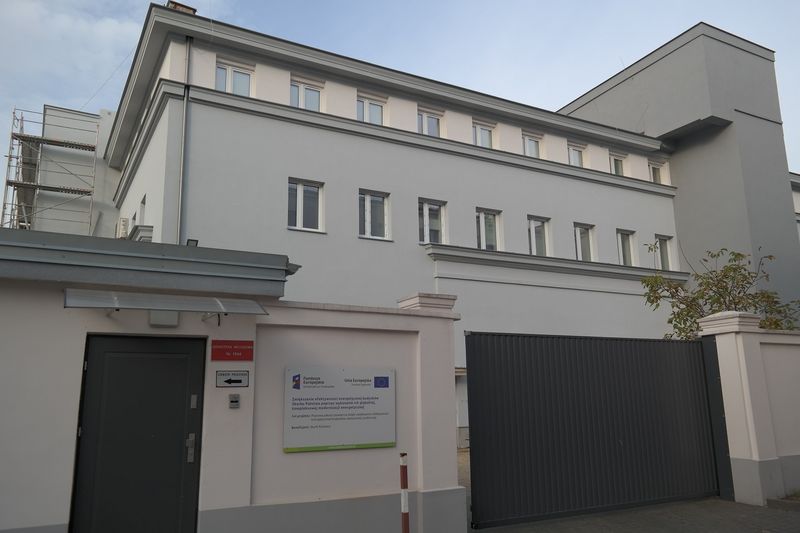
The operational footprint behind the arrests was wide. Between October 21 and November 2, 2026, ABW officers searched 21 locations across three Polish regions — Warmian-Masurian, which borders Kaliningrad directly; Pomeranian, on the Baltic coast; and Greater Poland, in the country’s west. The investigation is supervised by the Podlaskie branch in Białystok of the National Prosecutor’s Office, in its department for organised crime and corruption, with ABW officers from the Olsztyn delegation carrying out the field work. That geography matters: the searches were not a single raid but a coordinated sweep along the same north-eastern corridor through which the components are alleged to have travelled.
Who the six are, and what happens to them now
The six suspects are five Polish citizens, aged between 25 and 52, and one Russian citizen, a 37-year-old woman. Four of them — including the Russian woman — were charged with espionage and placed in pre-trial detention for three months. The other two were placed under non-custodial preventive measures, the category Polish courts use for restrictions short of jail, such as bail conditions or supervision. All six, per the Euronews/AP reporting, face the organised-criminal-group charge in addition to the case against the four. None has been convicted of anything; under Polish law, as elsewhere, the espionage charge is the prosecution’s allegation to prove, and the three-month detention is a preventive measure, not a sentence.
How we got here: Poland’s hybrid-war docket
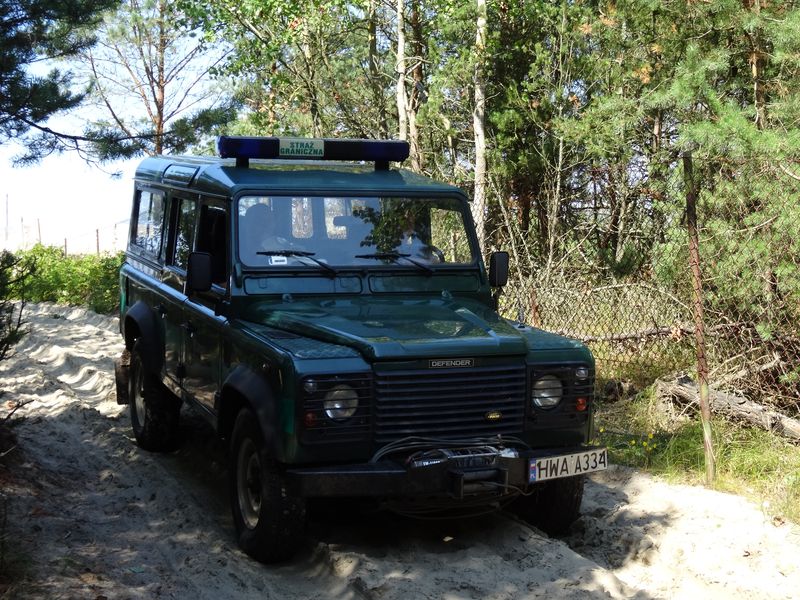
This case does not arrive in isolation, and Warsaw does not present it that way. Poland is a NATO member and, since 2022, the principal transit country for Western weapons and aid bound for Ukraine — a role that Polish officials say has made it a priority target for Russian intelligence activity. Since the full-scale invasion, Poland has repeatedly accused Russia of running sabotage, arson and espionage campaigns on its territory; Moscow has denied such accusations in past cases. No Russian government response to this specific case was reported in the sources covering Thursday’s announcement, and none should be assumed.
The pattern Polish officials describe is one of deniable, low-signature operations: not classic embassy-based spying, but recruited intermediaries, commercial purchases, fires and surveillance of infrastructure. In our recent reporting on the suspects detained in Germany over a fire at a Polish Starlink facility, the alleged method was similar in spirit — an attack on a piece of communications infrastructure with a supply chain of people rather than a uniformed service behind it. European governments have been drawing the same conclusion in public: in our coverage of how Sweden, Poland, Finland and Britain are preparing their citizens for war, the through-line was that hybrid pressure — sabotage, espionage, disinformation — is treated in European capitals as a present condition, not a contingency.
Siemoniak’s figure is the statistical version of that claim: nearly 100 people made suspects or charged in ABW espionage and sabotage investigations since January 1, 2024. Read one way, that is evidence of an intense Russian effort against Poland. Read another, it is evidence of an intense Polish counter-effort — more surveillance, more searches, more cases built. Both readings can be true at once, and the courtroom outcomes of the individual cases, this one included, are what will eventually separate proven networks from alleged ones.
Why this matters
A small pipeline that feeds a big war
Two million zloty is not, by the standards of a war economy, a large sum — it is roughly the cost of a single mid-range missile. But the value of the alleged pipeline is the wrong measure. Shell casings and projectiles are inputs to ammunition production, and ammunition is the commodity Russia’s war effort consumes fastest and sanctions are designed to make hardest to replace. A channel that moves even modest quantities of components into Russian production matters less for its cash total than for what it demonstrates: that embargoed goods can be sourced inside the EU, through ordinary commercial and online suppliers, and walked across a land border in commercial quantities over years without — on the prosecution’s account — being stopped until now. If the allegations are proven, the case is a map of a sanctions leak, and maps of leaks are what export-control systems are tightened from.
The Kaliningrad seam
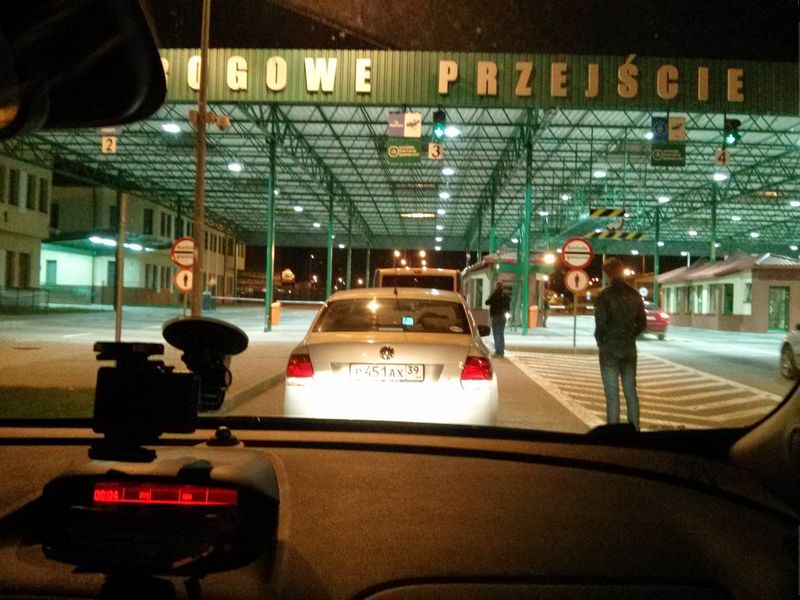
The route is the second reason the case matters. Kaliningrad Oblast is Russia’s forward position inside Europe’s geography: a Baltic exclave bordering two NATO and EU states, Poland and Lithuania, hosting Russian military forces a short distance from allied territory. Every crossing point on that border — and the land corridor around it — is a place where the embargo, customs law and alliance security physically meet. A smuggling scheme alleged to have run for 30 months across Poland, Lithuania and the exclave tests exactly that seam: not the border’s fences, but its paperwork — what gets declared, what gets bought under civilian descriptions, and what a component looks like before it becomes ammunition. The searches in Warmian-Masurian, the region that shares the land border with Kaliningrad, underline where investigators believe the physical crossing happened.
One case inside a campaign
Finally, the case matters as a signal in both directions. For Warsaw, a publicised espionage case with named charges, searched locations and a three-month detention order tells Moscow that a channel is closed — and tells Polish and allied publics that the counter-espionage campaign is producing results. For investigators across the EU, the alleged method — strategic components sourced through commercial and online suppliers — is the detail most likely to travel: it points every member state’s export-control and customs services at the same category of seller. The war in Ukraine runs on industrial inputs, and the fight over those inputs is increasingly fought in warehouses, web shops and border queues rather than only on the front line.
The numbers in context
Four figures structure the case. The first is six: the detained, of whom four face espionage charges and all six face the organised-group charge. The second is 21: the locations searched over thirteen days in three regions — a scale that suggests investigators were mapping a network, not arresting a courier. The third is the money: more than 2 million zloty, about €455,000, in components bought and transported over the scheme’s life. The fourth is the time: June 2023 to December 2025, thirty months in which the alleged pipeline operated while Poland and its allies were publicly tightening sanctions and export controls. Set beside Siemoniak’s nearly-100-suspects figure since January 2024, the case reads as one node in a much larger docket — and the ABW’s own statement that the full extent is still being established implies the node may not be fully mapped yet.
Who gains, who loses — and the case for caution
If the charges are proven, Warsaw gains the most visible win: a deterrence signal to other would-be intermediaries, evidence for tighter controls on dual-use and ammunition-component sales, and confirmation of the argument Polish ministers have made to allies — visible again in our report on Germany’s extra €100 million for Ukraine’s infrastructure — that supporting Ukraine includes policing the home front of the embargo. Moscow, if the link to Russian intelligence is proven, loses a procurement channel and the deniability that comes with commercial cut-outs. The clearest losers either way are ordinary cross-border traders and small suppliers in the border regions, who can expect heavier checks, slower clearances and more scrutiny of exactly the kind of dual-use goods this case involves.
The cautions are real, and they run in the other direction. The espionage element — acting for Russian intelligence — is the hardest part of the case to prove, and it is legally distinct from illegal export: prosecutors must show not only that embargoed components crossed the border, but that the accused worked for a foreign intelligence service. Intelligence material is often difficult to present in open court without exposing sources and methods, which is one reason cases like this can narrow between arrest and verdict. There is also a presentational caution that applies to every government in a hybrid confrontation, Poland’s included: espionage announcements do double duty as deterrence messaging, and a ministerial announcement on social media is the start of a legal process, not its conclusion. The six suspects are entitled to the presumption of innocence, and the reporting of this case should be read with the charges labelled as what they are — allegations that a court has not yet tested.
What happens next
The immediate clock is the three-month pre-trial detention of the four espionage suspects: within that window, prosecutors must consolidate the evidence from the 21 searches into a charge sheet that can survive a court’s scrutiny, or seek extensions. The ABW has said the investigation continues to establish the full extent of the scheme, which leaves open the possibility of further detentions — the pattern in Poland’s recent espionage cases has been for networks to widen as seized devices and records are worked through. Three questions will decide what this case becomes. First, whether the prosecution can evidence the Russian-intelligence link, rather than only the embargo breaches. Second, whether Lithuanian or other EU partners announce parallel actions, given the alleged route ran through Lithuania as well. Third, whether the case pushes the EU to tighten controls on online and commercial sales of ammunition components and other dual-use goods — the gap the alleged scheme is said to have exploited. The answers will arrive through court filings and official statements over the coming months, not through the announcement that opened the case.
For now, the verified core is narrow and solid: six people detained, four charged with espionage and held for three months, an alleged thirty-month pipeline of shell casings and projectiles into Kaliningrad worth more than 2 million zloty, and a counter-espionage docket in Poland that, by its own minister’s count, is approaching 100 suspects in under two years. What a court makes of the rest is the next story — and the one that will determine whether Thursday’s arrests were the closing of a Russian procurement channel, or a harder, murkier case than the announcement suggests.
Related coverage
Suspects Detained in Germany Over Fire at Polish Starlink Facility
Europe Prepares Its Citizens for War: Sweden, Poland, Finland and the UK
Sources
Reuters, “Poland arrests four in probe into military supplies sent to Russia,” November 5, 2026 — https://www.reuters.com/world/poland-arrest-four-probe-into-military-supplies-sent-russia-2026-11-05/ · Euronews (with AP), November 5, 2026 — https://app.ekkow.com/1491038008496357870 · The Insider, November 5, 2026 — https://theins.press/en/news/299240