Nvidia-backed Upscale AI unveiled an open networking platform that lets rival AI chips share one fabric. If it works, the moat around proprietary AI networking starts to drain.
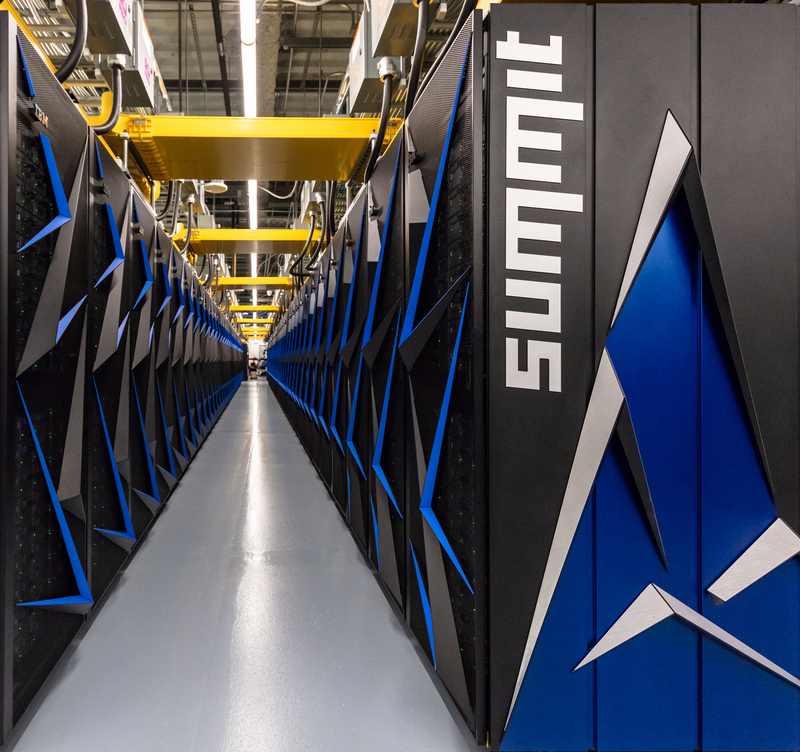
The Upscale AI Token Fabric launch on Thursday is the most direct assault yet on one of the AI boom's most durable moats: the proprietary networking that decides which AI chips can talk to which. The Santa Clara startup, valued at $2 billion in June and backed by Nvidia, Salesforce, and Singapore's Temasek, unveiled hardware and software designed to connect AI processors from rival suppliers across a single data center — no separate networking system required for each chip family. Chief executive Barun Kar expects Token Fabric revenue next year in the “tens of millions of dollars,” potentially reaching the low hundreds of millions.
Why this matters
Rival chips, one fabric: the promise of heterogeneous AI infrastructure
Today, a cloud operator that wants to run Nvidia GPUs, AMD accelerators, and a custom in-house chip in the same data center is effectively building and operating parallel networking stacks — one per chip family. That fragmentation is expensive in hardware, in the engineers needed to babysit it, and in the bargaining power it hands to whoever owns the dominant stack. Token Fabric's pitch is to collapse all of that onto one standards-based platform: scale-up inside the rack on Upscale's own SkyFabriX silicon, built on its SkyHammer architecture and supporting ESUN, UALoE, SUE-T, standard Ethernet/IP, and the evolving UALink standard. Copper and optical links span pluggable, near-packaged, and co-packaged optics on a multi-petabit-per-second roadmap.
Scale-out across the data center runs on Upscale-engineered switch systems powered by NVIDIA Spectrum-X at 400G, 800G, and 1.6T. A unified software layer — SkyOS and SkyCMD — manages GPUs and heterogeneous XPUs alike, spots traffic bottlenecks, and flags equipment that needs replacing. It is the first credible attempt to make “heterogeneous AI infrastructure” something you can actually buy rather than build yourself.
The real story is utilization
Strip away the branding and the stated goal is almost embarrassingly simple: keep expensive accelerators computing instead of sitting idle waiting for data. A leading AI GPU costs $30,000 or more, and a serious training cluster holds thousands of them. When chips stall because the network cannot feed them fast enough, the most expensive real estate in the data center is doing nothing. Networking is the tax every AI workload pays; Token Fabric's entire value proposition is that it lowers that tax for everyone except the vendor collecting it today. This is why the launch matters beyond one startup's fortunes: the AI build-out's scarcest resource is no longer the chip, it is the fabric that keeps the chips busy.
How we got here: the lock-in machine
Nvidia built the fortress — NVLink, NVSwitch, and InfiniBand
Nvidia's dominance was never just about having the best chip. It was about owning the roads between the chips. NVLink and NVSwitch handle scale-up — the ferociously fast connections inside a server that let GPUs share memory as if they were one giant processor. InfiniBand, which Nvidia acquired with Mellanox, handles scale-out — the fabric stitching thousands of servers into one training cluster. Both are superb technology, and both are proprietary in the ways that matter: buy the chips, and you buy the networking, and once your software and operations are tuned to it, switching vendors means rebuilding the roads. Lock-in was not an accident of this architecture; it was the business model.
Ethernet strikes back: UALink and the open-standards turn
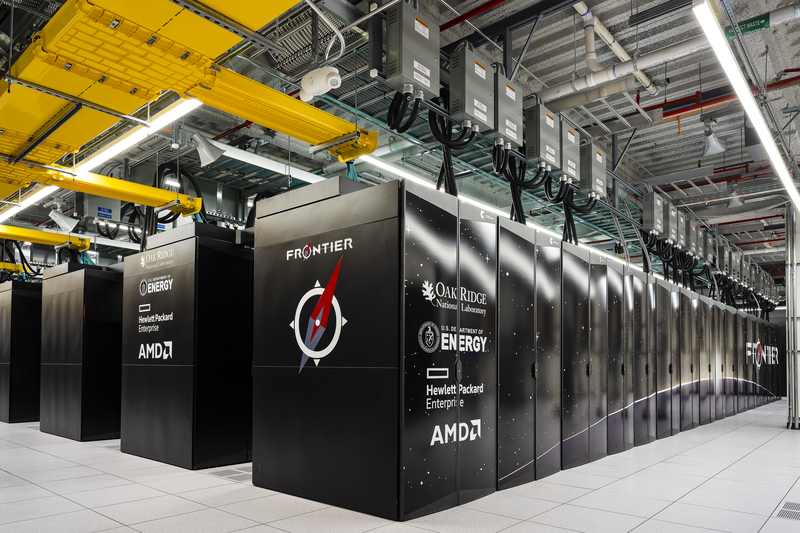
The industry has been pushing back for years. Ethernet — the humble, open, ubiquitous networking standard — has been steadily closing the performance gap, and Dell'Oro now forecasts it becoming the leading scale-up technology as AI back-end switch spending approaches nearly $1 trillion through 2030. The UALink consortium, an alliance of chip and systems companies, is building an open standard for accelerator interconnects explicitly meant to break single-vendor gravity. Token Fabric is best understood as the commercial vanguard of that turn: a product that assumes the open-standards future and tries to sell it a year or two early. Upscale is betting that the industry's direction of travel is now obvious enough to build a $2 billion company on.
Who wins, who loses, and what the skeptics say
Winners: neoclouds, AMD and custom-XPU builders, the Ethernet camp
Start with the neoclouds — the specialized AI cloud operators building so-called AI factories at breakneck speed. They live and die on utilization and have the least patience for paying a proprietary tax, which is exactly why Upscale names them, hyperscalers, and large cloud providers as its target customers. Then there are the chip challengers: AMD, custom-silicon builders, and every startup with an accelerator that is technically competitive but commercially stranded because customers cannot easily network it alongside Nvidia hardware. An open fabric is their distribution strategy. And the Ethernet camp — switch vendors, optics suppliers, standards bodies — gets the most powerful validation yet that the future of AI data center networking is open rather than owned.
Losers: the proprietary moats
The losers are not hard to identify: anyone whose pricing power depends on networking being a reason to stay inside one vendor's walled garden. If the interconnect layer becomes interchangeable, the chip has to win on its own merits — performance per dollar, performance per watt — and that is a much more competitive fight. Note the irony at the heart of this story: Upscale is backed by Nvidia itself, and its scale-out systems run on NVIDIA Spectrum-X. The giant is funding the company trying to commoditize one of its moats — either a genuine belief that open networking grows the whole AI pie, or a hedge, or both.
The skeptical case: a $2 billion startup against entrenched giants
Now the cold water. Barun Kar's revenue figures are forecasts, not purchase orders, and “tens of millions” next year is a rounding error next to the incumbents' networking businesses. Upscale is attempting something genuinely hard: shipping its own scale-up silicon, its own switch systems, and a unified software stack — SkyOS and SkyCMD — all at once, against competitors who have been doing each of those things for decades. Execution risk is the whole story for a hardware startup, and networking gear lives or dies on reliability at scale, proven over years, not launch-day demos.
There is also the awkward fact that Token Fabric's scale-out half is powered by NVIDIA Spectrum-X — still Nvidia technology. A platform whose pitch is independence from the dominant vendor, built partly on the dominant vendor's silicon, invites the obvious question about how independent it really is. And the giants will not stand still: expect the proprietary stacks to get more open-looking, more interoperable-seeming, precisely where it blunts Upscale's pitch without surrendering the moat.
What the numbers actually say
Dell'Oro's trillion and the AI networking market in 2030
Put the forecasts side by side and the prize comes into focus. Dell'Oro Group expects nearly $1 trillion in AI back-end switch spending through 2030, with Ethernet becoming the leading scale-up technology. 650 Group projects AI networking overall will surpass $200 billion by 2030. These are not the same market slice — switches versus the full networking stack — but together they describe a build-out where the connective tissue is becoming as valuable as the compute itself.
For context, Upscale raised a $190 million extension in June, led by Premji Invest, the investment unit of Azim Premji, bringing its total funding to $500 million. That is serious money for a startup and pocket change next to a $200-billion-plus market — which is precisely why venture-scale returns are plausible here even with modest share. The company only needs a sliver of the AI networking market in 2030 to justify its $2 billion valuation many times over. The question is not whether the market is big enough. It is whether a startup can take share in it.
Do the utilization math
A back-of-the-envelope calculation shows why customers might care enough to try. Take a 10,000-GPU cluster at roughly $30,000 per GPU: $300 million in silicon before a single cable is run. If networking bottlenecks leave those GPUs idle even 5 percent of the time, that is $15 million of compute capacity evaporating per cluster per deployment cycle — and large operators run many such clusters. Shaving even a point or two off idle time pays for a great deal of networking hardware.
This is the cold arithmetic underneath every AI infrastructure purchase in 2026, and it is the same arithmetic driving this week's other AI infrastructure stories: Samsung's record third-quarter profit on AI memory-chip demand, and Tencent's reported $7 billion Oracle lease for 100,000 AI chips. Memory, compute, networking — the binding constraint keeps moving, and right now advanced networking and packaging are where the industry is stuck.
What happens next: 2027 to 2030
The rollout clock: Q4 2026 through 2027
The first part of Token Fabric — connecting groups of AI chips across a data center — ships in the fourth quarter of 2026, with the full platform rolling out in stages through 2027. That timeline matters because it puts first customer references roughly a year out, which is when the market will learn whether the utilization story survives contact with production traffic. Watch for two signals: named neocloud or hyperscaler design wins, and any disclosure of measured utilization improvement versus incumbent fabrics. Without those, this remains a compelling slide deck.
Scenarios — the open-standards endgame and the acquisition watch
Three scenarios from here. First, the open-standards endgame: Token Fabric becomes the reference implementation of the post-proprietary data center, UALink matures, Ethernet completes its takeover of scale-up, and AI chip interconnect becomes a commodity layer where Upscale is simply the best vendor. Second, the tactical adoption scenario: hyperscalers deploy Token Fabric selectively — not to replace their primary stacks, but as negotiating leverage against their incumbent networking suppliers. Even this would be a win for Upscale and a quiet victory for every buyer.
Third, the acquisition: a $2 billion valuation with proven technology in a $200-billion market is a takeover target by definition. The buyer could be a networking incumbent buying its own disruption, a hyperscaler bringing the technology in-house, or — the funniest possible endgame — Nvidia itself, closing the loop on the company it backed to attack its own moat. However it plays out, the direction is set: the walls around AI networking are coming down, and the only question is who profits from the demolition.