War · World · Africa · Diplomacy
World / Africa — The UN Western Sahara mission ends not with a settlement, a referendum or a ceremony, but with a veto deadlock in New York. On Sunday, Secretary-General António Guterres confirmed that MINURSO — created in 1991 to hold a self-determination vote that never happened — began its liquidation on November 1, closing a 35-year chapter in one of the world’s longest-running territorial disputes.
Track it live: Africa Wars — Live Global Trackers
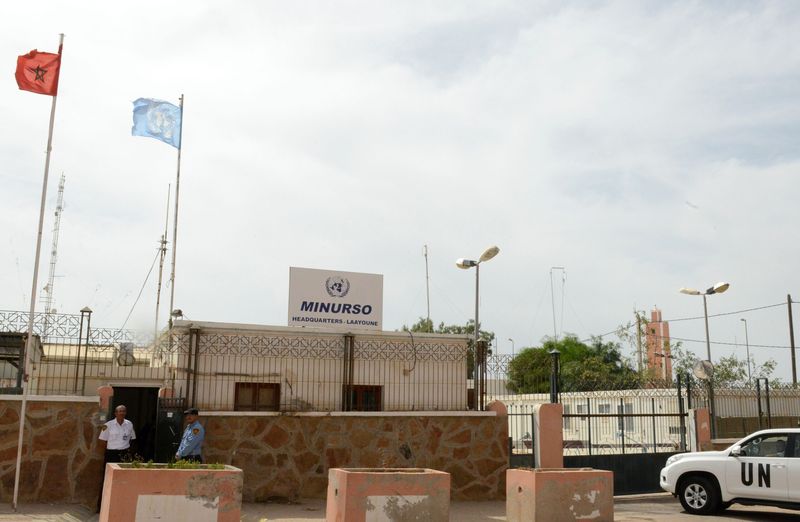
The UN Western Sahara mission ends after 35 years because the Security Council could no longer agree on what it was for. MINURSO’s mandate expired at midnight on Saturday, October 31, after the Council failed on Friday to adopt either of two rival drafts: a United States text, vetoed by Russia, that would have extended the mission for a year while cementing Morocco’s autonomy plan as the basis for a settlement and scaling back its military component; and a Russian text, defeated after a United States veto, that would have extended the mandate unchanged to October 31, 2027. On Sunday, UN Secretary-General António Guterres confirmed the consequence: the mission’s operations have ended, and November 1 marks the start of a “liquidation phase,” with a smaller UN team overseeing the disposal of equipment and the return of assets to troop-contributing countries. Morocco, which controls most of the territory and claims it as its own, welcomed the non-renewal. The Algeria-backed Polisario Front, which has sought an independent Sahrawi state since Spain withdrew in 1976, expressed concern at the deadlock. Between those two reactions sits the central fact of this story: the referendum MINURSO was named for — the “R” in its name — will now never be organised by the mission created to hold it.
A double veto ends a mission the Council had renewed for decades
For 35 years, renewing MINURSO was one of the Security Council’s most routine acts; the mandate was extended dozens of times, often with little public debate. Friday’s meeting was different. The US draft would have renamed the mission — dropping “Referendum” to create a United Nations Mission in Western Sahara — and designated Morocco’s 2007 autonomy proposal, under which the territory would be self-governing under Moroccan sovereignty, as the framework for talks. Russia vetoed it. The Russian delegate defended the vote as “a life-saving veto, so to speak,” arguing the text would have imposed one-sided solutions; the US delegate countered that his country’s draft would have supported self-determination and “moved the 50-year conflict forward,” calling the status quo unacceptable. Russia’s alternative — a clean one-year extension — then failed to win the nine votes needed for adoption after the United States voted against it. The sequence matters because of what it reveals: the mission did not end because the parties settled their dispute, or because the Council judged the territory stable. It ended because the two powers backing opposite frameworks each preferred no mission at all to the other side’s version of one. A year earlier, the same Council had adopted a US-drafted resolution describing Morocco’s autonomy plan as the “most feasible” solution and asking Guterres to review the mission — a vote Russia abstained on. This year, abstention became a veto, and the review became an ending.
Liquidation begins: what closes, and what stays
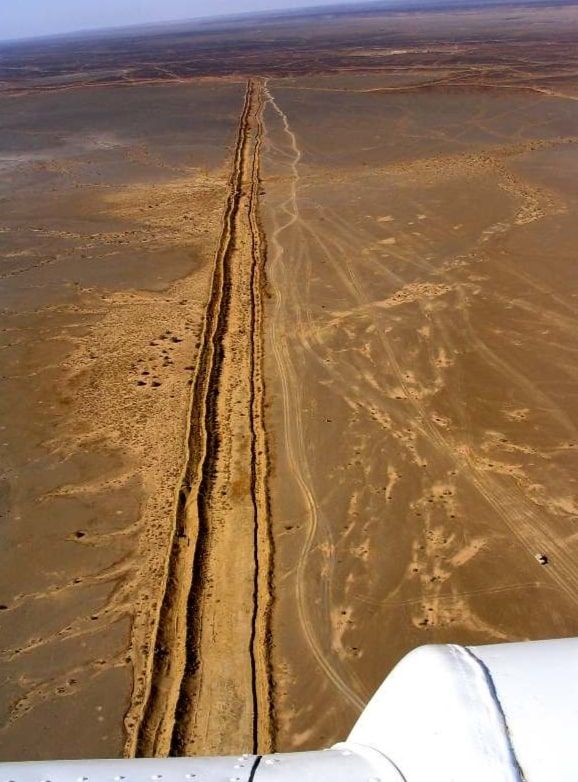
Guterres’s statement, delivered by his spokesperson on Sunday, set out the mechanics of the wind-down and paid tribute to a mission most of the world had forgotten existed. When its mandate expired, MINURSO was headquartered in Laayoune, with nine team sites — four west of the berm, the sand wall that divides Moroccan-controlled territory from the Polisario-held east, and five east of it — and a liaison office in Tindouf, Algeria, the channel to the Polisario leadership. It fielded about 200 civilian staff, military observers and staff officers from more than 35 countries, alongside some 155 military personnel, and it ran a dedicated mine-action capability in one of the most heavily mined landscapes on earth; the mission was budgeted at about $62 million for the fiscal year that began in June. A smaller liquidation team, reporting to the UN Department of Operational Support, will now oversee the disposal of UN equipment. Guterres thanked the mission’s personnel and its head, Special Representative Alexander Ivanko, who led it through what the statement called a “particularly challenging period” after hostilities resumed in 2020, and he paid tribute to the 20 MINURSO personnel who lost their lives during the mission’s 35 years. What stays is diplomacy without observers: the UN will keep working toward a settlement through the Secretary-General’s Personal Envoy, Staffan de Mistura. What goes is the only international presence that watched the berm day to day, verified ceasefire violations and gave both sides a neutral channel when incidents flared.
Morocco celebrates, Algeria regrets, Polisario warns
The reactions mapped precisely onto the conflict’s fault lines. Morocco’s royal palace called the non-renewal a “significant development” toward removing the Western Sahara issue from the Security Council’s agenda, said the mission’s personnel and equipment should leave in the coming days, and stated that Morocco remains committed to the ceasefire. Foreign Minister Nasser Bourita told state media that the mission’s reference to a referendum — the “R” in MINURSO — was an “anachronism,” and declared that a page lasting 35 years had now been closed. Algeria’s Foreign Ministry, by contrast, expressed “deep regret” on Saturday and blamed the “excessive bias” of the United States toward Morocco’s position. The Polisario Front said it was “concerned at the deadlock in the Security Council meeting”; its representative Sidi Omar thanked Russia for vetoing a US resolution he said would have “torpedoed the foundations of the UN peace process.” Aid organisations had warned before the vote that losing the mission could put refugees at risk. Guterres, for his part, stressed that MINURSO’s departure “does not abrogate” the Sahrawi people’s “inalienable right to self-determination,” called on all parties to respect and promote the rights of the people of Western Sahara, and urged “maximum restraint,” saying he remains concerned about the security situation and the risk of hostilities escalating. Both readings of the weekend are honestly available: Rabat’s, that an outdated mission built around a referendum nobody could organise has finally been retired; and the Polisario’s, that the international community has walked away from a promise made in 1991 without keeping it.
Fifty years of conflict, 35 years of waiting for a vote that never came
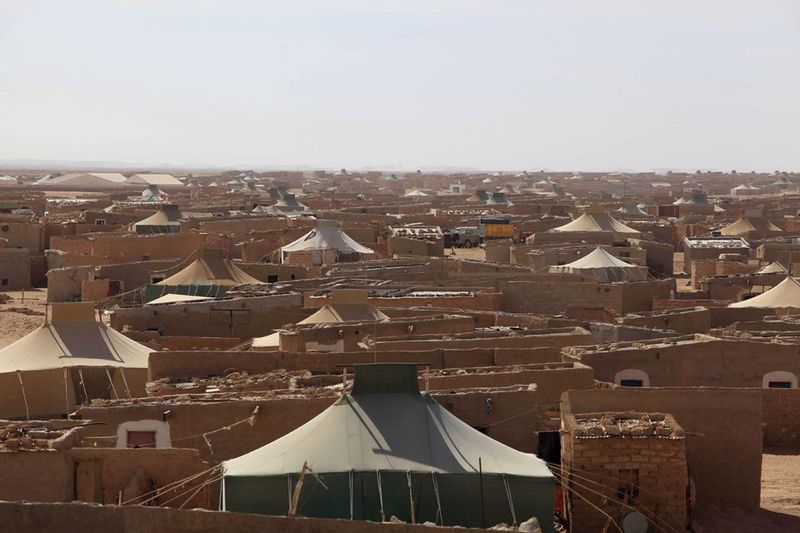
Western Sahara is the last major territory on the UN’s list of non-decolonised territories, and its dispute predates the mission by a generation. Spain, the former colonial power, withdrew in 1976; Morocco moved in, and the Polisario Front — backed by Algeria — fought a war for an independent Sahrawi Arab Democratic Republic that lasted until a UN-brokered ceasefire in 1991. That ceasefire created MINURSO under Security Council resolution 690, in line with settlement proposals Morocco and the Polisario had accepted in 1988: the mission would monitor the truce and organise a referendum in which the people of Western Sahara would choose between independence and integration with Morocco. The vote was originally expected in 1992. It never happened, defeated by a deceptively simple question — who is a Sahrawi, and therefore who gets to vote? After the 1975 Green March and decades of Moroccan settlement, the territory’s population had been transformed; by the mid-2010s, Moroccan settlers were estimated to make up at least two-thirds of its roughly 500,000 inhabitants. Successive fixes — the 1997 Houston Agreement, the Baker Plan of 2003, accepted by the Polisario and endorsed by the Council but rejected by Morocco — all failed on the same rock. Morocco’s 2007 autonomy proposal shifted the terms: self-government, yes, but under Moroccan sovereignty, with no independence option on any ballot. The ceasefire itself frayed in November 2020, when the Polisario declared it was resuming “armed struggle”; low-level hostilities have persisted since. Most Sahrawis live in the Moroccan-controlled west of the territory, while tens of thousands live in Polisario-run refugee camps around Tindouf in Algeria — some of them born there, in exile, waiting for the same referendum their grandparents were promised.
Why this matters
It would be easy to file MINURSO’s end as housekeeping — a small, cheap mission (about $62 million a year, a rounding error beside the UN’s big operations) wound up after outliving its purpose. That reading misses three things. First, precedent: peacekeeping missions are supposed to end when they succeed, when they are expelled, or when they catastrophically fail. MINURSO is ending for a fourth reason — great-power deadlock over the political framework the mission served — and every frozen conflict with a UN presence, from Cyprus to the Golan, will read the lesson that a mandate is only as durable as the Council’s least patient veto-holder. Second, verification: whatever its flaws — and they were real, including its status as the only modern UN mission without a human-rights monitoring mandate — MINURSO was the mechanism that turned incidents along the berm into reports rather than escalations. Since 2020 the two sides have already been exchanging fire at a low level; from this month, no neutral observer is tasked with watching. Guterres’s warning about escalation is not boilerplate; it is a description of a guardrail being removed from a road that is already icy. Third, the people: the end of the mission does not resolve the status of a single Sahrawi refugee in Tindouf or a single settler in Laayoune. It resolves only the UN’s administrative relationship to their dispute. The promise of 1991 — that the territory’s future would be decided by its people in a free vote — has not been fulfilled or formally withdrawn. It has been allowed to expire, which is a quieter thing, and in some ways a harder one to reverse. Morocco gains the diplomatic outcome it has sought for years: a Council agenda increasingly organised around autonomy under its sovereignty, a trajectory reinforced by last year’s resolution and tracked in our coverage of Moroccan politics, including Morocco’s political reshuffle in September. The Polisario and Algeria lose the institutional embodiment of the referendum claim, even as Russia’s veto shows they retain powerful friends. And the United States, which drafted both last year’s autonomy-backed resolution and this year’s vetoed text, discovers the limit of Security Council statecraft in an era when Washington and Moscow veto first and negotiate later — the same Council arithmetic now shadowing the diplomacy around the G20 summit guest list and the invitation to Vladimir Putin.
What happens next
The near term is logistics: the liquidation team will inventory and dispose of UN equipment, team sites on both sides of the berm will close, and personnel will leave — Morocco’s palace has said it expects that to happen in the coming days, and Guterres has asked all parties to cooperate so the process is orderly and quick. The medium term is Staffan de Mistura’s shuttle diplomacy, now the UN’s only instrument in the dispute, pursued in a landscape where the Council has no agreed framework to point to: the autonomy plan has been called the most feasible basis for talks, but the text that would have made it the only basis is dead, and so is the text that would have preserved the status quo. Three scenarios follow. In the first, the parties accept the new reality and negotiate around autonomy, with the referendum quietly buried — Rabat’s preferred outcome, and the one the past two years of Council movement point toward. In the second, deadlock hardens: the Polisario, deprived of the process that channelled its claim, leans further into the armed struggle it resumed in 2020, and incidents along the berm — unmonitored now — carry a rising risk of the escalation Guterres warned against. In the third, the Council returns with a smaller political mission stripped of peacekeeping functions, a possibility diplomats had weighed before Friday’s vote; it would restore a UN presence without restoring the referendum machinery, and would need the consent of the same veto-wielders who just killed the larger mission. For now, the flags at the Laayoune headquarters — Morocco’s and the UN’s, flown side by side for 35 years — are coming down on a timetable set not by a peace agreement, but by an expiry date.
Sources
Reporting based on: Reuters, “UN peacekeeping mission in Western Sahara ends after 35 years, UN chief says” (November 1, 2026), https://www.reuters.com/world/africa/un-peacekeeping-mission-western-sahara-ends-after-35-years-un-chief-says-2026-11-01/ ; UN News, “Western Sahara: UN ‘stands ready’ to keep supporting peace efforts as MINURSO mission ends” (November 1, 2026), https://news.un.org/en/story/2026/11/1168717 ; United Nations Meetings Coverage, “Security Council fails to adopt resolution to extend UN Mission for Referendum in Western Sahara” (SC/16498), https://press.un.org/en/2026/sc16498 ; and the statement of the UN Secretary-General on the conclusion of MINURSO’s mandate.