Morocco first woman prime minister
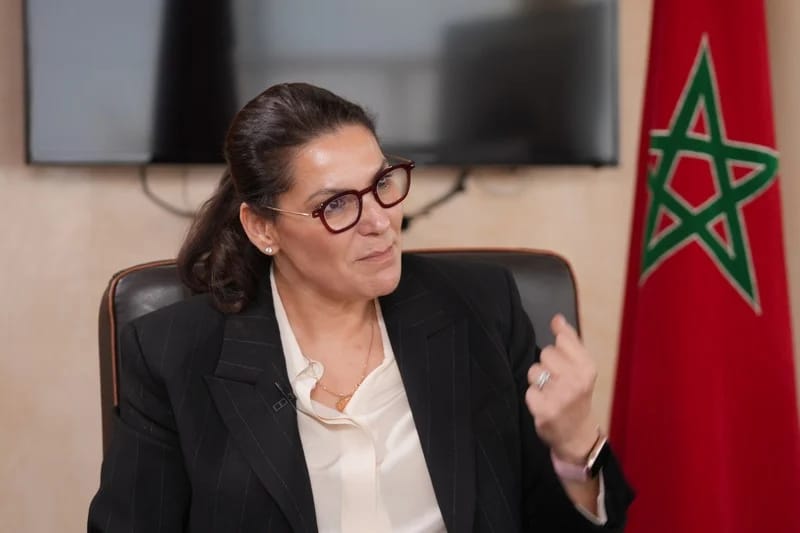
RABAT — Morocco first woman prime minister: King Mohammed VI appointed Fatima Ezzahra El Mansouri as the country's first woman prime minister on Tuesday, the royal palace said, six days after her liberal-centrist Authenticity and Modernity Party (PAM) came out on top in the September 23 parliamentary election. The appointment, reported by Reuters, makes the 50-year-old Marrakech mayor and former planning minister the first woman to head a Moroccan government — and only the second woman to lead a government anywhere in the Arab world, after Tunisia's Najla Bouden.
Under Morocco's 2011 constitution, the king appoints the prime minister from the party that wins the most seats — and the PAM's 97 seats in the 395-member House of Representatives, per provisional Interior Ministry results, made El Mansouri the constitutionally inevitable choice, even though the party fell far short of the 198 seats needed to govern alone. She must now build a coalition, most likely with the monarchist Istiqlal party, which finished third with 65 seats, after the Islamist PJD — which staged a striking comeback to 54 seats — ruled out joining any PAM-led government.
The appointment caps a week of high political drama in Rabat. Until Tuesday, the smart money had been split between El Mansouri and Fouzi Lekjaa, the 56-year-old budget minister and head of Morocco's football federation, who joined the PAM weeks before the vote and was widely seen as the palace's preferred technocrat. The king's choice of the party's own leader — a woman who once said it would be a "great honour" to take the post — is the bolder of the two options, and the one with the bigger symbolism.
Why this matters
Firsts matter most when they change what people believe is possible, and this one will be felt far beyond Rabat. In a region where women remain sharply underrepresented in executive power, a woman taking the premiership of North Africa's most Western-facing monarchy is a genuine milestone — the kind of image that ends up in textbooks. For millions of Moroccan girls, the country's head of government will now, for the first time, look like them. That is not nothing; representation has a documented downstream effect on political participation, and Morocco's own record — seven women in the 2021 cabinet, a deliberate palace strategy of elevating women since 1999 — suggests the symbolism is at least partly the point.
But the deeper significance is the tension the appointment exposes between symbolism and substance. Morocco's king retains sweeping constitutional powers: he presides over the Council of Ministers, directs defence and foreign policy, and can dismiss ministers and dissolve parliament. The prime minister governs, but within a perimeter the palace draws. El Mansouri will be the most powerful elected woman in the Arab world — and she will exercise that power in a system designed to keep ultimate authority with the throne. Whether her premiership becomes a story about women's empowerment or about the limits of elected office in a monarchy depends on how much room the palace actually gives her.
There is also a harder-edged reading. The PAM was founded in 2008 by Fouad Ali El Himma, a royal adviser and childhood friend of the king, explicitly as a counterweight to the Islamist movement. It has always been the palace-adjacent party — the "king's party" in the shorthand of Moroccan politics. Appointing its leader as prime minister, even a historic one, also consolidates a friendly political landscape: the outgoing RNI-led government lost ground, the Islamists are back in opposition, and the new premier comes from the party closest to the throne. History and power politics are arriving together, and it would be naive to celebrate only the first.
How we got here: the September 23 election
The PAM's victory was decisive without being commanding: 97 seats, ahead of the outgoing governing party RNI's 66 (down from 102) and Istiqlal's 65. The real shock was the PJD, the moderate Islamist party that led the government for a decade before collapsing to 13 seats in 2021: it quadrupled to 54, a comeback its chief Abdelilah Benkirane hailed as a "victory" — before ruling out any coalition with the PAM, which he accused, without providing details, of being "tainted by fraud." With the PJD choosing opposition, El Mansouri's path to 198 runs through Istiqlal and smaller parties, in negotiations that will test how much of her agenda survives contact with coalition arithmetic.
The election's other headline was who stayed home. Turnout was just 38% — the second-lowest since Mohammed VI ascended the throne in 1999, sharply down from roughly 51% in 2021. Analysts blame widespread disengagement after youth-led protests last year over jobs, healthcare and education, and the deadly mass attempts by migrants to reach Spain's North African enclave of Ceuta in July. A prime minister chosen by fewer than two in five registered voters starts with a legitimacy deficit, and El Mansouri knows it: the PAM campaigned on a $37 billion platform promising 5% annual growth, 2% inflation and at least one million new jobs over five years. Those numbers are now hers to deliver — or to be judged against.
Who is Fatima Ezzahra El Mansouri
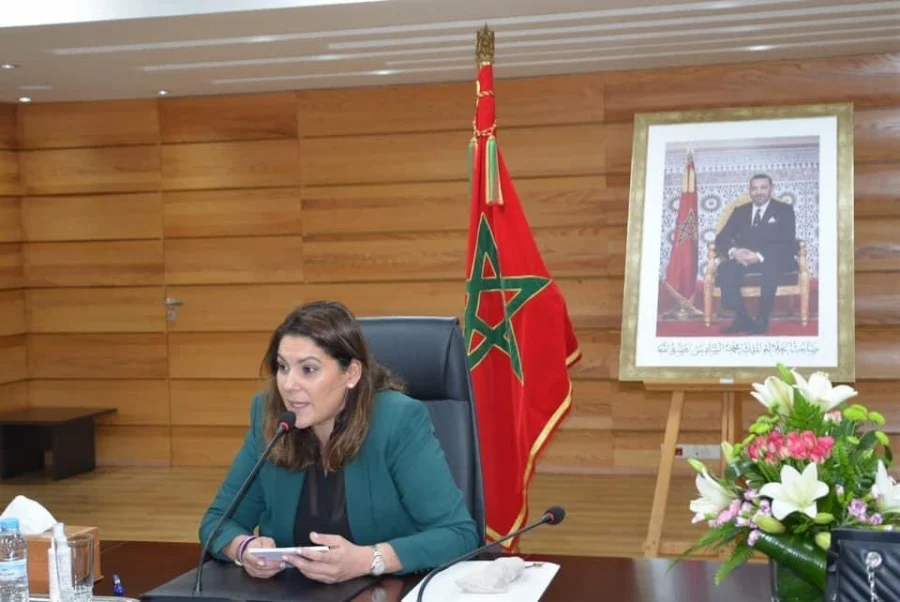
Born January 3, 1976, in Marrakech, El Mansouri trained as a lawyer at the University of Montpellier before entering politics — and she has been breaking glass ceilings for nearly two decades. In 2009, at 33, she became the first woman elected mayor of Marrakech, then only the second woman to lead any Moroccan city; she lost the post in 2015 and won it back in 2021. She served in parliament from 2011 to 2021, became the PAM's national coordinator in February 2024, and has run the planning, housing and urban policy ministry since October 2021. Her mayoral reputation was built on anti-corruption and hands-on campaigning — Time magazine once noted her "Western-style" habit of walking neighbourhoods to hear complaints face to face.
That biography is her political capital: she is not a palace technocrat parachuted into the job but a politician with an electoral base, a party machine, and a record in both local and national government. It is also, potentially, her constraint. She rose inside the PAM — the palace-adjacent party — and inside governments the palace shaped. Her independence from the throne is untested, and her first real test will come quickly: coalition talks where the palace traditionally plays kingmaker, and a policy agenda (jobs, wages, healthcare) that requires spending the palace's own budget priorities may not favour.
The numbers, in context
97 of 395. The PAM won roughly a quarter of the lower house — a clear plurality, but a fragile one. Compare it with 2021, when the RNI's 102 seats bought a comfortable three-party coalition with PAM and Istiqlal. El Mansouri has fewer seats and fewer friends: the RNI relationship is strained after a term of mutual recrimination, and the PJD has ruled itself out. Her coalition will be narrower, which means every partner has more leverage over her.
38%. Turnout is the number that should worry Rabat most. It is not just low; it is the second-lowest of Mohammed VI's 27-year reign, and it fell 13 points in a single cycle. The youth protests of 2025 were the warning; the empty polling stations were the verdict. A government elected by barely a third of voters can still govern — most Moroccan governments have — but it cannot claim a popular mandate for painful reforms. El Mansouri's million-jobs pledge is, among other things, an attempt to buy back the voters who stayed home.
2030. The other clock ticking over this premiership: Morocco co-hosts the FIFA World Cup with Spain and Portugal in less than four years. The tournament has focused billions in infrastructure spending and national attention; it is also a hard deadline. Stadiums, transport links and urban services must be delivered on time, in public, with the world watching. For a former planning and urban policy minister, it is familiar territory — and a trap. World Cup deadlines have a way of exposing exactly which parts of a state work and which do not.
Who wins, who loses — and what the critics say
The winners: El Mansouri herself, obviously, and the PAM, which converts a plurality into the premiership. Moroccan women in public life, who gain the most visible role model the kingdom has ever produced. And the palace, which gets a modernising headline — a woman premier, appointed days after an election — at a moment when Western partners are watching Morocco's democratic trajectory closely.
The losers: Fouzi Lekjaa, the budget minister and football federation chief who was tipped for the job and must now serve under the woman chosen instead. Aziz Akhannouch's RNI, which bled more than a third of its seats and faces opposition or junior-partner status. And the PJD, whose impressive comeback bought it exactly nothing in power terms — 54 seats and a front-row seat in opposition.
The critics' case has three strands. First, the power critique: in a system where the king keeps defence, foreign policy and the right to dismiss ministers, a prime minister — any prime minister — governs on licence, and a historic first does not change the constitution. Second, the legitimacy critique: 38% turnout and fraud allegations from the PJD mean the election that produced this moment is itself contested. Third, the co-optation critique: the PAM is the palace's party, and appointing its leader is less a democratic breakthrough than a reshuffling of the palace's own furniture — with a woman's face on it. Each strand has force. None of them erases the fact that no woman has ever held the job before, and now one does.
What happens next
Three things to watch. First, the coalition: El Mansouri needs 101 more seats, and the Istiqlal negotiations will set the terms of her government — which ministries she keeps, which promises survive. Watch whether the RNI, despite the bad blood, is brought back in; a PAM-Istiqlal-RNI government would be broad but brittle.
Second, the jobs pledge. One million jobs in five years, 5% growth, 2% inflation — these are the numbers she will be measured against, and they are ambitious for an economy still absorbing the aftershocks of the youth unrest. Her planning-ministry background is relevant here: she knows the machinery. The question is whether the machinery answers to her.
Third, the precedent. Tunisia's Najla Bouden showed that a woman premier in the Arab world is possible; her tenure also showed how quickly such a breakthrough can be swallowed by the system around it. El Mansouri's appointment will be watched across the region — in Algiers, Cairo and Riyadh — as a test of whether Morocco's gradualist model can produce not just a woman prime minister, but a consequential one. The palace gave her the title on Tuesday. The next five years will decide what it was worth.
Sources and further reading
Reuters, "Morocco's king appoints first woman PM following Sept 23 election," 29 September 2026, reuters.com; France 24 (Africa) coverage via ImNews; provisional election results via the Interior Ministry as reported by Internewscast; biographical details via Wikipedia. Related Signal Post News coverage: Morocco election results: PAM wins and Morocco's legislative elections: the vote.