War · World · Diplomacy
War / World — Asked amid the costumes of his Mar-a-Lago Halloween party whether he would invite Ukraine’s president to December’s G20 summit in Miami, President Trump answered in three seconds — “I would. I would. No problem.” Vladimir Putin is already on the guest list. Volodymyr Zelenskyy, pointedly, was not — until now.
Track it live: Ukraine War Map — Live Global Trackers
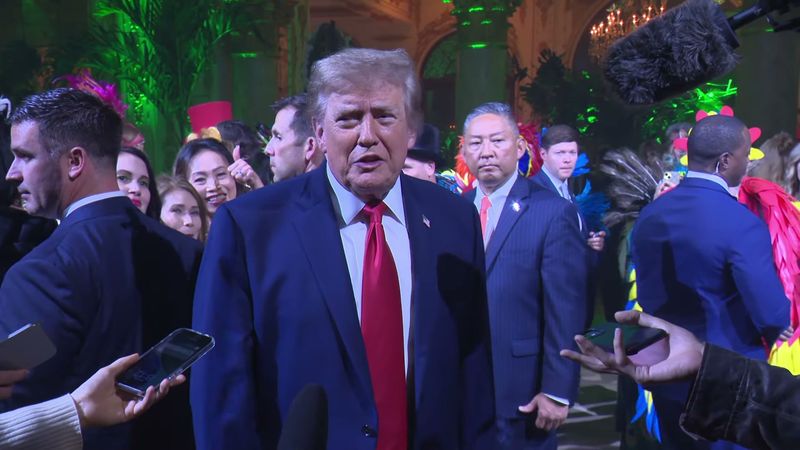
The Trump invite Zelenskyy G20 summit question was put to President Donald Trump directly on Saturday night, October 31, 2026, amid the costumes and cameras of the Halloween party at his Mar-a-Lago estate in Palm Beach, Florida — and the answer took about three seconds. Asked whether he would extend a G20 invitation to Ukrainian President Volodymyr Zelenskyy, Trump replied: “I would. I would. No problem.” The remark, reported by Anadolu Agency and IANS from the Saturday-night press gaggle, puts Ukraine’s president in line for a guest seat at the G20 leaders’ summit scheduled for December 14–15 at Trump National Doral in Miami — a summit to which Russian President Vladimir Putin was already invited in September, and from which Ukraine had, until Saturday night, been deliberately excluded. Two precision points matter. No formal invitation to Zelenskyy has yet been announced: Trump said he would invite him, which is a statement of intent, not an issued invitation, an acceptance, or a confirmed attendance. And the answer landed hours after his own secretary of state, Marco Rubio, had spent Saturday in Atlanta refusing to make the announcement himself — saying only that the decision was Trump’s to make.
What Trump said at Mar-a-Lago
The setting was not a podium. Trump took questions from the travelling press pool in the middle of his club’s Halloween party, surrounded by guests in costume, photographers and boom microphones — a scene captured in full by the White House’s own cameras and catalogued by C-SPAN, whose rundown of the gaggle lists the G20 invitation question among its topics, alongside the midterms, Iran and a U.S. warning to Russia. Trump, who wore his customary suit and red tie rather than a costume, worked through the questions in the middle of the party floor. When the Zelenskyy question came — whether he would extend an invitation to the Ukrainian president for December — he did not hesitate or qualify. “I would. I would. No problem,” he said, in the rendering carried by Anadolu and IANS; AzerNews, reporting the same exchange, rendered the answer as: “Yes, there’s no problem with that.”
The same exchange produced the night’s second headline. Asked about the war itself, Trump expressed confidence that the Russia–Ukraine war would end in the “not-too-distant future,” in AzerNews’ account of the gaggle. That pairing — an open door for Zelenskyy in Miami and a prediction that the war is nearing its end — is the combination to watch. Linked to a forecast of peace, a guest invitation becomes the outline of a summit at which the president appears to want both wartime leaders in the same room, on his own resort’s grounds, six weeks from now. Whether that is a plan or an improvisation, the formal machinery has not moved: no invitation issued, no response from Kyiv, no confirmation from Moscow about Putin.
Rubio left the door open in Atlanta
Hours earlier on Saturday, the same question had been put to Secretary of State Marco Rubio in Atlanta, where he was hosting the G20 foreign ministers’ meeting — and Rubio’s handling of it reads, in hindsight, like a door being carefully left ajar for the president to walk through. Zelenskyy could be invited to the December summit in Miami, Rubio said, if Trump thought “something positive” could result from his attendance, according to Reuters’ report of his remarks. But the decision was not his: “That would be up to the President to decide. I wouldn’t rule it out. But I don’t have an announcement on that today.” Every element of that formulation mattered. Rubio did not say no, did not say the guest list was closed, and attached a condition — a positive result — that only the president could judge, keeping the decision, and the credit for it, in Palm Beach rather than Atlanta.
The Atlanta meeting was the final major ministerial before the December leaders’ summit, and it ended without consensus on the wars dividing the table, as Signal Post News reported in its coverage of the foreign ministers’ meeting Rubio hosted with Russia’s Sergey Lavrov in the room. Rubio spent the same weekend promoting a narrower objective: a possible limited Black Sea ceasefire to protect grain and energy shipping, even as he cast doubt on whether a comprehensive negotiated peace was within reach. Read together, the sequence is two-step: the secretary of state establishes that an invitation is possible and presidential; the president, hours later, treats it as obvious. What neither man did on Saturday was announce that an invitation exists.
Putin is already on the guest list
The reason Trump’s three-second answer carries weight is the name already pencilled in above Zelenskyy’s. Washington invited Russian President Vladimir Putin to the December summit in September — an invitation Rubio himself confirmed at the time — despite Russia’s ongoing war against Ukraine, as Signal Post News reported when the invitation to the summit at Trump’s Florida resort first became public. Putin’s attendance remains unconfirmed: Moscow has announced nothing, and Rubio said in Atlanta that he did not know whether the Russian president would come. The invitation nonetheless drew sustained criticism when it emerged, on a straightforward ground: the leader who launched and continues the full-scale invasion would be received as an honoured guest on American soil, at the American president’s own property, while the leader of the country being invaded had not been invited at all.
That asymmetry is what Saturday’s remark changes — or begins to. A Miami table with Putin alone is a summit at which Ukraine is discussed in its absence; a table with both presidents present makes Ukraine a participant in the conversation about its own future. Critics framed their objection in exactly those terms, while the administration’s defence of inviting Putin has been that ending the war requires talking to the man waging it. Trump’s remark, if followed by a formal invitation, dissolves the premise of the first argument and tests the sincerity of the second.
Why this matters
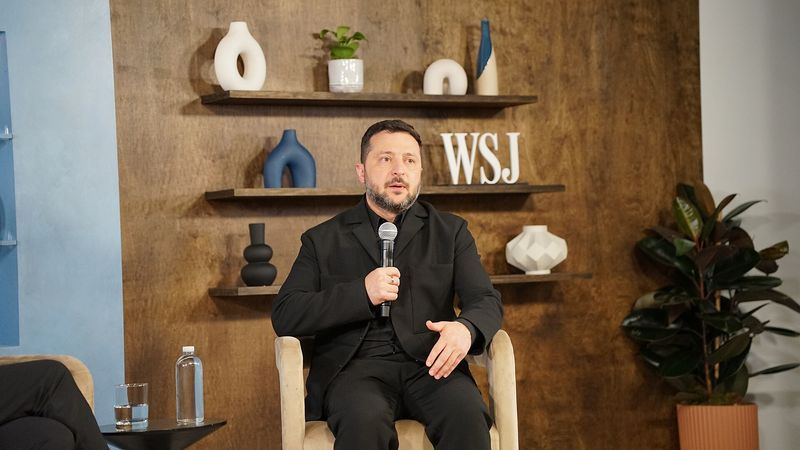
Start with the encounter it makes possible. If a formal invitation is issued, if Zelenskyy accepts, and if Putin confirms, the December summit would put the American, Russian and Ukrainian presidents in the same venue on U.S. soil for the first time since the full-scale invasion began. Even short of a trilateral meeting, a shared summit creates the conditions for the sideline bilaterals through which stalled negotiations sometimes move. None of that is scheduled or promised. It is the possibility space a guest invitation opens — larger than the one that existed on Friday.
Second, consider the signal against the week that preceded it. The remark came at the end of days in which Trump had publicly clashed with Zelenskyy over the direction of negotiations and delayed arms. An invitation extended in that context reads two ways. Supporters will say the pressure was tactical: squeeze Kyiv on terms, then bring its president to the table where terms are settled. Critics will say access to the president’s summit is being granted and withheld as leverage, extended on camera at a party after being denied on paper for months. Both readings are genuinely in circulation; the fact established on Saturday is only the remark itself.
Third, the ambition attributed to the summit. Earlier reporting — by The Atlantic, as carried by United24 Media — has said that Trump wants a Russia–Ukraine peace deal to be signed at the Miami G20 itself. That is reporting about the president’s intentions, attributed here as such, not an announced plan; no signing ceremony has been scheduled or confirmed by any government. But it is the context in which a Zelenskyy invitation makes strategic sense for the White House: a signing requires the signatories, and until Saturday night, one of the two was not on the guest list of the venue where the signing is reported to be wanted.
A guest list that was supposed to be members-only
None of this required a rule change, because the rule was always the host’s to bend. Ukraine is not a G20 member, but membership has never been the whole guest list: host countries routinely invite guest countries and organisations to G20 summits, and Ukrainian representatives have previously attended G20 meetings in that guest capacity, making Kyiv’s case in rooms it does not formally belong to. This year was the exception, and it was a chosen one. U.S. officials said they had consciously decided to invite formal members — with Poland attending as a guest — which left Ukraine outside a summit season otherwise dominated by its war. That members-only approach is what Trump’s remark reverses. It does not need a vote, a charter amendment or anyone else’s permission: the host presidency issues guest invitations, and the host president has now said, on camera, that he has “no problem” issuing this one.
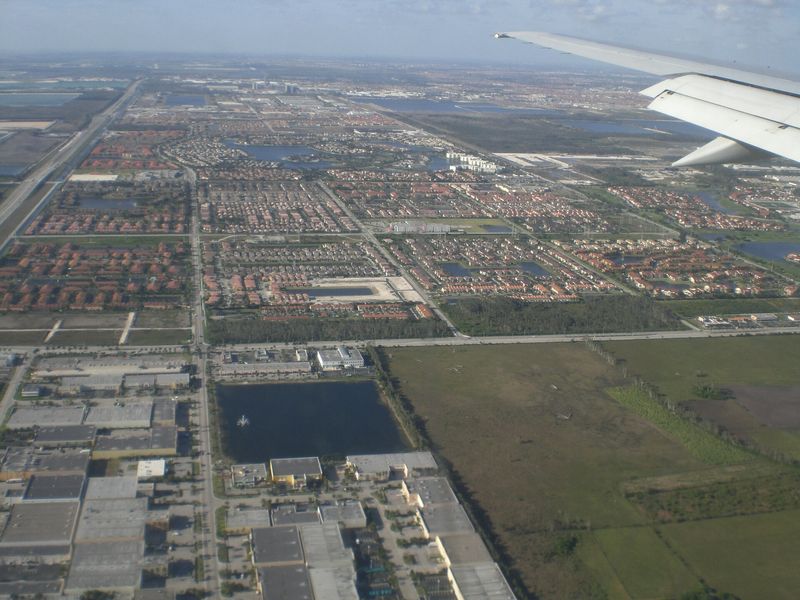
The venue sharpens every one of these questions. The leaders’ summit is scheduled for December 14–15, 2026, at Trump National Doral, the president’s resort in Doral, in the Miami area — a host-property arrangement that has itself been part of the summit’s controversy since it was announced. A guest invitation to Zelenskyy would add the Ukrainian president to a stage the host owns, in a production the host controls. Summits are choreography as much as negotiation, and the choreography of Miami is now the story.
Who gains, who loses
Kyiv gains the most, and the gain is concrete: a seat it was denied, at the table where its war will be the unavoidable subject, with the chance to make its case to leaders — including those from the G20’s middle powers — whom it otherwise reaches only bilaterally. For a government that has spent the autumn being negotiated about, presence is not symbolism; it is the minimum condition of agency. Moscow, correspondingly, loses something it currently holds: exclusivity. As long as Putin was the only wartime leader invited, Russia could present Miami as evidence that the war had not cost it its place among the great powers and that Ukraine’s exclusion proved the point. A Zelenskyy invitation does not revoke Putin’s — it remains issued and unanswered — but it ends the monopoly on the room.
The critics who opposed Putin’s invitation now face a more complicated table. Those whose objection was asymmetry — one belligerent honoured, the other excluded — have had their central complaint answered. Those whose objection was to Putin’s presence itself will not be moved by a second invitation, and will say so. European G20 members have reasons to welcome a Ukrainian seat: they have argued in previous summit cycles for Ukraine to be heard in the room. They also state a caution openly: a summit engineered around a possible signing creates pressure for a deal on a deadline, and European governments have consistently said a settlement must be one Ukraine can accept rather than one a calendar demands.
The calendar underneath the remark
Three dates frame everything that follows. The remark was made on Saturday, October 31, 2026. The U.S. midterm elections fall on Tuesday, November 3 — three days later — and will decide the congressional majorities under which any Ukraine policy or settlement must be sustained. And the summit itself opens on December 14, roughly six weeks — 44 days — after the gaggle: long enough for an invitation to be issued, accepted and built into a programme; short enough that the choreography of who meets whom will be decided within days, if it is to happen at all.
What happens next
The first thing to watch is the paper. A presidential remark at a party gaggle becomes policy when the host government issues the invitation; until the White House confirms that a formal invitation to President Zelenskyy has been extended for December 14–15, the accurate description remains the one Trump himself supplied — he would invite him, and has no problem with it. The second watch is Kyiv’s answer, which is not a formality: Zelenskyy has stated public conditions for negotiations and a public at war, and an acceptance, a conditional acceptance and a polite deferral would each set December on a different course. The third is Moscow’s: Putin’s September invitation still awaits any public confirmation, and a confirmed Zelenskyy invitation removes the propaganda value of exclusivity while adding the possibility of an encounter the Kremlin has at times said it does not rule out.
The scenarios branch from there. At the maximal end: all three presidents in Doral, a trilateral or near-trilateral encounter, and a summit remembered for the war rather than the economics it was convened to discuss. In the middle: Zelenskyy attends, Putin does not, and Miami becomes a U.S.–Ukraine alignment exercise instead. At the minimal end: no formal invitation follows the remark, and Saturday’s answer joins the list of presidential sentences that meant less on paper than they sounded on camera. Which December arrives will be decided by documents, not gaggles — and the first document to watch for is the invitation itself.
Sources
- Reuters, via DevDiscourse, October 31, 2026 — “Zelenskiy could be invited to Miami G20 summit if Trump thinks it could be helpful, Rubio says”: Rubio’s Atlanta remarks that Zelenskyy could be invited if Trump thought “something positive” could result, that the decision rested with the president, and that he would not rule it out but had no announcement.
- Anadolu Agency, via Europe Says, November 1, 2026 — “Trump says he would invite Ukraine’s Zelenskyy to G20 summit in US”: Trump’s Mar-a-Lago answer — “I would. I would. No problem” — the December 14–15 dates at Trump National Doral, Rubio’s September confirmation of the Putin invitation, and the note that no formal invitation to Zelenskyy has yet been announced.
- IANS, November 1, 2026 — “Trump says he will invite Zelensky to G20”: the sequence from Rubio’s Atlanta remarks to Trump’s statement hours later, and Rubio’s quoted condition that participation be considered if it offered a prospect of progress.
- AzerNews, November 1, 2026 — “Trump says Zelenskyy can attend G20 summit in Miami”: the gaggle exchange rendered as “Yes, there’s no problem with that,” and Trump’s confidence that the Russia–Ukraine war would end in the “not-too-distant future.”
- C-SPAN, October 31, 2026 — C-SPAN’s posting of the Mar-a-Lago Halloween party gaggle, whose listed topics include inviting President Zelenskyy to the G20 meeting, the midterms and Iran.
- The White House, via Wikimedia Commons — “President Trump Gaggles with Press at a Halloween Party at Mar-a-Lago, Oct. 31, 2026” (public domain): the full White House video of the gaggle, from which this article’s lead photograph (video frame) and embedded clip are taken.
- Photos: The White House via Wikimedia Commons (public domain, video frame); Xuthoria via Wikimedia Commons (CC BY-SA 4.0); Averette via Wikimedia Commons (CC BY 3.0), as credited in the captions. The Zelenskyy and Doral photographs are file photographs.