UN Sudan sanctions extended
War / World / Sudan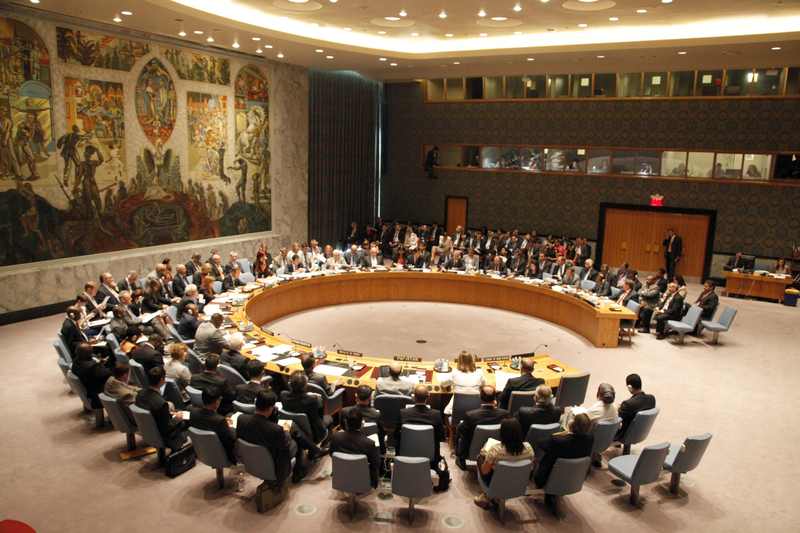
The UN Security Council voted unanimously on Thursday, October 8, to renew the Sudan sanctions regime for two months, through December 11, 2026. The mandate of the Sudan Panel of Experts, which monitors compliance and reports to the Council, now runs through January 11, 2027. The United States-drafted measure was a technical rollover: it preserved the existing mandate rather than rewriting it. It followed a one-month extension adopted September 11 under resolution 2828, which had kept the measures in force only until October 9.
That sequence matters. A two-month agreement can be read as evidence that all 15 members still see value in preventing the Darfur sanctions regime from expiring. It can also be read as evidence that they could not agree on much beyond that. The vote created another negotiating window; it did not settle the central argument over the scope of the Sudan arms embargo.
Why this matters: a unanimous vote that reveals a deadlock
A technical rollover is diplomatic maintenance. It preserves legal continuity, avoids an abrupt gap in monitoring and gives negotiators more time. In a Council often divided over Sudan, unanimity is not trivial. Yet the short duration is the more revealing part of the UN Security Council Sudan vote. Members chose a bridge to December rather than a durable settlement.
The disagreement turns on geography and time. The existing measures were designed around Darfur more than two decades ago. The current war between the Sudanese Armed Forces and the paramilitary Rapid Support Forces is national, with weapons, financing and outside support moving through networks that do not stop at Darfur's borders. Washington argues that the sanctions architecture should reflect that reality. Russia and the Sudanese authorities oppose using the 1591 framework to widen restrictions across the country.
Neither position is cost-free. Keeping the embargo geographically limited may preserve consensus and reduce the risk that the entire regime collapses in a veto fight. It may also leave regulators using an older map against a war whose supply chains are broader. Expanding it could close some of those gaps, but only if member states agree on language, listings, enforcement and exemptions. A wider rule without cooperation could be more ambitious on paper than in practice.
Background: resolution 1591, Darfur and the September rollover
The sanctions system grew out of the 2004 Darfur conflict and Security Council resolution 1591, adopted in 2005. Its tools include an arms embargo focused on Darfur and targeted measures such as travel bans and asset freezes. Those measures are meant to constrain designated individuals and entities rather than punish Sudan's population as a whole.
The distinction between targeted sanctions and a general economic blockade is important. The regime does not impose a comprehensive ban on Sudanese trade. Its practical reach depends on who is listed, what transactions are blocked, whether weapons transfers fall within the embargo and how consistently states enforce the rules. The Panel of Experts supports that system by investigating flows of arms, money and support and reporting findings to the Council.
The immediate calendar has been unusually compressed. Resolution 2828 extended the regime from September 11 to October 9. Thursday's decision moved the deadline to December 11 and extended the experts' mandate one month beyond that, to January 11, 2027. Rather than resolve the misalignment and scope debate for a full year, the Council postponed it again.
The split: Washington's expansion push and Moscow's red lines
What the United States wanted to change
Washington sought to extend the embargo to all of Sudan and all parties to the current war, while updating the rules to address drones and dual-use technology. U.S. Ambassador Jeffrey Bartos described the regime as “more than 20 years outdated.” The argument is straightforward: a Darfur-only framework can miss equipment and support that enter elsewhere and later affect the fighting.
Supporters of expansion would gain a wider legal basis for scrutiny and interdiction. Civilians could benefit if a broader, enforced embargo slowed the supply of weapons used in attacks. But humanitarian organizations would need clear exemptions and workable compliance rules so that dual-use restrictions did not delay communications gear, vehicles, medical supplies or other civilian equipment. The value of broader rules would therefore depend heavily on drafting and implementation.
Why Russia and Khartoum resist
Russia's deputy UN ambassador, Anna M. Evstigneeva, drew a firm boundary against expansion, saying Moscow would not accept “even a hint of broadening the restrictions.” That position aligns with Khartoum's opposition to extending the Darfur framework across Sudan. Their stated concern is that an old, region-specific mechanism should not become an open-ended national sanctions system without the consent of Sudanese authorities.
Around half of the Council reportedly preferred a one-year renewal confined to Darfur. That option would have offered predictability for the Panel of Experts and preserved the existing limits. It would also have deferred questions about drones, dual-use technology and arms flows outside Darfur for another year. The two-month compromise gave neither camp its preferred outcome: Washington did not win expansion, while opponents of a broader mandate did not secure long-term stability.
The numbers: what the WHO Sudan health warning implies
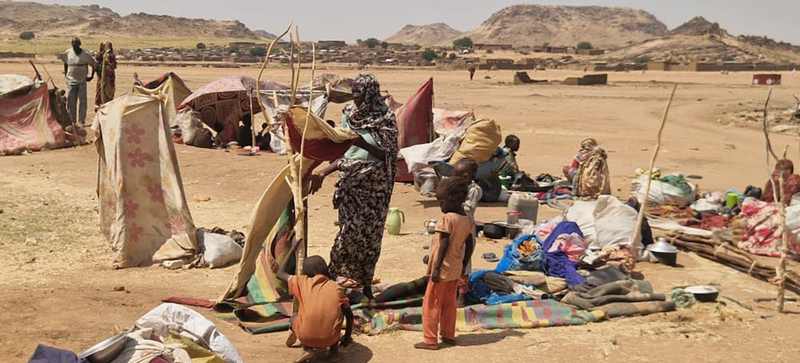
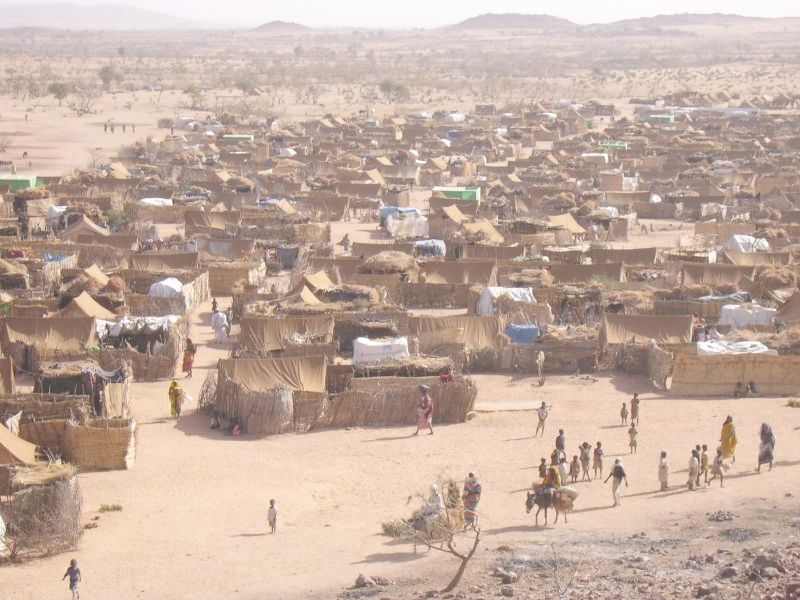
The sanctions argument unfolded against a much more immediate emergency. The World Health Organization warned that more than 700,000 displaced people in Tawila, North Darfur, face severe shortages of healthcare, nutrition, food, water, sanitation and protection. That is not simply a large camp population; it is a concentration of needs that can overwhelm clinics, supply chains and disease surveillance at the same time.
WHO's representative in Sudan, Dr. Abdinasir Abubakar, visited Darfur states from September 14 to 24, excluding East Darfur. The agency reported worsening malnutrition linked to poor rainfall, crop failures and a projected strong El Niño. It also said medicines for HIV, tuberculosis and neglected tropical diseases were dangerously low, while mental-health services remained severely limited.
Darfur hosts 65% of Sudan's 8.6 million internally displaced people, according to the International Organization for Migration. That works out to roughly 5.6 million people. The figure helps explain why a regional sanctions debate and a national humanitarian crisis cannot be cleanly separated: Darfur remains the center of mass displacement even as the war and its supply networks extend beyond it.
Funding is the other constraint. WHO's $97.7 million Sudan appeal for 2026 is only 23% funded, or about $22 million received. The arithmetic leaves a gap of roughly $75 million. A sanctions renewal does not fill that gap, reopen a road or deliver medicines. WHO says it needs safe, sustained and unimpeded humanitarian access as well as more resources. Those are separate policy tracks, but civilians experience them together.
Who benefits and who loses from each outcome
The current rollover benefits institutions that need continuity: the sanctions committee, investigators and governments enforcing existing listings. It also avoids the uncertainty that would follow expiration. Council members opposed to expansion retain the Darfur boundary for now, while those seeking broader rules keep the issue alive for December instead of accepting a one-year freeze.
The losers are harder to measure. If the existing scope fails to capture arms or drone components routed through other parts of Sudan, civilians exposed to those weapons bear the cost. If an expansion were drafted too broadly or enforced without effective humanitarian exemptions, aid operations and civilian commerce could face delays. Claims about either effect should be tested against evidence from the Panel of Experts rather than treated as automatic.
The war itself continues to punish aid delivery. On October 3, an aerial attack on two World Food Programme-contracted trucks in South Kordofan killed a driver. The UN has not publicly attributed every disputed incident, and battlefield claims remain difficult to verify independently. What is clear is that attacks, insecurity and access restrictions raise the cost and danger of moving food and medicine.
What's next: December 11 and three possible paths
The next deadline is December 11. Council members could negotiate a broader embargo covering all of Sudan and update the text for drones and dual-use goods. They could approve a longer renewal with the current Darfur scope. Or, if the same divisions persist, they could resort to another short technical rollover.
The sanctions talks will run alongside diplomacy over a U.S.-backed 90-day ceasefire proposal, which the Sudanese army has resisted. Human Rights Council-appointed investigators have warned that outside support sustains the military capabilities of both the army and the RSF. That makes external supply networks central both to the embargo debate and to any effort to make a ceasefire hold.
Recent developments underscore the distance between negotiation and the battlefield. For continuing coverage, read our reports on army chief Abdel Fattah al-Burhan's rejection of peace talks, the RSF drone attack on the Merowe Dam area and the consequences after El Fasher fell to the RSF.
Between now and December, the Panel of Experts' evidence, the treatment of humanitarian exemptions and the willingness of major powers to compromise will shape the next draft. The rollover bought time. Whether the Council uses it to modernize the regime, preserve the Darfur-only framework or postpone the decision again will be the next test.