UN settlements blacklist companies
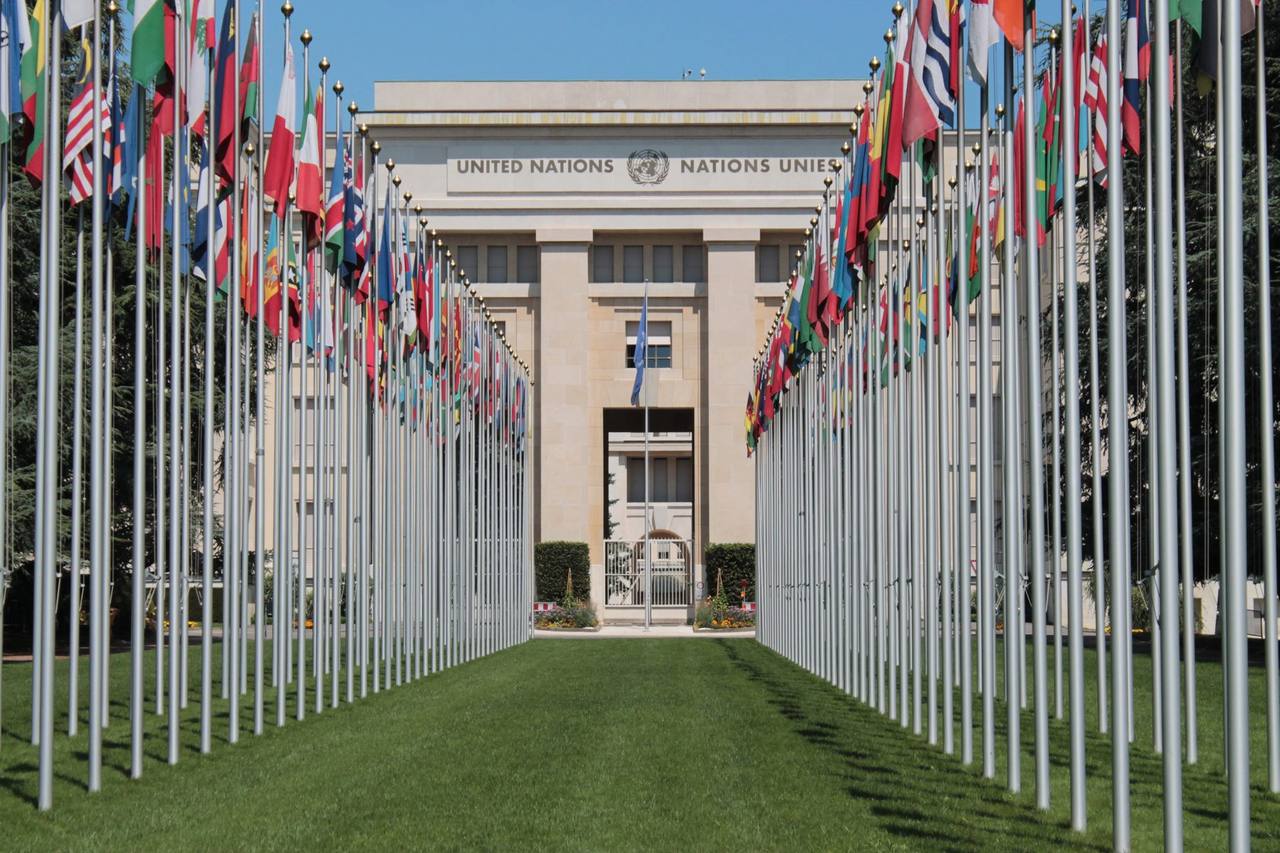
The UN settlements blacklist now covers 214 companies in 11 countries after the Office of the U.N. High Commissioner for Human Rights added 61 businesses and removed five. The annual update, released in Geneva on Friday, September 25, 2026, expands a database that the United Nations says identifies enterprises involved in specified activities connected to Israeli settlements in the occupied West Bank, including East Jerusalem.
The arithmetic is more revealing than the headline number. Last year's list contained 158 companies. Adding 61 and removing five produces a net increase of 56, or roughly 35% in one year. The expansion does not create a fine, a trading prohibition or a court judgment. It does, however, give governments, investors, procurement officers and corporate compliance teams a larger set of names to examine at a moment when several Western governments are moving from criticism of settlements toward trade restrictions.
Existing entries include Motorola, Airbnb, Booking.com and Tripadvisor, according to reporting on the update. The vast majority of the 214 businesses are Israeli, while the full set is based across Canada, China, France, Germany, Israel, Luxembourg, the Netherlands, Portugal, Spain, the United Kingdom and the United States.
Background: what the OHCHR update says — and what it does not do
The database grew out of U.N. Human Rights Council Resolution 31/36 and was first published in 2020. Its mandate is narrower than a general list of every company doing business in Israel or the Palestinian territories. It concerns business activities that the Council linked to the maintenance and growth of settlements: construction materials and infrastructure, surveillance and identification systems, demolition equipment, security services, transport and utilities, banking and finance, real-estate activity, natural-resource use and other listed forms of support.
That distinction matters. Inclusion records OHCHR's assessment that a company is involved in one or more activities within the mandate; it is not a criminal conviction, a sanctions designation or a finding by a court. The Human Rights Council cannot compel a company to divest, stop serving customers or pay compensation. Its practical instrument is disclosure.
“This report is another reminder to companies that they have human rights responsibilities and are expected to conduct due diligence to ensure that they do not become involved in human rights violations or abuses,” said Volker Türk, the U.N. human rights chief, in a statement.
The five removals demonstrate the database's other side. A company can give OHCHR information showing that it is no longer involved in a listed activity. That creates an off-ramp: change the relevant operation, end a relationship, dispose of an asset or document why the criteria no longer apply, then seek removal in a later update. The process is administrative and reputational rather than judicial, but it is not necessarily permanent.
Why a list with no enforcement power can still matter
The database's effect comes through intermediaries. A national government can use it as one input when designing sanctions, import rules or public-procurement exclusions. A pension fund or asset manager can use it in an environmental, social and governance screen. A bank can flag a client for enhanced due diligence. A multinational can ask whether a local subsidiary, supplier or marketplace listing exposes the group to human-rights, litigation or disclosure risk.
None of those responses is automatic. The financial impact of inclusion remains unclear, and the update does not establish that every investor or government will treat every company alike. A listed Israeli construction supplier, an international travel platform and a financial institution may face very different exposure. But a common reference point reduces the cost of asking the first compliance question: is this enterprise on the U.N. list, and why?
That is why the database is best understood as sanctions-adjacent rather than as sanctions. It has no asset freeze, transaction ban or penalty attached. Yet it can become part of the evidence chain used by actors that do possess economic power. Repeated annual updates also make it harder for boards to dismiss the exercise as a one-time political statement.
The timing: trade policy is moving closer to the database
The September update landed in the same month Britain banned trade with Israeli settlements in the occupied West Bank. France and Canada said they would take similar action. The measures and the U.N. database are separate instruments, adopted by different institutions, but they point in the same policy direction: distinguishing commerce connected to settlements from commerce with Israel inside its internationally recognized borders.
That distinction has long existed in diplomatic language and some labeling rules. The new pressure is operational. Once governments restrict settlement goods or services, customs authorities and businesses need to identify origin, ownership, counterparties and end use. A U.N. list does not answer every one of those questions, but it gives regulators and compliance teams a ready-made pool for further review.
The connection also raises the stakes of accuracy. A database intended for transparency can produce real consequences even without formal enforcement if banks, insurers or suppliers choose to reduce risk broadly. Critics worry that firms can be punished by association before they have an effective chance to challenge the underlying assessment. Supporters answer that voluntary corporate due diligence is inadequate when business activity helps sustain a settlement system the United Nations considers unlawful under international law.
Israel's objections and the database's unusual status
Israel's diplomatic mission in Geneva rejected the update as a “political tool” used by Türk's office “to advance a smear campaign against business enterprises that committed no wrongdoing.” In a longer response carried by the New York Post and Jewish News Syndicate, the mission called the mechanism discriminatory and said deterring business in conflict-affected territories could itself harm the population whose rights the database is supposed to protect.
Israel also objects to the legal and geographic premise. It disputes the characterization of all Jewish communities beyond the 1949 armistice lines as illegal settlements and often refers to the West Bank as Judea and Samaria. The United Nations and most governments treat the territory, including East Jerusalem, as occupied and regard the settlements as contrary to international law. Those competing positions are not resolved by a database entry.
The mission's strongest institutional criticism is comparative: the United Nations maintains no equivalent company blacklist for other disputed or occupied territories. That makes this database unique. Supporters view the specificity as a response to a long-running, documented system of settlement expansion. Critics view the absence of parallel mechanisms elsewhere as proof of selective treatment. Both observations can be true at once: the mandate is unusually focused, and its focus reflects a political decision by the Human Rights Council.
The numbers: growth, removals and unfinished review
The update changes the list from 158 companies to 214. The 61 additions are the gross expansion; the five removals leave a net gain of 56. Dividing that net gain by last year's 158 yields approximately 35.4%. For a database designed to be updated annually, that is a substantial broadening of scope in a single cycle.
Reporting on the accompanying material says 381 of 596 companies reported for potential involvement have been reviewed. That means the published list should not be read as the universe of every relevant enterprise, and the companies not listed should not be presumed cleared. It is a reviewed subset shaped by the mandate, the evidence OHCHR received and the pace of assessment.
The removals are equally important to interpretation. They show that the total is not cumulative in the sense of names being added forever. The list can contract when operations change or when companies satisfy OHCHR that they are no longer engaged in the specified activities. That creates an incentive to document exits, but it also puts pressure on the office to explain its methodology consistently.
Who gains, who loses
Potential winners
Human-rights advocates gain a larger, updated reference for campaigns aimed at investors, retailers and governments. Palestinian businesses and communities may gain leverage if the list prompts companies to examine operations that affect land, movement, housing or market access. Governments pursuing settlement-specific trade rules gain a starting point for company-level scrutiny, though they still need their own legal tests and evidence.
Companies that changed their conduct and secured removal also gain. The five deletions show that engagement can produce a measurable outcome. Competitors with cleaner supply chains may benefit if buyers begin attaching greater value to traceability and human-rights controls.
Potential losers
Newly listed firms face reputational and compliance costs even where direct financial damage cannot yet be measured. Israeli companies concentrated in settlement-linked construction, services or finance may have fewer practical options than global platforms that can alter a listing policy or exit a narrow line of business. Workers and Palestinian customers can also lose if broad corporate withdrawals reduce jobs, services or competition without changing settlement policy.
OHCHR itself takes on risk as the list grows. A 214-company database across 11 jurisdictions requires credible notice, review and correction procedures. Errors or opaque decisions would strengthen Israel's claim that the mechanism is political. Transparent removals and clear activity-specific explanations strengthen the opposite case: that it is a due-diligence tool capable of distinguishing current conduct from past association.
Corporate off-ramps: what boards can do now
A company does not have to accept the framing of the database to respond seriously to it. Boards can identify the precise activity OHCHR says falls within the mandate, verify the geography of assets and customers, map subsidiaries and franchise relationships, and compare public claims with contracts and operational records. Where the activity continues, the company can assess whether safeguards are possible or whether withdrawal is the only credible way to reduce exposure.
Global travel platforms face questions about property listings, disclosure and the economic role of tourism. Equipment and technology companies face end-use and customer-screening questions. Banks face lending, payment and beneficial-ownership questions. The correct response will not be identical across sectors, which is another reason to resist treating inclusion as a single legal verdict.
Companies seeking removal will need evidence, not only a policy statement. The five removals imply that OHCHR is willing to change the record, while the 61 additions show that new names continue to enter as reviews progress. For directors, the least defensible position is to ignore the list until a government converts its logic into binding rules.
What happens next
Three developments will determine whether the 2026 update becomes more consequential than its predecessors. The first is implementation of the British ban and the scope of the French and Canadian measures. The second is how investors, public pension funds, banks and procurement bodies incorporate the 214 names into their own policies. The third is the next OHCHR review: which companies provide evidence, which are removed and how many of the unresolved reports move into the published database.
Legal challenges are also possible if a government relies on the list without conducting its own assessment. Companies may argue that administrative inclusion does not satisfy domestic standards for sanctions or procurement exclusion. Advocates may press in the other direction, arguing that governments with duties under international law should do more than request voluntary due diligence.
For readers following the wider U.N. week, the update belongs beside Signal Post News's coverage of President Trump's Iran warning at the General Assembly, Israel's GovMap satellite-image disclosure in Gaza and Shehbaz Sharif's Kashmir and Indus water address. Each story shows a different way international institutions shape pressure without directly controlling the underlying conflict.
The 2026 database is therefore neither an empty gesture nor an enforcement regime. It is an expanding signal to actors that make decisions about capital, contracts and access. A list without enforcement power grows because the relevant audience keeps reading it.
Sources and references
- Associated Press via Netscape: OHCHR additions, removals, totals, mandate and trade-policy context
- Associated Press via WCIA: Volker Türk statement and Israel's response
- New York Post / Jewish News Syndicate: named companies, country list, review totals and extended Israeli objections
- OHCHR report A/HRC/37/39: mandate, methodology and categories of business activity
Reporting basis: Company totals, quoted statements and the timing of the 2026 update are attributed to OHCHR and the cited reports. Analysis of compliance, procurement and investor effects is identified as analysis; the financial effect on listed companies has not been established.