UN relief chief Tom Fletcher is sending emergency cash to a dozen underfunded crises — with a first-ever disability set-aside. But money can't cross front lines, and in five of these countries, aid workers can't safely get in.
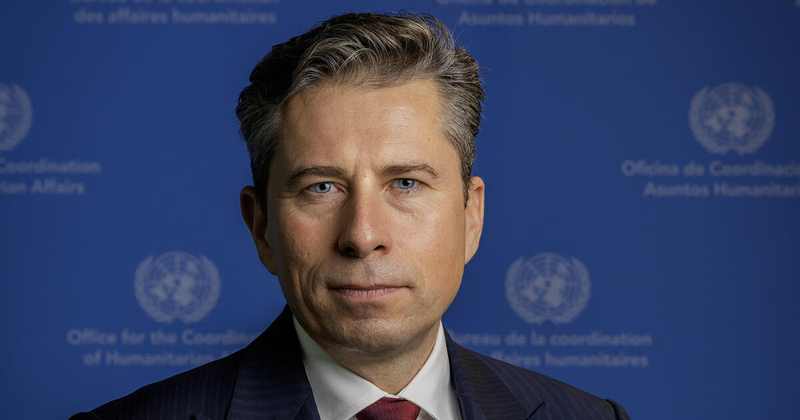
UNITED NATIONS — On Friday, October 2, 2026, the United Nations' humanitarian chief, Tom Fletcher, announced that the world body's emergency fund is releasing $160 million for 12 of the planet's most underfunded humanitarian crises — from Afghanistan and Yemen to Cuba — in one of the largest single allocations this year for emergencies the cameras forgot. “We have 87 million people to reach, and no time to waste,” Fletcher said.
Where the money goes
$150 million comes from the UN Central Emergency Response Fund (CERF), and the split tells its own story about where need is deepest and attention thinnest. The largest shares — $18 million each — go to Afghanistan, the Occupied Palestinian Territory, and Yemen. Somalia and Sudan receive $16 million each; South Sudan $15 million. Then the Sahel and its neighbors: Burkina Faso, Mali, and Niger $10 million each; Chad $9 million; Cameroon $6 million. Cuba, the outlier on the list, receives $4 million. The 12 allocations sum to exactly $150 million.
On top of that, a further $10 million is set aside for people with disabilities across the same 12 crises — and CERF is teaming with the UN Global Disability Fund, which can add up to $4 million more through its Inclusion Catalyst Hub, to strengthen local organizations of persons with disabilities.
Why this matters: the attention economy of suffering
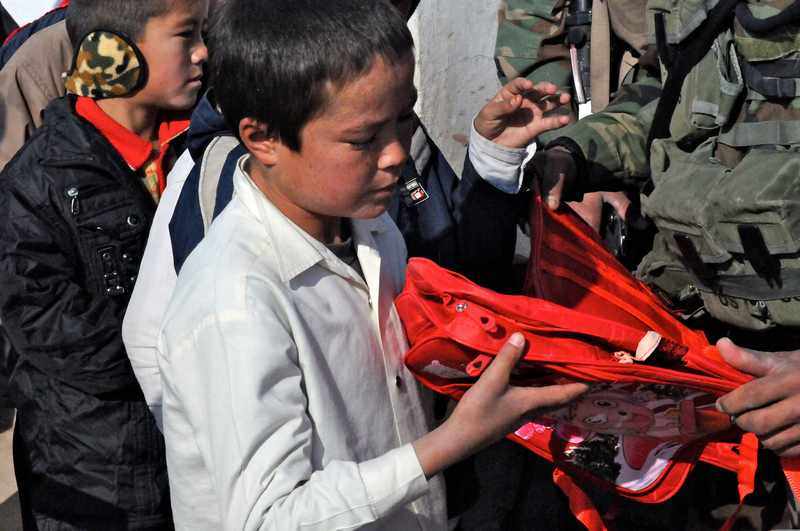
Analysis: Call them what Fletcher's office does — “underfunded emergencies” — but “forgotten crises” is the honest phrase, and it contains an indictment. These are not small crises. Sudan's war has displaced millions; Yemen's hunger emergency is among the worst on earth; Afghanistan's humanitarian collapse grinds on largely unwatched. What makes them “forgotten” is not the scale of suffering but the allocation of attention: while Ukraine and Gaza dominate headlines and donor conferences, these 12 emergencies compete for the remainder.
The numbers expose the gap brutally. Fletcher launched a 2026 appeal targeting 87 million people in need at roughly $23 billion. This $160 million release — generous by CERF standards — is about seven-tenths of one percent of that appeal. It is a tourniquet, not a cure, and Fletcher knows it.
“Today's new funding will help us get aid to people who might otherwise be left behind. But money alone won't get us there: leaders must exercise political will to open access, remove obstacles and help us reach people whose lives are on the line.”
That is a diplomat telling the world that cash is the easy part.
How we got here: CERF and the underfunded-emergencies window
Background: The Central Emergency Response Fund was created by the General Assembly in 2005 precisely for moments like this — to get money moving in hours, not months, and to correct the market failure of humanitarian attention. Since then it has channelled $10.2 billion to hundreds of millions of people in more than 117 countries and territories, funded by 135 Member States and observers plus private donors, against an annual target of $1 billion.
Twice a year, CERF runs dedicated rounds for underfunded emergencies: the crises that score highest on need and lowest on donor response. This October round is one of the largest. It lands in a brutal funding climate. 2026 has been a year of donor retrenchment across the board — including deep U.S. foreign-aid cuts that rattled the entire humanitarian system — and UN appeals are running far behind their targets. The UN development agency has also warned that overlapping crises are exhausting the capacity of developing countries to absorb each new shock.
Who benefits — and who the money still can't reach
Multiple angles: The most striking feature of this allocation is the disability set-aside. People with disabilities are routinely the last reached in any crisis — less mobile when fighting moves, less visible in needs assessments, less served by distribution systems designed for the able-bodied. A dedicated $10 million, plus up to $4 million more through the Global Disability Fund's Inclusion Catalyst Hub aimed at strengthening local organizations of persons with disabilities, is a first for a CERF underfunded-emergencies round and a quiet admission that the system has been failing these people for years.
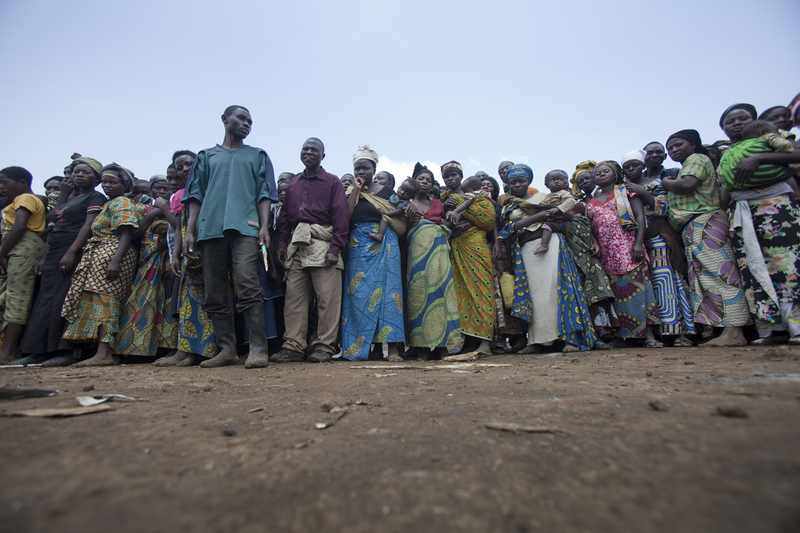
But then the harder truth: five of the 12 recipients — Afghanistan, the Occupied Palestinian Territory, South Sudan, Sudan, and Yemen — are among ten contexts where Fletcher has been calling for urgent diplomatic action to secure humanitarian access. Unlocking access in those places, OCHA says, would reach 11 million people. Money cannot cross a front line, bribe a checkpoint, or negotiate with a militia. Fletcher's plea for “political will to open access” is aimed squarely at the governments and armed groups blocking his convoys.
The critics' case
Balanced analysis: Aid groups will welcome the money and then ask the uncomfortable questions. First: does the allocation reward visibility after all? The three $18 million top recipients are also the three crises with the most name recognition on the list — which suggests even the underfunded-emergencies window can't fully escape the attention economy.
Second: is $160 million spread across 12 crises and hundreds of millions of people in need too thin to matter anywhere? CERF's answer is that its money is catalytic — it unlocks other funding and keeps pipelines alive — but critics note that catalytic only works if someone follows.
Third: Fletcher's broader “Humanitarian Reset” agenda — his push to overhaul how the UN delivers aid — has divided the aid world between those who see overdue reform and those who fear restructuring becomes an excuse for donors to give less. This allocation will be read as a test of which interpretation is right. The Security Council separately renewed the Haiti gang-suppression force mandate in September — another underfunded crisis competing for the same shrinking donor pool.
What $18 million — and $4 million — actually buys
Data reasoning: Put the figures in context. This release takes CERF's 2026 allocations to $483 million — less than half of the fund's $1 billion annual target, with three months of the year left. The per-country splits are triage math: $18 million for Afghanistan, the OPT, and Yemen reflects caseloads in the tens of millions; $4 million for Cuba reflects a smaller, sharper shock.
None of these sums covers a national response — CERF was never designed to. It is designed to be first and fast: the money that keeps clinics stocked and food pipelines moving while bigger bilateral pledges grind through parliaments. The honest way to read $483 million against a $1 billion target is as a measure of donor appetite, not UN competence. The fund can only allocate what member states put in.
What happens next
Forward look: Three things to watch. First, disbursement speed — CERF's promise is hours and days, and the test is whether cash reaches frontline partners before the next funding cliff. Second, the disability money — whether the Inclusion Catalyst Hub actually puts resources in the hands of local organizations of persons with disabilities, or whether it dissolves into overhead.
Third, and biggest, the access diplomacy: Fletcher has now publicly tied money to political will in ten access-constrained contexts. If leaders open the roads, 11 million more people become reachable and this $160 million multiplies in value. If they don't, some of it will sit in accounts while people it was meant for stay beyond reach. The funding is real. Whether it becomes aid is a political question, not a financial one.