Siti Hasmah dies
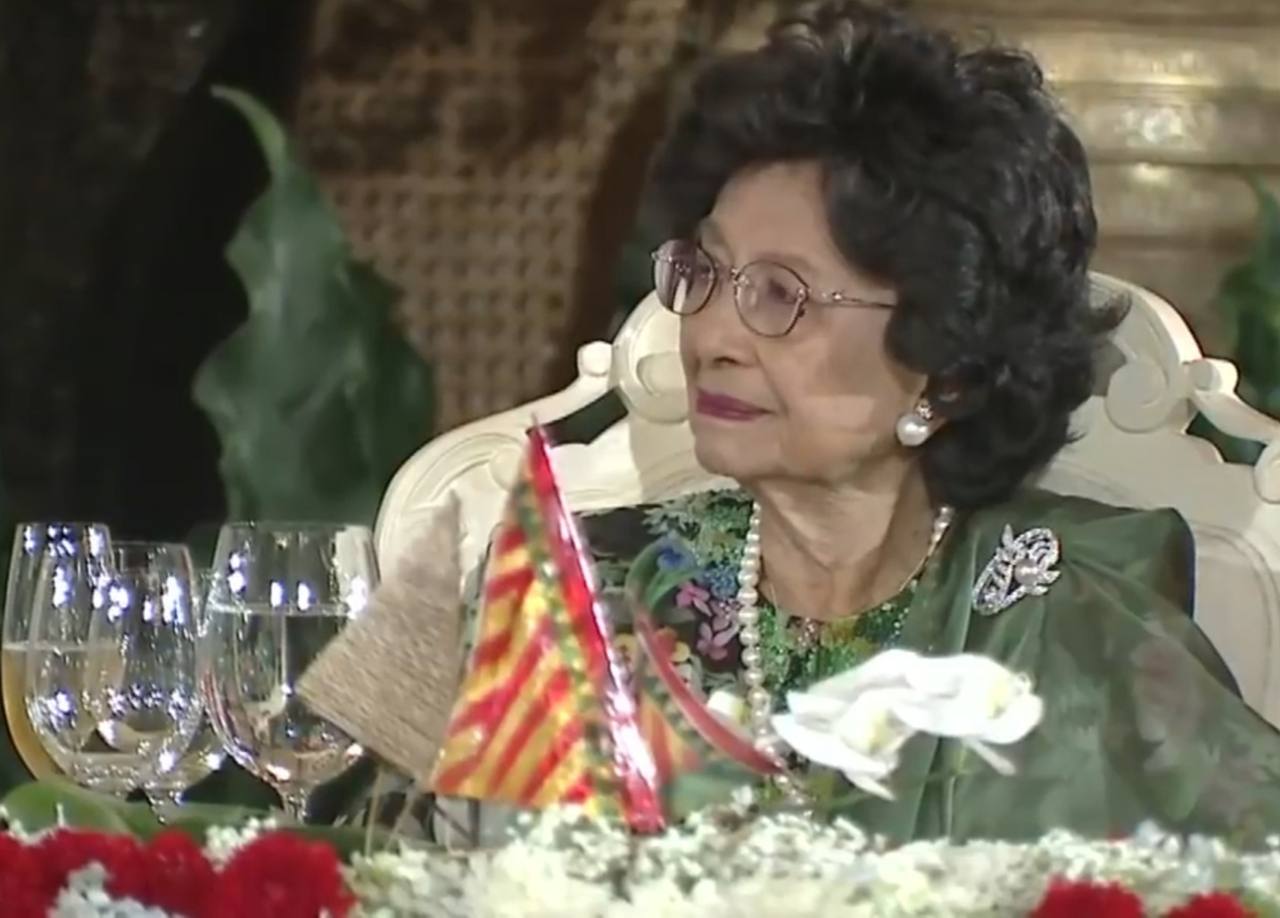
Siti Hasmah's death was confirmed on Monday morning by her son, Tan Sri Mokhzani Mahathir, speaking to Malaysia's state news agency Bernama, and announced by the office of her husband — Tun Dr Mahathir Mohamad, 101, the country's longest-serving prime minister. She died at the National Heart Institute (IJN) in Kuala Lumpur, reportedly at 9:20 a.m. local time. No cause of death was immediately disclosed.
The news reached much of the country through an unlikely channel: it was announced during a town hall session at Parliament, where attendees paused for a brief Islamic prayer in her honour, according to the Malay Mail. Within the hour, Reuters, Bernama and Malaysian outlets were carrying the story, and her Wikipedia entry had already been updated to record a life that spanned a full century — from British Malaya to the digital age.
The announcement
Born Siti Hasmah binti Mohamad Ali on July 12, 1926, in Klang, Selangor — the sixth of ten children — she turned 100 this past July. Just last month, she and Mahathir quietly celebrated 70 years of marriage, a milestone almost without parallel among the world's political couples. She is survived by her husband and their seven children, including businessman Mokhzani, social activist Marina Mahathir and politician Mukhriz Mahathir.
Mahathir's office offered no further details on Monday. The family has not announced funeral arrangements. In Malaysia, the death of a figure of her stature — a former prime minister's wife of 22 years across two stints, a decorated physician, a national patron of sports and welfare causes — would ordinarily occasion national mourning and a state-attended funeral. Expect flags, tributes from across the political divide, and a debate-free moment of unity in a country that has known little of it lately.
Why this matters: the end of the founding generation
To understand why Siti Hasmah's death lands the way it does in Malaysia, you have to understand what she represented: continuity. She was among the last living links to the generation that built modern Malaysia — not as a politician's accessory, but as a professional woman who broke ground before the country had a name for what she was doing.
Consider the timeline. When she entered medical school in Singapore in the late 1940s — the first Malay woman ever offered a place at the King Edward VII College of Medicine — Malaya was still a British colony. When she graduated in 1955, women doctors were a rarity; Malay women doctors, vanishingly so. By the time her husband took the premiership in 1981, she had already spent a quarter-century as a working physician and public-health official. She did not become somebody when Mahathir became prime minister. She was already somebody.
That distinction matters because it shaped the character of her public role. Where political spouses elsewhere have been lightning rods — and Malaysia has had its share of controversy around prime ministerial families — Siti Hasmah was that rarest of public figures: universally liked. Reuters, in its obituary dispatch, noted her "unassuming personality and good humour, which contrasted with her husband's blunt and acerbic style." Mahathir himself once described her as "the backbone to his success," and said he admired her determination to obtain a university degree — "a rarity among ethnic Malay women at the time."
Her passing also closes a chapter on Malaysia's political era in a literal sense. Mahathir, at 101, is now a widower after a 70-year marriage. The couple's longevity — his and hers — had become a national talking point, a symbol of an older Malaysia's discipline and endurance. With her gone, the country's founding-generation figures are nearly all departed, and the question of how Malaysia remembers them, flaws and all, moves to the foreground.
The doctor who broke the mold
Strip away the political marriage and Siti Hasmah's résumé stands on its own — which is precisely why it deserves the retelling. In 1965 she became the first woman appointed as a medical officer in Malaysia's Maternal and Child Health Department. In 1974 she became the country's first woman State Maternal and Child Health Officer. As Kedah's state officer, she oversaw a collapse in infant mortality from 75 deaths per 1,000 births to six — a transformation measured not in headlines but in thousands of children who lived.
Those numbers deserve a pause. A twelvefold reduction in infant mortality in a single Malaysian state, driven by maternal-health outreach, family planning and basic clinical infrastructure, is the kind of public-health achievement that entire ministries now spend careers chasing. She did it as a working doctor in the 1970s, in a country still finding its feet, while raising seven children and married to a rising — and famously demanding — political figure.
She carried that work onto the national stage when Mahathir took office in 1981. As president of BAKTI, the welfare club of ministers' wives, she ran national campaigns against drug abuse — work that took her, in 1985, to Washington at the personal invitation of U.S. First Lady Nancy Reagan for the First Ladies' Conference on Drug Abuse, and in 1987 to Vienna for the International Conference on Drug Abuse and Illicit Trafficking. She led the Malaysian Girl Guides Association, chaired the Kedah Family Planning Association, and was invited by Rosalynn Carter to join the World Federation for Mental Health. From 1997 to 2012 she served as chancellor of Multimedia University. She was the first wife of a Malaysian prime minister to receive the Seri Setia Mahkota Malaysia, the federal award carrying the title "Tun."
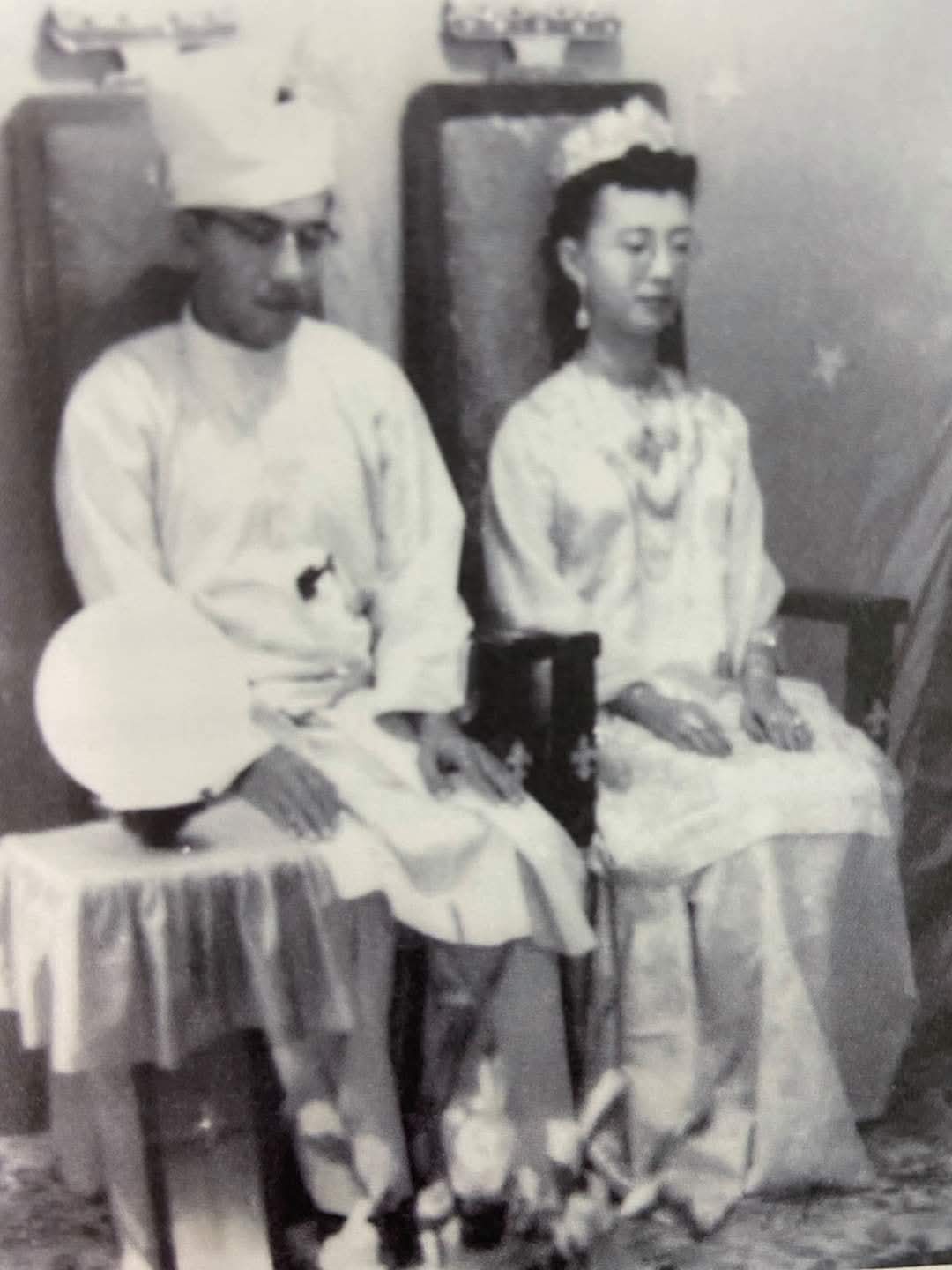
Seventy years beside the most consequential Malaysian alive
The marriage is the spine of the story, and it is worth telling straight. They met as medical students in Singapore in the late 1940s — two ambitious young Malays in a colonial institution that had barely room for either of them — and married in 1956, a year before Merdeka. What followed was a partnership that endured Mahathir's expulsion from UMNO, his wilderness years writing The Malay Dilemma, his return and 22-year premiership, his retirement, his stunning 2018 comeback at 92 to topple Najib Razak over the 1MDB scandal, and his government's collapse in 2020.
Through all of it, she was the softening presence. Malaysian politics is a bruising business, and Mahathir — brilliant, abrasive, unyielding — made enemies at industrial scale. Siti Hasmah made almost none. That asymmetry was not an accident of temperament alone; it was a division of labor. He fought the fights. She kept the home, raised the family, ran her causes, and showed up — always composed, always warm — at the thousands of functions the job required. Malaysians who could not stand her husband routinely adored her, and that adoration, paradoxically, burnished him.
The contrast sharpened after 2018, when the country's attention fixed on a different prime ministerial spouse entirely. Without belaboring the comparison, Siti Hasmah's reputation for modesty became, in the public mind, the standard against which excess was measured. Her legacy benefits from that contrast, fairly or not.
The nation's badminton mother
Ask Malaysians under forty what they associate with Siti Hasmah and many will answer before the medicine or the marriage: badminton. She was an avid sportswoman who played competitive badminton until the age of 75, served as patron of the Badminton Association of Malaysia, and became a maternal figure to generations of national shuttlers — the "Badminton Mother" of Malaysian sports pages. In a country where badminton is closer to religion than recreation, that patronage was not ceremonial. Players spoke of her genuine presence at tournaments, her encouragement, her memory for their names and their injuries.
It is a small detail in a century-long life, and it is also the most revealing one. The through-line of Siti Hasmah's public existence — the maternal-health clinics, the Girl Guides, the anti-drug campaigns, the badminton courts — was care work, performed at national scale, without fanfare, for six decades. Malaysia's feminist historians will have plenty to say about how that labor was valued. For now, the tributes will say it was loved.
Who gains, who loses — and what the numbers say
There are no winners in an obituary, but there are ledgers. On one side: a century that began in colonial Klang and ended in a Kuala Lumpur heart institute; a medical career that moved a state's infant-mortality rate from 75 per 1,000 to six; a 70-year marriage that survived everything Malaysian politics could throw at it; seven children; two stints as the prime minister's wife totaling nearly 24 years; a chancellorship; a federal title. On the other: a 101-year-old widower, a family that confirmed the news through a son's brief statement to Bernama, and a nation that has lost its most unifying living figure at a moment when unity is scarce.
The numbers that matter most are the quiet ones. Seventy years of marriage, celebrated just last month — in an age of disposable partnerships, a rebuke and an inspiration in equal measure. Twelvefold: the reduction in Kedah's infant mortality under her watch. Seventy-five: the age to which she played competitive badminton. One hundred: the years she was given, nearly all of them in service to something larger than herself.
The institutions she patronized — the Badminton Association of Malaysia, the Girl Guides, Multimedia University, the maternal-health programs she built — lose a living emblem. They will name things after her now: halls, tournaments, scholarships. That is how nations metabolize grief into memory. The question is whether they will also absorb the lesson she embodied — that the unglamorous work of care, done consistently for decades, compounds into something historic.
What happens next
Funeral arrangements had not been announced as of Monday afternoon Malaysian time. Expect a funeral with full state honors and attendance across the political spectrum — in Malaysia, even bitter rivals observe the protocols of grief, and Siti Hasmah's universal standing makes attendance obligatory rather than optional. Parliament, which learned the news mid-session, will almost certainly adjourn in tribute and record condolences.
Longer term, her death reframes the Mahathir legacy conversation. At 101, Mahathir remains a looming, divisive presence in Malaysian public life — revered as the modernizer who built the economic-tiger years, reviled for the authoritarian streaks of the same era, and still opining on the politics of the day. Widowhood at his age is its own story, and Malaysia's press will tell it with the tenderness it rarely extends to him. The tributes to her will inevitably become, in part, a final referendum on him — conducted, for once, on ground where he cannot lose, because she is the subject.
And there is the quieter, human coda. Seventy years. They met as teenagers, essentially — medical students in a Singapore that belonged to an empire. They married the year before independence. She outlived the colony, the federation, the confrontation, the boom, the crash, the scandals, the comebacks. Malaysia's story, from 1926 to 2026, can be told through her eyes without missing a chapter. That is what the country buried on Monday: not just a prime minister's wife, but a witness.
Sources
- Reuters: Wife of Malaysia's longest-serving PM Mahathir dies at 100 — the September 28 dispatch: death confirmed by Mahathir's office and son Mokhzani Mahathir via Bernama; biography of Mahathir's two stints and the couple's 70-year marriage.
- MCI Group: Dr Siti Hasmah dies aged 100 at IJN — Bernama-sourced Malaysian report: death at the National Heart Institute on the morning of September 28; her medical firsts, BAKTI anti-drug work, badminton patronage and the SSM "Tun" award.
- Scoop: Tun Dr Siti Hasmah passes away aged 100 — confirmation by Mokhzani Mahathir; 9:20 a.m. death at IJN; her pioneering medical career and global anti-drug advocacy.
- Penang Today: Tun Dr Siti Hasmah, wife of Mahathir, passes away at 100 — via Malay Mail/Malaysiakini: announcement during the Parliament town hall and the prayer held; Kedah infant-mortality record and public-health legacy.
- Wikipedia: Siti Hasmah Mohamad Ali — biographical reference: birth July 12, 1926 in Klang; King Edward VII College of Medicine; marriage 1956; Multimedia University chancellorship 1997–2012; honors and family details.