Ukraine strikes Russian oil facilities
Kyiv says the attacks hit two oil sites, a military training ground and a Black Sea target after Russia's overnight barrage killed civilians across Ukraine; the claims were not independently verified.
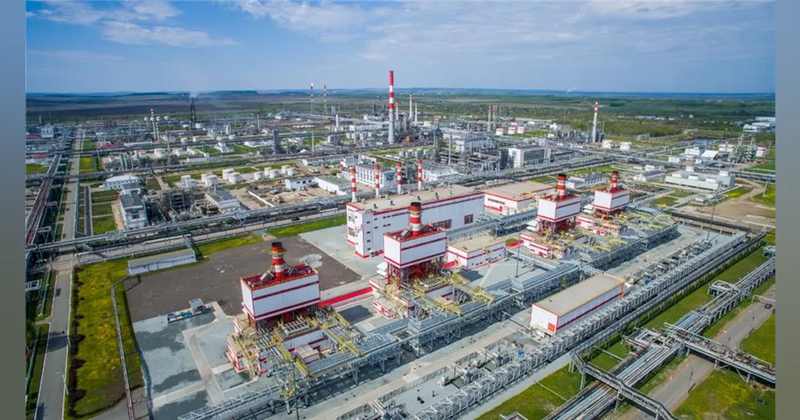
Ukraine strikes Russian oil facilities in what President Volodymyr Zelenskyy called a direct response to Moscow's overnight October 7 barrage, which Ukrainian officials said killed civilians from Pryluky to Kyiv. Zelenskyy claimed Ukrainian forces struck four targets supporting Russia's war effort in the Perm, Samara and Astrakhan regions, including two oil facilities and a training ground, and mounted what he called a response in the Black Sea. Russian officials made no immediate comment, and the Ukrainian claims had not been independently verified.
The sequence captures the war's widening energy logic. Russia says its long-range attacks are aimed at military and energy infrastructure tied to Ukraine's armed forces; Kyiv says the strikes repeatedly hit civilian homes and essential systems. Ukraine, meanwhile, argues that Russian refineries and other oil assets finance and sustain the invasion. Each side presents energy infrastructure as part of the other's war machine. Civilians on both sides absorb the risk when that definition expands.
Why this matters
This was not merely a claim of battlefield retaliation. It was an attempt by Kyiv to connect civilian deaths in Ukraine to costs imposed deep inside Russia, and to show that distance no longer guarantees insulation from the war. Perm lies far east of the Ukrainian border, while Samara and Astrakhan sit along strategic industrial and transport corridors. If the reported strikes are confirmed, their geography would demonstrate both range and an effort to stretch Russian air defences across a vast territory.
The timing sharpened the message. Russia's barrage coincided with President Vladimir Putin's 74th birthday and came one day after Zelenskyy warned that a large attack was being prepared. Signal Post News covered that warning and the wider assault in Russia's massive strike on Kyiv and a separate analysis of the attacks on Kyiv, Odesa and Dnipro. The retaliation announcement made clear that the cycle did not end with the morning's damage assessment.
The October 7 barrage and the casualty count
Pryluky apartment strike casualties anchor the human cost
Ukraine's Foreign Ministry said Russia launched about 70 missiles overnight. Ukraine's air force separately reported 130 drones and 48 cruise missiles. The figures came from Ukrainian authorities and could not be independently reconciled in the first hours after the attack, but they describe one of the largest combined barrages of the period.
The deadliest reported site was Pryluky in the Chernihiv region, where Interior Minister Ihor Vyhivskyi said 13 people were killed, including four children, and about 50 were wounded, according to an AAP report carrying Associated Press material. Officials also reported two people killed in Kyiv, two killed and seven injured in Kremenchuk in the Poltava region, and two killed in Oleksandriia. Different outlets placed the nationwide death toll between 19 and 21 as local counts were updated.
Zelenskyy said the Russian attack focused on Ukraine's energy sector. Moscow had not, in the cited reports, provided a target-by-target account addressing each civilian casualty. Russia has previously said it targets military-linked infrastructure and rejects accusations that it deliberately attacks civilians; Ukraine says repeated impacts on homes and public services show civilians are bearing a foreseeable and unacceptable cost.
What Zelenskyy said Ukraine hit
Perm, Samara and Astrakhan strikes remain Ukrainian claims
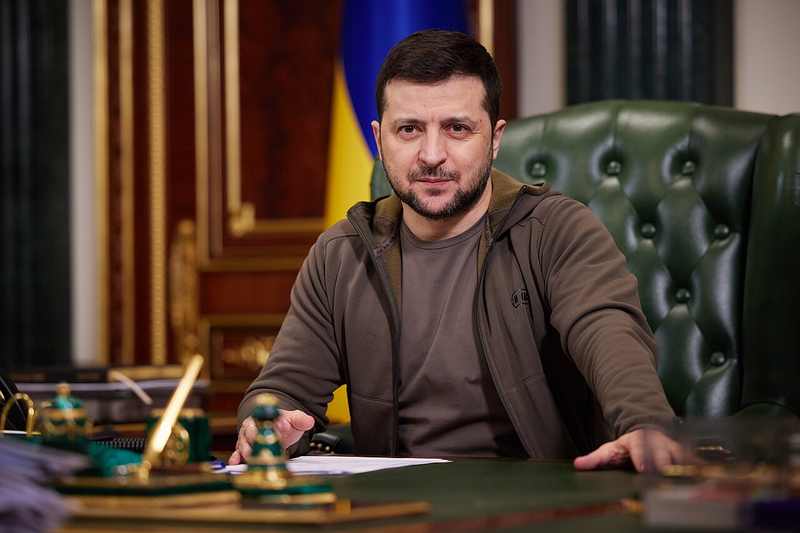
In a post attributed to @ZelenskyyUa and quoted verbatim by the AAP/Associated Press wire, Zelenskyy wrote: “Ukraine's just responses to all Russian strikes against our people. Over the past day, our warriors struck four targets that help Russia finance and wage its brutal war – two oil facilities and a training ground in the Perm, Samara, and Astrakhan regions. There was also a response in the Black Sea.”
The statement did not publicly identify every target, the weapons used or the extent of damage. Russian officials made no immediate comment, according to the report. No independent satellite assessment or on-site verification was available in the source material reviewed for this article. That distinction matters: the announcement establishes what Kyiv says it attempted, not what was conclusively destroyed.
For Ukraine, naming three Russian regions serves a strategic communications purpose even before battle-damage evidence emerges. It signals reach, disperses Russian defensive attention and tells domestic audiences that the government is answering an attack that killed children. For Russia, acknowledging damage can reveal vulnerabilities; silence therefore neither confirms nor disproves Kyiv's account.
Background: the refinery campaign and Russia's fuel pressure
Ukraine drone strikes oil refineries to squeeze war revenue
Ukraine's long-range campaign against Russian oil infrastructure has developed into an economic strategy as much as a military one. Refineries turn crude into gasoline, diesel and jet fuel; disrupting them can complicate military logistics, tighten domestic supply and force Russia to move or import products even when crude production continues.
Kyiv's Defence Ministry claims the campaign has neutralised 51% of Russia's oil-refining capacity. That is a Ukrainian government figure, has not been independently verified and should not be read as proof that half of all Russian fuel output is permanently offline. “Capacity” can refer to units hit, temporarily halted or operating below normal rates; refineries can restart, reroute feedstock or restore partial production.
Even so, Russia has acknowledged an economic effect. At the Valdai Club forum, Putin said Ukrainian strikes had cost Russia roughly 1% of gross domestic product. Asked whether they had achieved their goal, he replied: “Did they achieve their goal? Partially.” Earlier strikes this year were followed by a fuel crisis and sales restrictions in parts of Russia. That does not validate every Ukrainian damage estimate, but it undercuts the argument that the campaign has been economically meaningless.
Data-driven analysis: 51% of capacity and 1% of GDP are not the same measure
Russia oil refining capacity 51 percent is a claim, not an audited total
The two headline numbers measure different things. Ukraine's 51% claim describes the share of refining capacity it says has been neutralised; Putin's roughly 1% figure describes an asserted macroeconomic loss. A refinery can be damaged without losing all output, and an outage can be temporary. Conversely, the cost to the broader economy can include repairs, air defence, transport bottlenecks, lost margins and fuel subsidies that do not appear in a simple capacity count.
The casualty figures require similar discipline. Thirteen deaths reported in Pryluky, two in Kyiv, two in Kremenchuk and two in Oleksandriia sum to 19. Some outlets reported at least 21 nationwide, reflecting additional or updated local counts. The responsible conclusion is not to force one total prematurely, but to identify the named locations and attribute the changing national figure.
The clearest comparison is strategic rather than arithmetic. Russia used a mass of missiles and drones to pressure Ukraine's cities and energy network; Ukraine says it used long-range systems to pressure Russia's fuel economy. One campaign seeks to exhaust air defence and power resilience. The other seeks to raise the fiscal and logistical cost of sustaining the war.
Who benefits, who loses and what critics say
Trump's pressure and the Ukraine air defence Patriot shortage
Kyiv's case is that attacks on Russian energy assets reduce the resources available for war and create leverage that sanctions alone have not produced. The immediate beneficiaries, in that view, are Ukrainian forces and cities if Russia must divert air-defence systems from the front or spend more protecting refineries.
The losers extend beyond the Russian state. Refinery workers, nearby communities and ordinary motorists can face danger, shortages or higher prices. Energy disruptions can also spill into international markets. Those risks help explain why President Donald Trump pressed Kyiv on October 1 to stop hitting Russian energy targets. His intervention reflects concern that attacks on energy infrastructure can widen economic instability even when Kyiv views the targets as legitimate components of Russia's war capacity.
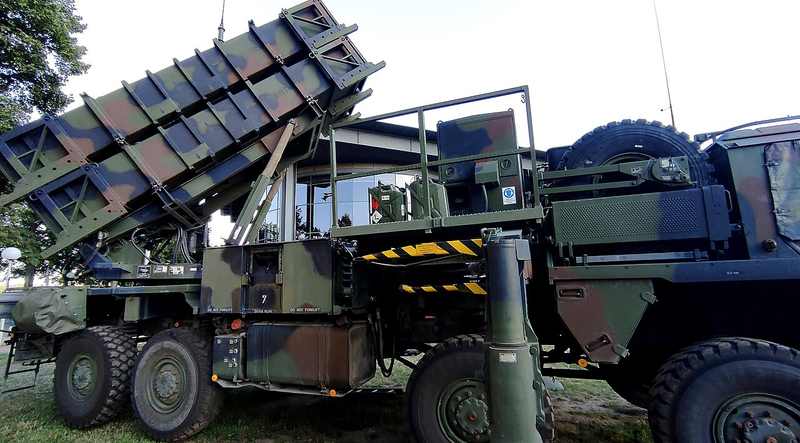
Ukraine's defensive constraint is equally serious. AAP reported that Patriot interceptors were in short supply “due to the Iran war,” leaving Kyiv with fewer high-end missiles against Russian ballistic and cruise threats. That imbalance creates a grim incentive: when Ukraine cannot intercept every incoming weapon, its leaders may put greater weight on retaliation and deterrence. Critics can reasonably answer that reciprocal energy strikes risk escalation without reliably protecting the next apartment block.
The Black Sea response and two disputed incidents
Ukraine Black Sea response: evidence remains incomplete
Zelenskyy also posted images of a burning oil tanker near Sochi and presented them as part of Ukraine's answer. The images and attribution could not be independently verified. Signal Post News previously examined the reported Sochi tanker fire and the uncertainty around its cause.
A separate episode about 112 kilometers off Bulgaria's coast deepened the dispute. One ship sank and another was damaged. Zelenskyy said a joint investigation with Bulgaria's navy had established that Russia was behind the attack. Bulgarian Prime Minister Rumen Radev said it remained unclear whether the drones came from Russia or Ukraine. Our earlier report on the Bulgaria Black Sea drone attack details those competing claims.
The Black Sea thread is strategically important because commercial shipping, energy exports and coastal infrastructure intersect there. It is also the part of the retaliation narrative where attribution is most contested. Ukraine's statement, Bulgaria's caution and the absence of independent forensic findings should be held together rather than collapsed into a single verdict.
Winter, EU funding and the next escalation test
EU €1.4 billion drones package adds capacity, not certainty
On October 7, the European Commission disbursed €1.24 billion, about $1.4 billion, to Ukraine for drones, ammunition and drone interceptors. Commission President Ursula von der Leyen said, “Russia is pursuing a deliberate strategy of terror.” The funding gives Kyiv more means to defend against drones and sustain its own unmanned campaign, but money disbursed is not the same as systems delivered to units or interceptors available that night.
The winter question is whether both sides intensify the energy war as temperatures fall. Russia can continue targeting power generation, transmission and fuel sites in Ukraine. Ukraine can press attacks on refineries, depots and export infrastructure in Russia and the Black Sea. Each side may believe the other's economic pain will improve negotiating leverage; both risk creating a cycle in which civilian hardship becomes the instrument of pressure.
Three scenarios now stand out. In the first, Ukraine's attacks cause temporary refinery disruptions but Russia adapts, repairs facilities and hardens key sites. In the second, repeated outages deepen domestic fuel shortages and force Moscow into costlier tradeoffs between exports, civilian supply and military demand. In the third, the campaign triggers wider retaliation against Ukraine's energy system or Black Sea shipping, increasing the risk to neighboring states and commercial vessels.
Conclusion: retaliation is a message, verification is the test
Zelenskyy's announcement was designed to be unmistakable: after a Russian strike that Ukrainian officials said killed at least 19 people, Ukraine claimed it hit the economic infrastructure that helps sustain Moscow's war. The Perm, Samara and Astrakhan names project reach; the Black Sea reference projects a broader theater; the oil targets project economic pressure.
But a responsible assessment must stop where the evidence stops. Kyiv's claims about four targets and 51% of refining capacity are not independently verified. Russia's limited immediate response leaves key questions unanswered. The confirmed significance lies in the pattern: both countries are tying military strategy to energy vulnerability, and the approach of winter makes that contest more consequential.
What happens next will be measured not by rhetoric alone but by satellite imagery, verified outage data, fuel availability, air-defence allocation and the civilian toll from the next exchange. The central question is whether long-range strikes produce leverage toward negotiation—or simply make the energy systems that millions rely on the war's next front line.