War · Ukraine · Defence Technology
The Ukraine Denmark defence AI pact signed this week makes Denmark one of the first countries admitted to Avengers Labs, Kyiv’s military AI platform built on an annotated dataset of 5 million battlefield frames — most of them pulled from unmanned systems through the DELTA combat system. Denmark will train its own AI models on that combat data and co-develop new ones with Ukraine, inside a secure environment that never exposes the underlying dataset itself.
Track it live: Ukraine war map · Live war trackers
KYIV / COPENHAGEN, November 18, 2026 — Denmark has become one of the first partner nations to plug directly into Ukraine’s battlefield artificial intelligence. The Danish Ministry of Defence announced on November 17 that Defence Minister Jeppe Bruus and Ukrainian Defence Minister Yevhenii Khmara had signed a declaration on closer defence-AI cooperation, and that Danish Defence had signed a separate agreement giving Denmark direct access to Ukraine’s Avengers Labs platform — the system Ukraine’s Ministry of Defence runs to turn frontline imagery into training data for military AI. The signing was reported by Nordic Defence Sector, The Defender and Defense Mirror, each citing the Danish ministry’s announcement.
Ukraine’s Ministry of Defence confirmed the arrangement a day later. In its November 18 statement, Kyiv said a letter of intent on strategic defence AI cooperation had been signed on the sidelines of a Ramstein-format meeting, and confirmed Denmark’s access to Avengers Labs. The Ukrainian announcement was reported by RealUA and carried across the h.ua and Ukrinform ecosystem and by EuropeSays. Two capitals, two documents, one substance: Denmark gets to build military AI on the largest pool of real combat imagery any Western-aligned military has assembled — and Ukraine gets another NATO-country partner invested in the platform it built under fire. The ministers also used the meeting to discuss faster delivery of air-defence equipment and possible additional support for air defence and unmanned systems, and Denmark has prepared a new defence aid package for Ukraine totalling €645 million, according to The Defender and EuropeSays.
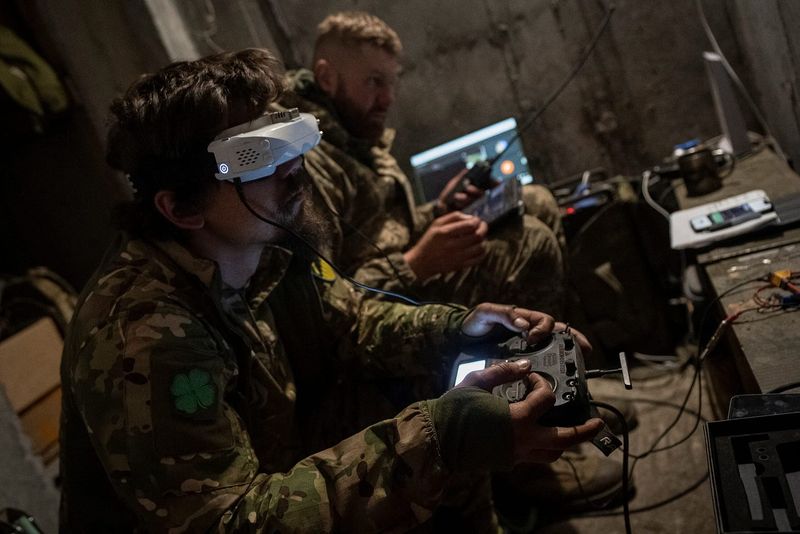
What Avengers Labs is: 5 million battlefield frames from the DELTA combat system
Avengers Labs is run by Ukraine’s Ministry of Defence, and its raw material is the war itself. According to both ministries, the platform is built on an annotated dataset of 5 million battlefield frames — still images drawn from combat footage, labelled so that machine-learning models can learn to recognise vehicles, weapons, positions and movement. Most of that imagery comes from unmanned systems, and most of it arrives through DELTA, Ukraine’s combat management system, which fuses feeds from drones and other sensors into a single operational picture used by Ukrainian units.
That pipeline is what makes the dataset different from anything a peacetime military can generate on a training range. Military AI training data is only as good as the variety and realism of what the model has seen, and Ukraine battlefield AI data has been collected across seasons, terrain, weather, camouflage patterns and electronic-warfare conditions, against an adversary that adapts its own tactics month by month. Annotation is the unglamorous half of the work — someone, or some assisted process, has to mark what is actually in each frame before a model can learn from it — and 5 million annotated frames represents an accumulation no exercise programme in Europe could replicate on any realistic budget or timeline. The ministries’ figure has not been independently audited, and this article treats it as ministry-stated throughout; but the structure of the claim is consistent with how DELTA has been described since it became the Ukrainian military’s standard situational-awareness tool.
Why annotated combat data is the scarce asset in military AI
Algorithms are not the bottleneck in defence AI; labelled data is. Any competent research team can train a detection model — the hard part is feeding it enough real examples of the thing it must detect, in the conditions in which it must detect it. Ukraine AI weapons development has therefore produced an asset that cannot be bought off the shelf: a deep, continuously refreshed library of what modern battlefield targets actually look like from a drone’s camera. Avengers Labs is the mechanism Kyiv has built to share that asset selectively, with partners, without handing over the library itself.
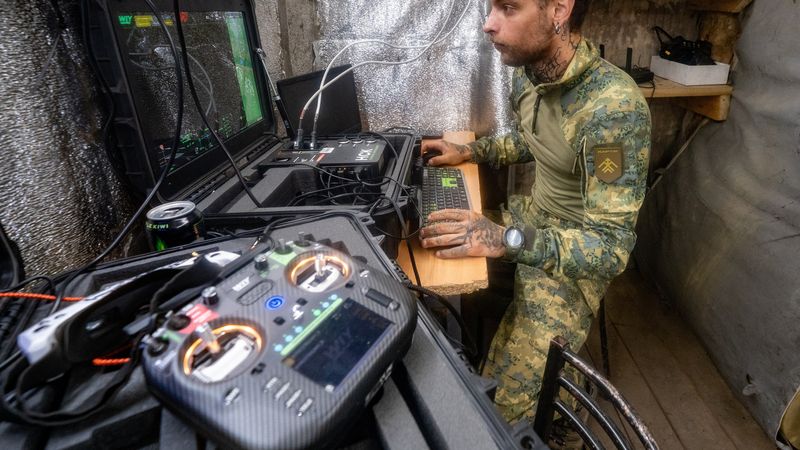
What Denmark gets: its own models, trained inside a secure environment
The access Denmark has signed for is specific, and its limits are as important as its scope. Under the agreement, Denmark will train its own AI models on the Avengers Labs platform and co-develop new models together with Ukraine. Danish specialists will work inside a secure environment — but without direct access to the underlying dataset. In practical terms, Danish models can learn from the 5 million frames; Danish personnel cannot download, copy or walk away with them. That architecture protects Ukraine’s most sensitive raw material while still letting a partner extract its training value, and it is likely to become the template for how Kyiv shares battlefield data with allies.
Implementation on the Danish side will run through the Danish Armed Forces’ newly established AI Centre, and Danish industry and research institutions are invited to take part — a structure that spreads the work across the military, universities and Denmark’s defence-technology sector rather than confining it to a single classified programme. Denmark is among the first partners admitted to the platform; the United Kingdom was the first international partner. For a country of Denmark’s size, early access matters: the Danish Defence AI Centre starts its life training on combat data that larger allies are still negotiating to reach.
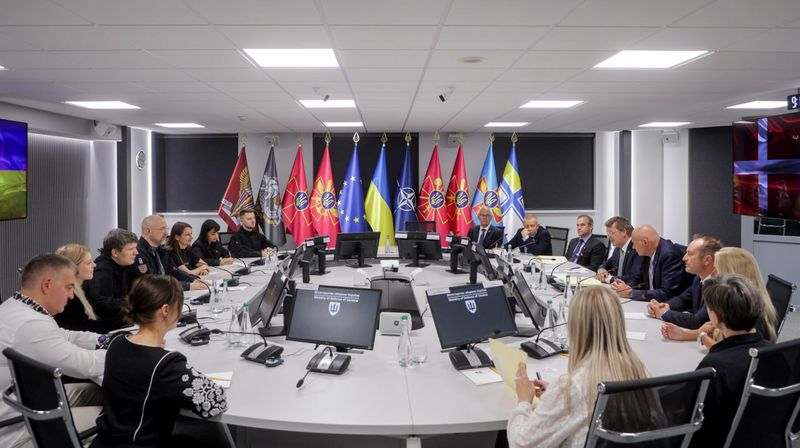
Why now: a jet-drone speed race and a Ramstein air-defence agenda
The timing is not incidental. The letter of intent was signed on the sidelines of a Ramstein-format meeting — the Ukraine Defense Contact Group framework through which Kyiv’s partners coordinate military aid — at a moment when air defence dominates the agenda. Signal Post News has covered how Ramstein partners have been weighing Patriot deployments and air-defence deliveries for Ukraine, and how EU defence commissioner Andrius Kubilius has warned of Russia’s ballistic-missile stockpiles in the same debate. Bruus and Khmara’s own agenda reflected that priority: alongside the AI documents, the two ministers discussed faster delivery of air-defence equipment and possible additional Danish support for air defence and unmanned systems.
The sharpest pressure is speed. Ukrainian lawmaker Fedir Venislavskyi, speaking to RBC-Ukraine on November 18, said Russia is flight-testing jet-powered Geran-6 drones reported to reach up to 1,000 km/h, with jet-powered Gerans more broadly flying at between 500 and 1,000 km/h. In the same Kyiv assessment, Ukraine stops roughly 60 per cent of jet-powered Geran-4s, compared with more than 90 per cent of the slower Shahed-type drones. Those figures are a Ukrainian lawmaker’s account, reported by RBC-Ukraine; they have not been independently confirmed, and they are presented here strictly as Kyiv’s assessment. But even as an assessment, they describe the problem AI is being recruited to solve: as incoming drones get faster, the time available for a human operator to detect, classify and engage them shrinks, and automated recognition trained on real imagery becomes a frontline necessity rather than a research luxury. AI interceptor drones — unmanned systems that hunt other drones — are exactly the class of weapon whose performance depends on models trained to pick a fast, small target out of a cluttered sky in fractions of a second.
The hardware war and the data war are running in parallel. Ukraine’s long-range drone campaign has, by Kyiv’s account and independent estimates, nearly halved Russia’s oil-refining capacity, demonstrating what unmanned systems at scale can do; the defence-AI race is about making those systems — and the systems built to stop them — faster at seeing. Denmark’s €645 million aid package, as reported by The Defender and EuropeSays, sits in the same frame: Copenhagen is funding Ukraine’s defence while simultaneously buying itself a seat inside Ukraine’s data infrastructure.
Why this matters
Ukraine is flipping from aid recipient to technology exporter
For most of the war, the flow of military value ran one way: allies sent Ukraine equipment, ammunition and money. The Avengers Labs agreements reverse a portion of that flow. Ukraine is now supplying something its partners cannot manufacture for themselves — combat-proven training data — and partners are reorganising to receive it, standing up institutions like the Danish Defence AI Centre to absorb it. That does not diminish what Ukraine still needs from its allies, and Kyiv is explicit that air-defence deliveries remain urgent. But a country that exports a scarce strategic input negotiates differently from one that only requests aid, and every additional Avengers Labs partner deepens the constituency with a direct institutional stake in Ukraine’s data infrastructure surviving and improving.
A learning loop NATO has never had before
Alliance militaries have always studied each other’s wars from the outside. The Avengers Labs model is different: partner specialists train models inside the system, on data generated by an ongoing war, and co-develop new models with the military generating it. If the model works as designed, lessons that once took years of after-action review move into allied AI development in something closer to operational time. The UK’s earlier admission as first international partner, and Denmark’s now, suggest a queue is forming — and each new partner increases the platform’s value to all the others, because co-developed models and shared standards compound.
The limits are real, and they are in the documents
None of that should be read past what was actually signed. The letter of intent is a political document, not a legally binding one. No funding figure, timeline or budget for the AI cooperation itself has been disclosed by either ministry — the €645 million package reported by The Defender and EuropeSays is defence aid, not an Avengers Labs budget line. The 5 million frames figure is ministry-stated and unaudited. And secure-environment access, by design, means Denmark’s gains depend on the platform’s continued operation and on Kyiv’s willingness to keep the door open. What has been signed is an intention and an access agreement, not a finished capability: the Danish models that this pact makes possible do not exist yet.
What happens next
The practical work now moves to the Danish Armed Forces’ AI Centre, which must stand up the secure-environment workflow, select the first Danish models to train on the platform, and bring the invited industry and research partners into a classified-adjacent programme without slowing it down. Watch for three signals that the pact is becoming capability rather than communiqué: the first named Danish co-developed model, any disclosure of funding or staffing for the AI Centre’s Ukraine work, and further partner admissions to Avengers Labs following the UK and Denmark. On the Ukrainian side, the test is whether the platform’s partner tier expands faster than the security risks of widening access to the DELTA-fed dataset. And over everything hangs the threat that made the timing urgent: if Kyiv’s assessment of jet-powered Geran drones is borne out, the interception-rate gap Venislavskyi described will widen the premium on exactly the kind of AI this pact is meant to produce — trained on the real sky, by the people fighting under it.
Sources
- Danish Ministry of Defence, November 17, 2026 — announcement that Defence Minister Jeppe Bruus and Ukrainian Defence Minister Yevhenii Khmara signed a declaration on closer defence-AI cooperation, and that Danish Defence signed a separate agreement giving Denmark direct access to Ukraine’s Avengers Labs platform; implementation through the Danish Armed Forces’ newly established AI Centre, with Danish industry and research institutions invited; Danish specialists to work in a secure environment without direct access to the underlying dataset.
- Ministry of Defence of Ukraine, November 18, 2026 — statement that a letter of intent on strategic defence AI cooperation was signed on the sidelines of a Ramstein-format meeting and confirming Denmark’s access to Avengers Labs; Avengers Labs described as built on an annotated dataset of 5 million battlefield frames, most from unmanned systems via the DELTA combat system; Denmark among the first partners, after the United Kingdom as first international partner.
- Nordic Defence Sector, November 2026 — reporting on the Danish ministry’s announcement of the Bruus–Khmara declaration and the Danish Defence access agreement for Avengers Labs.
- The Defender, November 2026 — reporting on the Danish-Ukrainian defence-AI agreements and on Denmark’s prepared defence aid package for Ukraine totalling €645 million.
- Defense Mirror, November 2026 — reporting, citing the Danish Ministry of Defence, on the declaration on defence-AI cooperation and Denmark’s access to the Avengers Labs platform.
- RealUA, November 18, 2026 — reporting on Ukraine’s Ministry of Defence statement on the letter of intent signed at the Ramstein-format meeting; also carried by h.ua / Ukrinform and EuropeSays, the latter also reporting the €645 million Danish aid package.
- RBC-Ukraine, November 18, 2026 — Ukrainian lawmaker Fedir Venislavskyi’s assessment that Russia is flight-testing jet-powered Geran-6 drones reported at up to 1,000 km/h, that jet-powered Gerans fly at 500–1,000 km/h, and that Ukraine intercepts roughly 60 per cent of jet-powered Geran-4s versus more than 90 per cent of slower Shaheds. Presented in this article as a Kyiv assessment only; no independent confirmation.
- Signal Post News, related coverage: Ramstein Air Defence: Britain and Germany Weigh Patriot Moves for Ukraine; EU’s Kubilius on Russia’s Ballistic Missiles and the Patriot Swap; Ukraine’s Drones Nearly Halve Russia’s Oil Refining.
- Photos: file photos — Ukrainian FPV drone operators in a concrete shelter, via Substack / Defense Blog OSINT; Ukrainian operator at a battle-map laptop, AP via ABC News; Ukrainian and Danish defence officials meeting at Ukraine’s Ministry of Defence, ArmyInform; Ramstein-format Ukraine Defense Contact Group meeting, German Federal Ministry of Defence (BMVg). None depicts the November 17–18, 2026 signings.