War · Ukraine · Air Defence
Ukraine air defence missiles dominated the 37th Ramstein meeting in Brussels on Tuesday: Britain announced a £240 million package built around more than 1,000 additional short-range missiles, and Germany committed $300 million to buy Patriot interceptors for Ukraine. The pledges landed hours after Russian missiles struck both of Kyiv’s Dnipro bridges — and the same meeting produced an open argument, when the Pentagon’s policy chief questioned Ukraine’s deep strikes into Russia and Germany’s and Britain’s defence ministers rejected the criticism in front of him.
Track it live: Ukraine war map tracker
BRUSSELS, November 17, 2026 — The Ukraine Defence Contact Group — the Ramstein format that has coordinated Western military aid to Kyiv since 2022 — held its 37th meeting on Tuesday at NATO headquarters in Brussels, bringing together representatives of some 50 nations. The session was co-chaired by Britain’s Defence Secretary, Wes Streeting, and Germany’s Defence Minister, Boris Pistorius, and its centre of gravity was the problem that has defined Ukraine’s war this autumn: how to keep Russian missiles and drones from getting through, in a winter when Moscow is striking the infrastructure Ukrainians heat and light their homes with. By the end of the day, the two co-chairs had put the two halves of that problem on the table in cash terms — volume at the low end, from Britain, and scarce high-end interceptors, funded by Germany, at the top.
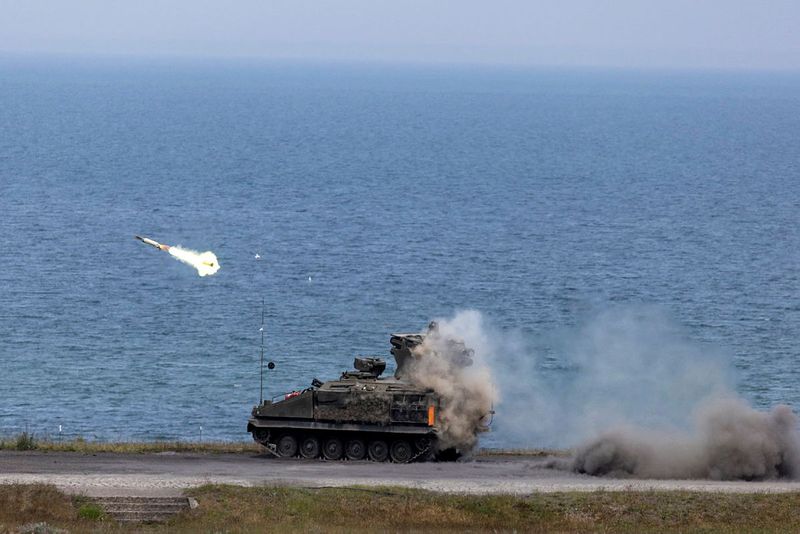
Britain’s £240 million package: more than 1,000 missiles, and radars
Britain’s contribution, set out in an official GOV.UK release, is a £240 million air-defence package — about $317 million at the rate Reuters cited — drawn from a £500 million budget pledge. Its centrepiece is more than 1,000 additional short-range missiles, supplied with their launchers, together with more than 12 air-defence radars. The missiles are made by Thales in Belfast, and the government describes them as proven against the jet-powered Shahed-type drones Russia has been sending against Ukrainian cities in growing numbers. Deliveries are to begin in mid-December, and they come on top of 400 missiles Britain says it has already supplied ahead of winter. Prime Minister Andy Burnham is to outline the remaining British support on Thursday, at a meeting of the Coalition of the Willing.
The composition of the package is the point. Short-range missiles and radars do not stop ballistic missiles, and no one in Brussels pretended otherwise on Tuesday. What they stop — in numbers, and at a cost per shot that a defence ministry can sustain night after night — is the drone traffic that makes up the bulk of Russia’s strike volume and that wears down the more capable systems behind it. A radar finds the incoming drone earlier; a short-range missile kills it without spending an interceptor that costs orders of magnitude more and exists in far smaller numbers. Britain’s package is aimed squarely at that arithmetic.
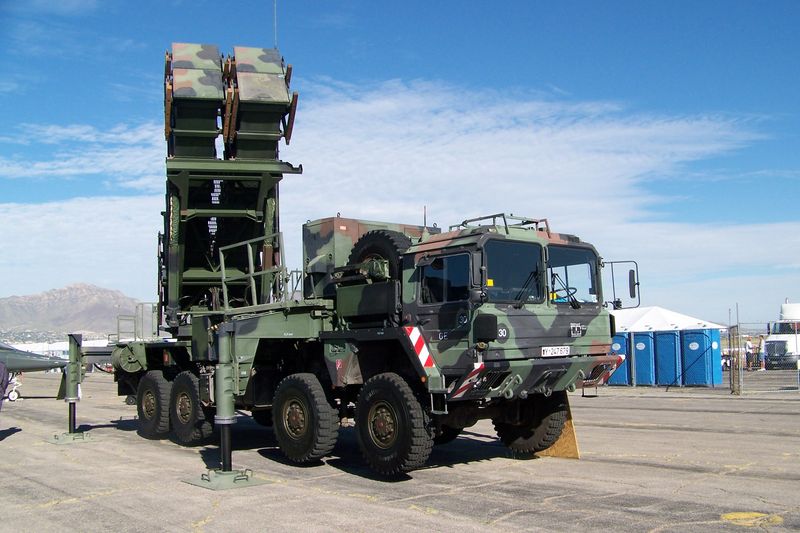
Germany and Norway: $300 million for Patriot interceptors
The high end of the problem was Germany’s. Berlin is contributing $300 million through the PURL mechanism — the arrangement under which European allies pay for American weapons drawn for Ukraine — in what is Germany’s fifth PURL package. Norway co-sponsors the package; Reuters reported no separate Norwegian figure, and none is stated here. The money is focused on PAC-2 and PAC-3 Patriot interceptors, the two variants of the one Western system Ukraine fields that can engage ballistic missiles in their terminal phase. Alongside the Patriot funding, Germany is working to integrate its IRIS-T missiles with Norway’s NASAMS launchers — a pairing that would let two European systems share ammunition and fire units — and the package also covers additional radars, drone ammunition and fighter-jet ammunition.
Patriot interceptors sit at the opposite end of the cost curve from Britain’s Belfast missiles, and that is precisely why they are bought this way. A single PAC-3 interceptor costs several times what the short-range missiles cost by the hundred, production is limited, and every air force that operates Patriot is competing for the same output. PURL exists to solve the political version of that problem: the weapons are American, the production lines are American, but the bill, under this arrangement, is European. Germany’s $300 million is the fifth time Berlin has written that cheque.
The night before: Kyiv’s bridges, and Crimea’s
The urgency in the room had a date and a target list. Overnight, Russia struck Kyiv’s Northern and Southern bridges — the two crossings that carry the capital across the Dnipro — partially damaging the metro and causing power outages across eight regions, according to Ukraine’s Deputy Energy Minister, Artem Nekrasov, as reported by Reuters. Signal Post News reported that strike in full in Russia Hits Both of Kyiv’s Dnipro Bridges With Seven Ballistic Missiles. Ukraine, for its part, struck the Crimean Bridge for a second consecutive day — the attack President Volodymyr Zelenskyy later confirmed as the seventh stage of a weeks-long operation, in Zelenskyy Confirms Crimean Bridge Attack as the Seventh Stage of a Weeks-Long SBU and General Staff Operation, following the second strike itself, covered in Crimean Bridge Second Strike Collapses a Road Section and Halts Traffic Again. Bridges, in other words, were what both sides were hitting while the ministers met — Kyiv’s bridges as targets of the campaign Ukraine’s air defences exist to defeat, and Russia’s bridge to Crimea as the emblem of the Ukrainian strike campaign that was about to be argued over in the Ramstein room itself.

Washington questions the deep strikes; Berlin and London push back
The meeting’s sharpest moment was not about air defence at all. Elbridge Colby, the Pentagon’s policy chief, who joined the Ramstein session, criticised Ukraine’s deep strikes on Russian oil infrastructure and commercial warehouses, arguing — as Reuters reported — that they have been ineffective and risk hardening Russian resolve. The public conversation, Colby said, focuses on “the spectacle of deep strikes designed to incur pain on the Russian population.” The American assessment, he said, is that such strikes “have not been effective in driving an end to the war, nor do they contribute to blunting Russia’s advances on the front line,” and that strikes on civilian infrastructure such as Wildberries warehouses have “probably hardened the Russian public’s resolve and the Kremlin’s own willingness to escalate.” Wildberries is a Russian e-commerce company; its warehouses were named by Colby in making his argument, and Signal Post News does not present strikes on those warehouses as independently verified findings of this newsroom.
Pistorius rejected the criticism directly. Criticising strikes on strategic military and military-used targets inside Russia was, he said, “quite a stupid thing” to do; the criticism, he argued, belonged instead on Russia’s nightly strikes against energy, water and heating infrastructure in Ukraine — “This is kind of terrorism.” Streeting took the same line for Britain: Ukraine’s strikes, he said, “helped to degrade Putin’s war machine, buying time and saving lives.” Ukraine’s Defence Minister, Yevhenii Khmara, said Ukraine’s strikes were a response to Russian attacks from October, citing in particular the assault on the Russian-built Crimea bridge. Colby also said, as reported by the Kyiv Independent’s Ramstein coverage, that Ukraine had for a second consecutive month liberated more territory than Russia captured and that Russian forces had suffered their heaviest monthly losses of the full-scale war — a statement attributed here to Colby, as he made it. Signal Post News presents each of these positions as its speaker stated it; the disagreement itself, conducted in public by the allies arming Ukraine on the day they armed it further, is the verified fact.
Colby’s second message: troops, timelines and American firms
Colby’s presence carried a second, quieter agenda, also reported by Reuters. The United States is reviewing its troop levels in Europe, and Colby expressed hope that a December 1 deadline connected to that review would be met, with clarity expected within weeks — a matter of direct consequence for Germany, which hosts some 35,000 American troops. He also cautioned European NATO allies against shutting American firms out of weapons deals, as European governments move to build up their own defence industries. Read together, the two threads of Colby’s day describe the terms Washington is setting for the next phase of the alliance’s war effort: European money, on a much larger scale than before, is now the engine of Ukraine’s supply — but Washington intends its own firms, and its own judgement about how the war should be fought, to remain at the centre of the arrangement. Tuesday’s pledges, and Tuesday’s argument, were both made inside that frame.
Why this matters
Ukraine’s air-defence problem is two problems wearing one name, and Tuesday’s package is best understood as the allies finally funding both of them in the same afternoon. The first problem is volume: waves of inexpensive drones, increasingly jet-powered and fast, that must be killed in large numbers without bankrupting the defender. Britain’s answer — more than 1,000 Belfast-built missiles, launchers and a dozen-plus radars, on top of 400 missiles already sent — is a volume answer, and its economics are the strategy: every Shahed killed by a short-range missile is a Patriot or NASAMS interceptor still in its canister for the target that only it can stop. The second problem is scarcity: ballistic missiles, of the kind that hit Kyiv’s bridges overnight, can be engaged by very few systems, and the interceptors for those systems are expensive, slow to produce and globally competed for. Germany’s $300 million of PURL funding for PAC-2 and PAC-3 rounds is a scarcity answer — European money converted, through an American mechanism, into the one class of weapon Ukraine cannot make or buy anywhere else.
The timing gap is the package’s honest weakness, and it was visible from the room. Britain’s deliveries begin in mid-December. The strikes they are meant to answer are happening now, in November, against heating and power infrastructure at the start of a Ukrainian winter — the eight regions that lost power overnight are the standing illustration. Who benefits from Tuesday’s decisions is therefore a question with two different clocks. In December and after, Ukraine’s defenders gain depth: more cheap shots at drones, more Patriot rounds for ballistic threats, more radars to see both coming. In the weeks before the deliveries land, the benefit runs to Russia’s campaign, which faces the air-defence inventory Ukraine already has and no more. And in the politics of the alliance, the day produced a third ledger: a public, attributed disagreement between Washington and its two biggest European backers over the legitimacy of Ukraine’s own strike campaign — conducted not in a leak or a briefing war, but in the Ramstein room, on the record, on the day the cheques were signed.
What happens next
The next fixed point is Thursday, when Prime Minister Andy Burnham outlines the remainder of Britain’s support at the Coalition of the Willing — the venue where the £240 million package’s place inside the wider £500 million pledge, and whatever accompanies it, should become clear. The second is Washington’s troop review: Colby’s hope of a December 1 deadline met and clarity within weeks gives European capitals — Berlin above all, with 35,000 American troops on its soil — a dated test of how far the American footprint in Europe is about to shrink, and how much of the burden Tuesday’s format will have to carry permanently. The third is the delivery pace itself: whether the Belfast missiles begin arriving in mid-December at a rate that changes the nightly arithmetic over Ukrainian cities, and whether Germany’s fifth PURL package moves Patriot interceptors at the speed the bridge strikes argue for. The evidence to watch is specific: Burnham’s Thursday outline, the first delivery announcements out of London and Berlin, and any restatement — or softening — of the positions Colby, Pistorius and Streeting took on Tuesday. The missiles are pledged. The argument about how Ukraine should fight is not settled, and neither, yet, is the winter. Follow Signal Post News for updates from Brussels, Kyiv and London, and share your thoughts below.
Sources
Reuters, November 17, 2026 — reporting on the 37th Ukraine Defence Contact Group meeting at NATO headquarters in Brussels: the UK £240 million ($317 million) air-defence package and its place in the £500 million pledge; Germany’s and Norway’s $300 million PURL contribution and its PAC-2 and PAC-3 focus; the IRIS-T and NASAMS integration work; and the overnight Russian strikes on Kyiv’s Northern and Southern bridges, the partial metro damage and power outages in eight regions, attributed to Deputy Energy Minister Artem Nekrasov. Reuters, November 17, 2026 — “German minister rejects US criticism” reporting on the Ramstein deep-strikes dispute: Elbridge Colby’s assessment of Ukraine’s deep strikes, including the “spectacle of deep strikes” and Wildberries warehouse passages; Boris Pistorius’s rejection, including “quite a stupid thing” and “This is kind of terrorism”; Wes Streeting’s statement that the strikes “helped to degrade Putin’s war machine, buying time and saving lives”; and Yevhenii Khmara’s response citing Russian attacks from October and the Crimea bridge. Reuters, November 17, 2026 — “Pentagon’s Colby warns NATO allies” reporting: Colby’s caution against excluding US firms from weapons deals; the US troop-level review in Europe, the hoped-for December 1 deadline and clarity within weeks; and the roughly 35,000 US troops hosted by Germany. GOV.UK, November 17, 2026 — the official UK release for the £240 million air-defence package: more than 1,000 additional short-range missiles and launchers, more than 12 air-defence radars, the Thales Belfast missiles’ record against jet-powered Shahed drones, deliveries beginning mid-December on top of 400 missiles already supplied ahead of winter, and Prime Minister Andy Burnham’s Thursday Coalition of the Willing outline. Kyiv Independent, November 17, 2026 — Ramstein coverage: Colby’s statement that Ukraine had for a second consecutive month liberated more territory than Russia captured and that Russian forces had suffered their heaviest monthly losses of the full-scale war, attributed to Colby as reported. Photographs are file photos via Wikimedia Commons (Mark Holloway, CC BY 2.0; Ad Meskens, CC BY-SA 4.0; UK Ministry of Defence / Corporal Watson, Open Government Licence 3.0), as credited; no photograph in this article depicts Tuesday’s meeting or the overnight strikes.