Britain sanctioned 15 senior commanders from both sides of Sudan’s war on Monday, accusing them of atrocities including conflict-related sexual violence during and after the fall of El Fasher — exactly one year after the North Darfur capital was captured following an eighteen-month siege. The UK sanctions on Sudan commanders from the Rapid Support Forces (RSF), the Sudanese Armed Forces (SAF) and armed groups allied to the army impose travel bans and asset freezes, and were announced alongside £5 million for survivors of sexual violence and a £10 million humanitarian package. The move follows UK-funded investigations that London says document a campaign of deliberate starvation and sexual violence by all sides in the conflict.
Track it live: Sudan and the world’s conflicts on our live wars tracker.
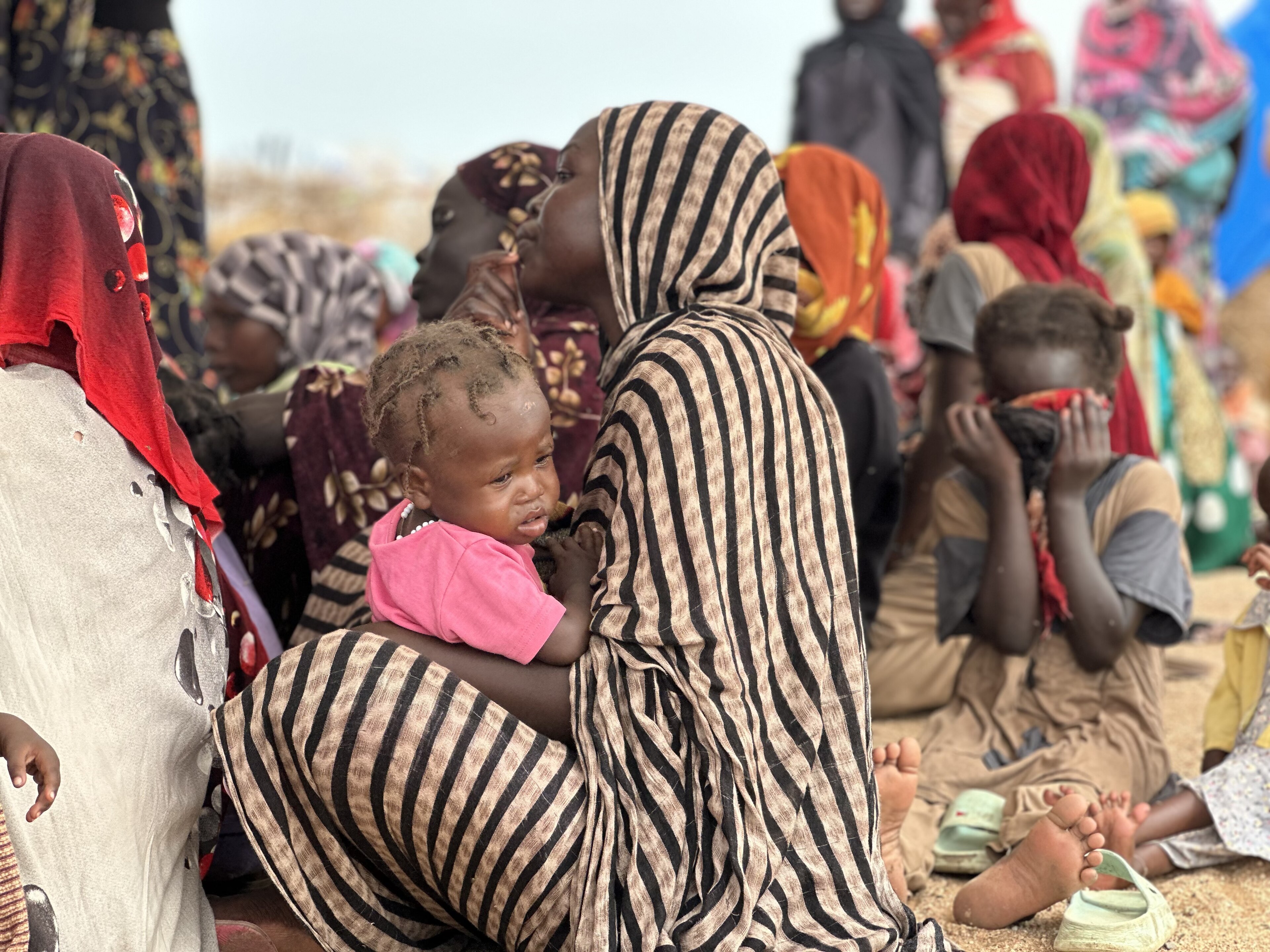
What London announced on Monday
The Foreign, Commonwealth and Development Office said 15 senior commanders from both the RSF and the SAF have been sanctioned for suspected atrocities, including conflict-related sexual violence, with travel bans and asset freezes taking effect immediately. Reuters, reporting the same announcement, described those designated as military commanders, militia leaders and security officials from both sides of Sudan’s conflict, accused of waging sexual violence, torture and attacks on civilians. The designations are the sixth UK sanctions round tied to Sudan’s war, after five previous rounds that targeted suspected perpetrators and the networks supporting them.
Two names were given in the announcement. Hussein Abu Jalak, an RSF colonel, was described as linked to atrocities during the siege of El Fasher. Al-Nour Ahmed Adam, known as “Al-Qubba,” was identified as present and playing a prominent role in besieging and attacking the city. The full list of 15 was not reproduced in the government’s press release; the measures against each designee ban them from entering the UK and freeze any assets within its reach.
Foreign Secretary Ed Miliband framed the package as a response to evidence gathered over the year since the city fell. “The war in Sudan has created a humanitarian catastrophe,” he said. “A year on from the atrocities in El Fasher, UK-funded investigations have shown that rape and starvation are still being weaponised against the people of Sudan. These are crimes against our humanity — the perpetrators must be held accountable and support from all external backers to the warring parties must end.”
The city the names are tied to
El Fasher, the capital of North Darfur, was the Sudanese army’s last major stronghold in Darfur when it fell to the RSF on October 26, 2025, after an eighteen-month siege that starved hundreds of thousands of civilians. In the days that followed, the UK government says, civilians were massacred, women and girls were subjected to horrific sexual violence, and entire communities were devastated. Signal Post News has covered the siege’s aftermath in depth, including a BBC investigation into the RSF’s hospital attacks in El Fasher and the UN human rights chief’s finding that drone strikes have killed hundreds of civilians across Sudan this year.

The war itself began in April 2023, when the uneasy partnership between the SAF, led by General Abdel Fattah al-Burhan, and the RSF, led by Mohamed Hamdan Dagalo — known as Hemedti — collapsed into open fighting. Darfur carries a particular weight in that history: the RSF grew out of the Janjaweed militias accused of genocide in Darfur two decades ago, and El Fasher’s fall was widely read as the moment the region’s earlier catastrophe repeated itself in a new form. Monday’s package is built explicitly on that anniversary — London is using the date to argue that what happened at El Fasher was not a single spasm of violence but a method of war that continues.
What the UK-funded investigation found
The sanctions rest on new reporting by the Centre for Information Resilience (CIR), funded by the UK, which the government summarised as revealing a campaign of systematic starvation and conflict-related sexual violence against civilians by both sides of the conflict. According to the Foreign Office account of the CIR findings, the tactics documented during the El Fasher siege are still being deployed across Sudan a year later: siege tactics, drone attacks on civilian infrastructure and humanitarian operations, and the systematic obstruction of aid are all regularly used as weapons of war. CIR-sourced footage, the government said, shows RSF fighters discussing shutting off water supplies to El Fasher and preventing traders from bringing food into the city. The reporting describes women and girls being abducted, repeatedly raped, and held in conditions amounting to sexual slavery.
That evidentiary basis matters to how the package should be read. These are sanctions built on open-source investigation — geolocated footage, satellite imagery and survivor testimony assembled outside a courtroom — rather than on a judicial finding. Nobody named on Monday has been convicted of the acts described, and the UK’s own wording is careful: the commanders are sanctioned for suspected atrocities. Supporters of the approach argue that waiting for courts, in a war where investigators cannot safely operate, would mean waiting forever. Critics of sanctions-led accountability make the opposite point: that designation without trial can become a substitute for the harder work of building prosecutions, and that its practical bite depends entirely on whether the men named hold anything within reach of the freezing order.
Why this matters
The significance of Monday’s package is less its size than its symmetry. Britain’s most prominent previous El Fasher round, in December 2025, sanctioned four RSF commanders — including Hemedti’s brother and deputy, Abdul Rahim Hamdan Dagalo — and was criticised at the time by members of the UK’s Darfur diaspora for aiming at one side while saying nothing about the army’s own record or about the RSF’s external backers. This time, London has designated commanders of the SAF and of army-allied militias alongside the RSF. That is a diplomatic statement as much as a legal one: the UK is formally recording that its investigators found starvation and sexual violence used as weapons by all sides, in a war where outside governments have often found it more convenient to condemn one belligerent and court the other.
It also lands in a crowded accountability landscape that has so far produced more documentation than consequences. The UN Security Council’s own Sudan sanctions regime was extended earlier this month — a separate instrument from Monday’s national designations, as our coverage of the UN Sudan sanctions extension explains — and international investigators have catalogued atrocities in Darfur in granular detail. What none of those processes has yet done is alter the behaviour of the forces still fighting. Miliband’s statement reached, implicitly, for the lever sanctions alone cannot pull: his insistence that “support from all external backers to the warring parties must end” is aimed at the foreign governments and networks that keep both armies supplied — none of which were named, and none of which were sanctioned on Monday.
Money for survivors, money for aid
Alongside the designations, the UK allocated £5 million specifically to support survivors of conflict-related sexual violence in Sudan, funding sexual and reproductive healthcare, maternal health services, psychosocial support and safe spaces for women and girls. A further £10 million will support the humanitarian response as famine risk rises, driven, London said, by attacks on markets, health facilities and displacement camps, obstruction of aid, and El Niño-induced drought. The package is aimed in part at clean water and sanitation in displacement sites around Tawila — the North Darfur town that became the main refuge for people fleeing El Fasher — and at health, protection and other essential services in El Obeid, the North Kordofan capital where civilians face acute needs.
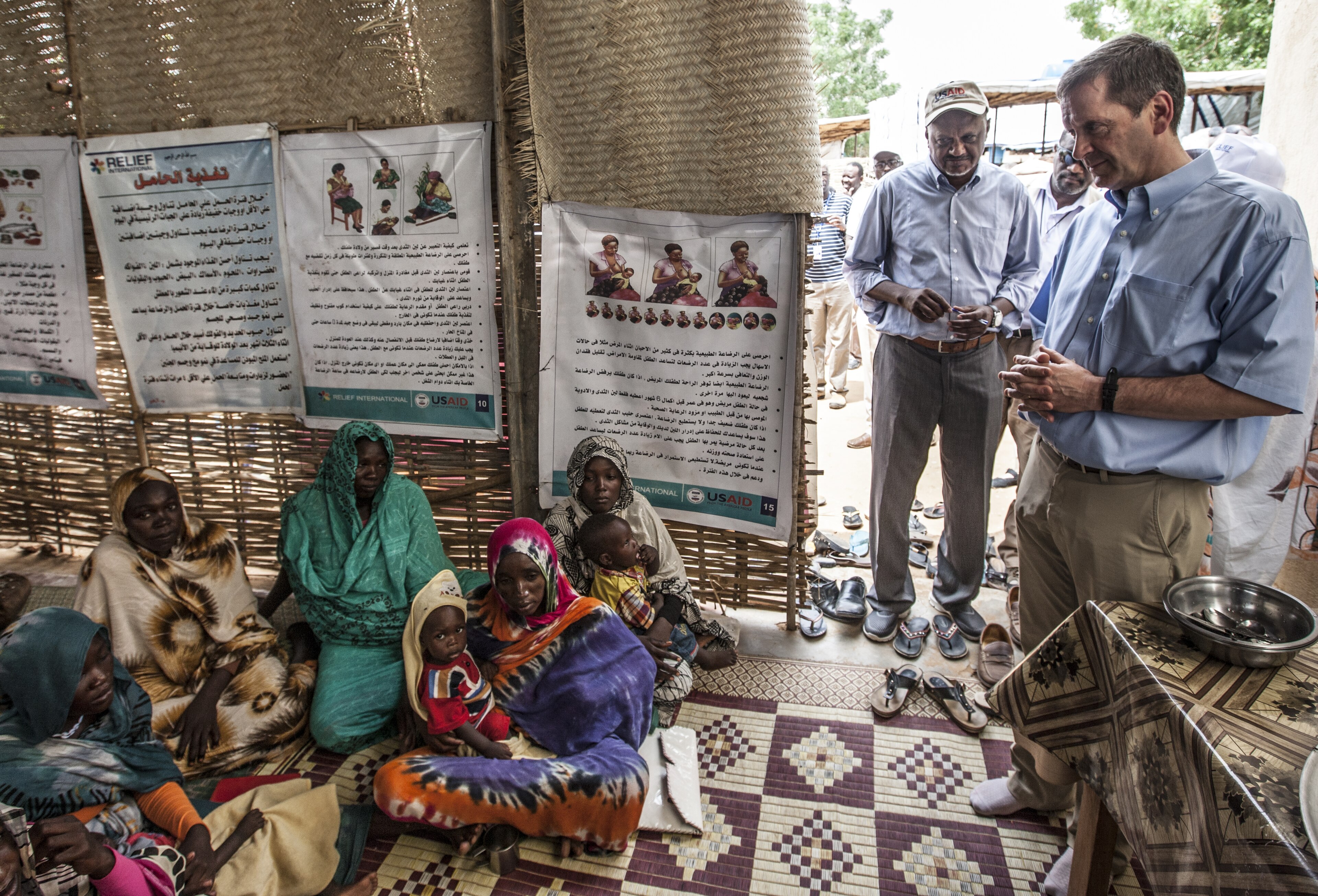
The numbers deserve context. £15 million is real money delivered through organisations that know how to spend it, and survivor services in Darfur are chronically the first thing cut and the last thing funded. Set against the scale of Sudan’s collapse, though — the world’s largest displacement crisis, with famine conditions already confirmed in parts of Darfur and Kordofan — it is a signal, not a solution. Miliband himself located the decisive variable elsewhere: “El Niño may worsen an already desperate situation, but whether famine takes hold is in the hands of the RSF and SAF — they must stop attacking aid convoys and let food reach communities.” In other words, the same two organisations whose commanders were sanctioned on Monday control whether the aid announced alongside the sanctions can move at all.
What happens next
Three tests will show whether this round is different from the five before it. The first is reaction: neither the RSF nor the SAF had responded in the reporting available at publication, and both have historically dismissed sanctions as Western interference while continuing operations — any pause in attacks on aid convoys around Tawila or El Obeid would be the earliest practical evidence of effect. The second is alignment: UK designations bite hardest when the United States, the EU and regional states mirror them, and the full named list of 15, once published in the UK’s official sanctions register, will give other governments a ready-made template to adopt or ignore. The third is the famine decision Miliband described — with El Niño drought compounding the siege economy, the coming weeks will show whether food is allowed to move.
For now, Monday’s package stands as the most explicit official finding yet by a Western government that starvation and rape were used as weapons by both of Sudan’s warring parties — and as a measure of how far documentation still runs ahead of enforcement. The fighting, and the evidence, can be followed on our live Africa wars tracker and the wider live wars tracker.
Sources
UK Foreign, Commonwealth and Development Office, “UK sanctions senior commanders implicated in campaign of rape in Sudan and unveils new support for survivors,” GOV.UK, October 26, 2026 — gov.uk (the 15 designations, Hussein Abu Jalak and Al-Nour Ahmed Adam “Al-Qubba” named, travel bans and asset freezes, the CIR findings as summarised by the Foreign Office, Foreign Secretary Ed Miliband’s statements, the £5 million survivor allocation and the £10 million humanitarian package for Tawila and El Obeid). Reuters, “UK sanctions 15 commanders from rival Sudan factions over wartime rape,” October 26, 2026 — reuters.com (independent confirmation of the 15 designations across the RSF, the SAF and army-allied armed groups, accused of sexual violence, torture and attacks on civilians). UK Parliament written statement HCWS1169 and the December 2025 GOV.UK release (the previous four-commander RSF round, cited for comparison).