The United States is paying to keep an Ebola medicine on the shelf for five more years. Regeneron Pharmaceuticals said on Monday that it has extended its agreement with the Biomedical Advanced Research and Development Authority — BARDA, the US government's medical-preparedness agency — to supply additional doses of its Ebola treatment Inmazeb through 2031, in a deal worth about $270 million, Reuters reported. The Regeneron Ebola treatment deal expands a contract first signed in 2020, and it lands in the middle of the largest and widest Ebola emergency Africa has ever recorded: an outbreak of the Bundibugyo strain that began in the Democratic Republic of Congo in May, has infected nearly 10,000 people and killed more than 4,800 there, according to Reuters, and has now spread to four countries — the widest geographic spread of any Ebola outbreak on the continent to date.
Track it live: Follow case counts and new outbreak alerts on our live disease outbreak tracker.
There is, however, a complication at the heart of the announcement, and it is the reason this contract deserves more scrutiny than a routine procurement notice. Inmazeb is approved for a different Ebola virus from the one driving the current outbreak. Understanding why Washington is buying it anyway — and what Regeneron is testing in parallel — is the real story of this deal.
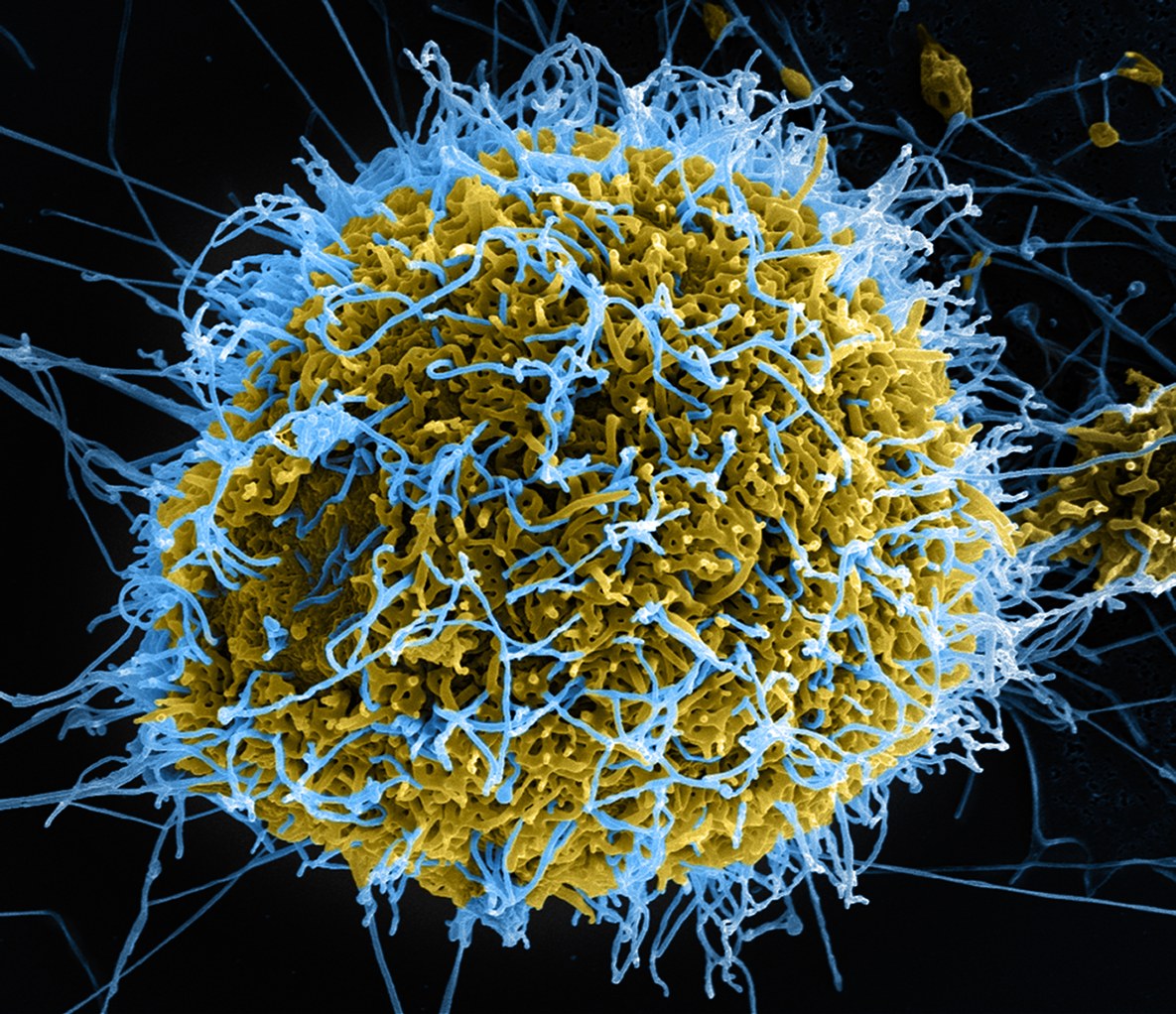
What the $270 million actually buys
The mechanics are straightforward. Under the extended agreement with BARDA — part of the Administration for Strategic Preparedness and Response within the US Department of Health and Human Services — Regeneron will supply doses of Inmazeb through 2031 for about $270 million, expanding the 2020 contract under which the drug entered the US preparedness stockpile, according to Reuters and Dow Jones Newswires reporting of the company's announcement on Monday.
Inmazeb is not a single drug but a cocktail of three laboratory-made antibodies — atoltivimab, maftivimab and odesivimab-ebgn — designed to swarm the virus and block it from entering human cells. The US Food and Drug Administration approved it in 2020 for treating infection caused by Zaire ebolavirus, the species behind the 2014–16 West African epidemic and the 2018–20 Kivu outbreak in eastern Congo. Dow Jones noted the treatment has been administered to hundreds of patients since 2019, spanning its late-stage trials in Congo — where antibody cocktails proved dramatically better than the standard of care of the time — and its stockpiled use since.
Spread across the five years to 2031, the headline figure works out at roughly $54 million a year: real money, but a rounding error against the cost of an uncontrolled hemorrhagic-fever emergency reaching US shores, and modest even beside the sums now being committed elsewhere in outbreak preparedness. Regeneron's co-chair and chief executive, Leonard Schleifer, framed the purchase in exactly those insurance terms. "Maintaining a ready supply of Inmazeb is exactly the kind of preparedness this country needs for the threats we can already see on the horizon," he said, in comments reported by Dow Jones.
The catch: the stockpiled drug does not treat this outbreak's strain
Here is what the contract does not do. The virus devastating Congo this year is not Zaire ebolavirus. It is Bundibugyo ebolavirus, a separate species of the same virus family, first identified in Uganda in 2007. Antibodies are precision instruments: the three antibodies in Inmazeb were selected and engineered against the surface proteins of the Zaire species, and for the Bundibugyo strain there is, as Reuters put it plainly on Monday, no approved specific antiviral treatment and no licensed vaccine. A clinician in Bunia or Butembo today cannot reach for the drug Washington has just paid $270 million to keep in reserve and expect it to work against the cases in front of them.
That mismatch is not a scandal, and it should not be reported as one. Zaire ebolavirus remains the species most likely to produce the next giant epidemic — it caused both of the two largest outbreaks before this one — and a stockpile that let its only proven antibody therapy expire would be a genuine failure of preparedness. But it does mean the deal's value for the emergency actually under way runs through a single molecule. Regeneron said it is testing maftivimab — one of the three antibodies in Inmazeb, and, as Dow Jones reported, the most potent neutralising component of the cocktail — as a potential treatment for Bundibugyo. If a lone antibody from the Zaire cocktail turns out to bind the Bundibugyo virus strongly enough to help patients, the stockpile logic changes entirely: the US would not merely be insured against the last war, but holding a candidate weapon for the current one. If it does not, the gap this outbreak has exposed — a whole Ebola species, now responsible for nearly 10,000 cases, with no approved therapy at all — remains wide open.
Why this matters
The Bundibugyo outbreak has been rewriting the Ebola record books for months, and Signal Post News readers have followed it from its first exported cases: our earlier reporting tracked the moment the Congo death toll passed 4,000, the arrival of the virus in Kenya and then in Nigeria's capital, Abuja. Monday's updated Reuters figures — nearly 10,000 infections and more than 4,800 deaths in Congo alone — imply a case-fatality rate near one in two, in line with Ebola's historic lethality and a reminder that supportive care, delivered early, remains the main thing standing between a patient and death in most treatment units.
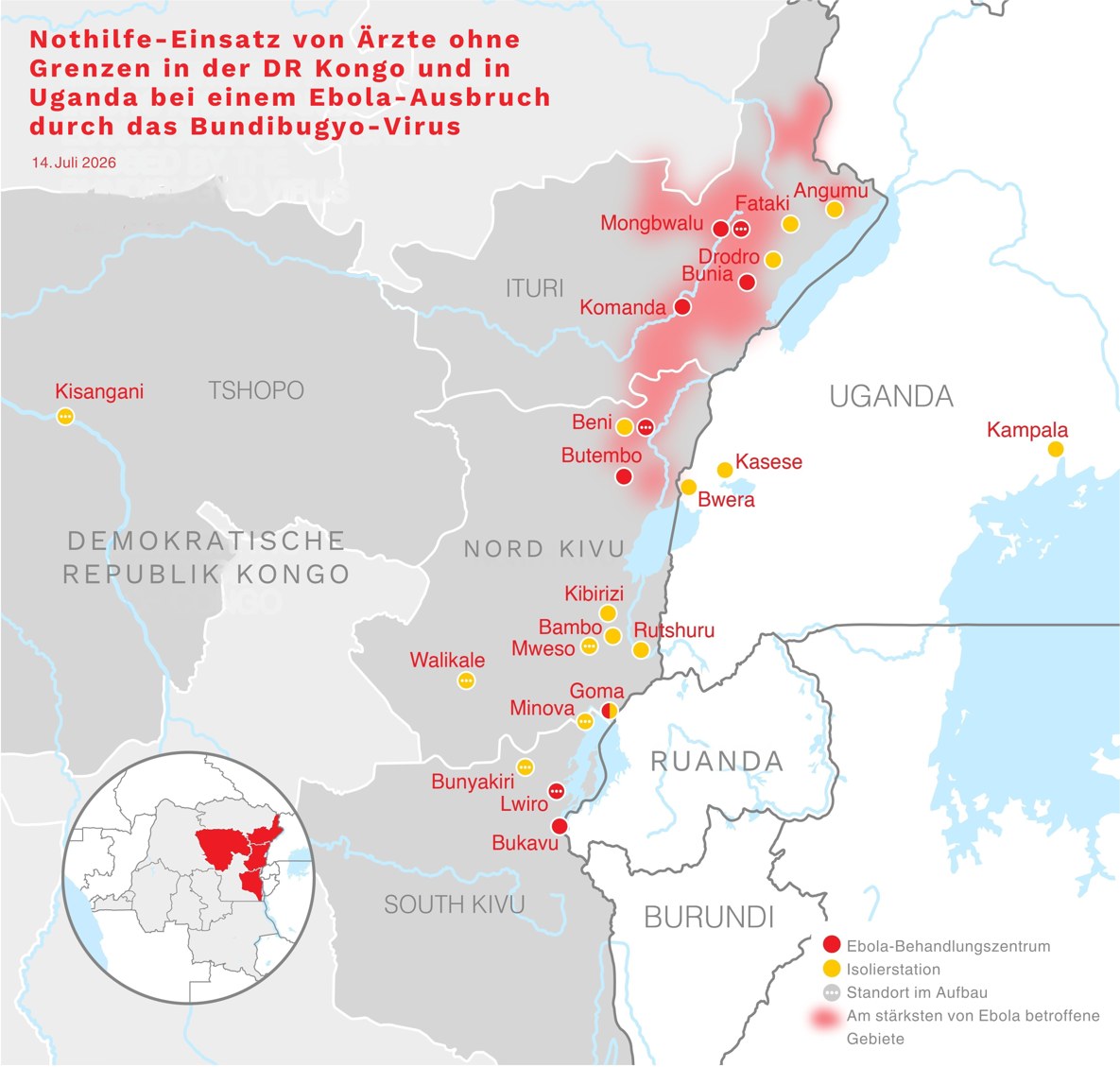
Geography is the other record. Previous Ebola outbreaks, however deadly, stayed comparatively contained: the West African epidemic of 2014–16 was overwhelmingly a three-country event, and the Kivu outbreak never left Congo and a handful of Ugandan border cases. This outbreak, first reported in Congo in May, has now been recorded in four countries across East, Central and West Africa, Reuters reported — the widest spread the continent has seen. Each new border crossing multiplies the number of health systems that must run contact tracing, isolation and safe burials simultaneously, and each one raises the premium on exactly the kind of pre-positioned medicine and pre-agreed science the Regeneron contract represents.
Governments are already behaving as if this will travel further
The contract is one piece of a wider defensive crouch. Dow Jones, reporting the deal on Monday, noted that cases have surfaced in Nigeria and Kenya; that Uganda and Rwanda have clamped down on public events and mass gatherings; that Congo has capped attendance at burials — a traditional transmission flashpoint, because washing and touching the dead can spread the virus — at 20 people; and that the United States has barred entry to noncitizens who have visited Congo, Uganda or South Sudan within the previous 21 days, Ebola's outer incubation window. None of those measures is the behaviour of governments that expect the outbreak to burn out quietly at home.
At the same time, scientists are still arguing about how the virus reached some of the places it has reached. Reuters reported on Monday that an Africa CDC-backed investigation, to be led by Congolese virologist Jean-Jacques Muyembe — a co-discoverer of Ebola itself — will probe the origin of the Nigerian case, after a public disagreement in which Uganda's government insisted the Abuja patient had been in Congo while Nigerian authorities suggested she had not and may have been infected in Uganda, a country declared Ebola-free in August. The team will also examine sequencing data to establish where a Kenyan patient was infected. These are not academic quarrels: if cases are seeding through routes the contact tracers have not mapped, the four-country map of this outbreak may not be finished growing.
Who benefits, and who is still exposed
Regeneron benefits in the most legible way: a guaranteed government buyer, a contract now running to 2031, and a lead candidate — maftivimab — positioned as the frontrunner should a Bundibugyo treatment race begin in earnest. BARDA benefits too, in the currency preparedness agencies trade in: a proven therapy kept in date, and an option on the next one. Patients infected with Zaire ebolavirus in a future outbreak are the deal's clearest human beneficiaries.
The exposed remain the people inside the current outbreak. Congo's responders are fighting the deadliest Ebola epidemic in their country's history without a species-specific drug or vaccine, in provinces where, as this site reported from the weekend's events in Tshopo, health workers have been attacked simply for answering alerts. A $270 million contract signed in Washington does not change a single shift in a Congolese treatment unit this week. What could change it — maftivimab data, a Bundibugyo vaccine programme, sustained funding for the unglamorous work of tracing contacts across four countries — is precisely what Monday's announcement gestures at without yet delivering.
What happens next
Three things will decide how this deal is ultimately judged. First, the science: any readout from Regeneron's maftivimab work against Bundibugyo — even early laboratory or animal data — will tell responders whether a real treatment candidate exists or whether the field starts from zero. Second, the epidemiology: whether the Muyembe-led investigation closes the argument over the Nigerian and Kenyan cases, and whether a fifth country joins the map. Third, the pattern of preparedness spending: if other governments follow Washington in quietly extending stockpile contracts, it will signal that officials now expect this outbreak, or the next species jump, to test borders far beyond Central Africa.
For now, the honest summary is a two-part one. The United States has bought insurance, at a defensible price, against the Ebola it knows how to treat. The Ebola it does not yet know how to treat killed most of the nearly 10,000 people it has infected this year — and it is still spreading. The distance between those two sentences is the story of this outbreak, and Monday's contract, for all its nine figures, closes only a fraction of it.
Sources
Reuters, "Regeneron extends US agreement for additional supply of Ebola treatment" (October 26, 2026) — reuters.com. Dow Jones Newswires via Morningstar, "Regeneron Secures $270 Million U.S. Contract Extension for Ebola Treatment Inmazeb" (October 26, 2026) — morningstar.com. Reuters, "Ebola scientists to probe Nigeria case origin, Africa CDC says" (October 26, 2026) — reuters.com. File photographs: NIAID and Ärzte ohne Grenzen / MSF, via Wikimedia Commons.