Sudan RSF hospital attacks
Track it live: Africa wars tracker · Live war tracker — Signal Post News
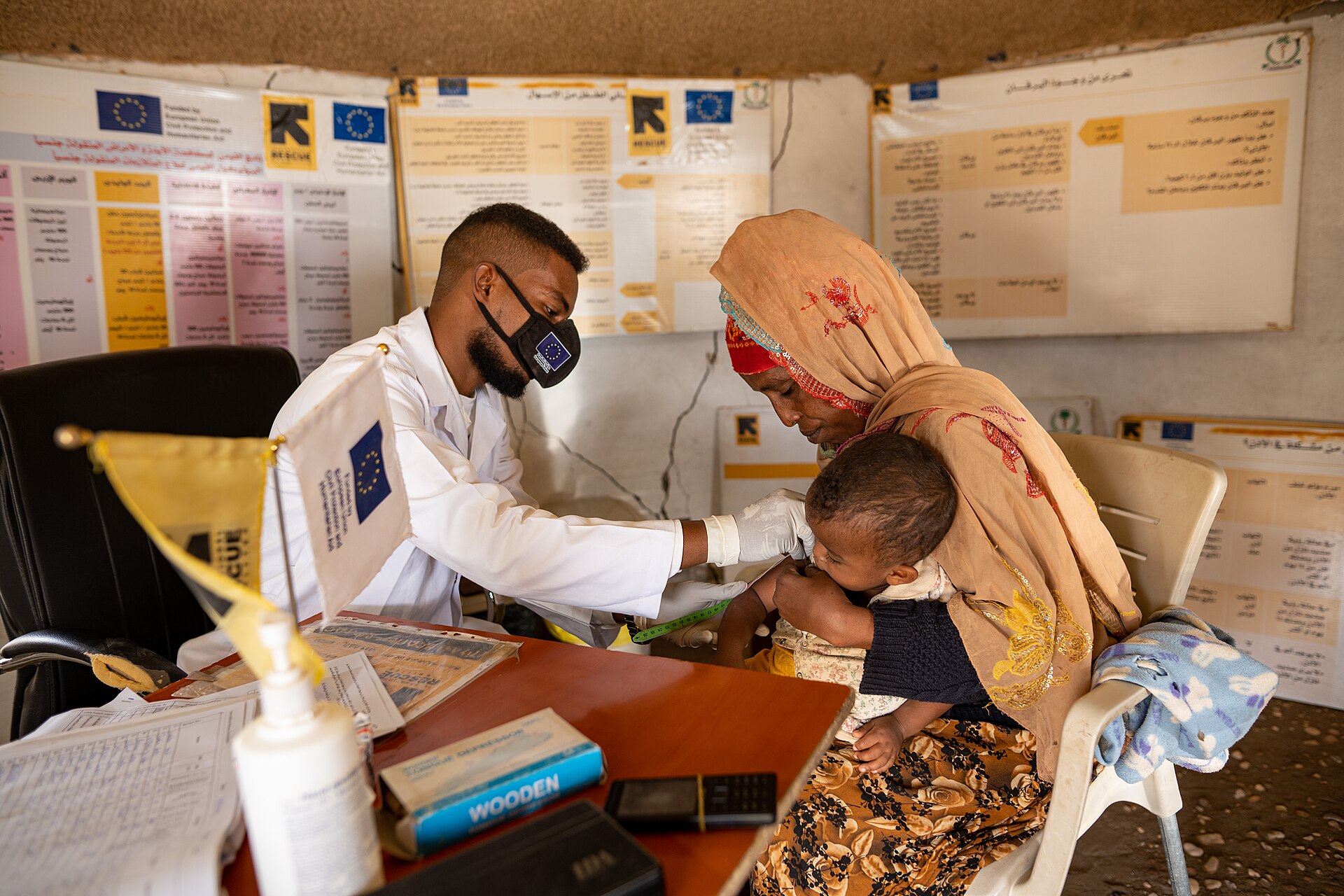
EL-FASHER, Sudan — The attacks were not random, and they were not confined to one building. A BBC investigation published on October 23, 2026, by BBC Africa correspondent Barbara Plett Usher and Mohamed Madi found that fighters of Sudan’s Rapid Support Forces (RSF) systematically destroyed el-Fasher’s healthcare system during the long siege and the October 2025 takeover of the Darfur city. Drawing on accounts from people who were inside el-Fasher, the BBC documented at least 43 separate attacks on hospitals and other healthcare sites between May 2024 and October 2025. Some sites were hit multiple times. When one facility became unusable, doctors moved the patients, the equipment and the wards — and the attacks followed the care to its new address.
The human toll among the people providing that care was severe. Between April 2023 and October 2025, the BBC’s data records 55 health workers killed, 120 injured and 10 forcibly disappeared or abducted in the city. By the time the RSF seized el-Fasher in October 2025, the Saudi Maternity Hospital was the city’s only functioning health facility. On October 25, 2025, RSF fighters stormed it amid reports that more than 460 patients and their companions were killed. That figure is a reported allegation, not an adjudicated fact: the RSF has denied responsibility for the reported killings, and the World Health Organization (WHO) condemned them. No court has ruled on what happened inside the hospital that day.
The findings drew an immediate response from the United Nations. UN High Commissioner for Human Rights Volker Türk called them “deeply disturbing” and said they were consistent with his office’s own monitoring, according to the UN human rights chief’s statement reported by the BBC. Repeated attacks on civilian infrastructure, including health facilities, are serious violations of international humanitarian law and may amount to war crimes, Türk said — an assessment by the UN’s top human rights official, not a judgment by a court. The WHO described el-Fasher as one of the clearest and most severe examples of the war’s impact on health care in Sudan. The RSF rejected the investigation outright: the health minister of its affiliated government, Dr Alaa Eldin Nugud, dismissed the findings as propaganda and said one of the hospitals had served as a military base — a claim the BBC said it found no independent evidence to support.
Why this matters
What separates the BBC’s account from a catalogue of wartime damage is the pattern. Hospitals in war zones are hit in many conflicts, sometimes by error, sometimes by indifference. The el-Fasher hospitals BBC investigation describes something more specific: a sequence in which care was attacked, displaced, attacked again at its new location, displaced again and attacked again — across at least 43 documented incidents and three major hospital relocations. If that pattern is accurate, it points away from collateral damage and toward intent, which is precisely the distinction international law draws when it treats attacks on medical care as potential war crimes rather than as the ordinary tragedy of urban warfare.
The doctors who lived through it describe the purpose in functional terms. Dr Muhamed Suliman, a surgeon who worked in el-Fasher during the siege, told the BBC the aim was to put hospitals out of service, because a health system is the cornerstone of a city. A city whose hospitals close is a city that cannot hold its population: the wounded cannot be treated, mothers cannot deliver safely, the chronically ill cannot get dialysis, and every family recalculates whether staying is survivable. Doctors told the BBC they believe sites were targeted partly because Sudanese army soldiers or allied fighters were among the patients — their belief, reported as such, and one the RSF-aligned health minister’s account echoes from the opposite direction with his claim that a hospital doubled as a military base. Both explanations are contested. What is not contested by any party is the outcome: a city of hundreds of thousands was left, at the moment of its capture, with one working hospital.
The investigation also matters because of what it preserves. Sieges destroy records as reliably as they destroy buildings. The BBC’s chronology — dates, sites, relocations, named witnesses, a counted toll of dead, injured and disappeared health workers — is now part of the evidentiary record that UN monitors, and potentially prosecutors, will work from. Volker Türk’s statement that the findings match OHCHR’s own monitoring means two independent tracks of documentation now describe the same pattern. That convergence, more than any single incident, is what turns reporting into the raw material of accountability.
A war that began in April 2023 — and a city besieged for 500 days
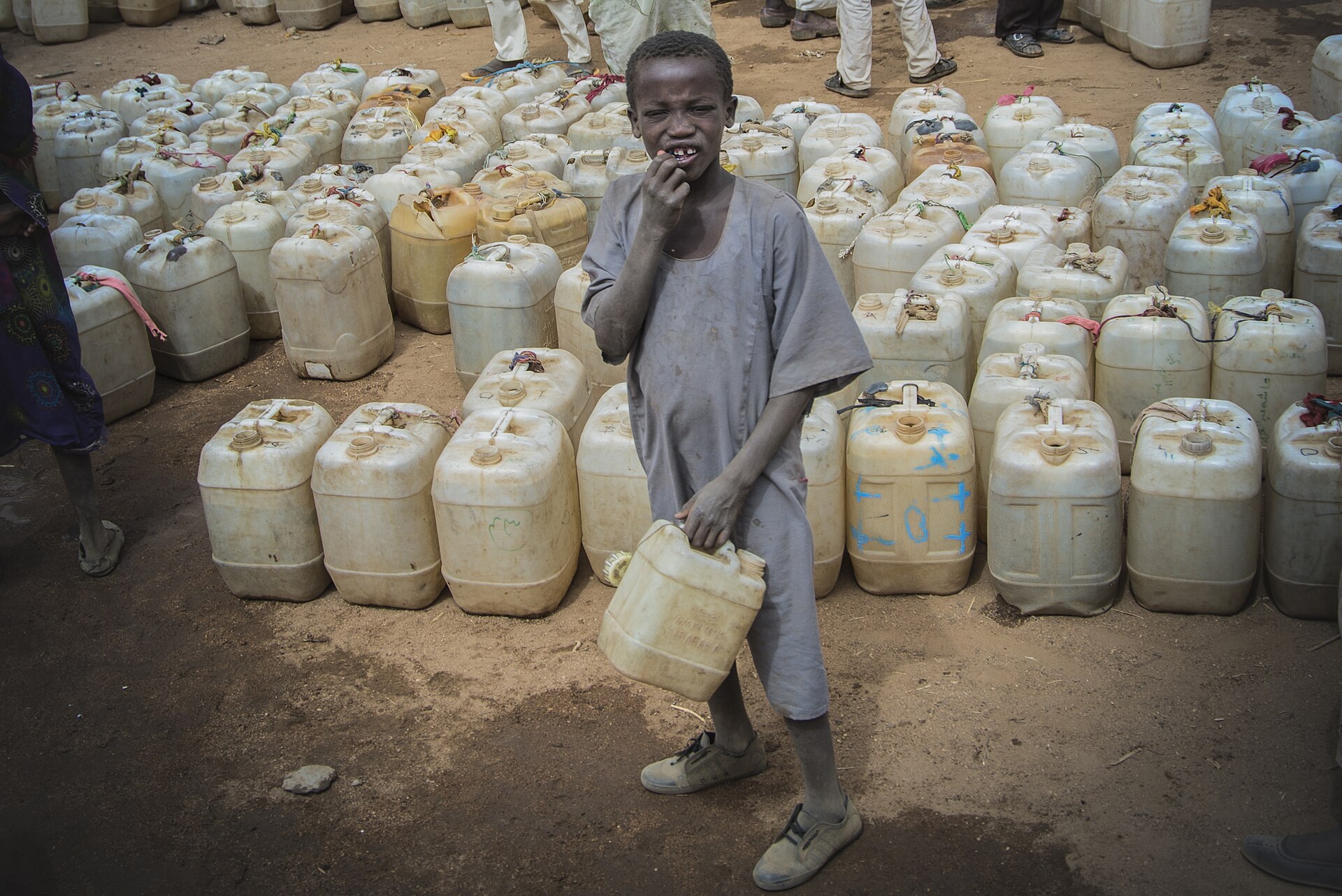
Sudan’s civil war began in April 2023, when a power struggle between the Sudanese Armed Forces (SAF), led by General Abdel Fatah al-Burhan, and the paramilitary Rapid Support Forces, led by Mohamed Hamdan Dagalo, erupted into open warfare. The fighting has displaced millions of people and pushed parts of Sudan toward famine. El-Fasher, the capital of North Darfur, became the army’s last major stronghold in Darfur and one of the war’s defining sieges: the RSF surrounded the city for more than 500 days — about 18 months — before it fell in October 2025, completing the RSF’s takeover of Darfur’s state capitals.
Context matters for balance as well as for scale. Both sides in Sudan’s war have faced accusations of attacking medical facilities, as BBC and UN reporting on the wider conflict has recorded; the BBC investigation’s detailed chronology concerns RSF conduct in el-Fasher specifically, because that is where its witnesses were and where the siege was longest. Nothing in the el-Fasher findings absolves any other actor elsewhere in Sudan — and the RSF’s defenders make exactly that point when they call the findings one-sided. The investigation is best read for what it is: the most detailed reconstruction yet published of how one city’s health system was dismantled, month by month, in a war in which health care has been attacked in many places.
The pattern that followed the care, relocation by relocation
RSF targeted hospitals in Darfur: the Teaching Hospital closes, and care moves south
The sequence begins early in the war. El-Fasher’s Teaching Hospital closed, and its services moved across the city to South Hospital, which kept operating through power cuts and dwindling supplies. For a time, South Hospital carried the city’s surgical care almost alone — a crowded centre treating war wounded and ordinary emergencies alike. It was the first move, and it established the rhythm of everything that followed: a closure, a relocation, a brief reconstruction of care under worse conditions, and then the next blow.
South Hospital shelled, then raided on June 8, 2024
South Hospital was shelled several times in late May and early June 2024. Then, on June 8, 2024, RSF fighters raided the building. Staff fled over the back wall as the fighters came in, according to the BBC’s witnesses. The hospital’s director general told the BBC he was beaten by fighters and survived only by pretending to be dead — lying still while they checked him and left him for dead. The RSF was driven out of the hospital the same day by the army and its allies, and the director returned to find patients’ bodies and his operating theatre’s equipment destroyed. South Hospital closed. When the army later retreated, the site fell into RSF hands. The care moved again — this time to the Saudi Maternity Hospital.
The El Fasher Saudi Hospital attack, repeated: care under sandbags and steel containers
The Saudi Maternity Hospital was struck repeatedly — sometimes many times in a single day, the BBC reported. What kept it functioning was improvisation under fire: staff ringed buildings with sandbags, built underground treatment spaces out of steel shipping containers, and opened alternative wards away from the most exposed parts of the site. On the day the hospital was bombed, medics there performed a Caesarean section by the light of a phone. Nor was the maternity hospital the only service hunted through its moves. A children’s hospital was shelled at two successive relocation sites. A dialysis centre was hit again after it had moved. Private hospitals and neighbourhood clinics closed one by one, the BBC found, until the map of care in el-Fasher had contracted to a single point.
October 25, 2025: the last hospital is stormed
That point was the Saudi Hospital — by October 2025 the only functioning health facility in el-Fasher, still treating patients as the RSF closed in and took the city. On October 25, 2025, RSF fighters stormed the hospital. Reports at the time said more than 460 patients and their companions were killed inside; the WHO condemned the reported killings, and laboratory technician Abdu-Rabbu Ahmed, who worked at the hospital throughout the conflict and escaped before the takeover, told the BBC he had lost his colleagues and his hope for the city’s future. Signal Post News presents the 460 figure as it has been reported — alleged and widely condemned, denied by the RSF, and not established by any court. What the BBC investigation adds is not a verdict on that day but the 17 months before it: by the time fighters entered the last hospital, the system around it had already been destroyed piece by piece.
The RSF’s denial — and the legal bar for attacking a hospital
The RSF rejected the BBC’s findings. Dr Alaa Eldin Nugud, a surgeon who serves as health minister in the RSF-affiliated government, dismissed the allegations as propaganda intended to smear the group, said the witnesses were aligned with the army, and denied that medical workers had been forcibly abducted, saying they had chosen to remain and work. His central factual claim was about South Hospital: that missile launchers had been set up on its grounds and that the hospital served as a military base. In support, he pointed to a video of weapons remains filmed more than a year after the hospital closed. The BBC said it found no independent evidence for the claim. Doctors who visited South Hospital during the war to collect medical equipment denied it was a military base, and the Darfur regional government rejected the charges outright.
The legal framework is not ambiguous, even where the facts are disputed. Under international humanitarian law, hospitals and medical units are specially protected: they must not be attacked, and medical personnel must be respected and protected. A hospital loses that protection only in narrow circumstances — if it is used, outside its humanitarian function, to commit acts harmful to the enemy — and even then only after a warning has been given, a reasonable time limit set, and that warning gone unheeded. The bar is deliberately high, because the protected status of a hospital does not depend on which wounded fighters are being treated inside it: caring for combatants is what hospitals in war zones do, and doctors told the BBC they believe the presence of army or allied patients is part of why el-Fasher’s sites were hit. A general claim that a hospital was misused, made after the fact, does not by itself satisfy that legal test; each attack has to be assessed against what was happening at that site, at that time. That is the standard against which Türk’s assessment — serious violations of international humanitarian law that may amount to war crimes — would have to be tested by investigators, and it is why his office’s parallel monitoring matters: OHCHR says its own records point the same way.
Other medical voices have been more cautious about intent. The medical charity Médecins Sans Frontières has said it did not know whether hospitals were being intentionally targeted, while adding that the belligerents were failing to take precautions to spare them — a position the BBC also reported. The dispute, in other words, is not over whether el-Fasher’s health care was destroyed: every account, including the RSF’s description of closed and abandoned hospitals, agrees that it was. The dispute is over whether it was destroyed deliberately, and that is the question the BBC’s relocation-by-relocation chronology is built to answer.
What happens next
Accountability now runs on several tracks, none of them fast. The first is documentation: OHCHR’s monitoring of Sudan continues, and the BBC’s incident-by-incident chronology gives UN investigators a public baseline against which to test satellite imagery, munitions evidence and further witness testimony from the thousands who fled el-Fasher to camps such as Tawila. The second is criminal scrutiny. Darfur is already within the International Criminal Court’s long-standing mandate on Sudan, and a documented pattern of attacks on hospitals — 43 incidents, a named chain of relocations, a counted toll among health workers — is the kind of record prosecutors build war-crimes cases from; whether the el-Fasher hospital attacks are taken up, and against whom, will depend on evidence identifying who ordered and who carried out particular attacks, which reporting alone cannot supply. The third track is diplomatic: findings endorsed by the UN human rights chief feed directly into Human Rights Council and Security Council debates on Sudan, where ceasefire demands, sanctions and access guarantees are already on the table — and where the RSF’s rejection of the findings previews the argument its backers will make.
The humanitarian test is more immediate. The RSF-backed authorities now running el-Fasher say hospitals there have reopened and are receiving some patients, according to the BBC, and Dr Nugud has said South Hospital is also set to reopen. Rebuilding a health system, as opposed to reopening a building, requires far more: surgeons, midwives and nurses to replace the 55 killed and those who fled; medicines, blood banks, oxygen and dialysis capacity; electricity and water; and, above all, a guarantee credible enough that patients and staff believe a hospital is a protected place again. Until that guarantee exists, the city’s surviving residents will keep making the calculation the siege taught them — that the building meant to save them may also be a target. The BBC investigation is, in the end, a story about how that calculation was created: not in one atrocity, but in 43 blows, followed from door to door, until there was nowhere left for the care to go.
Related coverage: El Fasher Has Fallen: Sudan’s Army Abandons Darfur’s Last Stronghold as the RSF Takes Full Control · Sudan Drone Strikes Killed at Least 306 People in Three Weeks, UN Says · UN Sudan Ceasefire Resolution Passes 28-10, Demanding Both Sides Stop the War
Sources
Sources: BBC News — “Hospitals deliberately targeted by Sudan’s RSF fighters, BBC finds”, the BBC investigation by Barbara Plett Usher and Mohamed Madi, published October 23, 2026 (bbc.com), and the BBC’s companion report on Saudi Hospital laboratory technician Abdu-Rabbu Ahmed — source for the 43 documented attacks, the health-worker toll of 55 killed, 120 injured and 10 forcibly disappeared or abducted, the relocation chronology, the June 8, 2024 South Hospital raid, the reported October 25, 2025 storming of Saudi Hospital and the reported figure of more than 460 patients and companions killed, Dr Muhamed Suliman’s account, the doctors’ stated belief about why sites were targeted, Dr Alaa Eldin Nugud’s rejection and military-base claim, and the BBC’s statement that it found no independent evidence for that claim. Addis Standard, Daily Brief (October 2026) — corroborating summary of the BBC investigation, the health-worker toll and the UN and WHO responses. OHCHR / UN statements as reported by the BBC and Addis Standard — UN High Commissioner for Human Rights Volker Türk’s response (“deeply disturbing”; consistent with OHCHR monitoring; serious violations of international humanitarian law that may amount to war crimes) and the WHO’s description of el-Fasher as one of the clearest and most severe examples of the war’s impact on health care in Sudan, including its condemnation of the reported Saudi Hospital killings. The RSF has denied responsibility for the reported killings and rejected the investigation’s findings; Signal Post News has not independently verified the 460 figure, which remains a reported allegation.