UK Russia sanctions Miliband
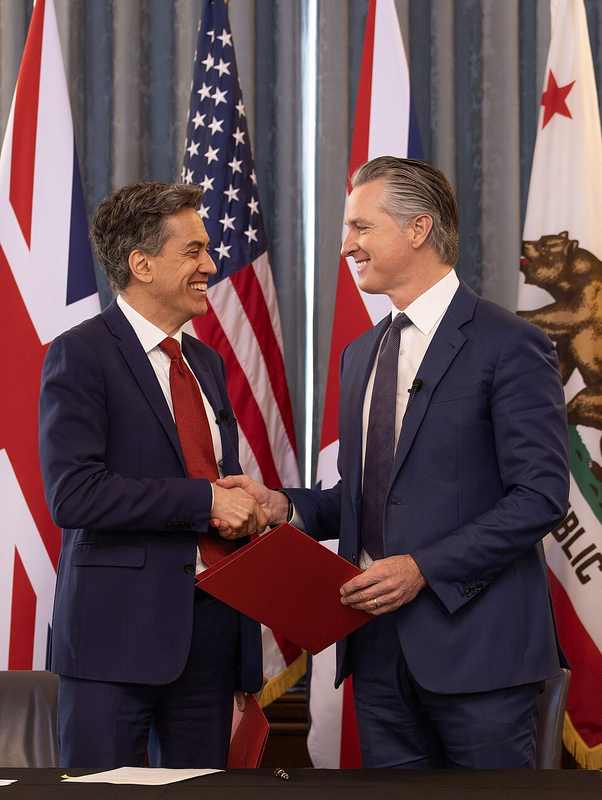
The UK Russia sanctions Miliband announced in Pryluky add 38 targets to Britain's effort to constrain Moscow's war economy. Standing with Ukrainian President Volodymyr Zelenskyy on Thursday, October 8, Foreign Secretary Ed Miliband said the package reaches Russian oil companies, 12 more shadow-fleet tankers, crypto and payment channels, and suppliers of equipment used in missiles and drones.
The announcement was made during a visit to the site of a Russian missile strike on a five-storey residential building in the northern Ukrainian city. Twenty-two civilians were killed there. The setting tied an economic-policy announcement to the human cost that London says the sanctions are meant to reduce.
What the UK announced
The package divides its 38 designations across four pressure points. Two Russian oil companies, Zarubezhneft and INK Capital, were added to the UK sanctions list. London says that step means its sanctions now cover more than 90% of Russia's total oil-production capacity. Twelve additional oil tankers were targeted as part of the network commonly described as Russia's shadow fleet, taking the British total above 600 vessels.
The financial measures include three cryptocurrency exchanges and two payment platforms. Several of those targets have links to Kyrgyzstan, according to the UK government, and are suspected of helping Russian actors route money around restrictions on conventional banking. The final group covers 17 entities and individuals connected to military procurement: importers and suppliers of machine tools, electronics, and materials considered important for ballistic-missile and drone production.
Miliband said Britain would offer more than verbal solidarity. Describing the targets, he said the government was acting against the Kremlin's war machine, shadow fleet, oil companies, cryptocurrencies and war financing. His message to Ukrainians was that Britain would remain alongside them for as long as necessary.

Why this matters
Sanctions lists can look abstract, but this package is notable for joining four parts of the same economic system. Oil producers generate revenue. Tankers move the commodity. Payment services settle trades. Industrial suppliers keep weapons factories operating. Targeting all four simultaneously is an attempt to raise the cost of substitution: if a company, ship or bank is replaced, the replacement network should face more obstacles.
The timing also matters. Zelenskyy warned that Russia is likely to intensify daily missile and drone attacks as colder weather approaches, with energy infrastructure and civilian areas exposed. Ukraine's immediate request is therefore not only for economic pressure on Russia but for more NATO air-defence capability. The sanctions may affect Moscow's resources over time; interceptors and ammunition affect the next night of attacks.
For Britain, the announcement reinforces a strategy built around long-term support. The UK has committed roughly €3.5 billion a year in military assistance through 2030-31, trained more than 63,000 Ukrainian personnel through Operation Interflex, and planned deliveries of about 150,000 drones and 350 air-defence missiles during 2026. The sanctions sit alongside those military commitments rather than replacing them.
What the numbers show
Thirty-eight targets versus the previous nineteen
The new package is twice the headline size of Miliband's earlier 19-target round announced about 64 days ago. That August action focused on six Russian banks, six newly acquired shadow-fleet tankers, four firms importing tantalum and niobium, and another set of designated actors. The October package broadens the mix, especially through crypto exchanges and payment platforms.
Counting designations is useful for measuring scope, but not effect. One large company can matter more than several small intermediaries, and a vessel already struggling to find insurance may be less consequential than a payment service still processing cross-border transactions. The stronger signal is the selection of nodes across an entire chain rather than the raw total of 38.
What the 90% oil-capacity figure means
Britain's statement that sanctioned companies account for more than 90% of Russian oil-production capacity describes coverage, not a 90% fall in output. A designation can freeze UK-linked assets, prohibit transactions by British persons and make global banks, insurers and traders wary of exposure. It does not physically shut wells or prevent every sale.
The practical test is whether targeted producers must accept larger discounts, use costlier intermediaries or delay shipments. Those effects can reduce net revenue even when production continues. They are also difficult to isolate from global oil prices, exchange rates, shipping costs and measures imposed by the United States and European Union.
Why more than 600 tankers still require enforcement
Adding 12 vessels takes the UK's cumulative shadow-fleet list above 600. The size reflects how quickly ownership, flags, insurers and ship managers can change. Vessel-specific sanctions make compliance screening more precise, but operators can rename ships or restructure companies. Port authorities, insurers, commodity traders and flag registries determine whether a listing becomes an operational barrier.
The shipping angle connects directly to Ukraine's campaign against Russian refining capacity. Signal Post News has separately examined Ukraine's claim that strikes have affected 51% of Russian refining capacity and Kyiv's claimed drone strike on the Omsk refinery. Military attacks and financial sanctions apply different kinds of pressure to the same revenue system, but neither automatically translates into an immediate halt in exports.
The crypto-enforcement test
The crypto designations show how sanctions enforcement is following money into alternative rails. Exchanges and payment platforms can move value without the correspondent-bank relationships that conventional sanctions monitor most easily. Yet crypto transactions are recorded on public blockchains, giving investigators a trail when addresses and counterparties can be identified.
Kyrgyzstan-linked targets underscore the jurisdiction problem. A British designation has its strongest direct force inside the UK financial system; its wider reach depends on partners, banks and commercial firms deciding that continued business is too risky. If sanctioned services simply migrate to a new company or less cooperative jurisdiction, the disruption may be temporary. If exchanges, stablecoin issuers and banks coordinate their controls, the same designation can isolate a network quickly.
How the pressure campaign reached this point
Since Russia's full-scale invasion of Ukraine in 2022, Western governments have moved from sanctions on prominent officials and major banks toward increasingly detailed controls on oil logistics, industrial inputs and evasion networks. Russia has responded by redirecting trade, using intermediaries in third countries, expanding domestic production and relying on a large fleet of older tankers outside traditional Western maritime services.
Moscow has repeatedly argued that sanctions are unlawful, politically motivated and ineffective at forcing a change in its military objectives. Russian officials point to continued energy exports and economic adaptation as evidence that the pressure campaign has not achieved its stated strategic result. Western governments counter that success should be measured in higher financing and procurement costs, reduced access to advanced components and constrained future capacity, not only in an immediate policy reversal.
That disagreement explains why successive packages keep changing shape. Broad restrictions create incentives to evade; later rounds identify the intermediaries that emerged. The August UK package targeted banks, tankers and rare-metal importers. The October round adds more oil assets, more ships and a sharper focus on digital finance and weapons inputs.
Who benefits and who loses
Ukraine and allied enforcement agencies
Ukraine gains diplomatic reinforcement and potentially greater friction inside Russia's revenue and procurement networks. Allied investigators gain a more explicit list of companies, vessels and financial channels to monitor. Legitimate shipping and financial firms also benefit from clearer compliance signals, although the work of screening customers and cargoes becomes more demanding.
Russian firms, crews and third-country intermediaries
Designated companies can lose access to British assets and services, while tanker operators may face fewer ports, insurers and buyers willing to handle their cargoes. The costs can extend to crews and contractors who are not accused of wrongdoing but depend on targeted businesses. Third-country firms face a choice between servicing Russian trade and protecting access to Western finance.
Oil buyers and consumers
Buyers willing to accept legal and reputational risk may gain negotiating leverage over discounted Russian oil. At the same time, aggressive enforcement can tighten shipping capacity and add to transport costs. The effect on consumers depends on whether those frictions reduce Russian supply or merely reroute it. A sharp reduction could lift global prices; successful rerouting might leave volumes broadly intact while lowering Moscow's margin.
The skeptics' case on sanctions efficacy
Critics argue that years of sanctions have not ended the war, that Russia has found buyers outside the coalition and that repeated vessel listings can become a game of replacement. They also warn that complex restrictions may burden compliant firms more than opaque networks, while encouraging parallel payment systems beyond Western oversight.
Supporters answer that the relevant counterfactual is not peace versus war, but Russia's ability to finance and equip its forces with and without the restrictions. They cite technology shortages, higher transaction costs and pressure on oil discounts as cumulative effects. Neither side can settle the argument from a designation count alone. Evidence should include actual production, export prices, shipping utilization, procurement delays and the speed at which targeted intermediaries are replaced.
Diplomacy and air defence move in parallel
Zelenskyy said a Ukrainian delegation would meet U.S. representatives Jared Kushner and Steve Witkoff on Friday and Saturday, October 9-10, with stronger air defence among the issues. The meetings come as Kyiv seeks both immediate protection and a diplomatic framework. Our continuing coverage examines Zelenskyy's push to bring European allies into the Ukraine-US talks.
The military and diplomatic tracks can reinforce each other, but they can also pull in different directions. Ukraine argues that stronger defences improve its bargaining position and protect civilians. Russia argues that continued Western military support prolongs the conflict and obstructs a settlement on terms Moscow considers acceptable. The next round of talks will test whether additional support is treated as leverage for negotiation or as evidence that the parties remain far apart.
What happens next: three scenarios
Enforcement closes the network
In the most effective scenario for London, allied regulators and private firms act on the new designations together. Tankers lose insurance and port access, crypto exchanges lose counterparties, and military suppliers struggle to replace machine tools and electronics. Russian exports continue, but at a higher cost and with lower net revenue.
Evasion shifts faster than enforcement
A second scenario is rapid adaptation. Vessels change ownership, traders use new corporate fronts, and payment flows migrate to other exchanges or settlement methods. In that case the package creates disruption without durable constraint, forcing Britain to identify successors in another round of sanctions.
Sanctions become part of a broader bargain
A third possibility is that sanctions relief becomes leverage in negotiations. That would require clear conditions for suspension or removal, coordinated positions among allies and verifiable Russian steps. Without those elements, targets have little reason to treat relief as attainable. With them, the list can serve not only as punishment but as bargaining capital.
For now, the measurable questions are practical: whether the two oil companies face higher transaction costs, whether the 12 tankers continue trading at the same rate, whether the designated crypto channels lose liquidity, and whether the 17 supply-chain targets can source replacements. Those outcomes will show whether the Pryluky announcement changes behavior or simply expands the list.
Sources
- UK Government — new sanctions on Russian oil, shipping, finance and supply chains
- PA via Leigh Journal — Miliband announces new sanctions during Ukraine visit
- Associated Press via WEKU — Ukraine seeks more air defence as winter strikes intensify
- Reuters — UK's August sanctions on banks, ships and metals importers