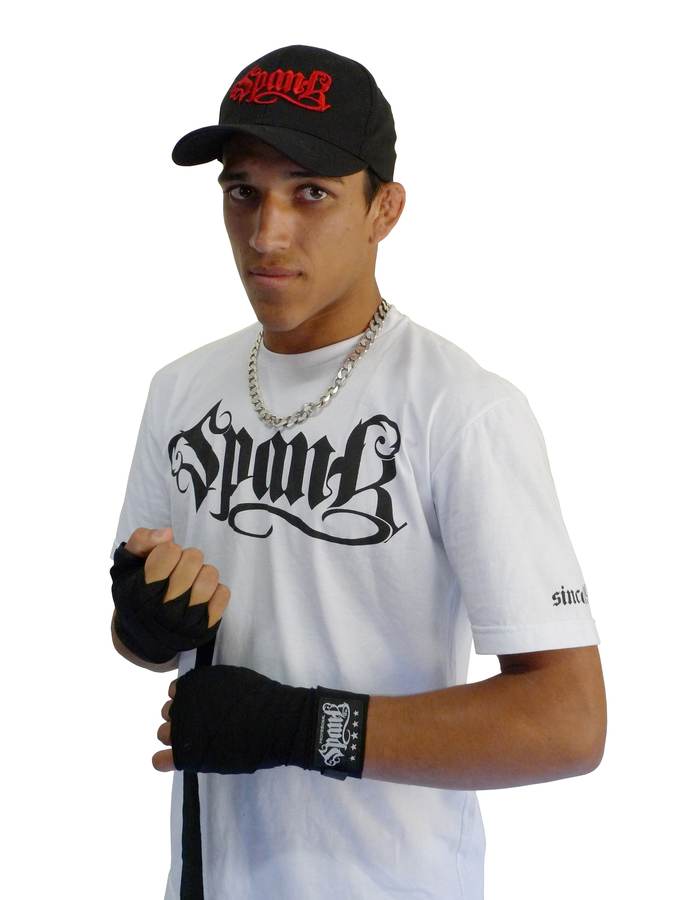
Primary topic: UFC 335 Oliveira vs Lopes
LAS VEGAS — The UFC is ending its 2026 numbered calendar by putting a symbolic belt, rather than a divisional championship, in the main event. Charles Oliveira will defend the BMF title for the first time against Diego Lopes on December 12 at T-Mobile Arena, a booking that is commercially obvious, competitively daring and revealing about how the promotion wants to frame its first full year on Paramount+.
The promotion announced the matchup during the UFC 332 broadcast on October 3. MMA Junkie reported Oliveira's defense and the Dec. 12 date, while theScore confirmed the two five-round attractions. UFC 335 is the final numbered card of 2026 and will stream on Paramount+.
Why this matters: a BMF headliner for the Paramount+ year-ender
The essential point is not that the BMF belt has suddenly become equal to a championship attached to a weight class. It has not. The significance is that the UFC now trusts the belt to carry the year-end sales pitch when no undisputed divisional title is available. That turns what began as a novelty into a durable piece of matchmaking architecture.
Oliveira against Lopes is an especially useful main event for that purpose. Oliveira is a former lightweight champion and one of the promotion's most reliable action fighters. Lopes has translated an aggressive style, quick turnaround habits and two featherweight title challenges into a large audience. The matchup is legible without a complicated rankings lecture: a champion famous for finishing fights meets a challenger whose career has accelerated through risk.
That logic also exposes a business constraint. Bloody Elbow reported that a middleweight title fight between Sean Strickland and Nassourdine Imavov had been expected for UFC 335 but was pushed toward 2027 amid pay negotiations. Rather than leave the Las Vegas finale without a title-shaped centerpiece, the promotion elevated a BMF defense. The belt is now a scheduling solution as much as a trophy.
The roads to UFC 335
Oliveira arrives with records, momentum and a difficult year
Oliveira, 36, enters at 37-11 overall and 25-11 in the UFC. In March, he won the BMF belt from Max Holloway by unanimous decision at UFC 326. That result mattered because Oliveira, long defined by submissions and volatile exchanges, proved he could control a high-level fight across the scorecards. Before beating Holloway, he submitted Mateusz Gamrot, giving him a two-fight winning streak.
The Brazilian was expected to rematch Arman Tsarukyan at UFC 331 in September but withdrew after the death of his friend and teammate Allan Nascimento. Any attempt to describe that withdrawal as a competitive choice misses the human context. UFC 335 is not simply his next booking; it is his return after a private loss that interrupted a major lightweight fight.
Oliveira is also the UFC's all-time leader in finishes, submissions and performance bonuses. Those records are more than promotional trivia. They show a career built on decisive outcomes across multiple generations of opponents. At 36, however, longevity creates a second question: can the instincts that produce chaos still be managed against a younger, fast-starting opponent who will not be intimidated by a scramble?
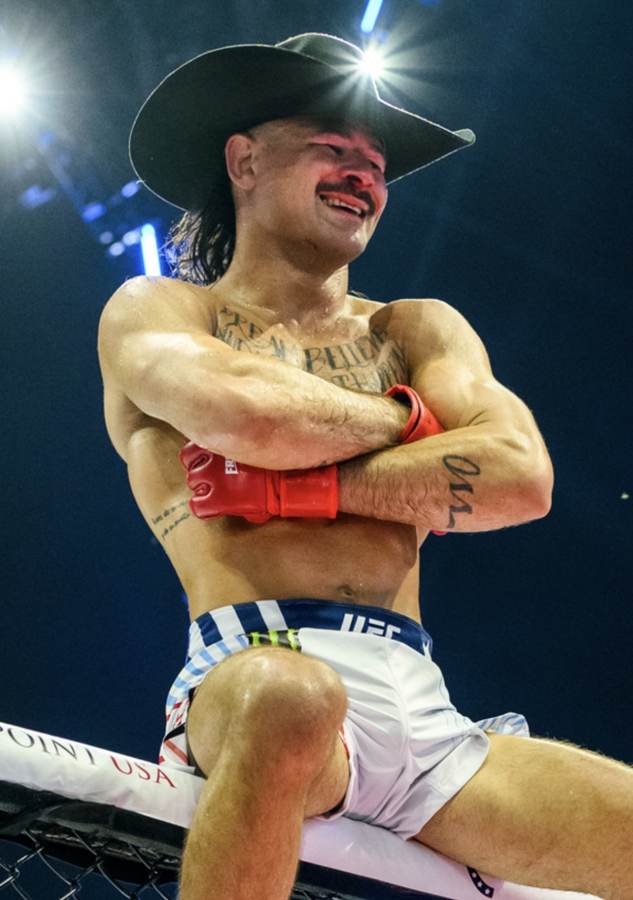
Diego Lopes' lightweight debut is a calculated gamble
Lopes, 31, is 28-8 overall and 7-3 in the UFC. He challenged Alexander Volkanovski for the featherweight title twice, losing first in April 2025 and again in the January 2026 rematch. Those defeats established a ceiling at 145 pounds, but they did not erase the speed with which Lopes became a credible headliner.
He reset his trajectory in June at UFC Freedom 250, stopping Steve Garcia by second-round technical knockout at the White House event. Now he will make his lightweight debut at 155 pounds in a fight carrying a UFC belt of any kind for the first time. That is an unusually aggressive transition: no tune-up, no test of how his power and defensive wrestling translate, and no gradual climb through the rankings.
The upside is obvious. Lopes will avoid a featherweight cut, and a stronger late-round gas tank could matter in a scheduled five-round fight. He may also be physically sturdier in exchanges. The downside is equally real. Oliveira has spent years facing full-sized lightweights, is dangerous in every phase of a scramble and can punish an opponent who mistakes freedom from a weight cut for freedom from consequences.
The records frame the tension. Oliveira owns 37 wins over 48 professional bouts; Lopes has 28 over 36. But the useful comparison is not raw win percentage. It is experience under elite, five-round pressure and the ability to create a finish after the first plan breaks. Oliveira owns the deeper evidence. Lopes owns the fresher body and a style built to collapse distance quickly. The BMF title does not settle which résumé is superior; it rewards whichever man can impose his version of disorder.
BMF title history: from one-off spectacle to booking tool
The BMF concept began at UFC 241 in August 2019, when Nate Diaz defeated Anthony Pettis and declared himself the "baddest" fighter in the game. The UFC commissioned a custom belt reportedly valued at $50,000 for Diaz's meeting with Jorge Masvidal at UFC 244. It was intended as a one-night attraction.
Seven years later, the belt has survived because it solves a recurring promotional problem. It can attach championship imagery to a fight between recognizable action stars even when neither is the undisputed champion of a division. Used sparingly, that gives a premium event a simple hook. Used too often, it risks becoming a consolation prize. UFC 335 is therefore a test of restraint as much as popularity.
Oliveira is a credible custodian because his career embodies the belt's premise: risk, recovery and finishes. Lopes is a credible challenger because he is accepting a new weight class against the most prolific finisher in UFC history. The booking works on its own terms. The more important institutional question is whether the UFC continues to reserve BMF fights for matchups that require no artificial grudge.
Alex Pereira vs Pavlovich: heavyweight redemption with no safety net
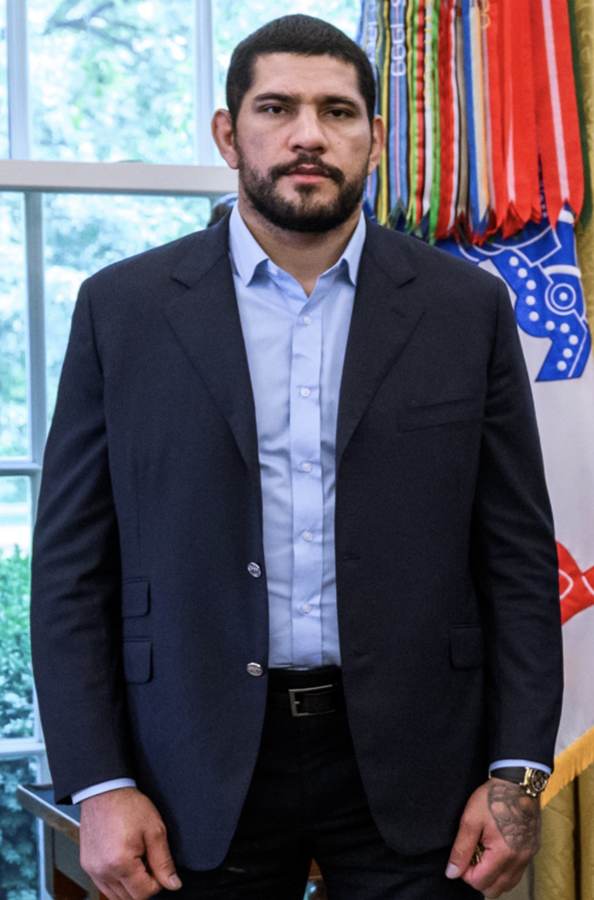
The five-round co-main event gives the card a different kind of danger. Pereira, 39, is 13-4 in mixed martial arts and will make his second heavyweight appearance against Pavlovich, 34, who is 21-3. Sportsnet reported the booking as Pereira's attempt to stabilize a heavyweight campaign that began badly.
Pereira vacated the light-heavyweight title to pursue the unprecedented distinction of winning UFC championships in three divisions. Ciryl Gane stopped him in the second round at UFC Freedom 250 in June, ending that immediate title bid. Pereira disputed the finish, alleging illegal blows, and threatened retirement in the aftermath. UFC 335 offers a route back, but not a gentle one.
Pavlovich is the No. 2-ranked heavyweight and has won three straight. His most recent victory was a 39-second knockout of Tallison Teixeira at UFC Macau in May. That streak follows back-to-back losses to Alexander Volkov and Tom Aspinall, results that forced him to rebuild his case rather than live on earlier knockout momentum.
Stylistically, the fight is designed to answer whether Pereira's precision can survive the mass and early violence of an established heavyweight. Eleven of Pereira's 13 MMA wins have come by knockout, an 84.6% rate. That figure is extraordinary, but percentages do not absorb punches. Pavlovich is the natural heavyweight, owns the current streak and has far more experience against opponents at this size. Pereira has cleaner marquee wins across lower divisions and a proven ability to create one decisive counter. There is no low-risk path for either man over five rounds.
A Pereira win would restore the possibility of a heavyweight title eliminator in 2027. A second consecutive heavyweight loss would make the abandoned light-heavyweight belt look like a costly wager and intensify retirement questions. For Pavlovich, victory over a global star could finally convert his ranking into another title opportunity; defeat would leave him as the division's most dangerous gatekeeper.
The rest of the UFC 335 fight card and the matchmaking logic
The announced card also includes Joe Pyfer against Bo Nickal at middleweight and Brandon Moreno against Charles Johnson at flyweight. Pyfer is ranked No. 4 and Nickal No. 12, making their fight a classic acceleration test: the established contender risks his position so the younger name can prove whether his profile is supported by top-five ability.
Moreno versus Johnson supplies a technically credible flyweight contest and another familiar former champion to the lineup. Together, the bouts reveal the UFC's preferred construction for a streaming-era finale: recognizable stars at the top, violent stylistic promises, and ranked fights that can create early 2027 title challengers.
The announcement came during a consequential UFC 332 broadcast. Esteban Ribovics knocked out King Green in the first round, Natalia Silva defeated Wang Cong to become women's flyweight champion, and Payton Talbott stopped former champion Deiveson Figueiredo. The UFC used a night of divisional change to advertise a December card built around crossover appeal.
BJPenn.com detailed the Oliveira-Lopes announcement, while its companion report on Pereira emphasized the Brazilian's return. The publicity balance is telling: the event is selling two Brazilian stars in fights where a loss would carry more strategic damage than a standard late-year appearance.
What the numbers say — and what they cannot
Oliveira and Lopes have 65 professional wins between them, while Pereira and Pavlovich bring another 34. Those totals suggest experience, but they do not make the outcomes predictable. MMA records compress opponent quality, weight-class effects, aging and five-round adaptation into a single fraction. The more useful signals are specific.
Oliveira has won two straight and holds the UFC's career finishing records. Lopes is 7-3 in the promotion, has already endured two championship camps and is coming off a second-round stoppage. Pavlovich has three consecutive victories and needed only 39 seconds in May. Pereira has 11 knockouts in 13 wins but is coming off a stoppage loss at a new weight. Every major fighter on this card has a path to a dramatic finish; only Oliveira has paired that danger with decades of evidence across the deepest parts of a UFC division.
This is why the main event deserves better than the lazy label of “fun fight.” It is a test of whether Oliveira's record-setting opportunism can withstand a younger opponent without the featherweight cut, and whether Lopes can turn star power into success in a division where every clinch carries more weight. The co-main asks the inverse question: can a decorated lighter champion make his skill scale upward after the first attempt failed?
What UFC 335 means for 2027
Oliveira and Lopes
If Oliveira wins, he strengthens his claim to a major lightweight fight in 2027 while giving the BMF belt a champion whose résumé can sustain future headliners. A loss would not erase his records, but at 36 it would narrow the route back to undisputed gold and hand the promotion a younger BMF attraction.
If Lopes wins in his lightweight debut, he becomes a two-division story overnight: a former featherweight challenger who found a different title and a more forgiving cut at 155 pounds. That still would not make him the undisputed lightweight champion, and the distinction matters. It would, however, give him leverage to demand a ranked lightweight opponent. A loss would force a difficult choice between staying in a larger division or returning to the weight class where Volkanovski beat him twice.
Pereira and Pavlovich
Pereira's next chapter is even sharper. Beat the No. 2 heavyweight and the three-division ambition becomes plausible again. Lose, and the UFC must decide whether to book a retirement-scale attraction, encourage a return to 205 pounds, or accept that the heavyweight experiment has reached its competitive limit.
Pavlovich can turn three rebuilding wins into a championship case by beating Pereira. If he loses to a natural lighter fighter, the ranking remains valuable but the aura that once came with his knockout streak will be harder to recover.
UFC 335 is therefore not a placeholder finale. It is a card about career leverage. Oliveira is defending a belt that grew from a one-off joke into a business instrument. Lopes is risking momentum on an immediate move up. Pereira is trying to rescue an audacious weight-class plan, and Pavlovich is defending heavyweight hierarchy. Paramount+ gets spectacle, but the fighters are wagering their 2027 options.
Sources
- MMA Junkie / USA Today: Oliveira to defend BMF title against Lopes
- MMA Junkie / USA Today: Pereira-Pavlovich booked for UFC 335
- theScore: UFC 335 main and co-main events
- Sportsnet: Pereira-Pavlovich announced as heavyweight co-main
- Bloody Elbow: UFC 335 additions and matchmaking context
- BJPenn.com: Oliveira's first BMF defense
Reporting note: Records, rankings and announced matchups reflect reports available October 4, 2026. Analysis of strategic consequences and likely 2027 paths is Signal Post News commentary, not an announced UFC plan.