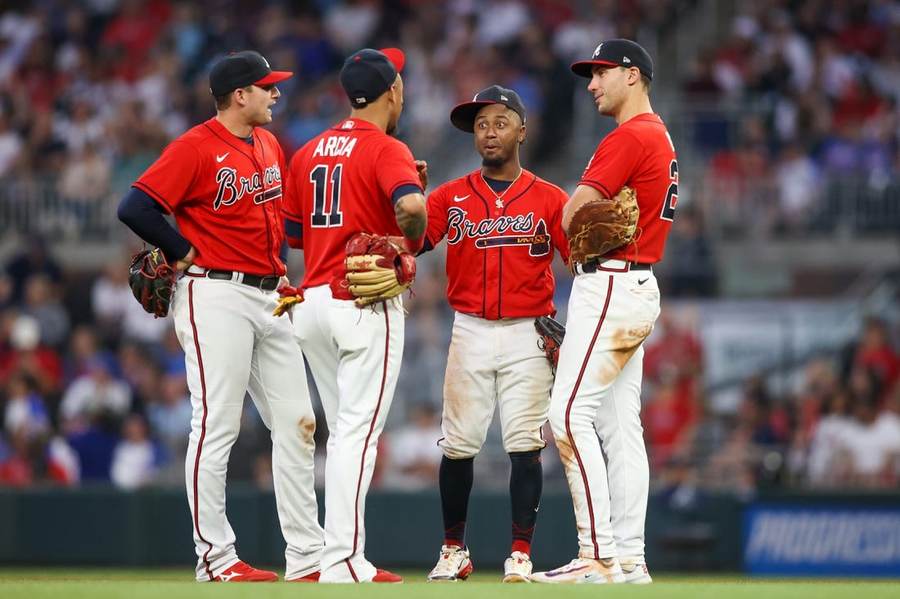
Primary topic: Braves Phillies Game 3 NLDS
The night in Atlanta
The Braves Phillies Game 3 NLDS clincher was decided by the oldest postseason formula in baseball: make the opponent pay immediately, add damage before the bullpen can settle, and trust elite pitching with the lead. Atlanta beat Philadelphia 6-2 on October 1 at Truist Park, won the National League wild-card series two games to one and moved into a best-of-five Division Series against the two-time defending champion Los Angeles Dodgers. The score looked comfortable by the end. The path to it was not. A short series turns every mistake into leverage, and Atlanta converted three mistakes into three home runs.
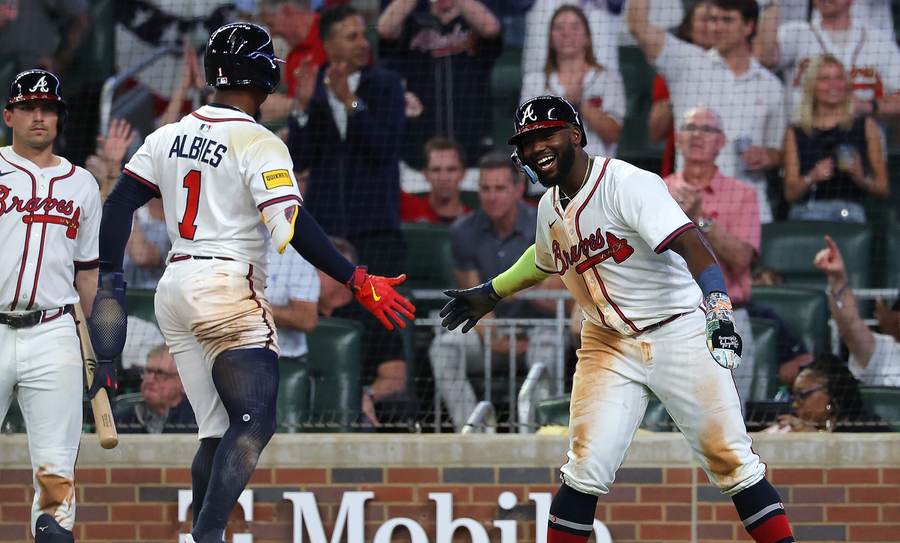
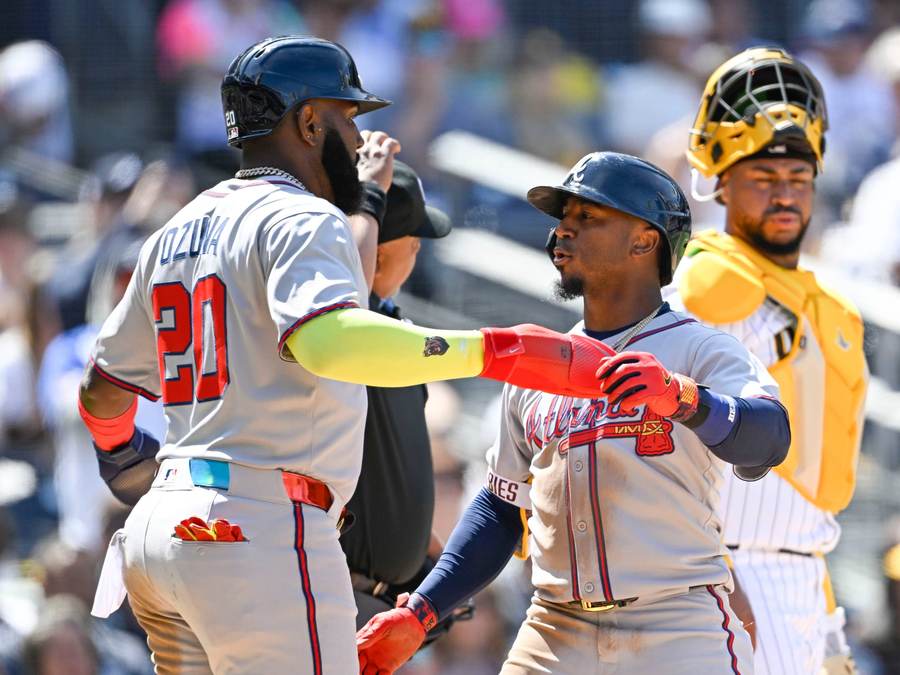
Michael Harris II changed the game in the first inning. With Aaron Nola trying to establish control, Harris drove a three-run homer that transformed the atmosphere and the strategic map. Philadelphia could no longer build patiently around a low-scoring game. Every subsequent plate appearance carried pressure to recover multiple runs, while Atlanta could choose matchups with a margin. Ozzie Albies widened that margin in the fourth with a 419-foot, two-run drive off Zack Wheeler. Matt Olson supplied the third homer. All six Atlanta runs came on those three swings.
That concentration matters. Six runs from home runs does not mean Atlanta dominated every inning; it means the Braves won the highest-value moments. Philadelphia still had chances to create traffic and force uncomfortable decisions. But when the Phillies needed a shutdown inning or a two-out escape, Atlanta produced extra-base damage. In October, a club can lose the broader statistical argument and still win the game because sequencing amplifies a few pitches. Atlanta’s hitters did not merely reach base. They converted contact into immediate, irreversible runs.
Chris Sale’s two-role October
Chris Sale supplied the closing image, and his route to it was historically unusual. He had started Game 1 and struck out at least nine. Two days later, he came out of the bullpen and struck out at least three while finishing Game 3. According to the OptaSTATS comparison cited in game coverage, the last pitcher to combine nine or more strikeouts in a postseason start with three or more in relief within two days was Randy Johnson in the 1995 American League Division Series. The comparison does not make the performances identical, but it captures the rarity of using a frontline starter twice in such a compressed window.
Sale’s relief appearance was also a statement about elimination baseball. Regular-season roles are built to survive 162 games. Winner-take-all roles are built to survive the next three outs. Atlanta could have protected Sale for the next round, but there is no next round if the current lead disappears. The decision traded future freshness for present certainty. It also placed the ball in the hands of a pitcher whose swing-and-miss arsenal reduces the probability that a bloop, error or moving runner can alter the ending.
The cost now transfers to the Dodgers series. Atlanta must manage Sale’s recovery while mapping a five-game set that begins Saturday, October 3, in Los Angeles. The Braves gained the benefit of his closing work and accepted uncertainty about his next full workload. That calculation is defensible because playoff probability is not evenly distributed. The final outs of an elimination game are more valuable than hypothetical innings later. Atlanta paid for certainty when certainty was most valuable.
Why this matters
For Atlanta, the win ends a long and increasingly burdensome pattern. It was the Braves’ first victory in a winner-take-all postseason game since Game 7 of the 1996 National League Championship Series and ended a six-game losing streak in elimination games dating to the 2018 Division Series. Those streaks do not control the next pitch, but they shape organizational pressure. Players change, yet questions about late-round execution accumulate around the uniform. A decisive home-run performance provides a cleaner answer than any speech about turning the page.
The result also changes the National League bracket. Los Angeles now gets a dangerous opponent that can score without stringing together five hits and can deploy premium left-handed pitching in unconventional ways. The Dodgers remain the two-time defending champions and will have the rest advantage. Atlanta arrives with momentum but also with a bullpen and rotation taxed by three wild-card games. The central question is whether the Braves’ power can shorten games before Los Angeles’ depth stretches the series.
For Philadelphia, the loss intensifies a different kind of pressure: not whether the team can reach October, but whether this core can still finish the journey. The Phillies have made five consecutive postseasons, tied for the longest such run in franchise history. Yet the exits have arrived earlier each year: the World Series in 2022, the NLCS in 2023, the Division Series in 2024 and 2025, and now the wild-card round in 2026. That is not evidence of a linear law. It is evidence that a very expensive window is narrowing without another pennant.
The Phillies playoff window is closing
Age is not destiny, but it is a roster constraint. Bryce Harper, Kyle Schwarber, Trea Turner and Aaron Nola are 33; J.T. Realmuto is 35; Zack Wheeler is 36. Veteran stars can remain elite, and several of these players are still capable of changing a series. The issue is the number of simultaneous age curves. A front office can manage one decline through rest, platoons or replacement. It is harder when the middle of the order, catching workload and top of the rotation all move toward greater volatility together.
Philadelphia must distinguish between a bad three-game result and a structural warning. A total teardown would ignore five straight postseason appearances and the difficulty of replacing star production. Standing still would ignore the visible risks. The practical path is selective renewal: add younger athleticism, protect Realmuto’s workload, improve the lineup’s ability to score without homers, and build enough pitching depth that October does not depend on veteran starters solving every crisis.
The shortest postseason of this run may also be the most informative. Philadelphia could previously point to deep October experience and argue that another chance was likely. The wild-card defeat removes that comfort. A team built to win now was eliminated before the Division Series. Management therefore has to evaluate not only talent but adaptability: who can change approach against premium pitching, who can defend late leads, and which contracts leave room for the next generation.
How Atlanta created six runs with three swings
Home-run totals can conceal the underlying contest, so the sequence deserves attention. Harris’s first-inning shot forced Nola to work without a safety net. Albies’s fourth-inning homer came against Wheeler, another accomplished starter, and converted a manageable deficit into a game Philadelphia had to chase aggressively. Olson’s contribution completed a lineup-spanning attack. The damage came from different parts of the order and against different pitchers, making it harder to dismiss as one bad matchup.
A three-run homer is not just three isolated runs. It changes managerial choices. The trailing club becomes more likely to use pinch hitters early, send runners, challenge borderline pitches and expose lower-leverage relievers to keep premium arms available. The leading club can attack the strike zone, align defenders for contact and avoid unnecessary bases. Harris’s swing therefore created secondary value beyond the scoreboard. Atlanta played the rest of the game from the favorable side of the decision tree.
The Braves’ challenge against Los Angeles is repeatability. No lineup can plan to score every run by homer, especially against a rested staff with scouting time. Atlanta needs the power threat to open other routes: walks ahead of sluggers, opposite-field contact against shifts, and pressure on pitchers who are working around the heart of the order. If the Dodgers can make the bases empty before every dangerous hitter, three solo shots may not be enough.
Division Series field is set
The completed bracket shows how compressed the wild-card round became. In the American League, the Yankees swept Boston and outscored the Red Sox 18-2 to earn a meeting with Tampa Bay. The White Sox swept Houston and advanced to face Cleveland, recording their first postseason series victory since the 2005 championship season. In the National League, Atlanta meets Los Angeles, while San Diego’s sweep of the Cubs sends the Padres against Milwaukee.
Those pairings create four different tests. New York brings overwhelming recent run differential into a matchup with a Rays club built around run prevention and matchup discipline. Chicago must prove that a two-game breakthrough can survive Cleveland’s deeper scouting. San Diego and Milwaukee offer contrasting ways to create offense. Atlanta and Los Angeles provide the most obvious power-versus-depth collision, magnified by the Dodgers’ championship status.
A sweep can be both an advantage and a trap. Rested teams reset rotations and heal minor injuries, but they also lose the rhythm of daily high-stakes games. Atlanta has no such rhythm problem; it has a fatigue problem instead. The opening innings on Saturday will show which effect matters more. If the Braves strike first, the wild-card intensity may travel. If the Dodgers force long at-bats, Atlanta’s compressed pitching usage could surface quickly.
Historical parallels and limits
The Randy Johnson parallel highlights improvisation, but Atlanta should resist turning emergency usage into routine. Johnson’s 1995 workload belongs to a different pitching era, with different expectations about recovery and injury. Modern clubs have more precise tracking and more specialized bullpens. Sale’s appearance is significant because it broke the normal pattern for a specific elimination game, not because it proves aces should routinely return on two days’ rest.
The 1996 Braves reference carries another caution. Winning one decisive game can remove a psychological obstacle, but it does not guarantee a championship. Atlanta’s franchise history includes both extraordinary pitching continuity and painful October reversals. The useful lesson is narrower: the current roster executed under maximum pressure. That experience can improve confidence and communication, but the Dodgers will not award a run for it.
Philadelphia’s sequence of earlier exits also has precedents. Contending cores often move from breakthrough to near miss to diminishing returns as opponents adjust and payroll flexibility declines. Some teams extend the window through aggressive retooling; others chase the original formula too long. The next winter is where the analogy becomes actionable. The Phillies must decide whether continuity still creates the best chance or merely preserves familiarity.
Winners, losers and the next decisions
Harris and Albies are the immediate winners because their swings defined the game, while Sale owns the unusual closing line. Atlanta’s front office gains validation for a roster whose postseason resilience had been questioned. The Dodgers gain clarity but not comfort: they know the opponent, can set the rotation and have home field, yet now must plan for a lineup that punished both Nola and Wheeler.
The clearest losers are the Phillies’ margin for error and the assumption that another October run will arrive automatically. Nola and Wheeler will absorb attention because the decisive homers came against them, but assigning the exit to two pitches would be too simple. Philadelphia scored two runs in an elimination game. Run prevention failed at the largest moments, and the offense did not create enough alternate paths back.
For Major League Baseball, the bracket offers marketable contrasts: historic franchises, a defending champion, long-awaited White Sox advancement and regional rivalries. Yet the competitive question is more interesting than the branding. Wild-card teams have shown that a short, hot stretch can erase regular-season hierarchy. The Division Series asks whether that volatility survives five games, travel and deeper rotations.
What happens next
Atlanta’s first task is recovery. Medical and pitching staff will assess Sale, align the rotation and decide how aggressively to use the bullpen in Los Angeles. The offensive plan will focus on creating baserunners before the power bats and preventing the Dodgers from turning every inning into isolated at-bats. Defensive execution also becomes more important because Los Angeles can manufacture pressure without a homer.
Philadelphia begins an audit with no painless answer. Keeping the core preserves star upside but raises age risk. Trading veterans could refresh the roster but reduce the chance of an immediate return. The most likely strategy is neither full return nor teardown: targeted moves around a veteran spine, with sharper standards for bench depth, late-inning defense and flexible pitching.
The series opener on October 3 will not settle every question, but it will reveal whether Atlanta’s wild-card formula can scale. If early power again creates a lead, the Braves can deploy matchups and force Los Angeles to chase. If the Dodgers extend innings and push Sale’s absence or limitation into view, rest and depth may control the set. Game 3 gave Atlanta passage. The NLDS will determine whether it also gave the Braves a sustainable identity.
Scouting the next round
Los Angeles will try to change the locations that Atlanta punished. Harris and Albies did damage when pitches entered zones they could lift, so Dodgers pitchers are likely to expand vertically and force chase before offering anything near the middle. Atlanta’s counter is patience. A lineup that treats every plate appearance like another elimination-game swing can help the opponent by enlarging the strike zone. Walks are particularly valuable because they force Los Angeles to confront the home-run hitters with men aboard.
The Dodgers’ offense will also test Atlanta’s defensive communication in ways Philadelphia did not sustain. Los Angeles can stack hitters who control the zone, extend at-bats and create matchup decisions before the fifth inning. That matters after a three-game wild-card series because every extra bullpen out compounds fatigue. Atlanta must get length from starters without waiting too long when contact quality rises. The ideal plan is flexible rather than heroic: use rested relievers before a deficit forms, then adjust Sale’s role to his recovery.
Philadelphia’s winter should include a forensic review of two-strike and two-out execution. Postseason offenses frequently face premium velocity and fewer predictable fastballs. The club needs evidence about which hitters maintained decision quality under that pressure and which became pull-dependent. Training can improve swing decisions, but roster construction also matters. A bench with contact, speed and defensive flexibility gives the manager alternatives when the main lineup’s power is neutralized.
Atlanta’s victory also underlines why postseason roster value differs from regular-season value. A player who can cover multiple defensive positions, a starter willing to relieve and a hitter who can alter the score with one swing all gain leverage in a short series. Depth is not merely insurance; it is the ability to create a different game plan within hours. The Braves used that flexibility in Game 3 and will need more of it against a club built to expose a static approach.
Forecasting the NLDS should therefore avoid treating the 6-2 score as a permanent power ranking. Atlanta won the necessary game and displayed an October strength. Los Angeles owns rest, home field and a longer preparation window. The matchup begins with those advantages in tension. If Atlanta can force a close late-inning contest without exhausting its best arms, the wild-card momentum becomes useful. If the Dodgers create early pitch-count stress, the cost of the decisive round will become visible.
Editorial assessment
The cleanest conclusion is that Atlanta earned advancement without proving every concern solved. Three home runs and Sale’s emergency versatility were decisive assets; rotation recovery and offensive diversification remain open questions. Philadelphia’s defeat likewise should not erase five years of contention, but it removes the comfort of assuming the same core will eventually receive a different result. October rewards exact moments and then forces organizations to separate moment from structure. The Braves can celebrate the former while preparing for the latter. The Phillies have no game left to distract from that work.
Sources and methodology
This analysis distinguishes confirmed events from interpretation and forward-looking scenarios. Reporting was cross-checked against the following sources:
Continue with technology coverage, world news and the latest trending stories.