FSU Virginia final score
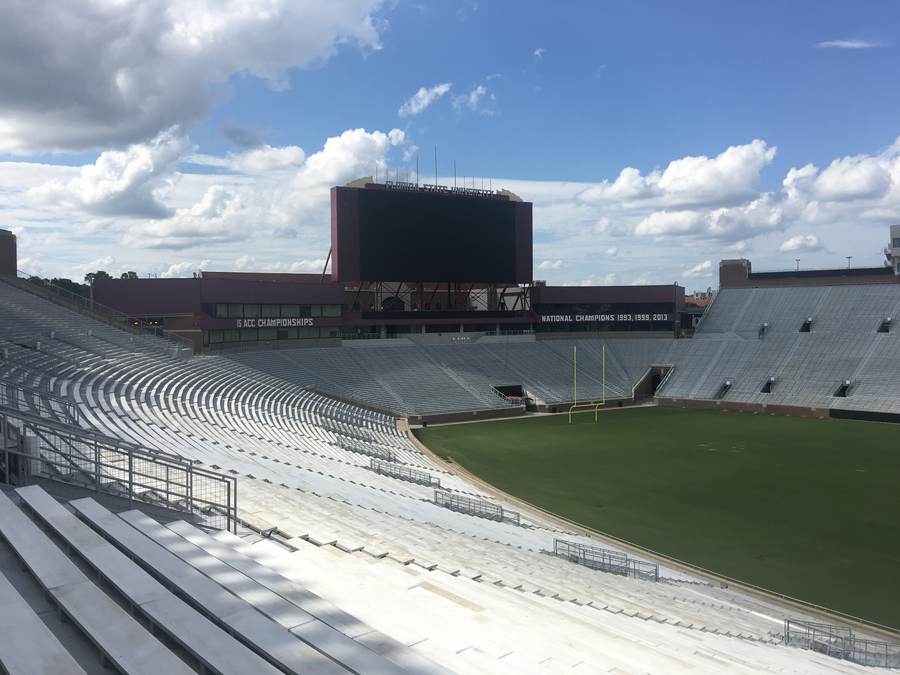
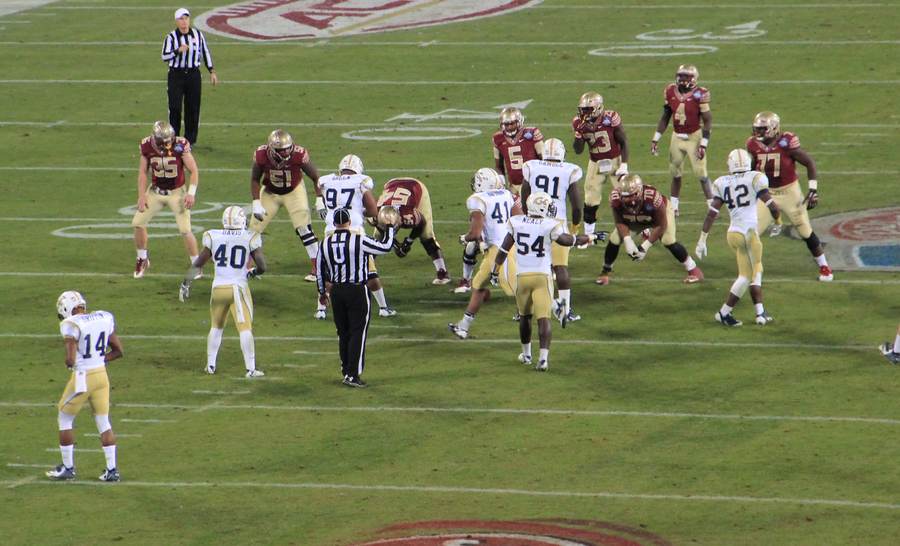
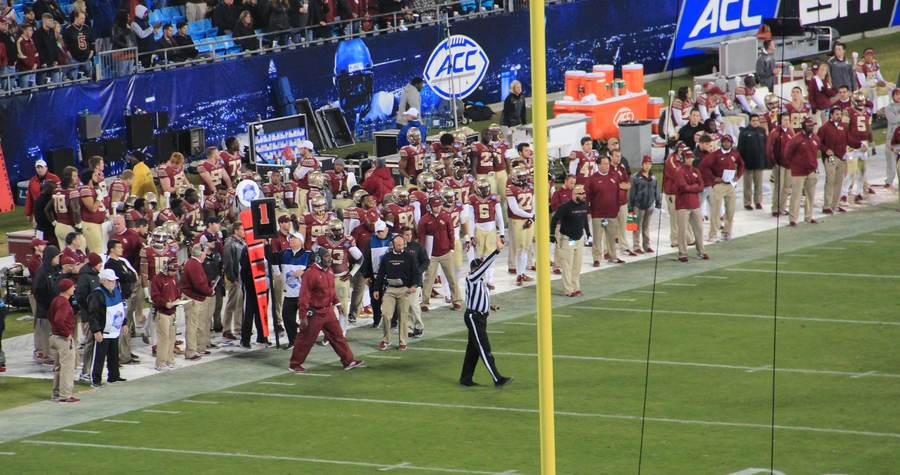
The FSU Virginia final score — Florida State 38, Virginia 7 — says this became a rout. The opening quarter said something else entirely. Virginia traveled 63 yards in seven plays for the game's first touchdown, Florida State managed only 38 total yards in the period, and the Seminoles walked to the sideline trailing 7-0 with the anxiety around their 2026 season getting louder.
Then the game turned with unusual force. Florida State scored the final 38 points at Doak Campbell Stadium, moving to 3-2 overall and 1-1 in ACC play. Daniels supplied five rushing touchdowns and 319 yards of total offense. The defensive front supplied a season-high 10 sacks. What began as another uneasy chapter ended as the clearest evidence yet that this team can still impose itself on a conference opponent.
How Florida State flipped the game after the first quarter
Quintrevion Wisner's 48-yard screen reception created the field position for Florida State's first touchdown, giving the offense the explosive play it had lacked in the opening period. Once the Seminoles found that first opening, their running game began to dictate the terms. Daniels repeatedly became the finisher, turning quarterback runs into the afternoon's defining scoring pattern.
The scoreboard reached 17-7 by halftime after Gabe Panikowski added a field goal. The larger break had already occurred on the other side of the ball: Virginia finished the second quarter with minus-12 total yards. On one sequence, back-to-back sacks by Kevin Wynn and Mandrell Desir changed second-and-9 into fourth-and-29. Beau Pribula was sacked three times in that quarter alone, and the Cavaliers never restored the rhythm of their opening drive.
Daniels' 81-yard touchdown run in the third quarter broke the contest open at 31-7. It was the most dramatic play in a historic rushing line: 17 carries, 136 yards and five touchdowns. He also completed 12 of 19 passes for 183 yards, with one interception. The passing numbers were not flawless, but the total package was overwhelming.
Micahi Danzy led Florida State's receivers with four catches for 70 yards. Ousmane Kromah and Wisner combined for 126 rushing yards, helping prevent Virginia from treating Daniels as the only running threat. By the final whistle, Florida State 38-7 Virginia was less a tale of one spectacular play than of a complete takeover after a poor first quarter.
Ashton Daniels' five rushing touchdowns rewrite the record book
Ashton Daniels' five rushing touchdowns established a program record for the most by any Seminole in one game and, by extension, the most by an FSU quarterback in one game. That distinction matters at a program with a deep catalog of celebrated quarterbacks and explosive runners. Daniels did not merely have the best rushing day of his position group; he produced a touchdown total no Florida State player had reached in a single game.
The 319 total yards explain why the record was not empty accumulation. Daniels carried the offense when Virginia's pressure and coverage challenged the passing game, then turned the contest with the 81-yard burst. Tallahassee.com's report card gave him an A+, a grade that fits the scale of the result and the record.
There is still room for a measured judgment. Daniels threw an interception, and questions about his deep-ball accuracy do not disappear because his legs controlled one afternoon. Opponents will force Florida State to win through tighter throwing windows and more obvious passing situations. But this was a breakout performance with permanent program-historical value, not simply a productive box score.
FSU defense: 10 sacks change the season's tone
The most encouraging number for Florida State may not be Daniels' five. It may be 10.0. The Seminoles entered Saturday with only seven sacks through four games, then exceeded that total in one afternoon. Nine defenders registered at least half a sack, a distribution that suggests the pressure came from a plan and a unit rather than one isolated matchup.
Florida State finished with 12.5 tackles for loss and held Virginia to 205 total yards, including just 37 on the ground. The Cavaliers averaged 2.8 yards per play and converted only three of 19 combined third- and fourth-down attempts. Chris Jones made six tackles and recorded 1.5 sacks; Ryaln Kennedy led the sack total with 2.0. Those numbers describe sustained control, not a late-game statistical spike.
Beau Pribula was sacked often enough that Virginia's offense kept operating behind schedule. The second-quarter avalanche was decisive because it prevented the Cavaliers from building on their 7-0 lead and gave Florida State's offense repeated chances to find itself. By the time Daniels broke the 81-yard run, the defense had already made the comeback feel inevitable.
Why this matters for Florida State and Mike Norvell
This was Florida State's first ACC win of 2026, an essential correction for an up-and-down team that had arrived at 2-2 with Norvell under intense scrutiny. The Seminoles are now 3-2, 1-1 in league play. One win does not erase the uneven opening month, but it changes the immediate argument from whether the season is slipping away to whether this can become the start of a turnaround.
The Mike Norvell hot seat had become part of every result. A narrow win might have offered temporary relief. A 38-point unanswered run, a quarterback record and a defense that multiplied its season sack total in one day offer something stronger: evidence that Florida State's staff still can make game-changing adjustments and draw a forceful response from its roster.
That is the central answer in these FSU vs Virginia takeaways. The first quarter exposed Florida State's recurring vulnerability — slow starts that leave too little margin later. The next three quarters showed the ceiling: a flexible rushing offense, multiple backfield contributors and a defensive front capable of wrecking a game.
Who benefits, who loses
Daniels benefits most. The FSU single-game rushing touchdowns record gives him a signature performance and gives the offense a clear identity around his mobility. Norvell gains a reprieve because the victory was built on adjustment rather than survival. The defensive front gains credibility after entering the day with only seven sacks and leaving with a statement that can travel into the rest of conference play.
Virginia and Pribula absorb the other side of that swing. The Cavaliers' opening possession showed they could move the ball, but the protection failures made that success impossible to sustain. In the ACC pecking order, losing 38-7 to a team that had not yet won a conference game is a result that can linger beyond one week.
Florida State's critics still have two fair points. The Seminoles cannot assume every opponent will allow them to survive a 38-yard first quarter, and a passing game with an interception and unresolved deep-ball accuracy will face sharper tests. The rout answers urgency; it does not answer consistency.
What happens next
The Seminoles move into a difficult ACC stretch with momentum but also with a demanding standard they created themselves. For the turnaround to be real, the defensive front must make pressure repeatable rather than exceptional. Ten sacks after seven in four games is a breakthrough; the next step is proving that it reflects a sustainable change in execution.
Offensively, Florida State cannot ask Daniels to score five rushing touchdowns every week. Kromah and Wisner must continue sharing the rushing load, Danzy's production must give the passing game a dependable target, and the first quarter cannot become a recurring tax on the rest of the game. Daniels' legs can raise the ceiling, but more precision downfield would make the offense harder to compress.
The meaning of the Doak Campbell Stadium October 2026 result will therefore be decided after Saturday. It could become the day a wavering season found its identity, or it could stand alone as a brilliant corrective. Florida State finally has the kind of conference win that permits the more hopeful reading. Now it has to repeat the habits behind it.
Related coverage
Sources: USA Today FSU Wire rapid reaction; Tallahassee Democrat game recap; Tallahassee Democrat report card; FSU Wire winners and losers.